
Content Distribution USA: Why Reach Needs a Plan
A practical look at how brands turn one content asset into search, social, video, email, and sales touchpoints.

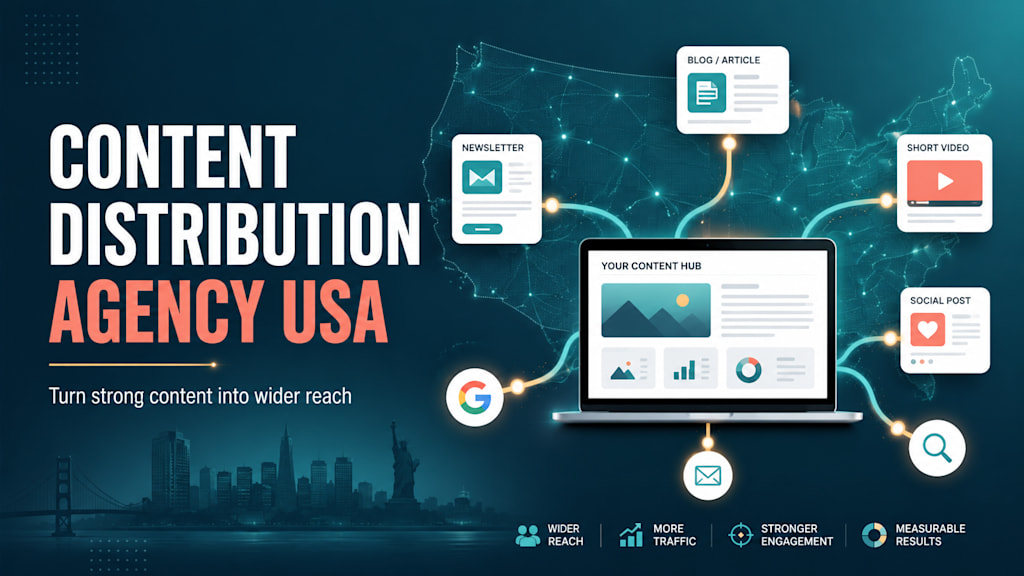
The life of a content asset should not end the moment it is published. An article, podcast, webinar, founder interview, or customer story takes real work to create, but too many brands treat that work as if it only deserves one short window of attention. The asset goes live, gets shared once or twice, and then the team moves on to the next item on the calendar.
That approach keeps a content schedule active, but it does not always build reach.
The better question is not always “What should we create next?” Sometimes the better question is “What have we already created that could be used more effectively?” A strong piece of content often contains several smaller ideas that can travel across different channels. A webinar may include useful explanations, buyer objections, customer examples, and short moments that could work as clips. A podcast may include answers that deserve to become written posts. A detailed article may contain sections that can become newsletter content, social posts, short video scripts, and supporting guest articles.
This is where content distribution becomes important. It gives useful ideas more than one route to the audience. It helps content move through search, social media, email, video platforms, newsletters, and sales conversations without forcing the brand to create everything from scratch every time.
Why distribution is the part brands cannot ignore
A useful way to understand a Content Distribution Agency USA is to think of it as a partner that helps brands turn existing content into a wider system of visibility. The goal is not to paste the same link everywhere and hope for the best. That creates activity, but activity is not the same as strategy.
Real distribution starts by looking at the content and identifying what is actually worth using. Which idea is strong enough to stand alone? Which section could become a short video? Which point would work better as a newsletter? Which explanation could support search? Which customer quote could help a sales conversation? Which angle could become a guest article or backlink opportunity?
Once those ideas are identified, they can be reshaped for the places where the audience is most likely to notice them. The core message stays connected, but the format changes. That is what makes distribution different from simple promotion.
Promotion says, “Here is our new article.”
Distribution says, “Here are five useful ways this idea can reach the right audience.”
Publishing alone is rarely enough
Publishing is important, but it is only the beginning. A blog post going live does not mean the right people will find it. A podcast episode being uploaded does not mean the best ideas inside it will spread. A webinar replay sitting on a page does not mean prospects will watch it weeks later.
The internet is too crowded for content to succeed only because it exists.
People are moving between platforms all day. They search for answers, scroll social feeds, watch short videos, open newsletters, compare service pages, and read recommendations. A brand that only publishes in one place is depending too much on one route. A brand that distributes well creates several routes back to the same idea.
That does not mean every piece of content needs to appear everywhere. It means the strongest parts should be adapted for the channels where they make sense.
A long article might work well for search, but the main idea may also work as a LinkedIn post. A customer story might sit on the website, but one proof point from that story may help in a sales email. A webinar might remain available as a replay, but the strongest answer from it could become a short-form video.
The asset remains the source. Distribution gives the source more life.
One strong asset can support many smaller pieces
Good content distribution is often built around the idea that one strong asset can become several useful pieces. The key is to avoid stretching weak content too far. The goal is not to create as many outputs as possible. The goal is to extract the strongest moments and give them a format that fits.
For example, one detailed webinar could become:
- A short-form video clip from the clearest answer
- A LinkedIn post built around the main insight
- A newsletter section with added context
- A blog section that supports search visibility
- A guest article angle for backlink support
- A sales follow-up note based on a buyer objection
- A quote graphic from a strong line
- An FAQ answer for a common customer question
Each version has a different job. The video clip grabs attention quickly. The blog section provides depth. The newsletter version adds context. The sales note supports a direct conversation. The guest article helps the idea appear outside the brand’s own website.
This is how content becomes more efficient. The brand gets more value from the work it has already done.
The USA market makes distribution more important
The USA market is crowded in almost every serious category. Agencies are publishing frameworks. SaaS companies are writing guides. Consultants are building newsletters. Founders are posting regularly. Creators are turning ideas into short clips. Even smaller businesses now understand that content can help build trust before a buyer ever speaks to the team.
That means a single piece of content has to work harder to get noticed.
A good article can still disappear. A useful video can still lose attention after a day. A podcast can still reach only a small group of listeners. A customer story can still sit quietly on one page without helping the wider marketing effort.
Distribution gives content more surface area.
A buyer may first see a short clip. A few days later, they may read a related post. Later, they may find a full article through search. A newsletter may reinforce the same idea. By the time the buyer visits the website, the brand already feels more familiar.
That familiarity matters because trust usually builds through repeated, useful touchpoints. People rarely remember a brand because of one post. They remember the brands that show up consistently with ideas that make sense.
Short-form video is a major part of modern distribution
Short-form video has changed how brands distribute long-form ideas. A person may not watch a full webinar from a company they do not know yet, but they may watch a short clip if the opening feels relevant. They may not listen to an entire podcast immediately, but one strong moment can introduce the topic and the speaker.
A strong short-form clip can:
- Explain one useful idea
- Answer a common buyer question
- Show a founder’s point of view
- Highlight a customer insight
- Make a complex topic easier to understand
- Lead people back to a full article, webinar, podcast, or service page
The clip still needs to stand on its own. It should not feel like a random cut from a longer recording. It needs enough context for a new viewer to understand the point. It needs a clear beginning and one focused takeaway.
Good distribution is not simply about making content shorter. It is about making the strongest parts easier to discover.
Planning distribution before publishing
Distribution works best when it is considered before the asset is finished. Many teams create the content first and only think about repurposing later. By then, the asset may not have been structured in a way that makes distribution easy.
A smarter workflow starts earlier.
If a podcast is being recorded, the host can ask questions that lead to clear standalone answers. If a webinar is being planned, each section can focus on one practical takeaway. If a customer story is being written, the team can capture proof points, objections, outcomes, and quotes that can later support social, email, sales, and search.
Before creating a major asset, a brand can ask:
- Who needs to see this?
- What is the strongest idea?
- Which channel is best for this message?
- Can any part become short-form video?
- Can this support search visibility?
- Can this become newsletter content?
- Can this help the sales team?
- Which points are strong enough to stand alone?
These questions do not make content less natural. They make it more useful. They also make the distribution process easier because the strongest ideas are easier to identify.
What brands should avoid
Poor distribution usually looks busy but does not build much value. A team posts the same caption everywhere, cuts a few random clips, shares a link once, and moves on. It creates activity, but not enough memory.
Brands should avoid:
- Posting the same wording across every platform
- Treating every channel the same
- Turning weak moments into clips just to increase volume
- Publishing thin guest articles with no fresh angle
- Ignoring email and sales use cases
- Measuring only views without looking at quality
- Forgetting older content that still has value
- Treating distribution as a last-minute task
The goal is not to do more for the sake of doing more. The goal is to make useful ideas travel better.
What good distribution should achieve
A strong distribution system should make a brand easier to find, easier to understand, and easier to trust. It should help the audience see the brand’s best ideas in more than one place without making the message feel repetitive.
Good distribution can support:
- Better use of existing content
- More consistent visibility across channels
- Stronger short-form video output
- More useful newsletter content
- Better sales follow-up material
- More search and backlink opportunities
- Stronger brand recall over time
- Less pressure to constantly create from scratch
The real benefit is not just reach. It is useful reach. The kind that puts the right message in front of the right people in a format they are willing to consume.
Final thoughts
Content creation is important, but content creation alone is not enough. A strong article, podcast, webinar, customer story, founder video, or long-form asset should not be published once and forgotten.
The best ideas deserve more than one format and more than one chance to be seen. For brands competing in the USA, distribution is the route that helps content move beyond the first publish date. It gives useful ideas more surface area, more context, and more opportunities to reach people who care.
A brand does not always need to create more content. Sometimes it needs to use the content it already has with more intention.
That is how content starts working harder, traveling further, and supporting real growth.
About the Creator
Clipping Agency
Clipping Agency drives creator growth through clipping services, clipping campaigns, and clipping marketing, turning long-form content into short-form momentum at scale.
Enjoyed the story? Support the Creator.
Subscribe for free to receive all their stories in your feed.
Comments
There are no comments for this story
Be the first to respond and start the conversation.