
Porsche’s Electric Dream Is Dead. Here’s What They’re Doing Instead.
The luxury carmaker is cutting 9,000 jobs and retreating from EVs. The reason is simpler than you think: you can’t sell a $150,000 badge on a spec sheet that looks like a $20,000 car’s.
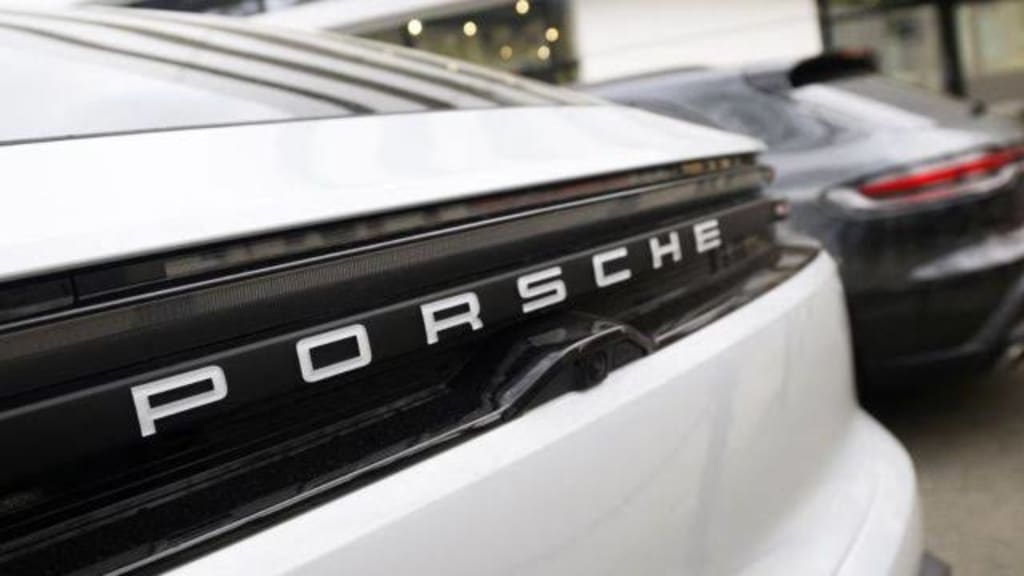
In 2025, Porsche delivered 279,400 vehicles globally, down 10%. Operating profit was €413 million, compared with €5.66 billion the previous year. In China, it sold 41,900 vehicles, versus 95,700 in 2021.
The new strategy leaves no room for ambiguity: cut 9,000 jobs, reduce management positions by 40%, push the break-even point below 200,000 units, and the 911 will never be electrified. Resources are being pulled back from pure electric vehicles and poured into a new supercar positioned above the 911 and the Sonderwunsch customization business.
The Taycan’s trajectory looks like this: 41,000 units globally in 2023, down to 20,800 in 2024, 16,000 in 2025, and just over 6,000 in the first half of 2026. Porsche did not separately disclose full-year numbers for the electric Macan, but in its Q3 2026 earnings report it listed "adjustments to the electrification product line" under restructuring costs.
A domestic Chinese EV in the RMB 200,000 class can already hit 0–100 km/h in the 3-second range. Porsche’s horizontally opposed engine, PDK transmission, and Weissach-tuned chassis, the things it was proudest of, have been erased on the speed metric by the physical characteristics of electric motors. Intelligent features standardize experience: fridges, big screens, plush sofas, high-compute chips, urban NOA. A RMB 200,000 car can offer all of it. Standardized things have no scarcity, and without scarcity, a high premium cannot hold. If you spend RMB 1.5 million on an EV and find that its spec sheet is roughly the same as a RMB 200,000 car’s, the money feels awkwardly spent.
Ferrari cut its 2030 electrification target from 40% to 20%. Lamborghini, with sales almost identical to Maserati’s, set a delivery record on order quality. Bentley and Mercedes-AMG launched pure combustion V8 models in 2026 with no electrification assistance, limited to 30 and 500 units globally, sold out upon release. The selling point of these cars is not acceleration. It is the V8 sound, the mechanical vibration, the shock of gear changes. These experiences cannot be reproduced in an EV, and in the EV wave they have turned from "outdated noise" into unique assets.
Porsche’s own data points in the same direction. In the first three quarters of 2026, total sales fell 16%. The 911 was the only model with positive growth, up 12% year on year, and buyers kept gravitating toward the higher-premium GTS, Turbo, and GT versions.
The core moves of the new strategy are a set of numbers: average selling prices for top models up about 20%; future top flagship pricing may reach two or even three times that of an entry 911, exceeding $400,000; revenue from the Sonderwunsch customization business expanded to six times its current level, with per-car custom projects priced at $2 million to $15 million; and a 20% cut in derivative models, with resources concentrated on D/E-segment models and a new supercar positioned above the 911.
This approach is a shift from "selling a better combustion car" to "selling a customized collectible marked by the mechanical era, one that cannot be replicated by the logic of industrial mass production." The overall share of combustion cars is shrinking. Simply "building a combustion car" has no scarcity. Scarcity has to be manufactured: restrict supply, deepen customization, price upward, and concentrate resources into a narrow lane where the supply side can be fully controlled.
The direction is right. Ferrari delivered 13,835 vehicles in 2025 and achieved an EBIT margin close to 30%. The "tiny volume, high unit price" model has been validated.
But Porsche is not Ferrari. Ferrari can rest on the luxury logic of selling just over 10,000 units a year. Porsche carries a 200,000-unit break-even line, the cost of 9,000 layoffs, and scale expectations inside Volkswagen Group. It has to balance two competing demands: scarce enough to support a high premium, and large enough in volume to cover fixed costs.
The scarcity of combustion cars is still valuable. It is no longer a trophy in an industrial competition, but a collectible that must be carefully curated, released in limited numbers, and annotated with the last footnote of the mechanical era. Porsche can make this collectible well. Whether it can feed a company of 200,000-unit scale by selling collectibles: the 2026 financial reports will give the first set of numbers.
About the Creator
Jin
Writer of reamstories
https://reamstories.com/jin
Enjoyed the story? Support the Creator.
Subscribe for free to receive all their stories in your feed. You could also become a paid subscriber, letting them know you appreciate their work.
Comments
There are no comments for this story
Be the first to respond and start the conversation.