
EV Road Trips Are Won by Fewer Stops, Not Faster Charging
A 130 kWh BYD Datang and an 85 kWh ONVO L90 show why a big battery changes the shape of a long drive.
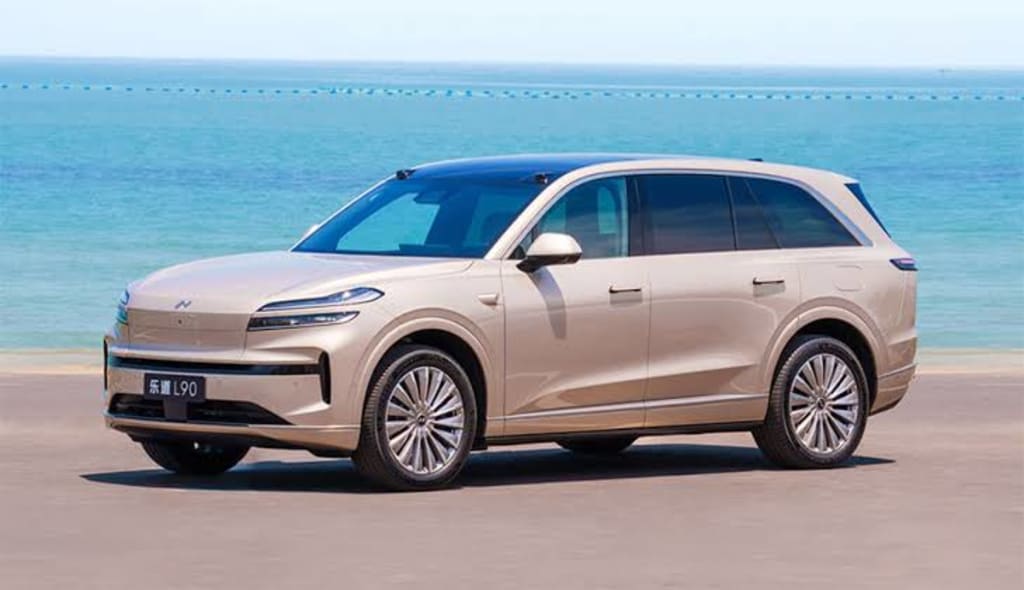
Two cars, same price, different trip shapes
Two EVs leave a charger at the same state of charge. Both cost about RMB 260,000. One is a mid-trim BYD Datang at RMB 269,900. It has a 130 kWh second-generation blade battery, a single rear motor with 500 hp, and a measured full-to-zero highway range of 611 km at an average 115 km/h. The other is a base ONVO L90 at RMB 265,900. It has an 85 kWh CALB ternary lithium battery. Dongchedi measured the high-trim L90 at 369 km of highway range.
Brand positioning can wait. The Datang sits on BYD’s mid-range line, below Fangchengbao, Denza, and Yangwang. The L90 sits on NIO’s mid-range line. At this price, buyers care about highway range and predictable charging. The badge does not move the car.
Nobody drives to zero. Use a 50 km safety buffer. The Datang then has about 550 km of usable highway range. The L90 has about 300 km. That buffer turns brochure range into a travel radius.
Five distances, five different answers
Within 300 km, neither car needs a stop. The experience matches.
At 500 km, the L90 needs one charge. The Datang goes straight through. The difference is not minutes at a plug. The difference is whether the trip includes a charging stop at all.
At 700 km, both need one stop. Even.
At 900 km, the L90 needs two stops. The Datang needs one. Under perfect conditions, the charging time gap is 6 minutes. Perfect conditions assume no queue, full charger power, and zero time entering or leaving a station. The extra stop adds an exit, a queue check, a plug-in or a swap-lane approach, and a gamble on availability. The 6 minutes misses that cost.
At 1200 km, the L90 needs three stops. The Datang needs two. The theoretical time gap is 9 minutes. The same caveat applies three times.
Fast-charging stations can lack stored power. Swap stations can have queues. Single-stop time differences are small in practice. The larger difference is how often the driver has to solve the same problem.
A three-minute swap still means a decision every 300 km
Battery swapping has a clear peak speed. A swap takes about three minutes. Fast charging adds roughly 400 km in five minutes and reaches 97% in nine minutes. That speed is useful.
Frequency decides whether speed matters. A car with long range treats a swap as an occasional convenience. A car with a small battery turns the swap into a regular task. A driver facing a swap decision every 300 km and a driver thinking about a charge every 550 km are on different trips.
The L90’s 85 kWh pack is not small for RMB 260,000. The Datang’s 130 kWh pack is 45 kWh larger. On the highway, that gap is roughly 200 km or more of usable range. A swap-based car with a smaller pack also faces a system problem. More drivers swapping on long trips means more turnover pressure and longer queues. Drivers who try to stretch the pack lower before swapping take on more range risk.
The Datang lets the driver choose a fast-charging stop from a wider state-of-charge window. A queue at a fast charger is less painful when the car can still reach the next destination. The L90 driver has less buffer and fewer choices.
The competition has moved from single-stop speed to stop count. The car that asks for fewer charging decisions feels closer to a gasoline road trip.
Swapping works. Swapping alone does not.
Battery swapping has practical uses. Battery-as-a-service lowers the purchase price. Upgradable batteries ease degradation worries. Urban swap stations help in specific cases. NIO built a useful swap network. The product problem appears when swapping comes with a battery capacity gap at the same price.
A swap architecture earns its keep when battery capacity stays competitive. If the swap system’s cost and operating needs push a car to a smaller pack than rivals at the same price, fast swaps start covering for short range.
Buyers purchase the whole car. A three-minute swap is quick. A swap decision every 300 km is a different rhythm from a charge decision every 550 km. NIO and ONVO have a strong swap card. They still need the large-battery card. One card cannot carry the hand.
One fewer stop beats a few minutes saved
Fast charging and battery swapping both work. The useful question is how often the driver stops. A three-minute swap and a nine-minute fast charge land close under ideal conditions. The trip diverges at 900 km and 1200 km, where one car adds a stop and the other does not. Each added stop brings queues, detours, and planning.
BYD pairs fast charging with a 130 kWh battery. Short highway trips need no charge, and longer trips leave room to choose a stop. The ONVO L90 pairs swapping with an 85 kWh battery. Its measured highway range trails at the same price.
Fast charging and swapping can coexist. A swap-only product strategy cannot ignore battery size. If swapping leads to a smaller pack at the same price, the speed advantage gets eaten by extra stops. Range sets the number of decisions. Fast charging sets the length of each stop. Swapping sets the best-case length of a stop. When range is short, the best case arrives too often to matter.
This comparison does not prove swapping fails. It shows that swapping needs a competitive battery. At RMB 260,000, range and capacity have to keep up. Otherwise, a fast swap looks like a patch on a pack that is too small.
About the Creator
Jin
Writer of reamstories
https://reamstories.com/jin
Enjoyed the story? Support the Creator.
Subscribe for free to receive all their stories in your feed. You could also become a paid subscriber, letting them know you appreciate their work.
Comments
There are no comments for this story
Be the first to respond and start the conversation.