
A Dutch Court Just Stopped Land Rover’s “Fishing Expedition” Against BYD
The ruling did not decide whether the Ti7 copied the Defender. It drew a harder line around evidence seizures, and Chinese automakers heading to Europe should take note.
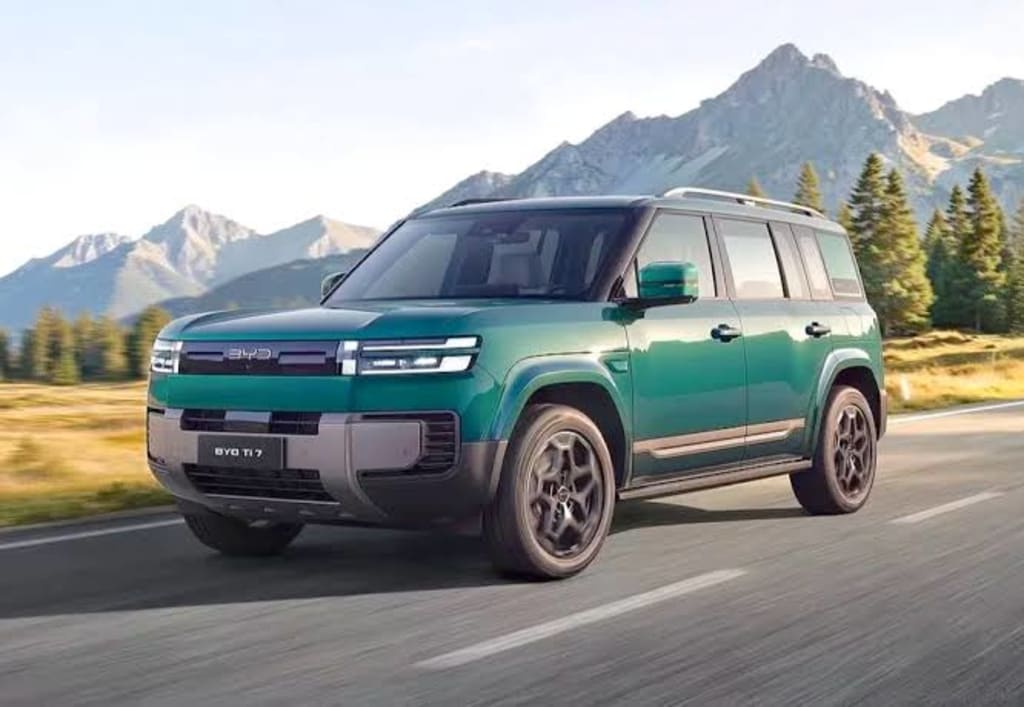
On November 11, 2026, Judge H.F.R. van Heemstra of The Hague District Court issued a ruling. It ordered Jaguar Land Rover to destroy or return all materials seized from BYD’s Dutch offices in August within 24 hours of formal notice. If JLR missed that deadline, the fine would be EUR 50,000 per hour, capped at EUR 500,000. JLR also had to pay BYD EUR 25,376.57 in legal costs.
The numbers are cold. In IP litigation, however, the enforcement design is clear. A seizure is not a “take first, sort later” gray area. If you start one wrongly, the cost lands immediately. JLR cannot stall compliance with an appeal. The ruling took effect at once.
Read this only as “BYD won,” and you miss what the court actually did. The court did not decide who was right on copying. It rejected the use of evidence-preservation proceedings as a way to obtain competitive intelligence.
I. The “raid” that was stopped
In August, JLR applied for an ex parte evidentiary seizure order. It argued that BYD’s Ti7, the overseas version of the Fangchengbao Tai 7, infringed the Land Rover Defender’s design rights and involved reverse engineering. BYD had no warning and no chance to respond. A court-appointed bailiff entered BYD’s offices in Schiedam and Hoofddorp and seized digital files.
The seized materials included Ti7’s launch plans, technical data and financial records, according to disclosures. To prove design infringement, JLR needed two things: the registered design filings and photographs of the Ti7’s exterior. Launch plans and financial records sit far from that comparison. They belong to the R&D system and the business plan.
BYD’s lawyers called the action a “fishing expedition.” The Hague court accepted that description.
The court’s reasoning had three steps. First, relevance failed. Ti7 had not been sold in the EU, and neither side disputed that. A product not yet launched in the relevant market could not already have caused JLR harm in the EU that required a seizure as a remedy. Second, necessity failed. Design infringement could be proven through public channels. JLR did not need internal R&D documents. Third, the scope was too broad. The court accepted BYD’s argument that the seizure was “excessively broad.” It also rejected JLR’s separate request for a surprise inspection of BYD’s internal documents.
The court did not say Ti7 did not copy the Defender. It said that even with suspicion of infringement, JLR had no right to take the other side’s R&D and business archives wholesale in the name of securing evidence.
II. Judicial review of ex parte seizures is tightening
The ruling is not an isolated event. Since January 1, 2025, the Dutch Code of Civil Procedure has set clearer rules for evidence-preservation seizures. An applicant must describe the data or items to be seized, their location, the legal relationship behind the application, and the specific facts showing a risk of concealment or loss. A claim that the other party “may have committed unlawful acts” is not enough. The law also requires the court to be satisfied that confidentiality is protected before it grants a seizure. Who copies the files? Where are they stored? Who has access? How are irrelevant materials and privileged information separated?
JLR’s application failed on these points. The ruling enforced the statutory threshold. The signal is that ex parte seizures, which have a surprise-raid character, face tighter judicial control.
III. A procedural win does not end the substantive dispute
This is a procedural ruling, not an infringement judgment. The court said that lifting the seizure “does not determine whether the SUV infringes JLR’s intellectual property rights.” The substantive dispute over whether Ti7 copied the Defender’s exterior is still being heard in Rotterdam and The Hague. JLR’s broader reverse-engineering allegations have not disappeared.
Procedural wins still matter. If JLR had kept the massive internal materials seized from BYD’s offices, it would have had an asymmetric information advantage in the later infringement case. It could have attacked the design comparison. It could also have searched R&D documents, technology roadmaps and financial data for anything it could repackage as a “clue to infringement.”
The order to destroy the materials restored equality in access to evidence. BYD won a defensive procedural victory. Before the substantive fight, it limited the range of its opponent’s weapons.
IV. Chinese automakers going global face more than copying allegations
JLR’s attempt deserves attention because it belongs to a larger set of pressures.
A CATARC report on IP disputes in Chinese automakers’ overseas expansion found that the overseas patent portfolios of China’s top 100 vehicle manufacturers account for only about 5% to 8% of their total applications. Comparable foreign companies are at about 30%. With lagging portfolios, Chinese automakers have limited patent leverage when they face IP challenges overseas.
The sources of challenge are diversifying. Traditional automakers bring design and reverse-engineering claims. Non-practicing entities bring lawsuits in the Unified Patent Court. BMS Innovations, for example, filed successive patent infringement suits against BYD in Paris and The Hague. Cross-industry standard-essential patent disputes also reach automakers. Nokia sued BYD in Europe. XPeng, Geely and Sunwoda face patent litigation or injunction risk in various jurisdictions.
JLR’s evidence-preservation application represents another form of pressure. It does not seek an infringement judgment directly. It seeks to change the information and evidence landscape through procedure. The strategy costs relatively little and can pay off handsomely. The information itself may have competitive value, whether or not infringement is ever established. The court stopped this particular attempt. It will not remove the incentive.
The Dutch business environment adds another layer. Wingtech Technology’s control over Nexperia was suspended in 2025 by the Dutch Enterprise Chamber on “mismanagement” grounds. Its shares were placed under third-party custody, and control remains restricted. Put the two matters side by side, and you do not need a theory of systematic targeting. The point is simpler. In the Netherlands and across Europe, Chinese companies face legal risk on several tracks: control rights, intellectual property and coercive procedural measures. They can appear in different forms at different times.
V. What BYD did in the proceedings matters more than the win
The Hague ruling’s most useful lesson is not the result. It is BYD’s response.
BYD did not stop at a public denial of copying. It entered the Dutch court’s procedural framework and used local law to argue that the seizure was excessive. Ti7 had not been sold in the EU, so the harm-relevance link failed. Design comparison could be done through public channels, so necessity failed. The seizure covered launch plans and financial records, so proportionality failed. The court accepted the “fishing expedition” description.
That is the ability to turn a commercial narrative into a legal-technical argument. In overseas litigation, the second often works better than the first.
The substantive contest continues. Whether Ti7 infringes the Defender’s design rights and whether the reverse-engineering claims hold will be decided after full hearings. Whatever the outcome, the November 11, 2026 ruling set a procedural line: IP protection cannot become a back door for obtaining a competitor’s core commercial information. The coercive power of evidence preservation must stay proportional to the specific dispute it serves.
For Chinese automakers entering Europe, that line does not guarantee a win in a substantive fight. It preserves ground that should not be given away. On that ground, you do not have to hand your R&D files to your opponent before the litigation has begun.
About the Creator
Jin
Writer of reamstories
https://reamstories.com/jin
Enjoyed the story? Support the Creator.
Subscribe for free to receive all their stories in your feed. You could also become a paid subscriber, letting them know you appreciate their work.
Comments
There are no comments for this story
Be the first to respond and start the conversation.