
TWO FACES OF CAMIGUIN’S LIVING WATERS
A Comparative Field Research Article on Katibawasan Falls & Tuasan Falls in Camiguin Island

Abstract
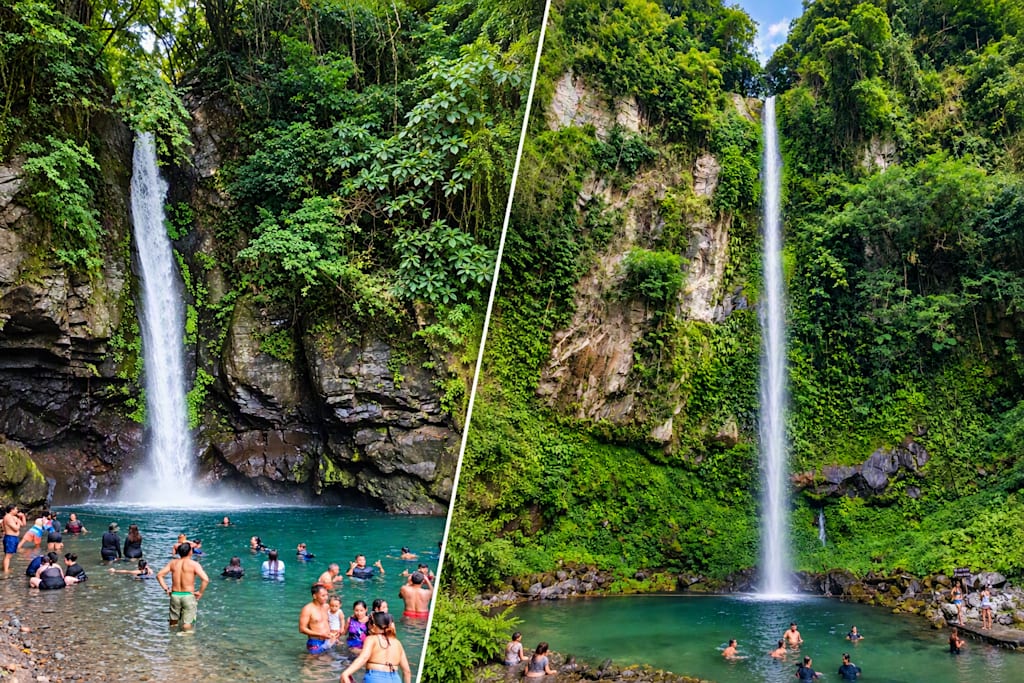
This comparative article examines Katibawasan Falls and Tuasan Falls in Camiguin Island through a blend of firsthand travel documentation and published visitor-oriented sources. The field context is the author’s company team-building trip with consultant colleagues from 12 to 14 June 2026. The group visited Katibawasan first and Tuasan the following day. Rather than treating the two waterfalls as interchangeable attractions, the article compares their setting, visible morphology, accessibility and visitor experience. Published sources consistently characterize Katibawasan as a tall, narrow single-drop waterfall near Mambajao, while Tuasan is described as a lower, broader cascade in Catarman. The comparison suggests that their tourism value lies precisely in this contrast: Katibawasan offers vertical drama and comparatively developed access, whereas Tuasan offers a broader, rockier cascade and a different sense of encounter with moving water. These conclusions are interpretive and site-specific, not measurements made by the author.
1. Introduction: Two Waterfalls, Two Expressions of Camiguin
Camiguin rewards comparison. On a compact volcanic island, two celebrated waterfalls can produce remarkably different experiences. During our company team-building trip with consultant colleagues on 12–14 June 2026, we visited Katibawasan Falls first and Tuasan Falls the following day. That sequence turned a leisure itinerary into a useful field comparison: the first site presented a high, slender fall framed by steep green walls, while the second presented a broader, more forceful cascade broken by rock. The purpose of this article is therefore not to declare a winner, but to ask a more useful question: how do Katibawasan and Tuasan differ as landscapes, visitor destinations and expressions of Camiguin’s inland water environment?
The attached field notes identify Katibawasan Falls on Mambajao–Itum Road, Mambajao, Northern Mindanao, and Tuasan Falls along the Mambajao–Itum Road/Catarman area. The same notes establish the travel dates, team-building purpose and visit order. These details are treated here as primary field notes supplied by the author, while physical descriptions and visitor information from external sources are distinguished as secondary evidence.
2. Method and Travel Context
This is a comparative descriptive study built from two evidence streams. First, the author’s travel notes and photographs provide primary field documentation of a single June 2026 visit. Second, recent public travel references are used to contextualize morphology, location and access. Because the field visit was not designed as a hydrological survey, the article does not claim measured flow rates, water chemistry, biodiversity counts or statistically representative visitor perceptions. Published heights and fees are reported only as source claims, and disagreements between sources are noted rather than concealed.
3. Katibawasan Falls: Vertical Drama Near Mambajao
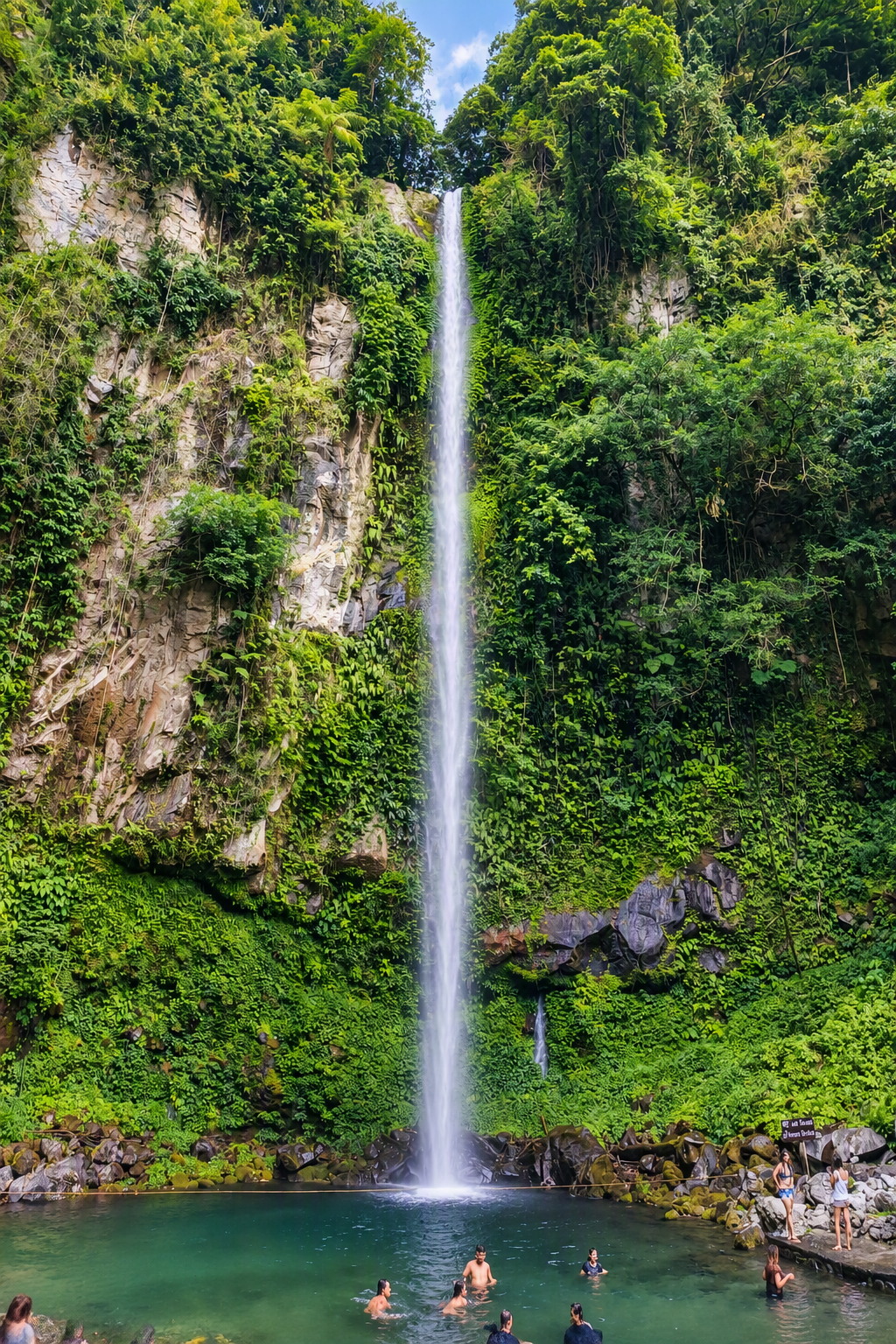
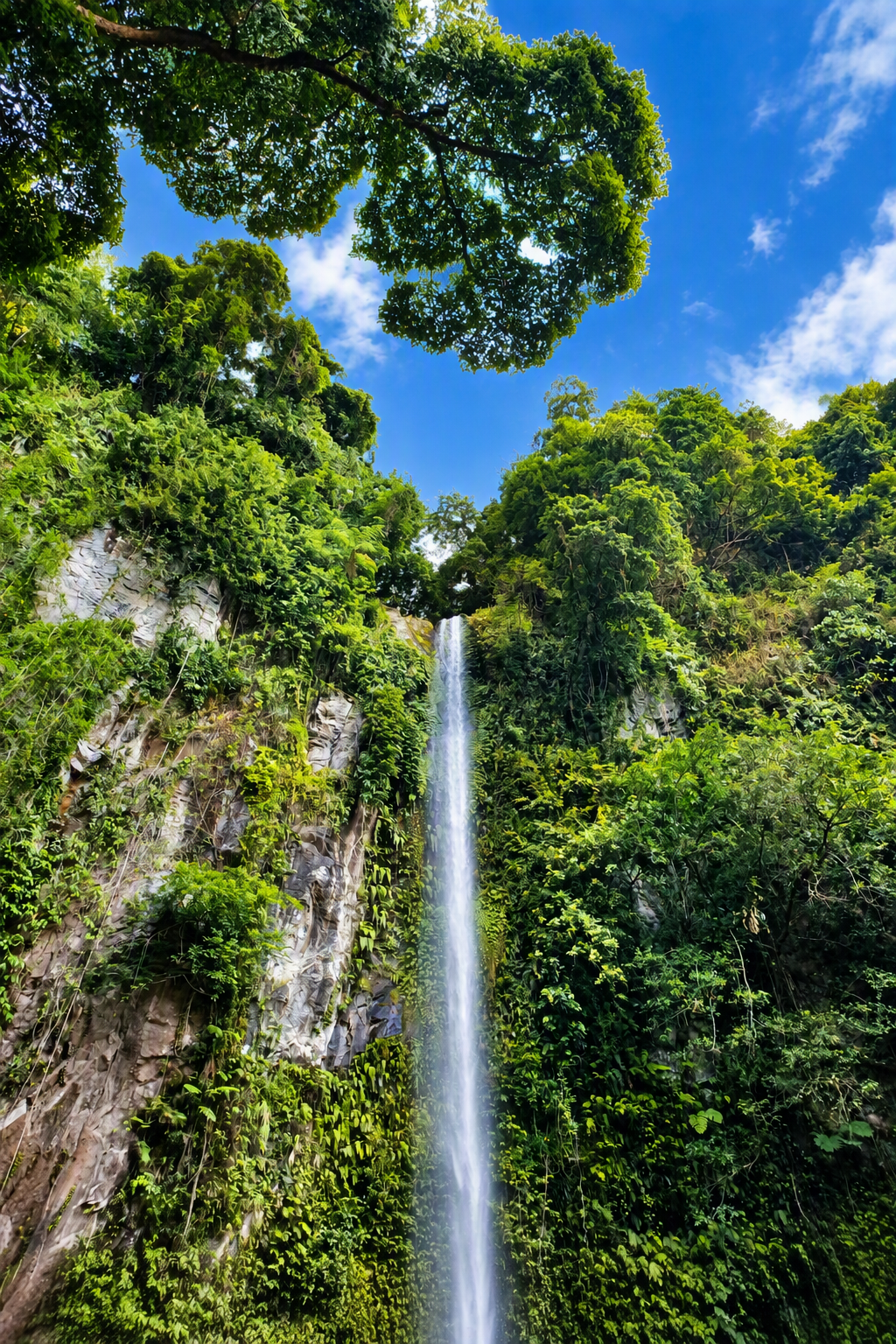
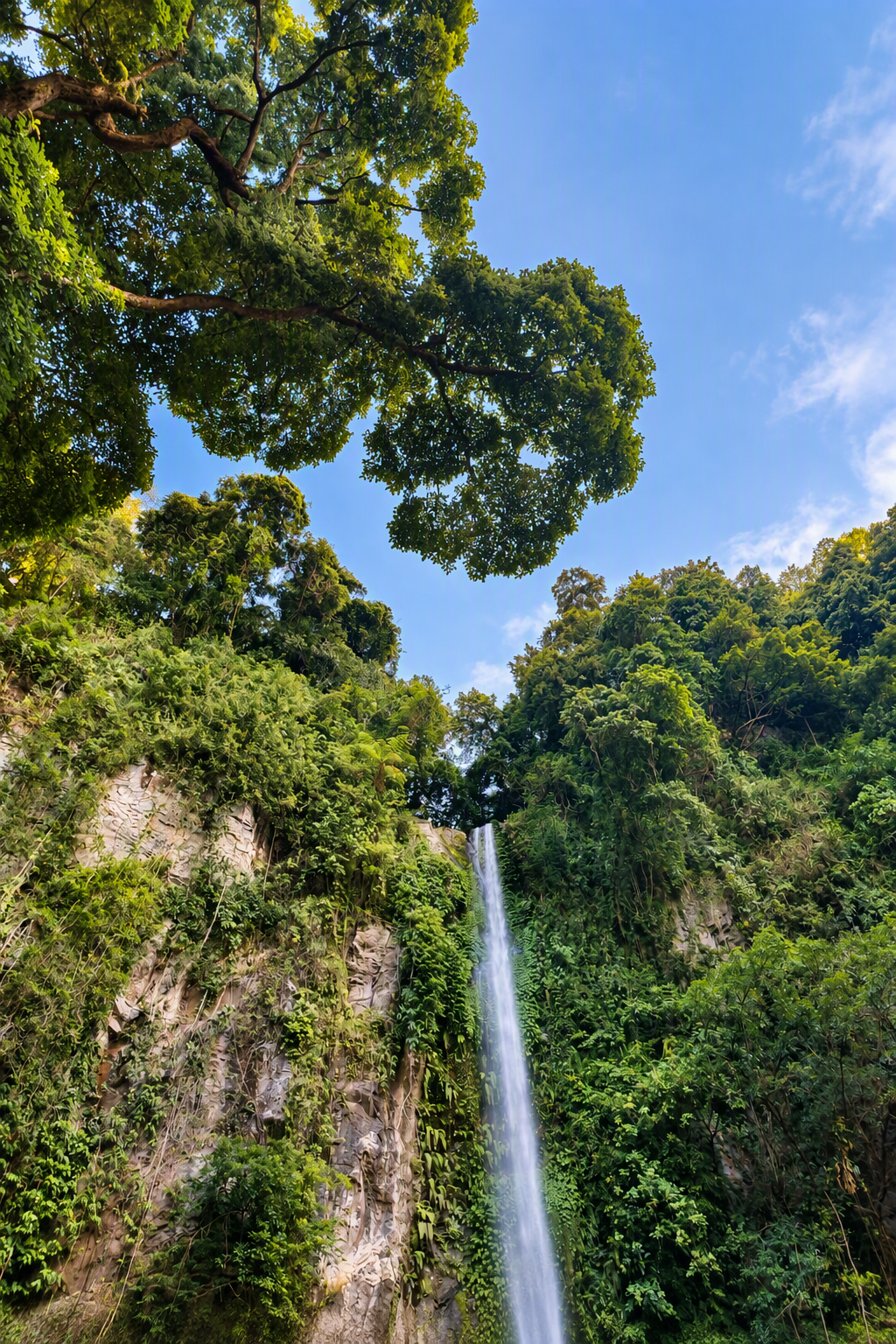
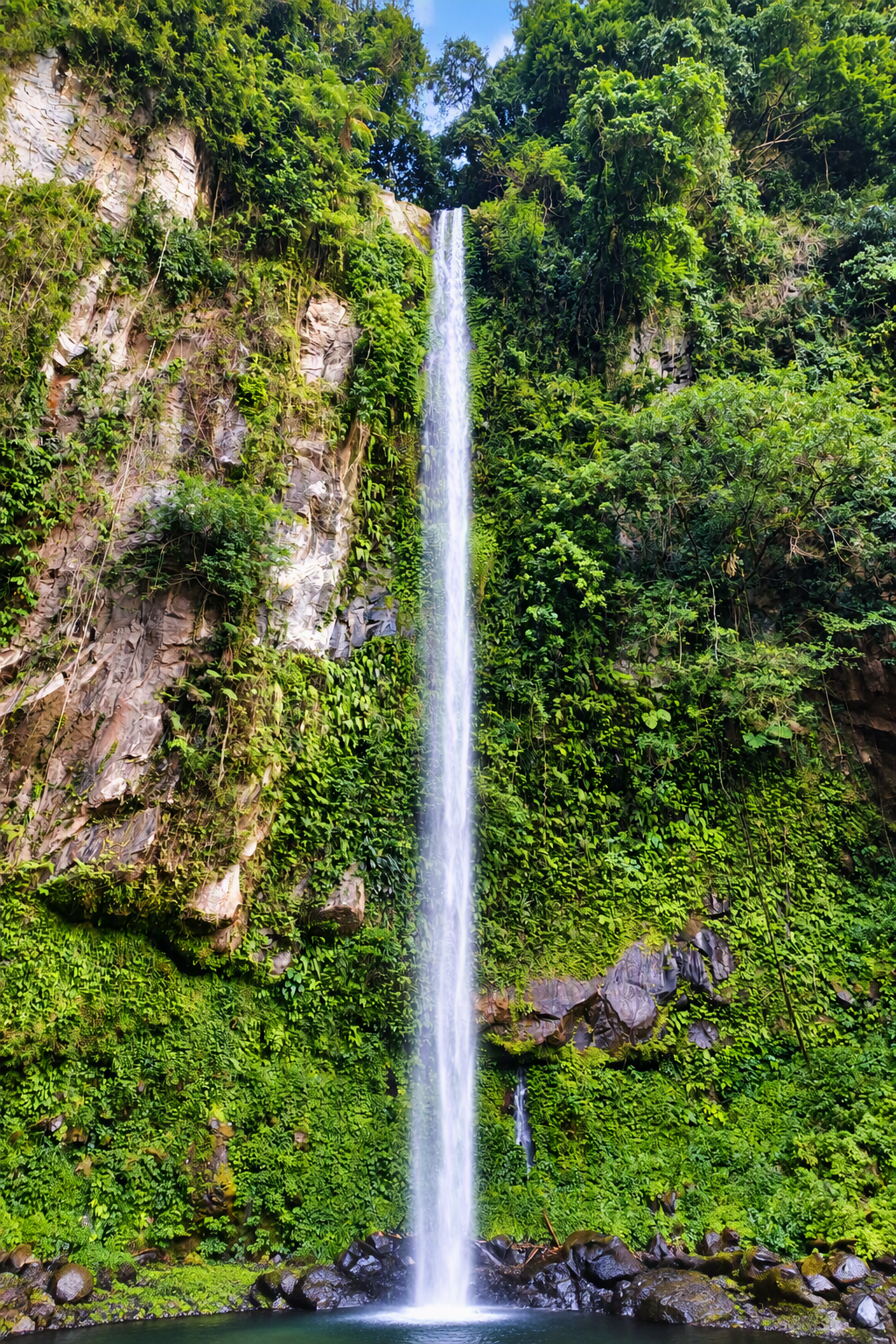
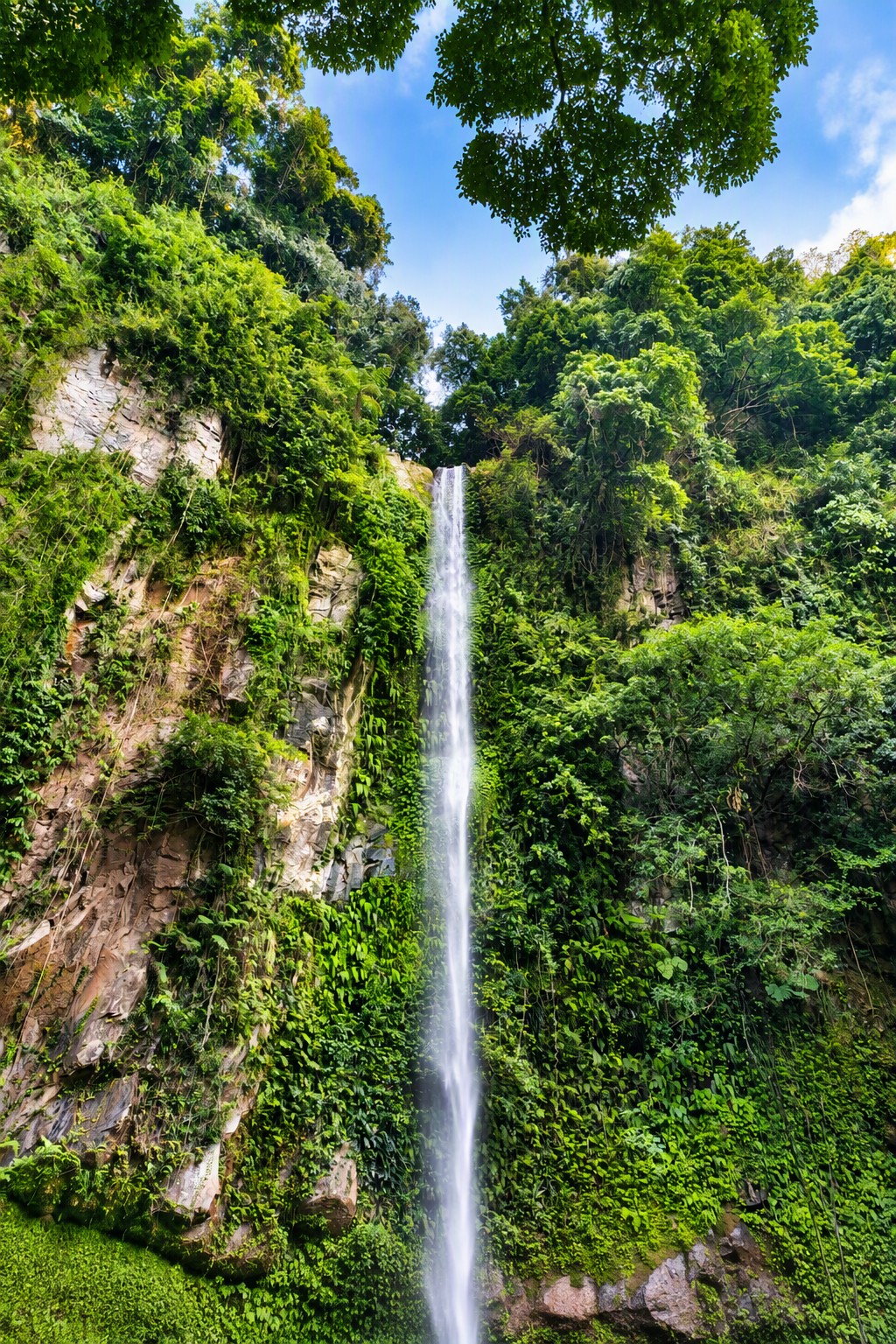
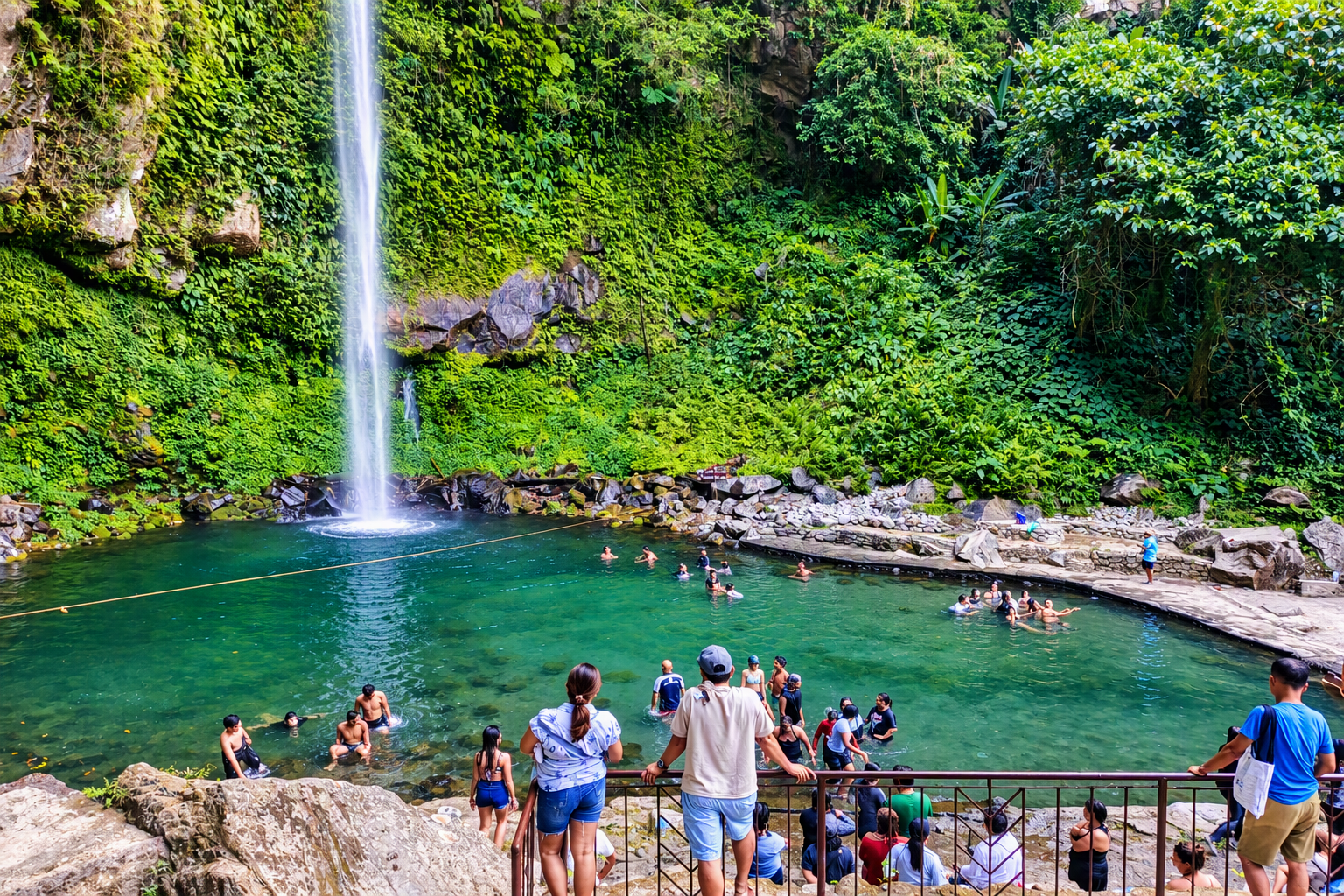
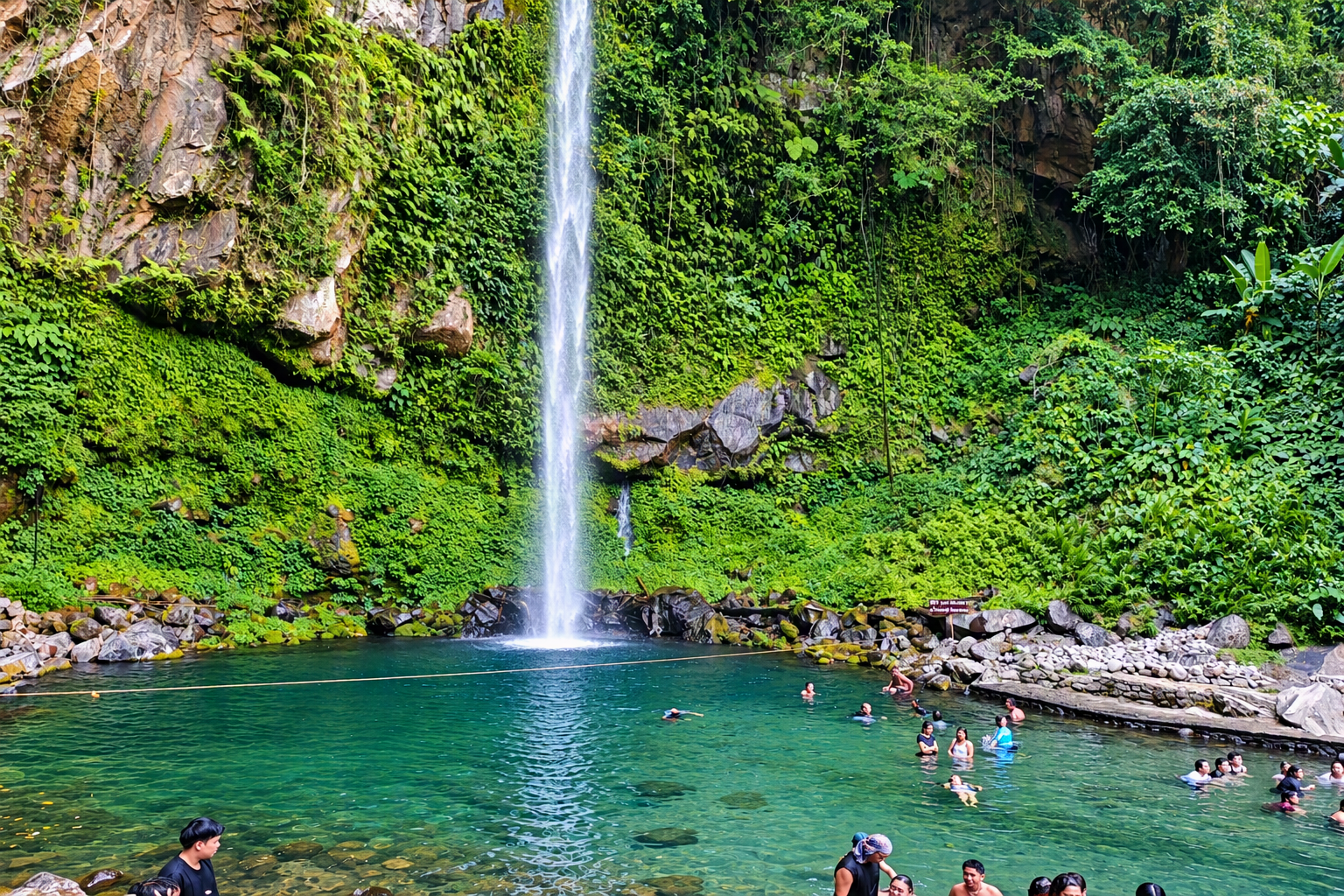
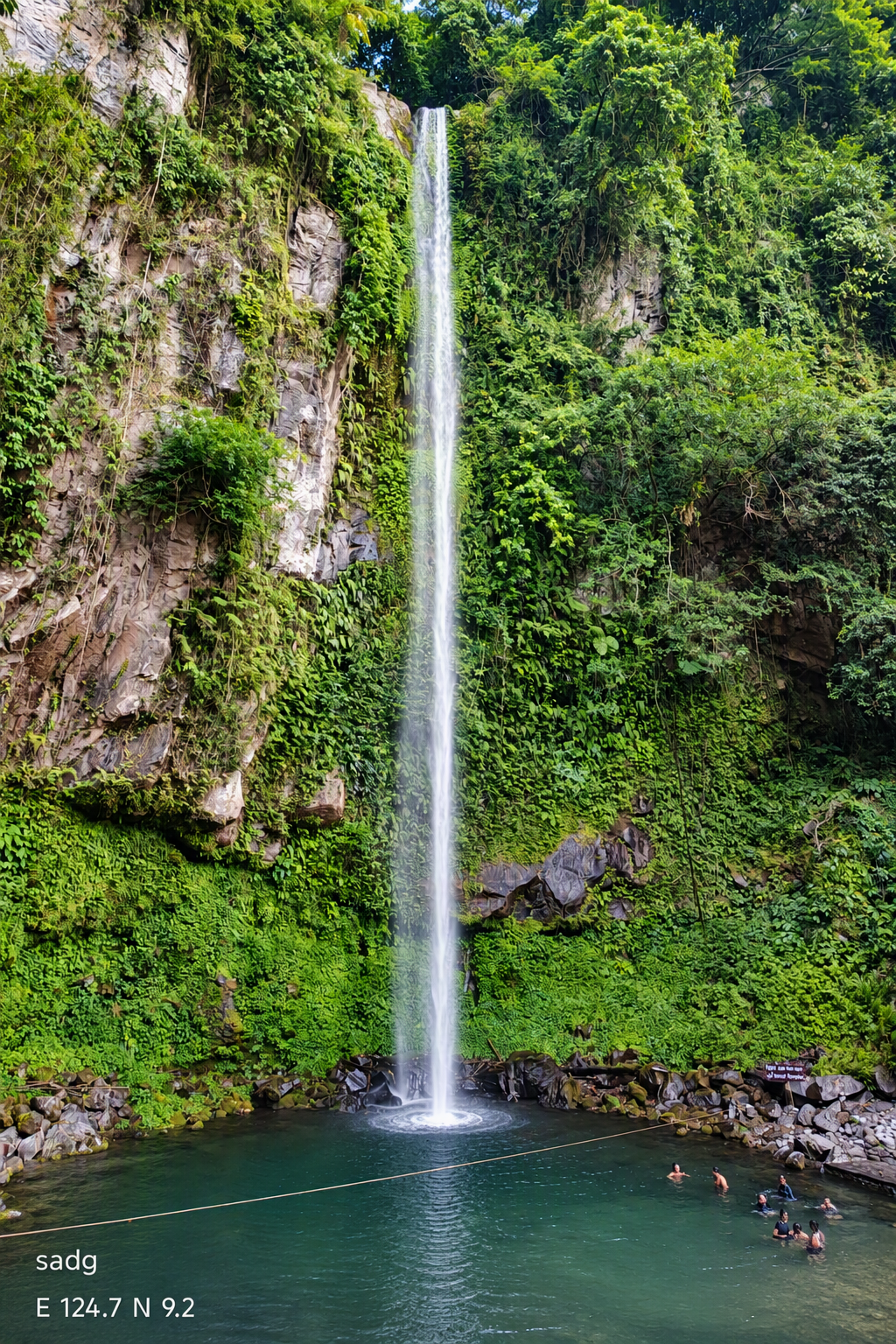
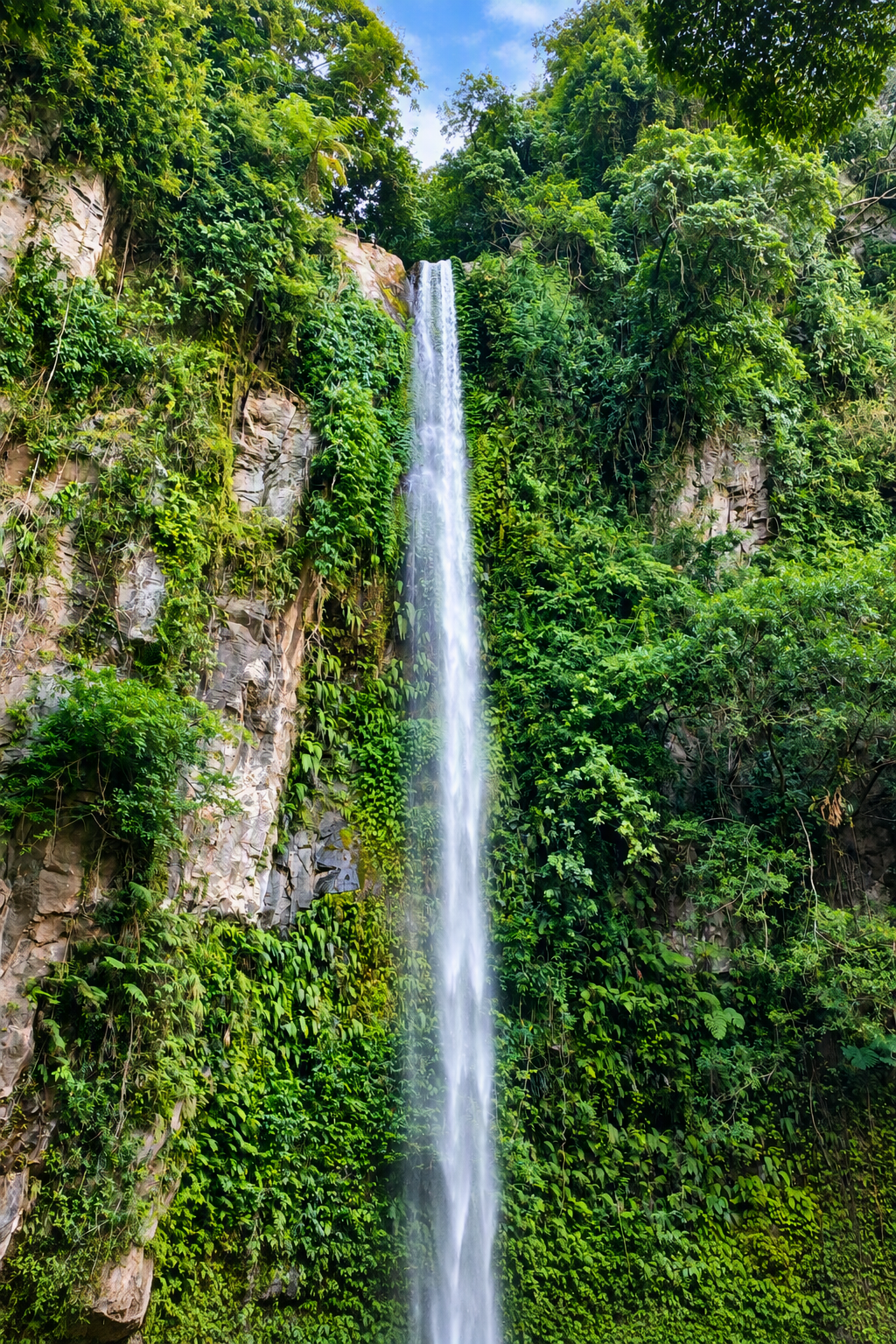
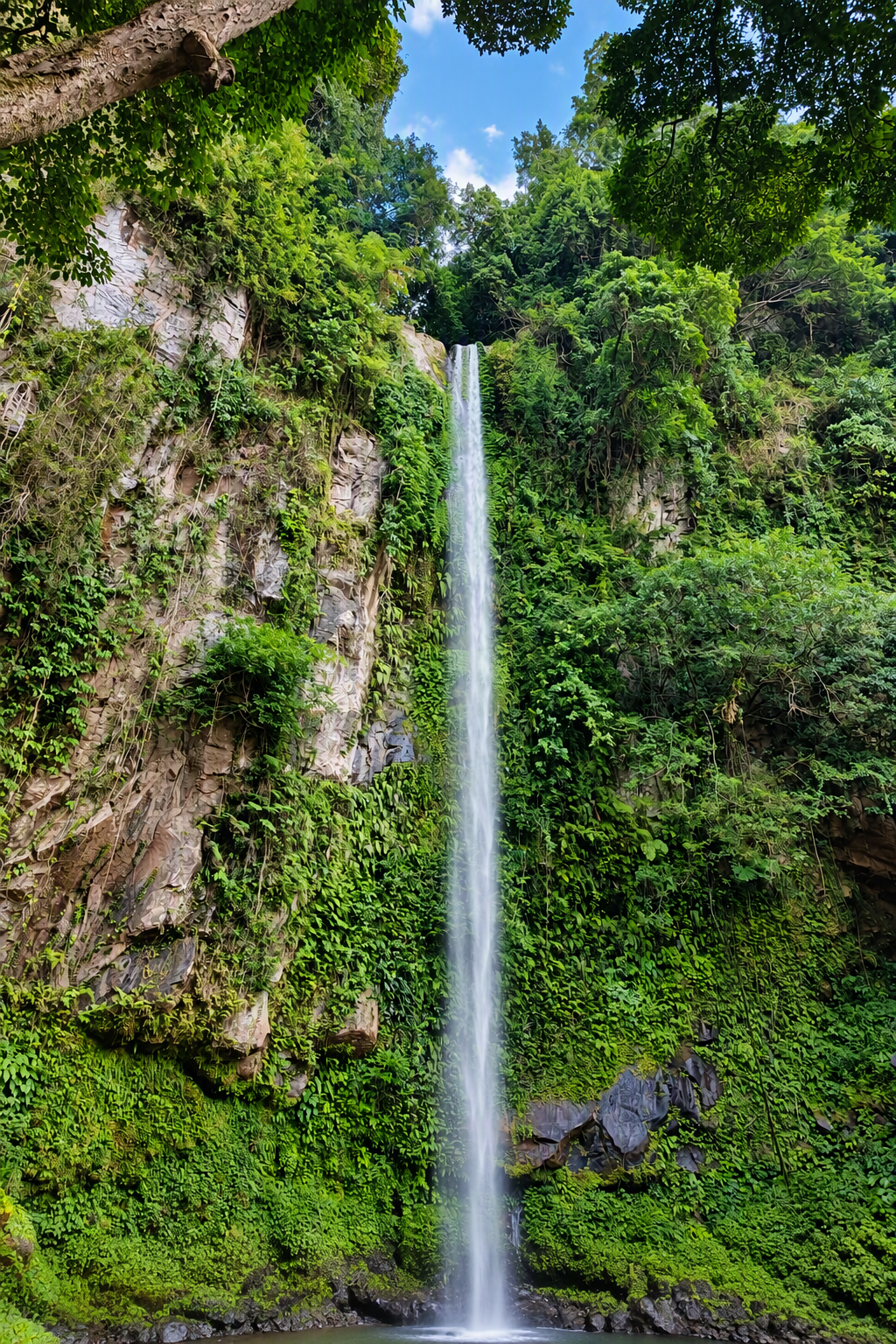
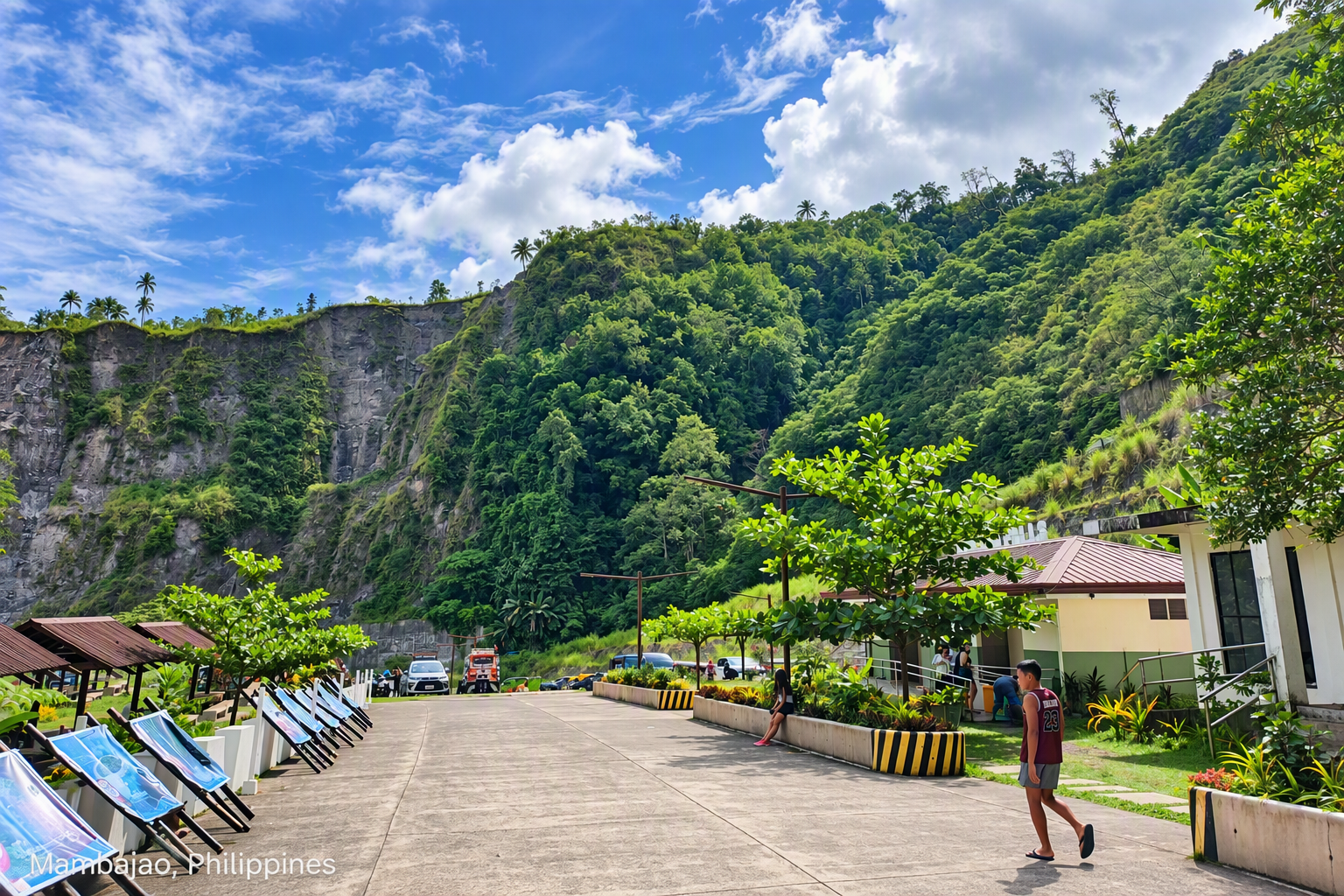
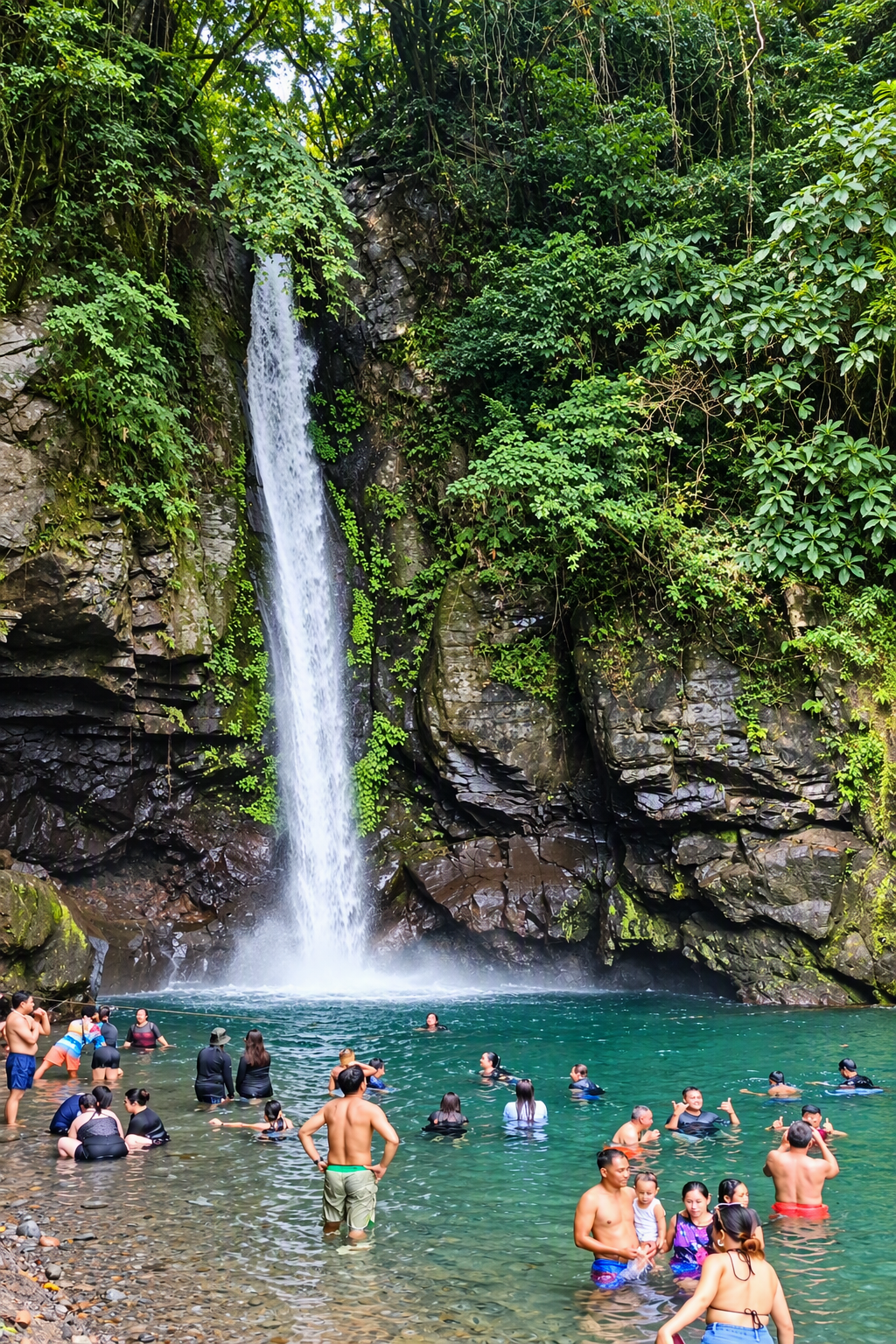
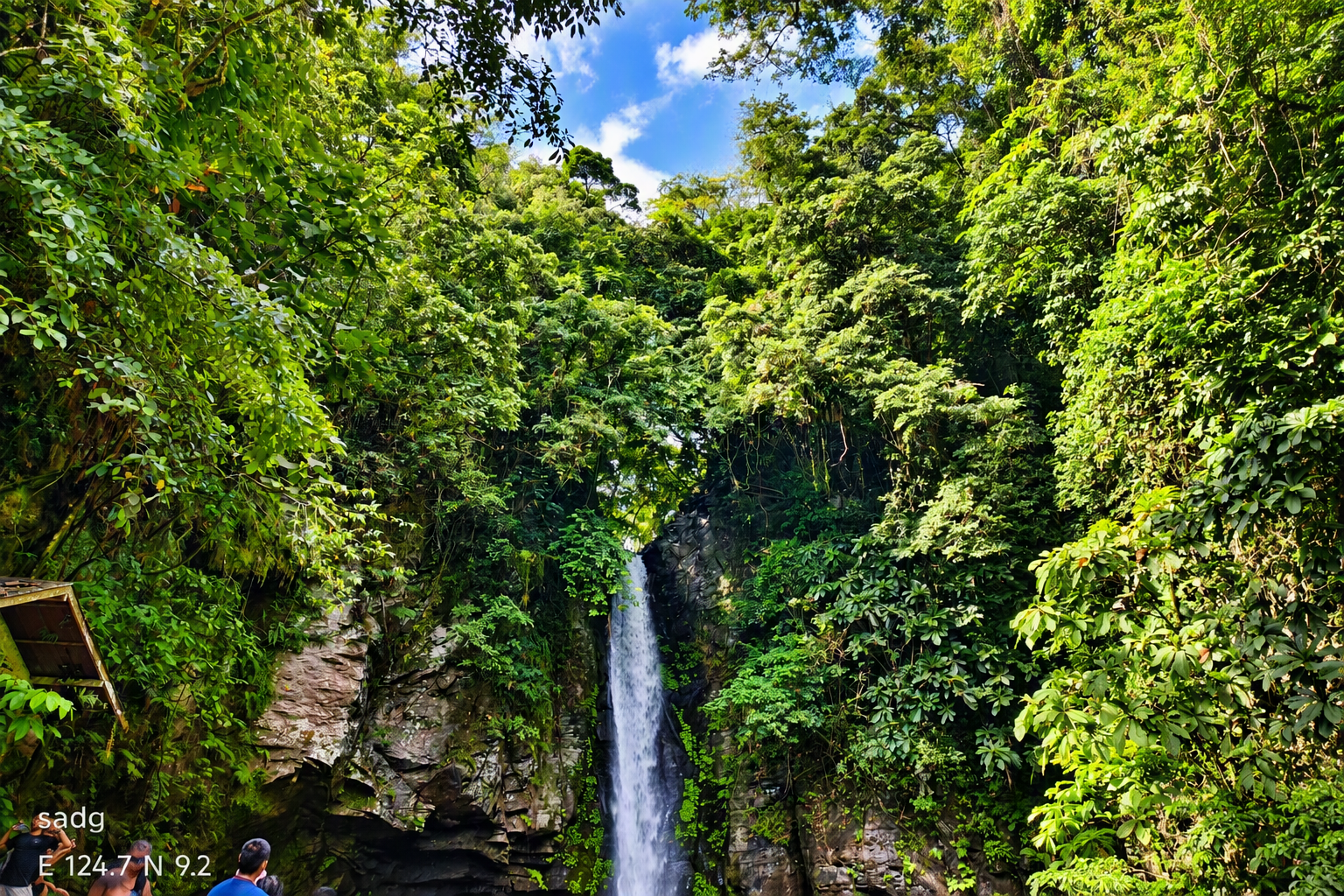
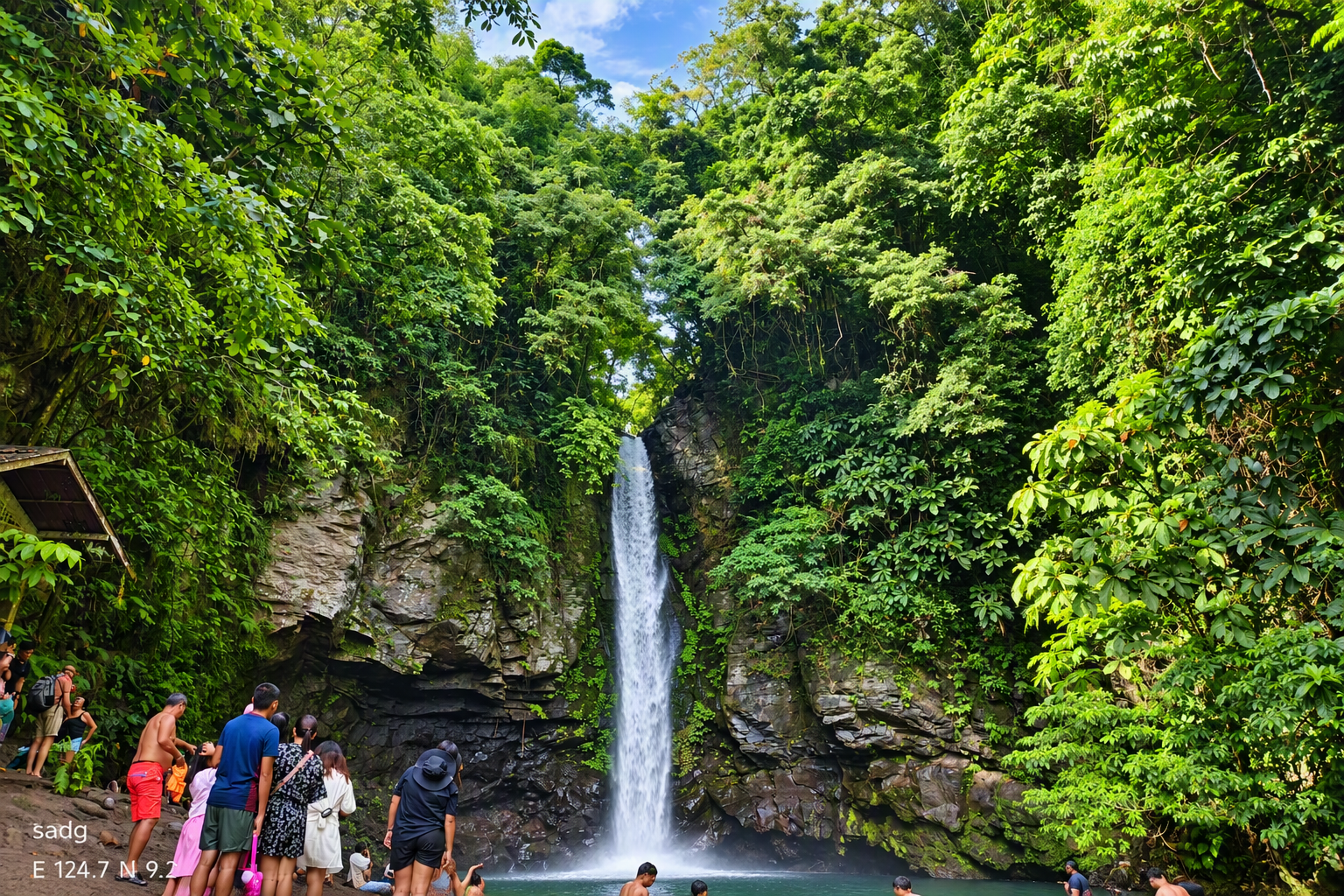
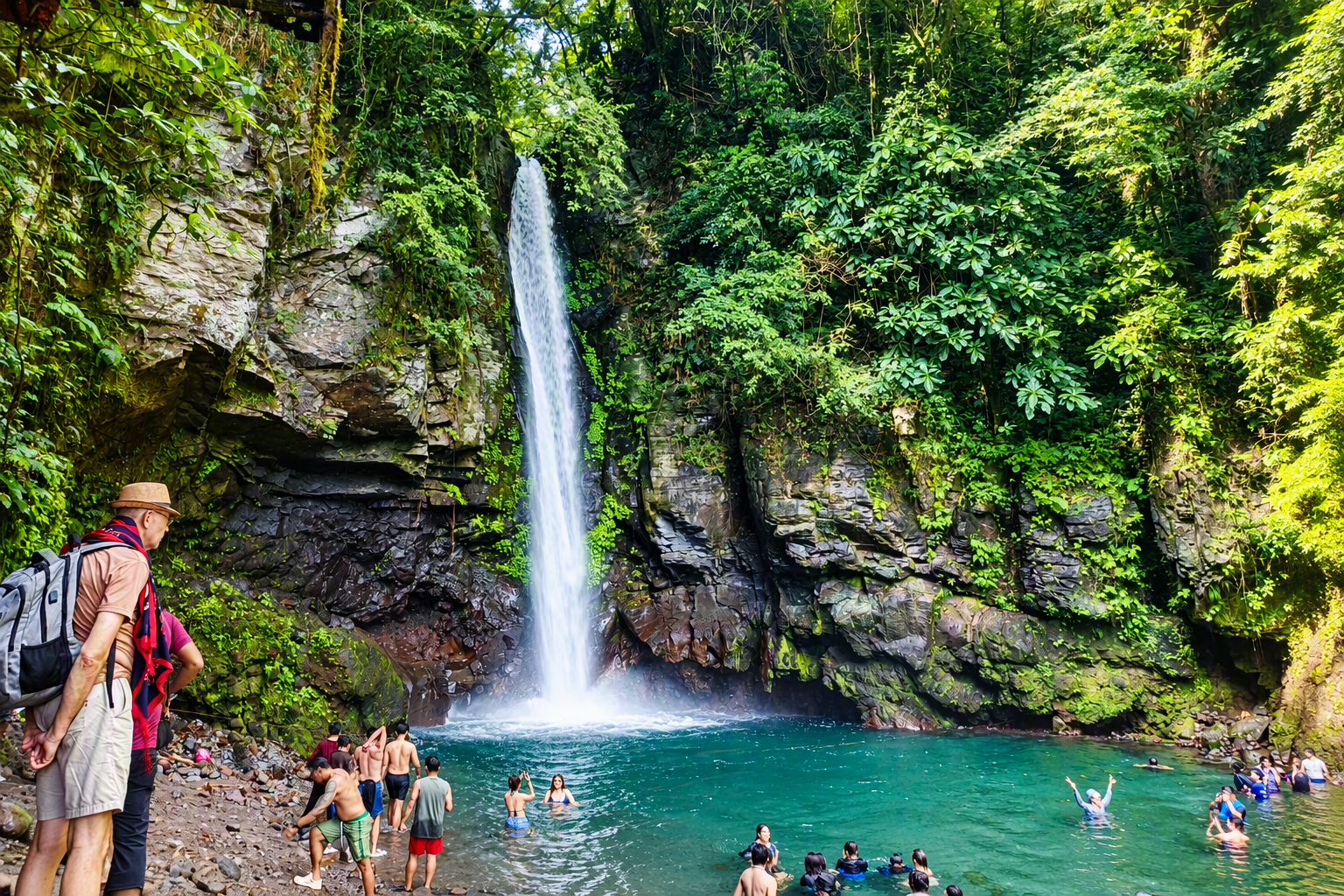
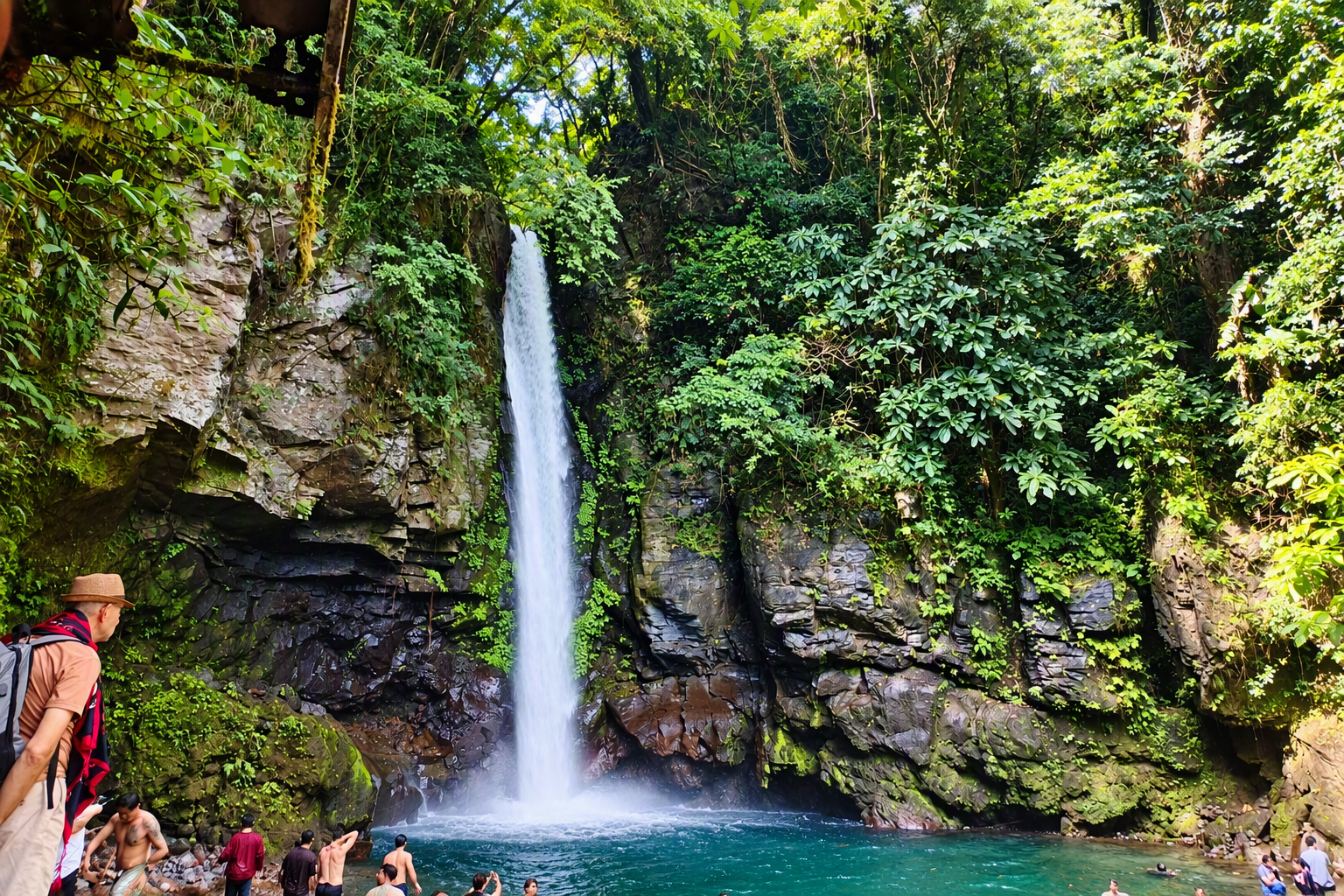
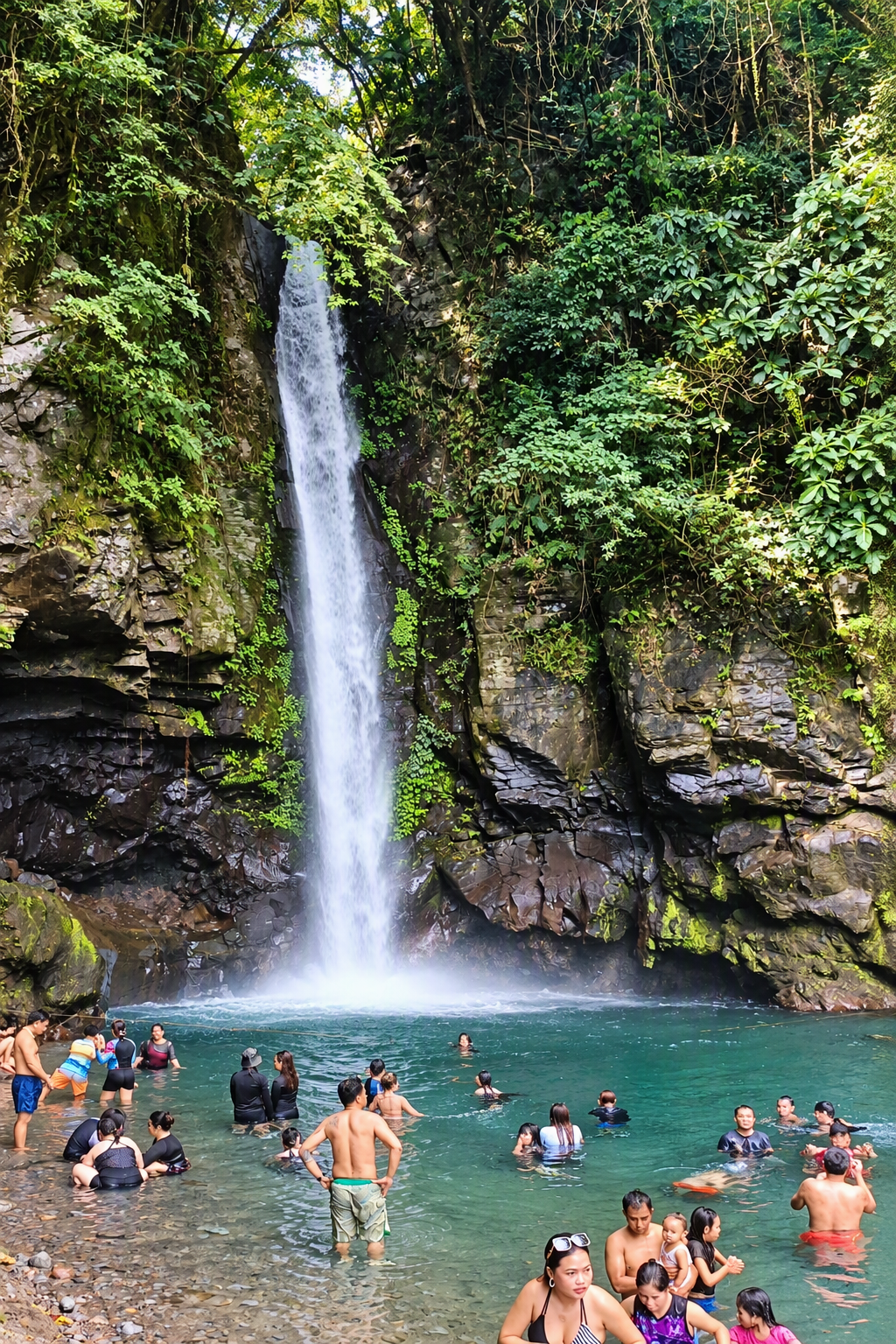
Recent visitor guides describe Katibawasan as a narrow, single-drop waterfall near Mambajao, commonly reporting a height of roughly 70 metres (about 230–250 feet). Sources also describe a pool or basin at its base and relatively developed access by steps or a marked path. This profile aligns with the visual impression in the author’s field photographs: the eye is pulled upward by a concentrated vertical ribbon of water and by the enclosing greenery.
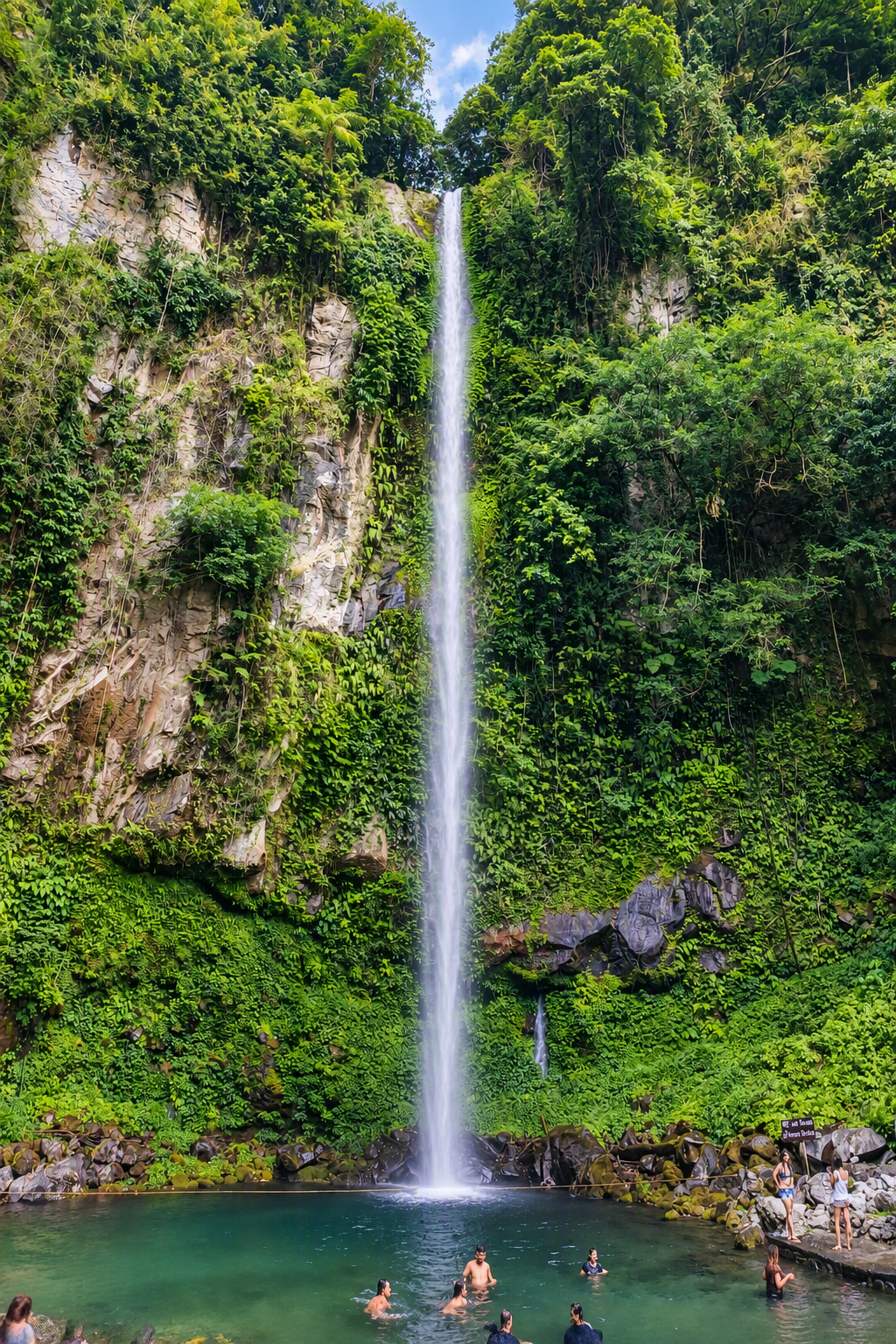
As a visitor landscape, Katibawasan’s strength is legibility: the fall reads immediately as a single vertical feature. Its height concentrates attention on scale, cliff face and the relationship between falling water and the basin below. For team travel, this kind of setting also lends itself to shared viewing and photography without requiring the article to assume that every visitor experiences the site in the same way.
4. Tuasan Falls: A Broader, Rock-Dominated Cascade
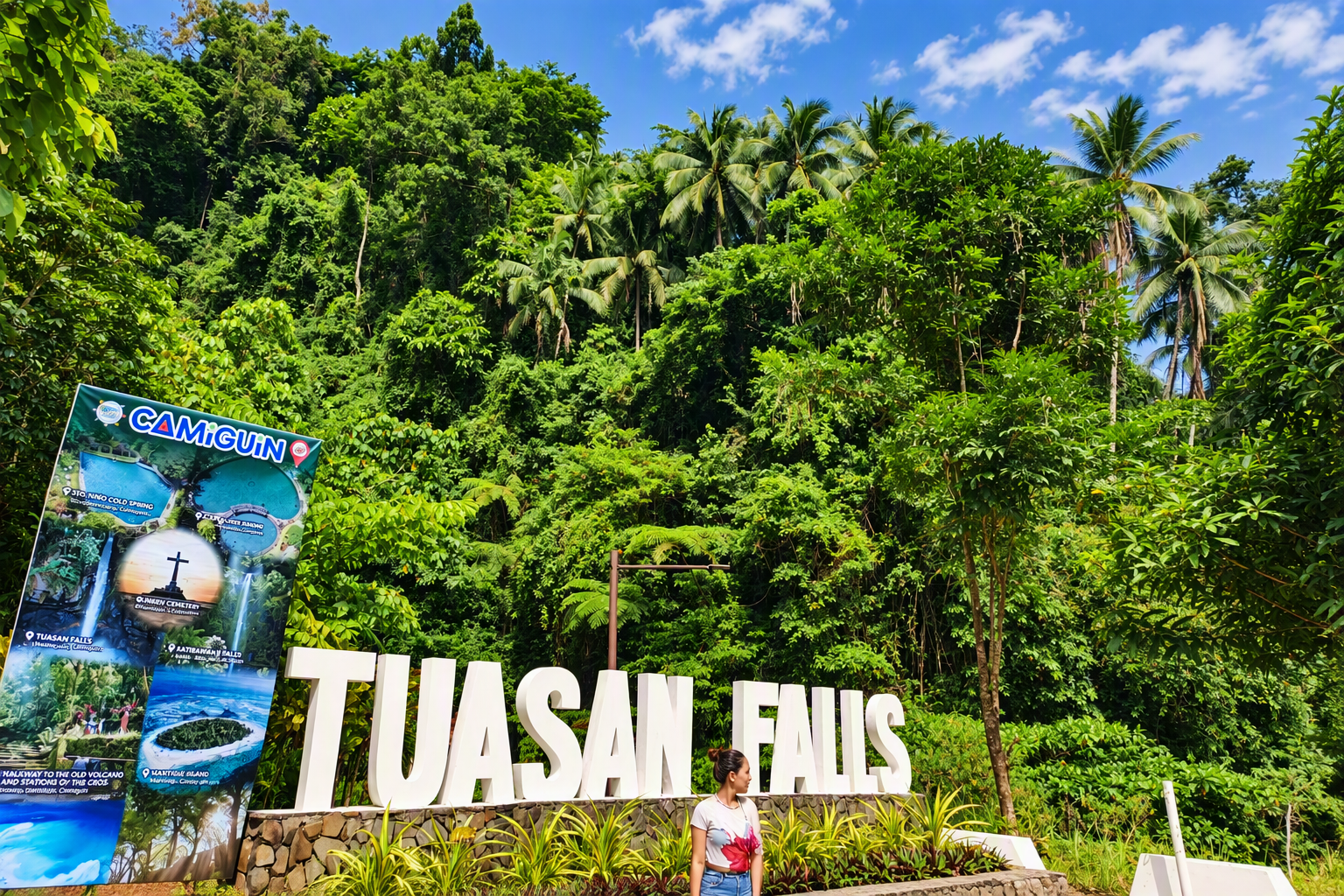
Published descriptions place Tuasan Falls in Catarman and commonly describe a roughly 20-metre cascade with a natural pool. A 2026 comparative guide characterizes it as wider and lower than Katibawasan. The contrast is important: Tuasan’s visual identity is less about a long vertical drop and more about water spreading across and around rock, producing a denser cascade at closer scale.
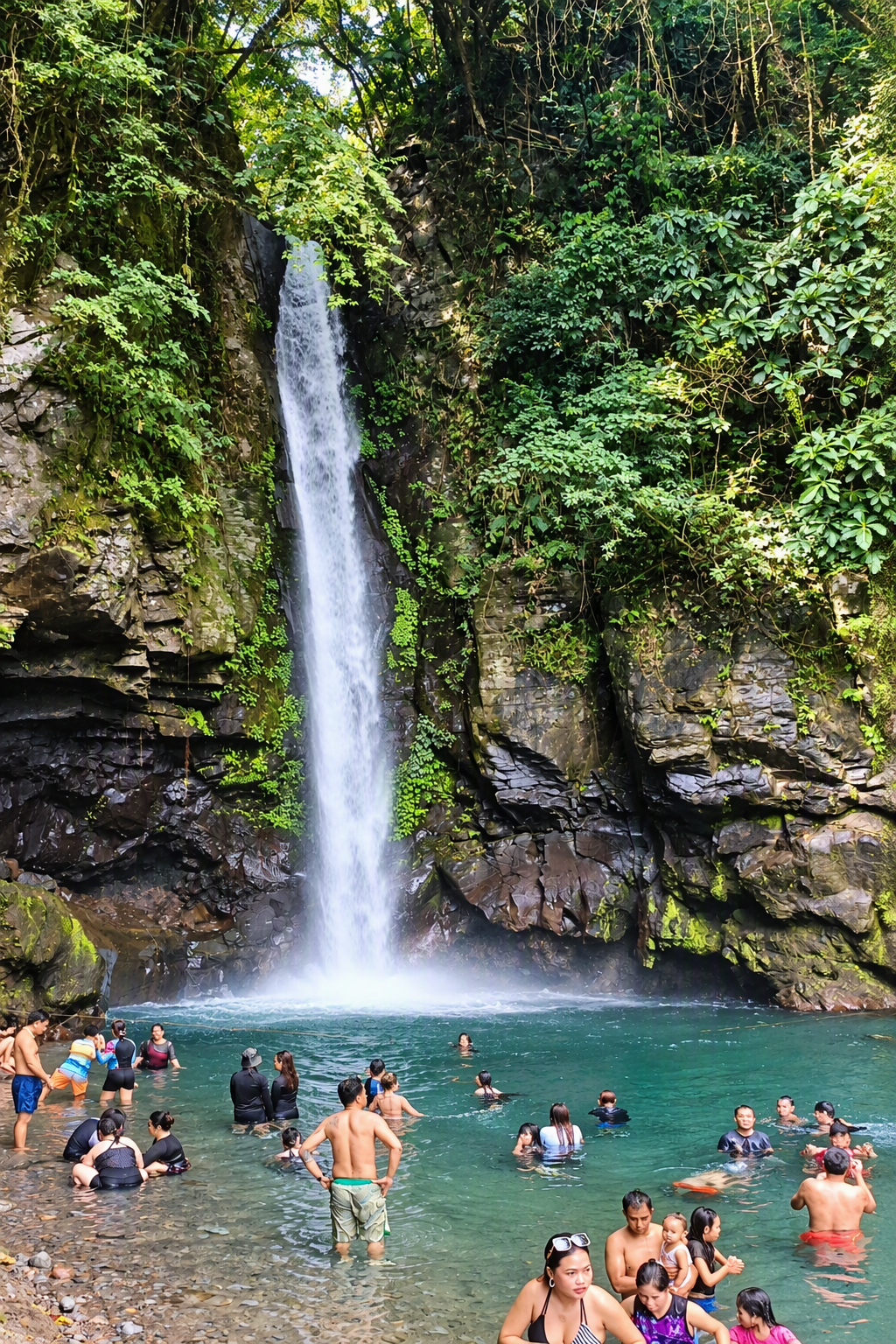
This difference changes the comparative reading of the landscape. Katibawasan emphasizes height and a continuous drop; Tuasan emphasizes breadth, rock texture and the immediate energy of cascading water. Neither characteristic is inherently superior. They serve different expectations and demonstrate why a two-site itinerary can be more informative than visiting only one waterfall.
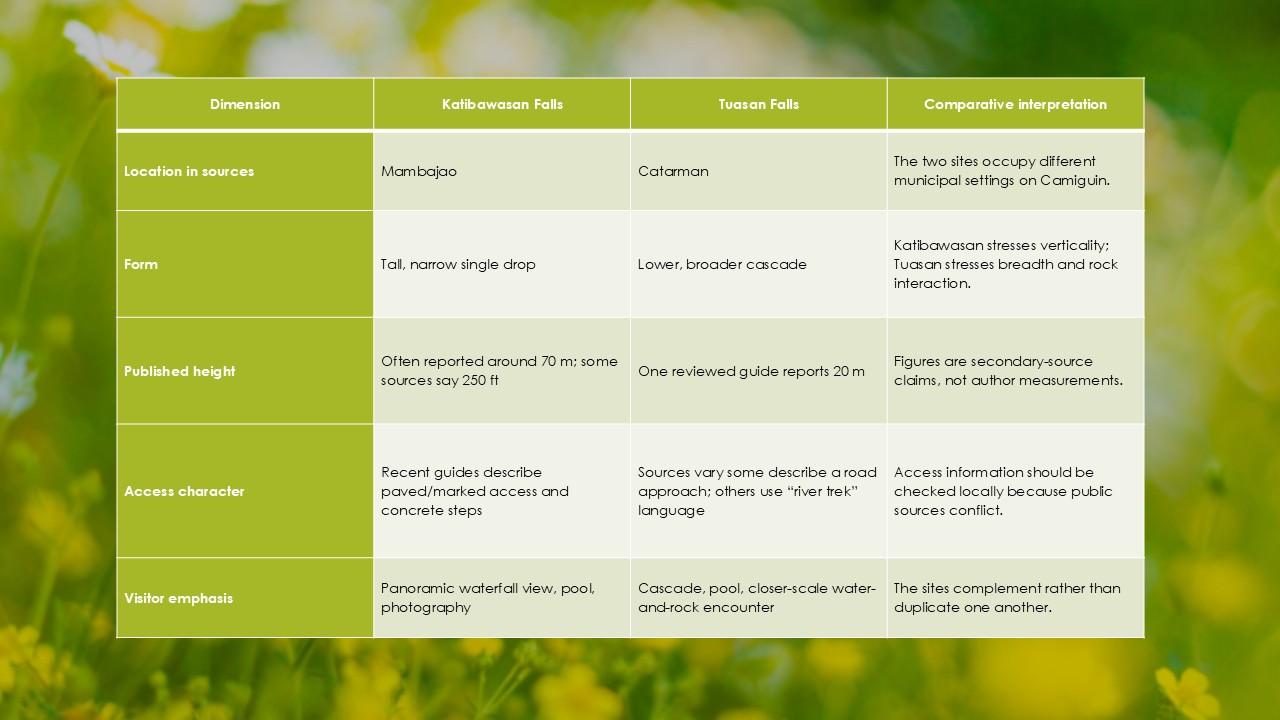
5. Comparative Findings
6. Review of Related Literature
The available literature is primarily tourism and travel writing rather than peer-reviewed waterfall science. Even so, several converging descriptions are useful for a cautious comparative account. Philippines Compass describes Katibawasan as a roughly 70–75 metre single drop with a forested amphitheater and a shallow basin, while noting stairs and the need to verify variable fee information. Philippine Travels similarly reports a 250-foot drop and describes built visitor facilities and stairs. Jonny Melon’s 2026 guide also places Katibawasan in Mambajao and describes a narrow stream descending into a catch basin.
For Tuasan, PH Tour Guide places the falls in Catarman and reports a 20-metre cascade into a pool. Txaleta de Camiguin’s 2026 comparison is especially useful because it treats the two waterfalls together, contrasting Katibawasan’s tall, narrow form and easier access with Tuasan’s wider, lower and rockier character. These sources broadly agree on morphological contrast, but they are not fully consistent on operational details such as entrance fees and access descriptions. Accordingly, this article uses their agreement for broad comparison while avoiding a single definitive fee or route claim.
The broader tourism literature frames Camiguin as a volcanic island landscape in which waterfalls, springs, mountains and coastal attractions coexist. A 2025 BusinessMirror travel feature likewise presents waterfalls alongside Camiguin’s volcanic and historical attractions. Those discussions help position Katibawasan and Tuasan not as isolated sights, but as elements within a wider nature-based tourism circuit. They do not, however, establish hydrological causation for the falls, and this article therefore avoids making unsupported geological-process claims.
7. Discussion: What the Comparison Reveals
7.1 Landscape character
The strongest comparative finding is morphological. Katibawasan is experienced as a vertical composition: cliff, narrow falling water and basin. Tuasan is experienced more horizontally and texturally: water, exposed rock and a wider cascade. For travel writing, this matters because the visual grammar of a place shapes how a visitor observes, photographs and remembers it.
7.2 Accessibility and destination experience
Katibawasan is consistently described in recent guides as comparatively easy to reach from Mambajao, with developed steps or paths. Tuasan access descriptions are less consistent across public sources. That conflict is itself a useful research finding: visitor articles can age quickly as roads and site management change. Travelers should therefore treat current local signage and official advice as more authoritative than older online fee or access details.
7.3 Responsible interpretation
A credible travel-research article should separate what was seen from what is assumed. The author’s photographs can support descriptions of visible form and site appearance on the visit dates, but they cannot by themselves establish annual flow patterns, ecological health or long-term tourism impacts. Future comparative work could strengthen this study with repeat visits in different seasons, measured visitor counts, structured interviews with local tourism managers and basic environmental observations using a consistent field checklist.
8. Conclusion
Katibawasan Falls and Tuasan Falls are compelling precisely because they are not the same experience. The evidence reviewed here portrays Katibawasan as the taller, narrower and more immediately monumental waterfall near Mambajao, while Tuasan in Catarman presents a lower, broader and rockier cascade. For our June 2026 team-building journey, visiting the sites on successive days offered a natural comparative framework: one destination foregrounded vertical scale; the other foregrounded the force and texture of cascading water at closer range.
The comparison also demonstrates a broader lesson for travel research. A destination becomes more meaningful when personal observation is tested against external evidence and when differences between sources are made visible rather than smoothed over. Camiguin’s waterfalls invite admiration, but they also reward careful observation. Seen together, Katibawasan and Tuasan form a paired study in contrast, each sharpening appreciation of the other.
References
Author field notes and photographs. (2026). Katibawasan Falls and Tuasan Falls, Camiguin Island, 12–14 June 2026. Unpublished primary material.
BusinessMirror. (2025, June 21). “Fiery but cool | Exploring the rustic landscape of Camiguin.” https://businessmirror.com.ph/2025/06/21/fiery-but-cool-exploring-the-rustic-landscape-of-camiguin/
Jonny Melon. (2026, February 4). “Katibawasan Falls in Camiguin: Complete Visitors Guide.” https://www.jonnymelon.com/katibawasan-falls-in-camiguin/
Philippine Travels. (2026, April 23). “Katibawasan Falls – Guide to Camiguin’s Tallest Waterfall.” https://philippinetravels.ph/katibawasan-falls/
Philippines Compass. (2026, July 22). “Katibawasan Falls Guide — Day Trip from Mambajao.” https://www.philippinescompass.com/katibawasan-falls-day-trip-guide-mambajao-camiguin/
PH Tour Guide. (2024, April 5). “Exploring the Cascading Wonders of Camiguin: Tuasan Falls and Beyond.” https://www.phtourguide.com/exploring-the-cascading-wonders-of-camiguin-tuasan-falls-and-beyond/
Txaleta de Camiguin. (2026, August). “Camiguin’s Waterfalls: Katibawasan and Tuasan.” https://www.txaletadecamiguin.com/guides/camiguin-waterfalls
Appendix A. Complete Photographic Field Record
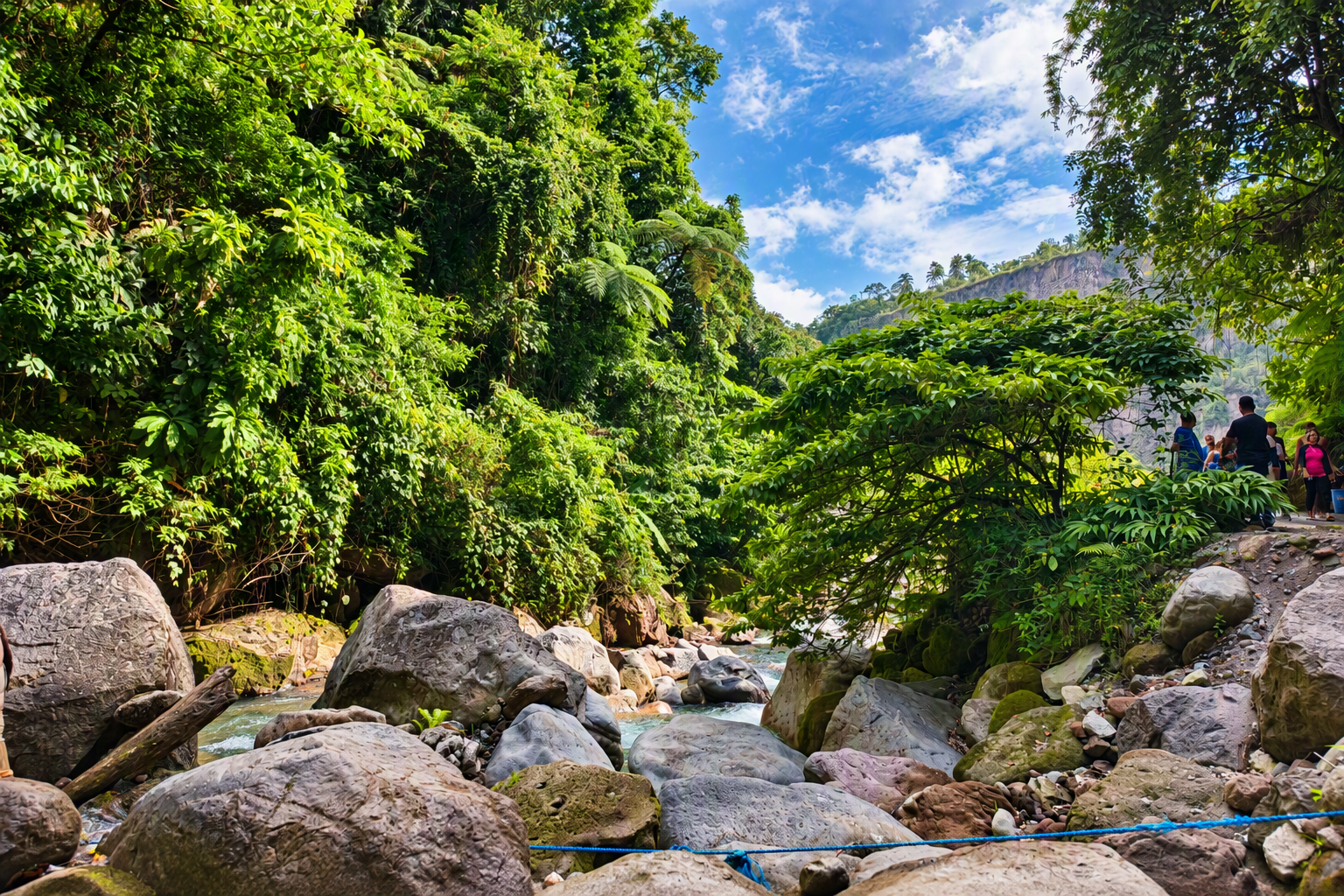
All 19 photographs supplied in the original field-notes document are reproduced below. The captions describe visible site features only; the photographs remain primary field documentation from the June 2026 visit.
Source and Citation Note
This article uses the author’s original notes and photographs as primary field material and publicly available travel sources as secondary references. Published visitor fees, access conditions and site descriptions can change. Where external sources conflict, the text identifies the uncertainty rather than selecting an unsupported “correct” value. Photographs remain the property of their original author unless separately licensed or assigned.
About the Creator
Domingo Añasco-Gaces Samontina, Jr.
.Professional Member of the Mechatronics and Robotics Society of the Philippines
.Certified Documented Information Controller with TUV Rheinland Qualifications
.Master of Science in Engineering (on-going) with Professional Teacher Certificate
Enjoyed the story? Support the Creator.
Subscribe for free to receive all their stories in your feed.
Comments
There are no comments for this story
Be the first to respond and start the conversation.