
Three Numbers, Two Slots: What eSIM Fixed and What It Didn't
I moved my main number to eSIM before a trip to Vladivostok. The SIM tray stayed shut, the work number stayed online, and the ejector pin stayed in the drawer. The carrier rules, the overseas data limits, and who this is worth for.
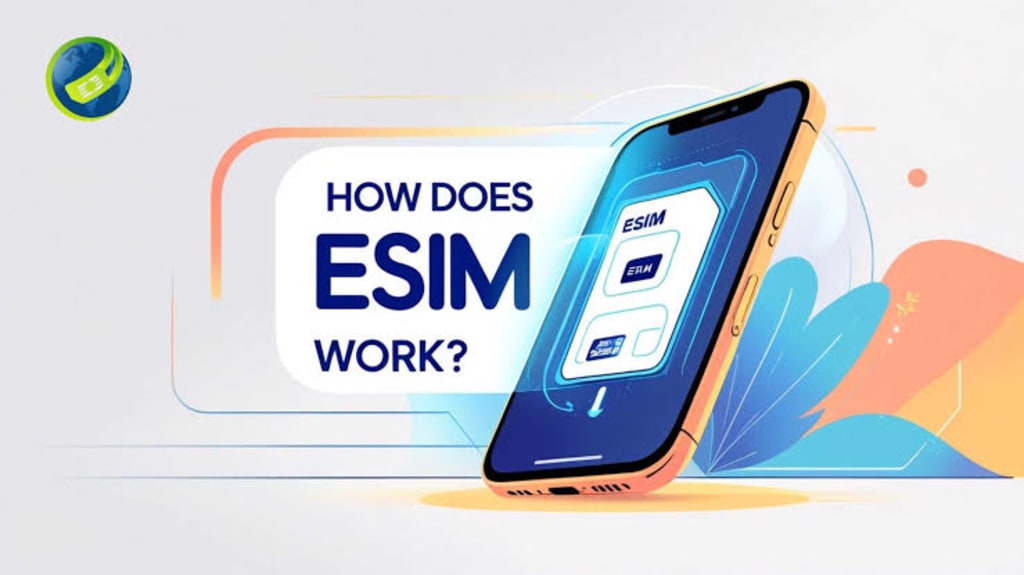
The day I switched phones, I opened the box, scanned a code, waited a few minutes, and the number was written into the phone. No SIM tray. No ejector pin. After more than twenty years of using mobile phones, this was the first time a phone switch did not involve that little plastic card.
The pin is gone, and I have no plans to look for it.
eSIM is not a smaller card. It splits two things apart.
Many people think eSIM means making the SIM card smaller until it disappears. That is not it.
What eSIM does is split the "number" from the "card." Before, the number lived on the card. You inserted the card, and the phone knew who you were. Now the number lives on a secure chip inside the phone, and the carrier writes the communication data remotely. The card still exists. It is just no longer in your hand.
One misunderstanding to clear up first: expect no speed boost and no extra data from eSIM. It changes how a number gets into the phone. The network runs the same way. China Unicom keeps saying this in its marketing, and I think that expectation management matters.
Three numbers, two slots: nothing fits comfortably.
I have three numbers. My main number has been with me for over twenty years and is tied to bank cards and all kinds of accounts. My work number is tied to my work WeChat, where clients and colleagues reach me. And before a recent trip to Vladivostok, I needed cheap overseas data. Three numbers, two slots. Any arrangement felt awkward.
My solution: move the main number to eSIM and free up a slot; keep the work number on a physical SIM; run both online at the same time. I also turned on the watch's one-number-two-devices feature, so I can take calls on a run without carrying my phone. It is free for the first six months, then RMB 10 per month.
In daily use, the main benefit is not needing multiple cards for multiple numbers. Before, every extra number meant another piece of plastic to track: where it was inserted, whether it would get lost, how to migrate it when switching phones. Now the main number sits in the chip. The slot goes to the work number. Overseas data is written into eSIM temporarily. Three things, each in its own place.
But there is a rule I took a while to understand: one phone can have at most two active eSIM numbers, counted across carriers. China Mobile, China Telecom, and China Unicom together count toward two. Each calendar month allows at most two new activations. You can store more than one, but the number of simultaneously active ones has a cap. The cap is a carrier-level rule; phone makers have no say.
Learn the rules first: two active, two per month, one ID five numbers.
If you are planning to sign up, remember these points first.
One phone can have at most two active eSIM numbers. The cap applies across China Mobile, China Telecom, and China Unicom combined. Each calendar month allows at most two new activations. A phone eSIM standalone number counts toward the "one ID, five numbers" cap; a watch one-number-two-devices line does not.
Deleting an eSIM in the phone settings leaves the account open. The number is still there, and the charges still apply. To cancel, you have to go through the carrier's formal process.
eSIM is not a one-way ticket. Eligible numbers can be converted back to a physical SIM through the replacement-card process.
"Supports eSIM technology" does not mean "can use a mainland China carrier's eSIM." Overseas editions and gray-market phones may have the hardware, but the profile may not be installable. Confirm before buying.
A rule scheduled for September 27, 2026 would require terminals to meet a new security standard before activating new eSIM lines. Some early models may not be able to sign up once that date arrives. Lines already in use are not affected. Confirm the details with the carrier store before signing up. The date is scheduled; I would not assume it is already in force.
The Vladivostok trip: the first time I felt the difference.
Before, going abroad meant three options. Buy a local SIM: cheap, but a short trip does not leave time to finish the process. Turn on roaming: easiest, but most expensive. Carry a portable Wi-Fi device: workable, but it adds another device to charge and keep track of.
This time, my physical SIM stayed untouched. The overseas data was written into the phone as eSIM. The SIM tray did not move. After landing, I turned the phone on and data worked. My mainland number stayed online, and colleagues and clients could still reach me. Doing all of that at the same time used to be awkward.
Back at the hotel, while the phone charged, I turned it over. The SIM tray cover was still flush. It had never been opened.
After I got back, the first thing I did was add another domestic data line. I added it because moving the main number to eSIM made the slot and number combinations flexible. The price was a bonus.
Overseas eSIM has limits too.
Data only, no voice or SMS. No hotspot sharing. It can only be downloaded and installed abroad. After you receive it, it must be activated within 365 days. After the data package is activated, it must be used within the 7/10/15-day window; after that it expires. After the data cap, speeds are throttled.
So it fits the scenario where you want data as soon as you land and your mainland number needs to stay online. Treat it as a data add-on. For a full overseas phone line, you need another solution. If you need to receive local calls, get SMS, or share a hotspot with travel companions, plan for that separately.
What China Unicom offers.
On licenses, China Unicom moved fastest in the early commercial stage of phone eSIM. It was the earliest to hold all four types: wearables, IoT terminals, tablets and laptops, and phones. China Mobile and China Telecom are also pushing forward; China Unicom currently has broader coverage and more experience in phone eSIM. This statement needs a time qualifier because all three are moving.
On models, China Unicom supports all brands and all models of eSIM phones that have obtained network access licenses. Apple, Huawei, OPPO, Honor, Samsung, vivo, and Lenovo are all fine. No brand lock, no purchase-channel lock. For overseas editions and gray-market phones, confirm before buying.
Right now, China Unicom eSIM can only be handled offline: bring the phone and ID card to a China Unicom store. Real-name verification, data download, and activation test happen in one visit. In the China Unicom app, go to "Services → eSIM Zone → eSIM Phone Card → eSIM Application Queue Number" to check which stores can handle it. Online acceptance is not open yet. I saw a post in early October claiming China Unicom was testing online activation and a lottery. It was not an official release. If you want to sign up, go to a store.
On benefits, you can claim once within 30 calendar days after activation. For non-iPhone Air eSIM phones launched after September 1, choose one of three: 30GB overseas data, an RMB 300 international roaming voucher, or 100GB domestic data. For iPhone Air, choose one of five, with extra perks such as Ciyuan credits and flower or coffee vouchers. Which items apply depends on brand, model, and purchase channel. Ask before claiming. Overseas data is sent to a CUniqGO account, and you need to install that app abroad. The original text said "iPhone Duo"; it should be "iPhone Air." Specific benefits are subject to China Unicom's official announcement.
Pitfalls to know before you sign up.
Two things tripped me up. The first was deleting an eSIM in the phone settings. I assumed that canceled the line. It does not. The account stays open, and the charges continue until you go through the carrier's formal cancellation process. The second was the "one ID, five numbers" cap. A phone eSIM standalone number counts toward it. A watch one-number-two-devices line does not. If your name already has several numbers attached, check the count before you add another.
The other warnings are simpler. Overseas editions and gray-market phones may not accept the profile even if the hardware supports eSIM. Not every China Unicom store can handle phone eSIM, so check the queue number in the app first. For the September 2026 security-standard rule, confirm with the store before signing up.
Is it worth it?
If you are switching phones and the new phone supports eSIM, I suggest moving your main number to eSIM while you are at it. The reason is practical: it removes the most fiddly link in changing numbers, changing phones, and going abroad. Which plastic card to remove and swap stops being part of the process.
If you are not changing phones, or you have concerns about offline handling, you do not need to make a special trip just to try it. Expect no speed boost and no extra data from eSIM. It only changes the number's carrier from a plastic card to a secure chip, and changes the sign-up process from "inserting a card" to "writing a profile."
But for someone like me, with three numbers, two slots, occasional overseas trips, and a watch one-number-two-devices line, it untangles several things that used to compete for the same space. The ejector pin stays in the drawer, the numbers sit in the chip, and nothing that should be online is missing.
New phone: go flagship. For eSIM, for now, look to China Unicom first. Whether it suits you depends on the rules and your needs. Coolness can wait.
About the Creator
Jin
Writer of reamstories
https://reamstories.com/jin
Enjoyed the story? Support the Creator.
Subscribe for free to receive all their stories in your feed. You could also become a paid subscriber, letting them know you appreciate their work.
Comments
There are no comments for this story
Be the first to respond and start the conversation.