
They Sold Their House for a Cruise Ship Home. Then Came the Seven-Hour Eviction.
A $369,000 suite, a monthly fee, and a budget that was upside down before the ship left port.
Their Cabin Was Home Until the Ledger Ran Out
I
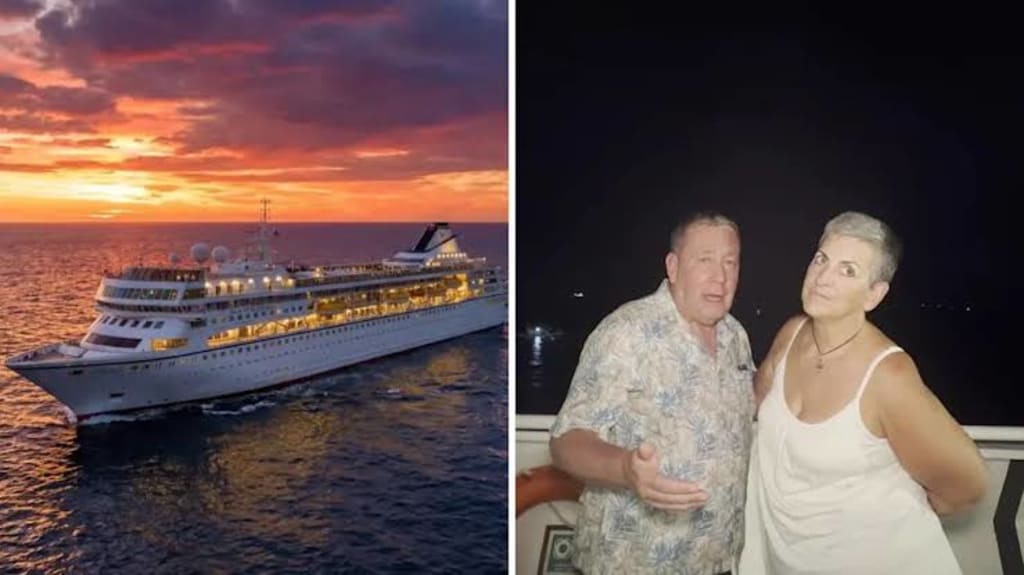
Randy Cassingham has cancer. In 2024 he and his wife Kit sold their house, sold their car, gave up almost everything they owned, and paid $369,000 for the smallest suite on the Odyssey. Monthly fees followed. They thought they were buying their later years.
Two years later, on October 27, 2026, the ship stopped at Sihanoukville, Cambodia. Residents had less than seven hours to pack and leave. Randy needed his medication, his luggage, and a new place to live with his wife. A reporter asked whether he was ready to go home. He said, “That ship is our home.”
That line did not come from an ad. It came from a cancer patient who had just been told to get off a ship. The company blamed fuel costs. It did not say when the ship would sail again.
II
Fuel costs did rise. The historical average was about $1,800 per cabin per month. In parts of Asia it reached $6,000 to $8,000. Any normal company would feel that. A project that promised at least 15 years of operation does not die from two years of oil prices. The cause sits in the budget.
The Odyssey spent about $3.1 million a month. Even at full occupancy, with every resident paid up, the revenue ceiling was $2.5 million. The blueprint carried a deficit of at least $600,000 a month. Occupancy stayed below 50% for long stretches. When the ship stopped, about 200 residents were aboard, roughly 31% occupancy. Monthly revenue was about $750,000.
$750,000 against $3.1 million. Fuel costs made the equation hit bottom sooner.
III
The company sold four products: cabin ownership plus monthly fees, segment rentals, one-time payment, and terms of one to four years. Randy and Kit chose the first. It sounded like buying a home: buy the cabin, then pay monthly fees. The purchase price and the fees together were the full cost. The “ownership” ranked behind the lender’s mortgage in bankruptcy. Before the ship stopped, 169 residents pledged more money to buy the vessel and rescue it. The lender refused to finance the deal.
The passengers held unsecured claims, not ownership. In the capital structure, they sat behind the lender.
IV
The ship had been leaking long before fuel became the final blow. It sat in Belfast for four and a half months before departure. The startup costs and lost time were on the books from the start. On board, residents pooled money to buy fuel. Crew went unpaid. Air conditioning and internet failed. The pool closed. Meals fell to cafeteria starch. At one point the ship was detained over a $167,800 fuel bill.
Those problems were evidence that the financial model had failed long before. A model that takes in a fixed $2.5 million a month and spends $3.1 million does not become viable because the ad copy is moving. The plan required near-full occupancy, full payment, stable oil prices and no surprises just to stay alive. Those conditions did not hold.
V
Large cruise companies do not sell this product. Mass-market cruises sell tickets by voyage or for short periods. Prices move with the market. When oil rises, the company raises fares on future voyages, increases onboard spending, adjusts routes, and absorbs the pressure over time. Revenue keeps flowing and can be adjusted. Risk spreads across many short-term transactions.
Lifetime living at sea works the other way. It sells a service commitment for 15 years or more at a fixed price, today, in one payment. The company gives up pricing power and the ability to pass on risk. Oil prices, labor and geopolitics land on its own balance sheet. A large company that cares about its credit rating and share price will not do that.
The World, the only residential cruise ship with a long record of financial success, took another road. Residents pay millions for apartment ownership and share operating costs. The residents are the owners. Risk is shared by all owners. No outside company guarantees a fixed price. Sustainable lifetime living at sea means the consumer joins the risk structure. That is not romantic. It is arithmetic.
VI
The Odyssey is not an isolated case. It shows the built-in flaw in a product category: long service commitments sold at a fixed price, operating costs that float, and prepayments held without escrow, insurance or asset segregation. Breach is a matter of time. It can arrive as fuel costs, a pandemic, a war, a crew strike or a supplier cutoff. The root stays the same.
These products target retirees. They package large prepayments as ownership, as a life purchase, as a lifestyle. Consumers get an unsecured right to continued service from a private company. When the company runs out of money and the lender takes the assets, that right is worth almost nothing. Randy and Kit bought a promise that ranked at the bottom of a balance sheet.
VII
A buyer can check five things without reading the ad copy. First, is revenue capped? A company that cannot raise prices as costs rise has no buffer. Second, is the occupancy assumption realistic? A plan that needs near-100% occupancy to break even will fail. Third, are prepayments segregated? The money should sit in escrow, insurance or a separate asset structure, not in an operating account. Fourth, is the ownership real? The buyer needs to know where cabin ownership ranks in bankruptcy and whether the lender holds a ship mortgage. Fifth, does the company have balance-sheet strength? A large company is not kind, but it is less likely to vanish overnight.
VIII
The breach began on the day the pricing was set. A company that sells a 15-year service commitment at a fixed price without a cost pass-through or a risk buffer is selling a ticket with an expiry date.
Randy said, “That ship is our home.” The sentence is painful. It offers no lesson by itself. The lesson sits in the books. Before signing a long prepaid contract, read the company’s ledger, not the seascape it paints. The seascape is free. The ledger is what kills you.
About the Creator
Jin
Writer of reamstories
https://reamstories.com/jin
Enjoyed the story? Support the Creator.
Subscribe for free to receive all their stories in your feed. You could also become a paid subscriber, letting them know you appreciate their work.
Comments
There are no comments for this story
Be the first to respond and start the conversation.