
Ten Months in Whampoa Garden: The Hong Kong Tourists Never See
I moved there for work in 2018 expecting Victoria Harbour and cha chaan tengs. What I got was wet markets, MPF, waiting times, and a city that doesn't fit on a postcard.
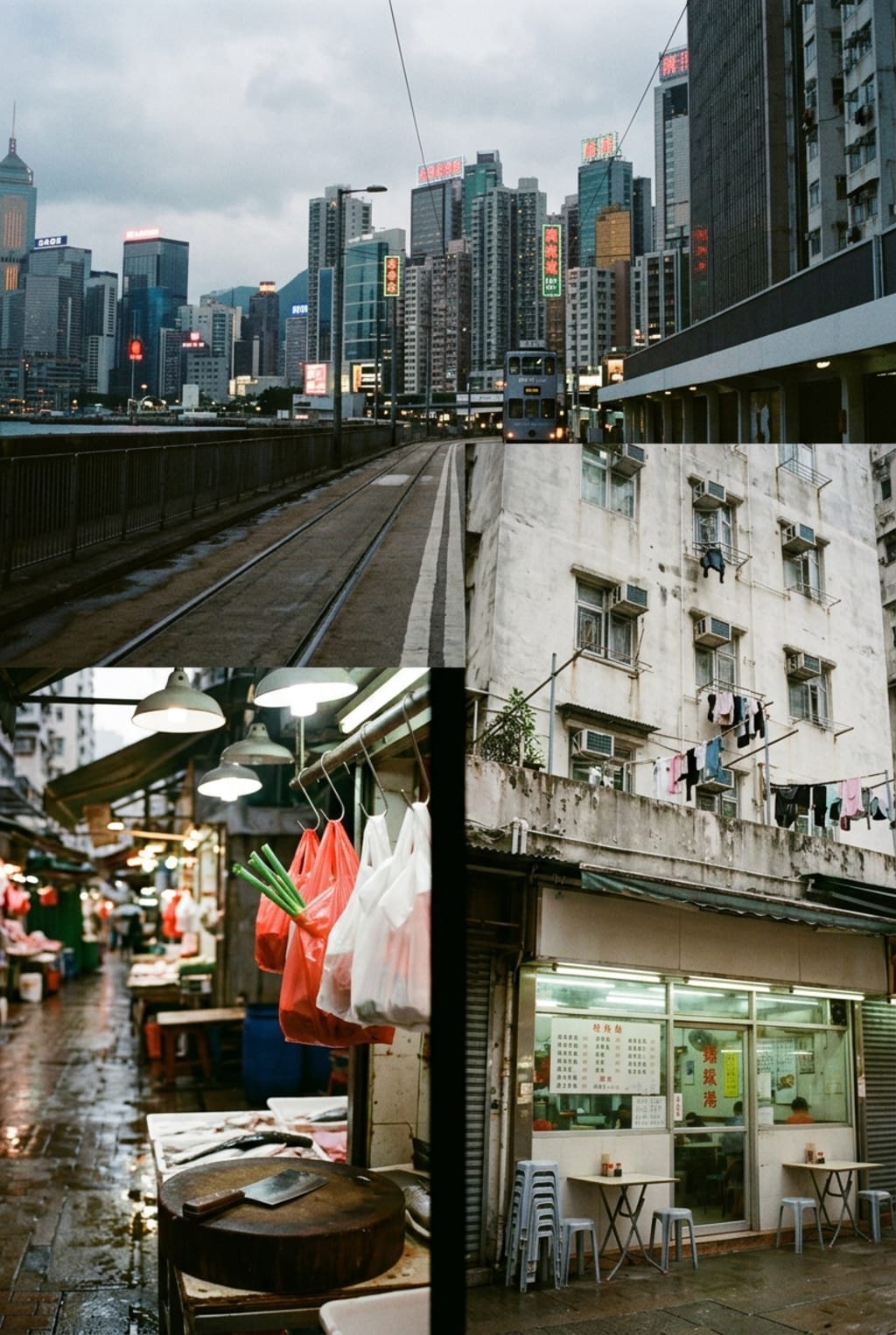
In the autumn of 2018 I dragged two suitcases into Whampoa Garden. Company posting, ten-month lease. Before that, every trip to Hong Kong had been a short business trip or a family visit: a few days of Victoria Harbour, cha chaan tengs, the Star Ferry, the city as a postcard. On my first night as a resident I went downstairs to find food, walked into a cha chaan teng, and recognized the words "iced lemon tea" on the menu. It came sweet enough to make my teeth ache. I waved the waiter over and asked if I could have it less sweet. He looked at me and said, "Next time say 'less sweet' first," then turned and walked off. I drank that tea for forty minutes. The ice melted and the sweetness was still there.
Whampoa Garden is a giant community. The malls run into one another, the ground-floor shops are dense, and from pharmacy to bank to roast-meat shop, downstairs solves most of daily life. It doesn't look old. It's well managed, the corridors are clean, and someone had put up a renovation notice in the lift in neat handwriting. I later described it to friends: like Beijing's Tiantongyuan with better ground-floor shops, or Chengdu's Yulin district stood upright. By my third week I already knew which cha chaan teng cooked its instant noodles a little firmer and which roast-meat rice shop didn't have too long a queue at lunch.
I like cooking, and eating out in Hong Kong isn't cheap, so I made my own food. I often went to Hunghom Market. The place is wet. The floor is always damp. The fish-stall uncle rinses his chopping board with water and scales a fish with the efficiency of someone writing characters. A colleague who is local took me along, taught me a few lines of Cantonese, and joked with the vegetable sellers. They'd round off the change and slip two spring onions into the bag. I'd walk back with the plastic bag cutting into my fingers, the spring onion leaves poking out of the top and brushing against my leg. You can't buy that kind of regular-customer feeling in a tourist area.
A domestic helper really is a good deal. A colleague I lived with had been tempted for a long time to hire one, but in the end decided that, since we were on an official posting, it wouldn't look good, and gave up the idea with some pain. He stood in the living room, did the sums on a calculator, put the calculator down, and said forget it. That calculator sat on the coffee table for three days. Nobody touched it again.
Transport is convenient. The Kwun Tong Line reaches Whampoa, the Tuen Ma Line connects, and getting to Hong Kong Island and East Kowloon is easy. The Cross-Harbour Tunnel and the bus terminus are right beside it. Later, during the unrest, the tunnel and buses were paralyzed outright for a time. That day I stood at the roadside watching the traffic not move, while people walked over from the direction of the tunnel mouth, some in suits carrying briefcases, some pushing prams. The more convenient things are in normal times, the more concrete they become when they break.
Driving is another matter. The company had a rental car, but fuel costs three or four times what it does on the mainland, parking is outrageous, and tunnel fees are extra. In Beijing and Chengdu driving is everyday life. In Hong Kong, using a company car for work meant counting every cent, and I'd sweat filling out the reimbursement forms. Most of the time it was the MTR plus walking. Hong Kong's "close" means physically close, but cost reorders your choices.
I felt unwell once and went to a private clinic. A small problem, over eight hundred Hong Kong dollars. The nurse was professional, spoke clearly, and the process didn't drag. I tucked the receipt into my passport, and later when I found it again the paper had gone soft. The public accident and emergency department later charged four hundred Hong Kong dollars. When I was there the price hadn't gone up yet, but the waiting time was still enough to put you off. On the night you have a fever, do you want to go and sit in A&E until morning? That's the question the city asks you.
At work, there were only three or four of us posted there, and I was the leader. The business was still early-stage, so we rarely worked overtime. From what I observed, the surrounding office buildings worked less overtime than Wudaokou in Haidian or Tianfu Third Street in Chengdu. Of course the sample is limited and can't represent all of Hong Kong. On tax, colleagues whose employment relationship was with the Hong Kong subsidiary and who paid into the MPF took home visibly more than the mainland team at the same salary band, and salaries tax tops out at just over ten percent. The expense is written into rent and meal costs, while tax and take-home pay are a different calculation.
At weekends I'd walk a stretch of Dragon's Back or the MacLehose Trail and come down for a bowl of wonton noodles. Sometimes I'd go to Repulse Bay for a meal, half an hour from the office to the mountains and sea. Cultural life was richer than I'd imagined. At weekends it was easy to fill time with exhibitions, book signings, and theatre. The choice isn't as wide as in Beijing, but the curatorial quality and the calibre of names hold up. Art Basel opened as usual in March, and the Hong Kong Book Fair in July, though the book fair was visibly depressed. I saw Ni Kuang in person at the book fair, standing not far away, surrounded by people. I didn't go up. Looking back on that year, the image is precious.
Holding a Chinese passport and working in Hong Kong on an ASMTP, my visa approval rate was higher than on the mainland and the risk of overstaying lower. At the time my Australian visa went through smoothly. That mobility is concrete. A window, a stamp, a wait.
The extradition bill unrest and the pandemic were a double shock. The impact on the economy, unemployment, and people's daily lives was real, and with changes in China-US relations layered on top, I won't go into it. Walking the streets you could feel the tension. Sitting in a cha chaan teng you could feel the resilience of the everyday. Both at once, most days.
When I wandered around I listened over and over to Shu Qi's Louis Vuitton SoundWalk, especially the Tram section, and Leung King-pak's "Lost Years." The ding-ding of the tram and the voices spilling out of cha chaan tengs. Ten months isn't long, but it was enough for the tourist's Hong Kong and the resident's Hong Kong to stack on top of each other. The first sees the night view. The second sees vegetable prices, MPF, waiting times, and two spring onions.
On the day I left, I put the keys on the table, folded the deposit slip, and put it in my wallet. The waiter at the cha chaan teng downstairs was wiping a table. He looked up at me and said nothing. I dragged my suitcase through the covered walkways of Whampoa Garden. The mall lights were still on, and people were carrying groceries home.
About the Creator
Jin
Writer of reamstories
https://reamstories.com/jin
Enjoyed the story? Support the Creator.
Subscribe for free to receive all their stories in your feed. You could also become a paid subscriber, letting them know you appreciate their work.
Comments
There are no comments for this story
Be the first to respond and start the conversation.