nature
The Science and Nature of Wanderlust, tourism, landmarks for nature buffs and more.
Best Time to Visit the Oregon Coast, A Seasonal Guide for Travelers. AI-Generated.
Have you ever dreamed of standing on a windswept beach, feeling the salty breeze on your face while the waves crash in a timeless rhythm? If so, you’re not alone. The Oregon Coast has a special way of capturing your heart, no matter where you go, but choosing the best time to visit can make your experience even more magical.
By Stella Shineabout a year ago in Wander
Welcome to Pakistan
When the plane first dipped below the clouds, I caught my first glimpse of the land I had only known through family stories, cricket matches on TV, and the occasional YouTube vlog. It was raw, golden, vast. The mountains stood like ancient sentinels in the distance, and the plains below bloomed in the glow of a sun I had never quite seen before. The words I had read on signs in airports all day finally landed in my heart: “Welcome to Pakistan.” I stepped into the warm air of Lahore, and immediately the city hit me—not in a way that overwhelmed, but in a way that embraced. There was a hum in the air, the kind that’s born from a thousand stories happening all at once. It smelled like spice and earth and something sweet I couldn’t quite place. That was my first introduction to Pakistan: not just a place, but a feeling. My journey began in the heart of Lahore, where history and heartbeat dance together in every brick. I wandered through the red sandstone arches of the Badshahi Mosque, hearing echoes of centuries-old prayers beneath the vast, sky-painted domes. Nearby, the Lahore Fort stood in silence, noble and weathered, a witness to Mughals, Sikhs, British generals, and now—me. But it wasn’t the monuments that moved me most—it was the people. Everywhere I went, I was greeted with a smile, a wave, a “Bismillah, welcome!” or “Come, sit, have chai!” In the narrow lanes of Anarkali Bazaar, a shopkeeper handed me a steaming cup of doodh patti and insisted I try his homemade samosas. He asked where I was from. “You’re Pakistani now,” he said with a wink, “You just don’t know it yet.” In Multan, the city of saints, I met a Sufi musician who played the dholak under a tree and told me about love—divine and human. In Peshawar, an elderly woman gifted me a handwoven shawl just because “you’ve come all this way to see us.” In Gilgit-Baltistan, children posed proudly with their goats and smiled so wide I forgot the world had problems. One evening, as I sat on a rooftop in Karachi, looking out over the Arabian Sea while seagulls hovered and kites flew, someone next to me said, “This is what people don’t see. They only see what the world shows them on news. But you, you saw the heart.” And it’s true. Because Pakistan is not just news headlines or dramatic tales of history. It’s not just mountains and mosques. It is a million acts of kindness. It’s mangoes in the summer and shawarma stalls at midnight. It’s weddings that last three days and laughter that lasts longer. It’s truck art and rickshaws, call to prayer and bhangra beats, qawwali and cricket and poetry and chai. It is the pride of a nation that has known hardship—and still smiles. It’s a country stitched together by traditions and dreams, by resilience and hope. I remember visiting a small village in Swat Valley, where a young boy named Saif took my hand and said, “I’ll show you our world.” We climbed hills. We drank from streams. He introduced me to his grandmother, who hugged me like I was family. She spoke in Pashto, but I didn’t need a translation. I understood her smile. In that moment, I realized: Pakistan doesn’t ask you to understand everything. It simply asks you to feel. And I did. I felt welcomed. I felt humbled. I felt like a guest—yes—but also like I belonged. Like I had found something I hadn’t even realized I was missing. When it came time to leave, someone told me, “You’ll carry Pakistan in your heart now, wherever you go.” And they were right. I left with my bags heavier—not just with souvenirs, but with memories, stories, and a deep appreciation for a land so often misunderstood, yet so full of soul. So to anyone who asks me now what Pakistan is really like, I say this: Come and see. Come and feel. Come for the mountains, yes. Come for the food, absolutely. But more than that, come for the people. They’ll welcome you not just to Pakistan… They’ll welcome you into their hearts. ---
By Huzaifa Writerabout a year ago in Wander
15 Unforgettable Things to Do in Morocco with Kids
Worried about traveling to Visit Morocco with children? Don’t be. This surprisingly family-friendly country provides countless opportunities for cultural discovery, outdoor adventures, and creating lifelong memories together.
By Said Ounirabout a year ago in Wander
7 Reasons Why Scuba Diving Is the Ultimate Vacation Activity
If you’re searching for the perfect blend of adventure, relaxation, and unforgettable memories, scuba diving stands out as the ultimate vacation activity. Whether you’re traveling solo, with friends, or seeking a unique family experience, scuba diving offers something for everyone. Nowhere is this more evident than in Florida, a diver’s paradise with world-class dive sites, vibrant marine life, and a thriving community of dive professionals. From family dive charters Florida to expertly guided scuba diving trips Florida, here are seven compelling reasons why scuba diving should top your vacation bucket list.
By Parrot Island Scuba Adventuresabout a year ago in Wander
🇰🇮 Kiribati – The Hidden Gem of the Pacific Ocean
🇰🇮 Kiribati – The Hidden Gem of the Pacific Ocean Kiribati, also known as Christmas Island (locally referred to as Kiritimati), holds a unique and fascinating position on the world map. It is the largest coral atoll in the world by land area, covering approximately 388 square kilometers. A coral atoll is a ring-shaped island formed from coral reefs that encircle a lagoon partially or completely. What makes Kiritimati exceptional is not only its geological features but also its historical, ecological, and cultural significance. Located in the central Pacific Ocean, Kiribati is part of the Republic of Kiribati, a sovereign nation composed of 33 atolls and reef islands. Kiritimati lies roughly 2,150 kilometers south of Hawaii, positioning it in one of the most isolated areas of the world. Its remote location contributes to both its environmental purity and its significance in terms of global biodiversity and climate studies. --- 🧭 Historical Discovery and Colonial Past The island’s historical journey dates back to Christmas Eve in 1777, when the famous British explorer Captain James Cook first set eyes on it. He named it "Christmas Island" in reference to the date of its discovery. Over time, the name was locally adapted to "Kiritimati" — a stylized spelling using the Gilbertese language, which lacks the letter 's'. Hence, "ti" is pronounced as "s", rendering it "Kirismas". During the Cold War era, specifically between the 1950s and 1960s, Kiritimati played a controversial and highly significant role in global military history. It was used as a testing ground for nuclear weapons — initially by the United Kingdom, and later by the United States. Massive hydrogen bomb tests were conducted here under operations such as "Grapple" and "Dominic". These experiments left a lasting legacy, both environmentally and geopolitically. Despite this dark chapter, the island gradually transformed into a site of peace, conservation, and natural beauty. --- 🐦 A Sanctuary for Wildlife One of the most striking features of Kiritimati today is its rich biodiversity, especially in terms of marine life and seabirds. The island is recognized globally as a critical habitat for millions of seabirds, including frigatebirds, petrels, terns, boobies, and noddy birds. It is considered one of the most important seabird breeding grounds in the Pacific. The coral reefs surrounding the atoll support a vast array of marine species, including endangered fish, turtles, and even some species of dolphins. Environmental organizations and conservationists have identified Kiritimati as a priority site for biodiversity protection. Efforts are ongoing to maintain the fragile ecosystem, monitor the impact of climate change, and prevent human encroachment. Because of its minimal industrial activity and low human density, Kiritimati provides a nearly pristine natural environment — a rarity in today’s world. --- 👥 People and Population Despite its large land area compared to other atolls, Kiritimati is sparsely populated, with around 6,500 residents spread across several small villages. The main settlements include London, Banana, Tabwakea, and Poland — interestingly named during the colonial era. These villages are small, close-knit communities, where people live a simple life, deeply connected with nature and local traditions. The people of Kiritimati are part of the Micronesian cultural sphere, and their traditional lifestyle includes fishing, farming, and copra (dried coconut kernel) production. The local economy depends heavily on subsistence fishing and natural resource utilization. Over time, there has been a push toward introducing sustainable eco-tourism as a way to provide income while preserving the environment. --- 🌴 Economy: Fishing, Coconuts, and Tourism The economy of Kiritimati is based on three main pillars: 1. Fishing – Both for local consumption and export. Tuna fishing, in particular, is important, and international fishing licenses generate revenue for the national government. 2. Coconut Production – Coconuts are abundant on the island and are used for producing copra, which is processed into coconut oil and sold both locally and internationally. 3. Eco-Tourism – In recent years, eco-tourism has gained momentum. Tourists from around the world, especially those interested in bird watching, deep-sea fishing, snorkeling, and scuba diving, are drawn to Kiritimati’s untouched beaches, lagoons, and reefs. Accommodations are modest, and the tourism industry remains in its early stages, but the ecological uniqueness of Kiritimati makes it an ideal location for researchers, photographers, and adventurers. --- 🌍 Environmental Importance and Climate Impact Kiritimati plays a crucial role in global marine conservation. Its vast lagoon systems, coral reefs, and natural marine reserves act as key indicators in the study of climate change, sea level rise, and ocean acidification. Because of its low elevation, Kiribati as a whole — and Kiritimati in particular — is at high risk from rising sea levels. The threat is so significant that the government of Kiribati has taken unprecedented steps, such as purchasing land in Fiji to potentially relocate populations in the future if needed. Nevertheless, local and international scientists are working together on sustainable development and environmental resilience programs to protect this irreplaceable ecosystem. --- 🕊️ A Symbol of Peace and Natural Beauty From its discovery on a quiet Christmas Eve to being used for nuclear bomb tests, and finally transforming into a sanctuary for birds and marine life — Kiritimati represents resilience. Its story is one of transformation — from a battleground of superpowers to a peaceful natural haven. Its geographic location also gives it a special status: Kiritimati is one of the first places on Earth to see the sunrise every day, being located just west of the International Date Line. This has made it a symbolic place during the new millennium celebrations, as the year 2000 was first celebrated here. --- 🧭 The Global Significance of a Remote Island Although far from global urban centers and often overlooked, Kiritimati is a living museum of natural history and a classroom of environmental science. It teaches the world about: Coral reef ecosystems Seabird ecology Human impact on isolated environments Climate change vulnerabilities It also offers lessons in how communities can thrive in harmony with nature through sustainability, conservation, and local empowerment. --- ✨ Conclusion: A Jewel in the Pacific Kiritimati (Kiribati) is not just a dot on the map — it is a symbol of natural beauty, resilience, and global ecological importance. Its coral reefs and lagoons shelter thousands of species. Its people live in harmony with the land and sea. And its history — from Captain Cook’s discovery to the shadows of nuclear testing — adds layers of human experience to its rich ecological narrative. As more attention is drawn to climate change, rising oceans, and biodiversity loss, islands like Kiritimati become not only case studies but also beacons of hope for a more sustainable future. If you ever dream of visiting a place where time begins, birds sing undisturbed, and nature flourishes unspoiled — Kiritimati awaits you.
By Ikram Ullahabout a year ago in Wander
Embracing Spontaneous Adventures. AI-Generated.
Most of us live our lives by schedules—school bells, work hours, appointments, and todo lists. We map out everything, down to the last detail, believing that structure brings control and comfort. But travel teaches us something entirely different: getting lost can be the best part of the journey.
By Awais Khanabout a year ago in Wander
What to Expect on Your First Dive Charter in Florida
Florida, with its warm waters, stunning coral reefs, and vibrant marine biodiversity, is one of the top diving destinations in the United States. Whether you’re exploring shipwrecks off the coast of the Florida Keys or encountering sea turtles along the reefs of Palm Beach, diving South Florida offers unforgettable underwater experiences for both beginners and seasoned divers.
By Parrot Island Scuba Adventuresabout a year ago in Wander
A Photo Diary from the Roof of the World: Trekking in the Everest Region
📖 Introduction: Through the Lens of a Trekker The Everest Region in Nepal is one of the most popular trekking destinations. The region offers more than just the view of Mount Everest. It offers adventurers the chance to witness beautiful scenery, thrilling suspension bridges, wander around serene Sherpa villages, and even touch the Himalayan culture. The view en route to the Base Camp keeps changing through the day and offers plenty of mountain views, welcoming friendly locals, and more.
By Nepal Trek Adventures & Expedition Pvt. Ltdabout a year ago in Wander
Another Tragedy in Swat: When the River Rose Without Warning
A Peaceful Morning in the Valley Swat Valley, nestled in the northern mountains of Pakistan, has long been a magnet for travelers and locals alike. Its lush green hills, flowing rivers, and serene landscapes offer a peaceful escape from the bustle of city life. On the morning of June 27, 2025, an extended family came together to enjoy this natural beauty. They started their day with a hearty breakfast at a local restaurant near the Fizagat River, savoring the fresh mountain air and the sounds of nature.
By Muhammad Adilabout a year ago in Wander
The Hidden Heaven of Swat No One Tells You About. AI-Generated.
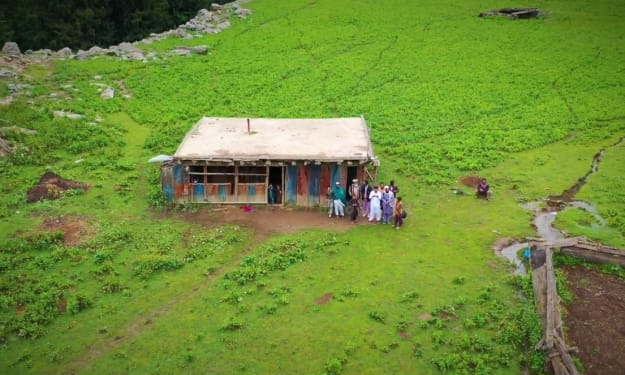
🌿 Taip Banda: Swat’s Secret Heaven in the Sky There are places that make you feel small—not in fear, but in awe. Taip Banda, nestled high in the hills of Swat Valley, Pakistan, is one such place. A wide, emerald meadow surrounded by towering peaks and laced with icy streams, Taip Banda is a place where silence speaks, and every breath feels like a blessing.
By Muhammad Adilabout a year ago in Wander