art
Be it Old Masters or local craftsmen, where there's art, there's travel.
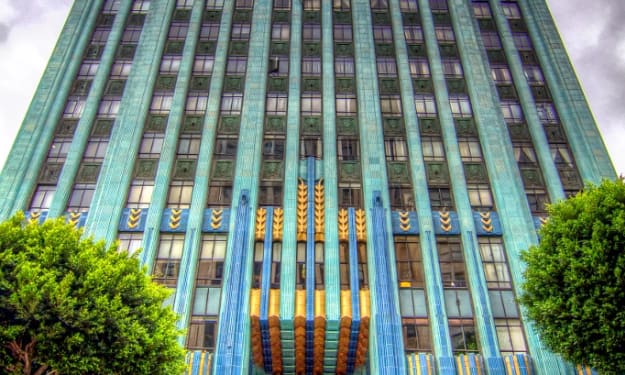
Amazing Art Deco Buildings
Art Deco architecture is among the most iconic design styles of the 20th century. It came out in the 1920s and 30s and symbolized hope and progress at a time of rapid industrial growth and social change. The materials used for these buildings included luxury materials such as chrome and marble to give each building an elegant and timeless look.
By Rasma Raistersabout a year ago in Wander
Any Tampa Bay Area Parties for Halloween?
Oh oh! Only 13 more days until Halloween. I hear spooky music. The door just closed on its own. Etcetera. It's October and spook lovers are vibing to the monster mash and looking for festivities. Moms and Pops with the little ones are either throwing home parties or have already found a family-friendly place to gather and collect treats. Churches usually have a pumpkin patch or a trunk-or-treat thing going on. But I'm sure there's also a bunch of Tampons like me wondering what to do for Halloween. Should we go out there? Can we hide behind a costume and mask and have some fun for once in our boring old lives? Can we get some candy and relive just a bit of those fabulous glory days while we can still carry a plastic pumpkin? I think so. I hope so. I've got my costume ready just in case.
By Shanon Angermeyer Normanabout a year ago in Wander
Wanderlust Wonders
Wanderlust Wonders A Journey of Discovery, Connection, and Unforgettable Moments For years, Maya had dreamed of seeing the world beyond her office window. Her days were filled with emails, meetings, and routines that rarely changed. But one rainy afternoon, while sipping tea and scrolling through photos of faraway places, she made a decision that would change her life—she signed up for a 10-day cultural tour through southern Europe. From the moment she stepped off the plane in Lisbon, Portugal, everything felt different. The air smelled of sea salt and pastries, and the streets buzzed with a rhythm that made her feel alive. She was joined by a small group of travelers from different corners of the globe—each with their own reasons for being there, but all united by curiosity and wonder. Their tour guide, Rafael, was passionate and full of stories. As they wandered through cobblestone streets, visited ancient castles, and tasted local delicacies, he brought history to life. In Lisbon, they marveled at tiled buildings and rode the iconic yellow trams. In Seville, Spain, they clapped along to flamenco dancers, their heels striking the floor like thunder. Every stop was a new adventure. But the true beauty of the tour wasn’t just in the places they visited—it was in the connections Maya made. On the third day, while watching the sunset from a vineyard in Andalusia, she struck up a conversation with Elena, a teacher from Argentina. They spoke about life, family, and the courage it takes to chase your dreams. By the end of the evening, they were laughing like old friends, sharing stories over glasses of local wine. As the group continued on to Granada, and then to the Mediterranean coast, Maya noticed herself changing. She began waking up earlier, excited for the day ahead. She started journaling again, capturing moments and emotions she hadn’t felt in years. She learned to say “thank you” in five different languages, tried foods she couldn’t pronounce, and danced in plazas under string lights with people she’d only just met. One of the most unforgettable moments came on the ninth day, in a small coastal town in southern France. The group had just arrived, and the sun was setting over the water. Rafael gave everyone free time to explore. Maya wandered toward a quiet beach and found a local artist painting the ocean. They spoke in a mix of English, French, and gestures, and he let her try her hand at painting. As she brushed soft blues and oranges onto the canvas, Maya felt something shift inside her—a peaceful joy she hadn’t known she was missing. On the final day of the tour, the group gathered for a farewell dinner. There were hugs, photos, and promises to stay in touch. Maya stood up to thank Rafael and her fellow travelers. Her voice trembled slightly, but her smile was wide. “This trip reminded me that the world is full of beauty and kind people,” she said. “Sometimes, you just have to take that first step out of your comfort zone.” When she returned home, things looked the same, but Maya no longer felt the same. She had stories to tell, memories to cherish, and a heart full of gratitude. The trip had awakened something in her—a sense of possibility, of connection, and of wonder. And perhaps most importantly, it reminded her that it’s never too late to start exploring.
By Muhammad Saad about a year ago in Wander
Discover Morocco’s Stunning Coastline: Beyond the Desert and the Medinas. AI-Generated.
Morocco isn’t just about deserts and medinas its coastline is equally captivating, offering a blend of surf, sun, and serene beauty. From the rugged Atlantic shores to the calm Mediterranean waters, the country’s beaches provide a refreshing escape for travelers exploring Morocco’s coastal tours with Morocco Classic Tours.
By Morocco classic toursabout a year ago in Wander
Sri Lanka, the "Wonder of Asia," is Seeing a Tourism Revival in 2025
Sri Lanka has for decades been admired as the “Wonder of Asia” for its stunning landscapes, deep cultural heritage, and biodiversity. In 2025, the country is seeing a marked tourism revival, driven by a mix of bold policy moves, infrastructure upgrades, marketing strategies, and new attractions. These changes are helping Sri Lanka re-establish itself on the global tourism map and attracting a broader, higher-spending traveler base.
By Shiran Pallewattaabout a year ago in Wander
Movies in English in Tbilisi
Those of you who read me here know that am a big movie goer. I love watching movies on the big screen, especially if I have someone to go with because it's such a wonderful shared experience. I raised my son to be a movie buff as well to the extent that he completed his Bachelor's in Media and Entertainment.
By Lana V Lynxabout a year ago in Wander
Angels In The Architecture
Introduction Today, with my sister Yvonne, and friends Nicola, Mick, Debbie and Harry, we met up in Carlisle. We had drinks in The Griffin, which is a wonderful, welcoming pub by the station, and very reasonably priced, while being an impressive place. The barmaid was very helpful and the service was excellent.
By Mike Singleton 💜 Mikeydred about a year ago in Wander
When the Road Became My Teacher
M Mehran Wandering began for me not as a choice, but as an accident. One train missed, one connection lost, and suddenly I was stranded in a town whose name I couldn’t pronounce. I could have panicked. Instead, I walked. That decision changed everything. The streets were narrow, cobblestones uneven under my shoes. A light rain had fallen, and the air smelled of wet earth and fresh bread drifting from a nearby bakery. I had no map, no plan—just time. For the first time in years, time belonged to me and me alone. As I wandered, I realized how much of life I had been rushing through. Normally, I would count the minutes, check my phone, calculate the fastest route. That day, I simply followed where the streets curved. Every turn revealed a surprise: an old fountain cracked with moss, a child chasing pigeons, an artist painting doorways in colors too bright for the gray sky. I stayed in that town until evening. No grand attractions, no famous monuments. Just life, ordinary and extraordinary, unfolding quietly. It was then I understood: to wander is to discover the beauty that doesn’t make it into guidebooks. From that day forward, I gave myself permission to get lost. And the more I wandered, the more the world opened itself. In the mountains, wandering meant surrendering to silence. The trail twisted endlessly upward, each step a negotiation between body and breath. When I finally stopped, lungs burning, I looked out over valleys spilling into infinity. The wind howled through the peaks like a hymn. There was no audience, no applause—only the raw reminder that nature is both vast and intimate, welcoming and humbling. By the sea, wandering meant listening. Waves thundered and retreated, a rhythm older than language. I walked barefoot along the shore until the horizon swallowed the sun. My footprints disappeared with each tide, teaching me that nothing we leave behind is permanent. And yet, the act of walking still mattered. In villages, wandering meant connection. An old man selling tea on a street corner told me his entire life story with just a smile and a handful of gestures. Children ran up to ask me where I came from, their laughter echoing long after they disappeared into alleyways. I learned that kindness travels farther than any currency, and that sometimes, being a stranger is the best way to feel at home. But wandering also taught me discomfort. Nights when the only shelter was a bench under flickering streetlights. Days when blisters throbbed with every step. Mornings when hunger gnawed louder than birdsong. Yet, those moments shaped me as much as the beauty did. Wander long enough, and you realize: the road is not here to serve you comfort. It is here to teach you resilience. One memory lingers most. I was in a remote town, walking aimlessly when I stumbled upon a festival. Lanterns floated into the sky, hundreds of tiny stars joining the night. Strangers handed me food, invited me into their dance. I didn’t know their songs, but I clapped and moved anyway. That night, surrounded by people I couldn’t understand yet somehow belonged to, I felt the essence of wandering: to lose yourself and find yourself at the same time. When I eventually returned home, friends asked me what I had gained. Souvenirs? Photos? Checkmarks on a list? I shook my head. Wandering had given me something subtler: a new way of seeing. Now, even in my own city, I wander. I take detours. I pause to notice the graffiti on a wall, the way shadows bend at dusk, the unexpected smile of a stranger. The world hasn’t changed—but I have. Because wandering isn’t about distance. It’s about presence. It’s about stepping off the straight line of expectations and allowing yourself to zigzag, to drift, to follow the pull of curiosity. It is less about where your feet go and more about what your heart discovers. And so, whenever life feels heavy or predictable, I lace up my shoes and walk—not toward a destination, but toward possibility. The road is still my teacher, reminding me that every step is both a question and an answer. To wander is to live twice: once in the body, and once in the soul.
By Muhammad Mehranabout a year ago in Wander
The Compass of No Direction
M Mehran The first time I left home without a destination, my friends thought I was reckless. “What if you get lost?” they asked. I smiled, because that was exactly the point. I carried only a small backpack: a notebook, a pen, a water bottle, and enough clothes to last a few days. No GPS, no guidebook, no reservations. The world had become too planned, too predictable. I wanted to know what it felt like to let the road itself decide. The bus dropped me off in a town I couldn’t even pronounce. The station was crowded with people rushing toward somewhere. I, on the other hand, stepped out with no direction. It felt like floating in a river without trying to swim upstream. I wandered through markets where vendors shouted in a language I didn’t understand. The colors overwhelmed me—spices in pyramids of red, gold, and green; fabrics glowing like captured sunsets. A woman offered me fruit I had never seen before. Its skin was rough, its taste sweet with a hint of something wild. She laughed when I made a face, and in that moment we were friends. Later that day, I found myself at the edge of the town where hills rolled out like waves frozen in time. I started climbing. The path was uneven, but each step revealed more of the valley: rivers curling like silver threads, villages like toy models in the distance. When I reached the top, the wind roared against my face, as if congratulating me for daring to stand there. That night I stayed in a guesthouse run by an old couple. Their home smelled of wood smoke and fresh bread. They didn’t speak my language, but kindness doesn’t need translation. We ate together in silence, breaking bread and laughing at gestures. I scribbled in my notebook: The world is full of strangers who feel like family, if only we wander far enough to meet them. The days blurred after that. Each one became an improvisation. I hitchhiked with farmers on tractors, slept under skies heavy with stars, and followed dirt paths that ended at waterfalls hidden from maps. Sometimes, I walked for hours without meeting a soul. At first, that loneliness stung. But soon, it became a strange sort of companionship. When there’s no one else around, you begin to hear your own thoughts more clearly. One evening, as I wandered along a coastal road, the ocean spread out before me like a mirror cracked by waves. I met a fisherman repairing his nets. He spoke softly, his words broken by the sea breeze. “The fish don’t always come,” he said, “but the waiting teaches patience.” I thought about that long after I left. Maybe wandering was like fishing—uncertain, but always teaching. But wandering is not always romantic. There were mornings when my feet ached, when rain soaked through my clothes, when I longed for the comfort of knowing where I would sleep. I missed home-cooked meals. I missed warm showers. Yet, even in discomfort, I felt alive. Because every challenge was proof that I was still moving. One of the most memorable moments came in a forest where trees arched overhead like cathedral ceilings. Sunlight filtered through leaves, painting the ground in shifting mosaics. I walked until I stumbled on a clearing where a group of travelers had built a fire. They invited me to join. We shared stories that night—tales of love, heartbreak, and dreams. None of us knew if we’d ever meet again, but for those hours, we belonged to the same tribe: the tribe of wanderers. Eventually, I returned home. My friends asked, “What did you find?” I laughed, because the answer wasn’t something I could pack in a bag or show in a photo. I found that wandering is not about reaching places—it’s about stretching yourself. About learning that the world is bigger than your worries, wider than your fears, and kinder than the news will ever tell you. Now, I wander even in small ways. I take a different street on my walk home. I try food I can’t pronounce. I let conversations with strangers unfold. Because wandering doesn’t always mean leaving your country; sometimes it just means leaving your comfort zone. What I’ve learned is this: maps will tell you where to go, but wandering will tell you who you are. And every step into the unknown is a reminder that life is not meant to be traced like a blueprint—it is meant to be lived like an adventure. So pack light. Leave the itinerary behind. Let curiosity be your compass, and wonder be your guide. The world is waiting for your footprints in places you’ve never dreamed of.
By Muhammad Mehranabout a year ago in Wander
The Call of the Unknown
M Mehran There is a moment, somewhere between the first step away from the familiar and the second step into the unknown, when the heart learns how to beat differently. It is not the fast rhythm of fear, nor the steady pulse of routine. It is something else—a rhythm born of possibility, of roads untaken, of skies uncharted. That moment is the essence of wandering. I first discovered it when I found myself lost, not in a forest or a city, but in life. My days had grown predictable, looped like a song on repeat. Wake, work, sleep. Everything measured, everything planned. Yet inside me was a restlessness I could not silence, a whisper that said: What if there is more? One morning, I listened. I packed a bag without much thought—just enough to keep me moving—and left my small apartment behind. I had no destination, no carefully mapped route. My only goal was to wander. The first hours were intoxicating. The city I thought I knew unfolded in unexpected ways when I stopped rushing. Streets I had walked a hundred times suddenly glowed with details: the painted shutters of a bakery I had never noticed, the mural hidden down a narrow alley, the way sunlight gathered like spilled gold on the cobblestones. By afternoon, I reached the edge of the city where the concrete thinned into fields. The air shifted. It was quieter, scented with grass and earth. I kept walking. And walking. At some point, the mind begins to loosen when the body moves without aim. Thoughts unravel like old knots, and what felt heavy inside becomes lighter. By evening, I reached a small village I had never seen before. Children played cricket in the street, their laughter chasing the ball farther than their feet could. A woman sitting on her porch waved at me as if I were expected. There was no question of belonging—I was simply another soul passing through. That night, I slept in a modest inn with peeling wallpaper and sheets that smelled faintly of lavender. I listened to the hum of crickets outside my window and thought: This is it. This is the life I wanted to feel. Days melted into weeks. I wandered through markets alive with spices and chatter, across bridges arched like the backs of old cats, and into forests that seemed to breathe. I shared bread with strangers who became friends for the length of a meal. I learned that conversations don’t need a common language, only patience and warmth. Once, while hiking through hills, I came across an old shepherd. His face was weathered like bark, his eyes the color of storm clouds. He offered me tea from a dented kettle, and we sat together in silence, watching sheep graze. Finally, he spoke: “The earth is wide, but the heart is wider when you walk it.” His words struck deep. Perhaps wandering wasn’t about escaping life—it was about expanding it. But not all days were romantic. Some were exhausting, marked by blisters and hunger, by rain that soaked through my clothes and left me shivering. There were moments I longed for the comfort of my bed, the certainty of hot showers, the predictability of routine. Yet even then, I felt alive. Because every discomfort meant I was moving, not standing still. One afternoon, in a seaside town, I found myself sitting on a pier, watching fishermen mend their nets. The sea was restless, throwing itself against the rocks with wild insistence. I thought of the life I had left behind—the clock ticking on my desk, the endless emails, the sameness of it all. For the first time, I didn’t feel guilty about leaving. I understood now: to wander is not to run away. It is to run toward something you didn’t know you needed. Months later, when I finally returned, my apartment felt smaller, though it hadn’t changed. My shoes were worn, my bag frayed, and my heart fuller than it had ever been. Friends asked me, “So, where did you go?” I never knew how to answer. I could list the places, the villages, the roads—but none of that captured the truth. Where did I go? I went outside myself. I went into the wide open. I went into the unknown, and came back with pieces of it stitched into my soul. Now, whenever life begins to feel heavy, I remind myself that wandering doesn’t always mean packing a bag. Sometimes it means taking the long way home, letting curiosity lead instead of obligation. It means saying yes to the unexpected, letting detours become destinations. Because the world is not a map to be checked off; it is a story to be lived. And the best chapters are written not when we plan every word, but when we surrender to the wild rhythm of wonder. So wander. Not because you are lost, but because the world is waiting for you to find it—one step, one story, one heartbeat at a time.
By Muhammad Mehranabout a year ago in Wander
The Path That Finds You
M Mehran There’s a word the dictionary defines simply as to move without a fixed course. But wander is more than drifting. It’s a calling, a pull of curiosity, a rebellion against straight lines and strict maps. For me, wander began on a quiet Tuesday. --- The Departure I was twenty-two, clutching a one-way ticket to Lisbon, terrified and exhilarated at once. Friends called me reckless, my parents called me lost, but inside I knew I wasn’t running away. I was running toward something—even if I didn’t know what it was. I had no itinerary, only a backpack stuffed with clothes and a notebook that still smelled like the store where I bought it. My plan was simple: wander. --- First Steps in a Foreign Street Lisbon welcomed me with cobblestone streets and tram bells. I wandered without Google Maps, letting instinct guide me. The city unfolded like a story: tiled walls painted in blue, laundry swaying from balconies, the scent of roasted chestnuts curling through the air. For the first time in years, I wasn’t rushing anywhere. I wasn’t checking off tasks. I was simply there, breathing in the moment. Wandering stripped away my need for purpose and replaced it with wonder. --- The People of Wander In Porto, I shared a hostel bunk with a Canadian artist who carried sketchbooks instead of cameras. She told me, “When you wander, you don’t just see—you feel.” I nodded, not fully understanding until later. In Seville, I met a retired schoolteacher from Japan who had decided, at seventy, to wander the world alone. She said, “Life waited for me to finish raising children, caring for parents, working jobs. Now it’s my turn to see what else is out there.” Each person I met was a mirror reflecting back possibilities. Wandering wasn’t just about places. It was about people who reminded me that life can be shaped in infinite ways. --- Lost and Found Of course, wandering isn’t always magical. One night in Granada, I got lost trying to find my hostel. My phone had died, the streets twisted like a labyrinth, and panic clawed at my chest. But then, I stumbled into a plaza where flamenco dancers were performing. The music cracked through the air like fire, and the rhythm made my fear dissolve. A kind stranger noticed my confusion, walked me back to my hostel, and left without asking for thanks. That night, I realized: wandering doesn’t mean you’ll never be lost. It means trusting that even in being lost, you might find something unexpected—beauty, kindness, or a story worth telling. --- The Silence of Mountains Weeks later, I wandered into the Pyrenees, where villages clung to cliffs and silence stretched wider than any city street. Hiking alone, I felt the weight of solitude press against me. But instead of loneliness, it brought clarity. The mountains didn’t care about my ambitions or failures. They simply existed, vast and patient. As I walked through them, I began to understand that wandering isn’t aimless. It’s listening—to places, to people, to yourself. --- The Notebook Speaks By the time I reached Paris, my notebook was swollen with ink. Pages filled with crooked sketches, overheard conversations, names of strangers, and fragments of thoughts I didn’t know I carried. One line I scribbled on a rainy afternoon still lingers with me: Wandering is not about escaping life; it’s about letting life catch up to you. Reading those words, I felt like I had uncovered a truth I didn’t know was inside me. --- Returning Home Months later, I returned home with my backpack worn and my shoes nearly falling apart. Friends asked, “So, what did you find?” I smiled, because there wasn’t a single answer. I didn’t return with riches or a grand plan. What I brought back was subtler: the ability to look at ordinary streets and see them with the same wonder as Lisbon. To sit in silence and not fear it. To understand that wandering isn’t about the destination—it’s about the shift inside you. --- The Ongoing Wander Now, even when I’m not traveling, I wander. Through bookstores, through unfamiliar neighborhoods, through conversations with strangers. I’ve learned wandering doesn’t require a passport. It requires curiosity. Sometimes I think of the people I met—the artist sketching cobblestones, the teacher chasing long-delayed dreams, the dancer spinning fire into the night. Their stories walk with me, reminding me that life is richer when you let yourself step off the straight road. --- Closing Reflection We live in a world obsessed with direction, with goals and milestones. But wander asks us to pause, to step sideways, to allow detours. To discover that the most meaningful parts of life are rarely on the main road. To wander is to give yourself permission to not know, to stumble, to get lost—and in doing so, to find beauty you didn’t even know you were searching for. And maybe that’s the real secret: wandering doesn’t change the world, but it changes the way you see it.
By Muhammad Mehranabout a year ago in Wander