
Pembrokeshire Odyssey
Spend a day with me in the place that was once my world



Come on. Wake up! I want to show you around. This is my corner, the place where I grew up. I can't show you it all but we've got 24 hours so we'll cram in what we can.
I thought we'd start here at Gupton, my former home, the holder of my heart until I was 28 years old. The wrench I felt first leaving this place was like a crucial piece of me was torn off and lost forever. I remember it like a wound, can still feel the scar.
I thought we'd camp in its fields for our trip like the visitors to our farm used to when I was a kid and less self conscious in shorts, listening to the lives of city folks with fascination. All those shops! Sounded like heaven! I never realised then that I lived in an idyll to be envied by them.
How did you sleep? Could you hear the night? Did you sense the fox as he sniffed your tent?
We used to make dens in the hay bales with the visitors and crawl through, breathing the dust of claustrophobia. And we'd use the farm to play hide and seek behind silos and chicken sheds. We were a gang, like something out of a Stephen King book in the hazy long days of summer with barbecues in the evenings where we'd sit on those same bales in fields of stubble. This is a holiday place now, all trussed up for tourists, but these roads were dust and stone and weeds and led to clapped out machinery buried in nettles and the smell of nature having been harvested and animals being housed.
The fields are still the same but this place is no longer filled with crops nor animals. It doesn't feel like it was ever my home but why would it? No-one is left here to make it feel like that anymore. Our essence left with the furniture.
We can't go in the house otherwise I'd show you where I slept, dreaming of Banff and Milford Sound and Andy Garcia and Kevin Costner, ripped from magazines, all facing my bed and you'd see where the mice used the curtain wire as a thoroughfare.
If you go to the edge of this field/camping ground, you can see the sea and that's where I'm taking you next, to Freshwater West. I'll give you an hour and then off we go. Wake up and eat up!
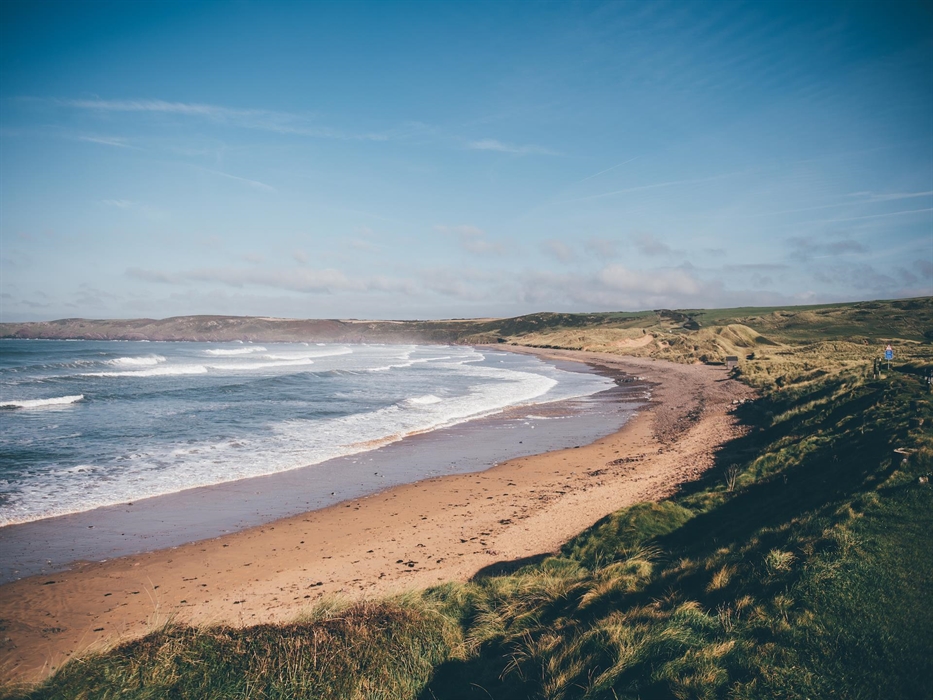
Listen.
I love the sound of this beach.
And I think it has personality in abundance. See over there? That's Rabbit Island which you can climb from the big tidal pool which you get to over the rocks. From there, you can see the headland behind which the Irish ferry disappears, and before it, the full golden gloriousness of the stretching sand, and the crowds of stones gathered before the spiky grasses of the dunes take over.
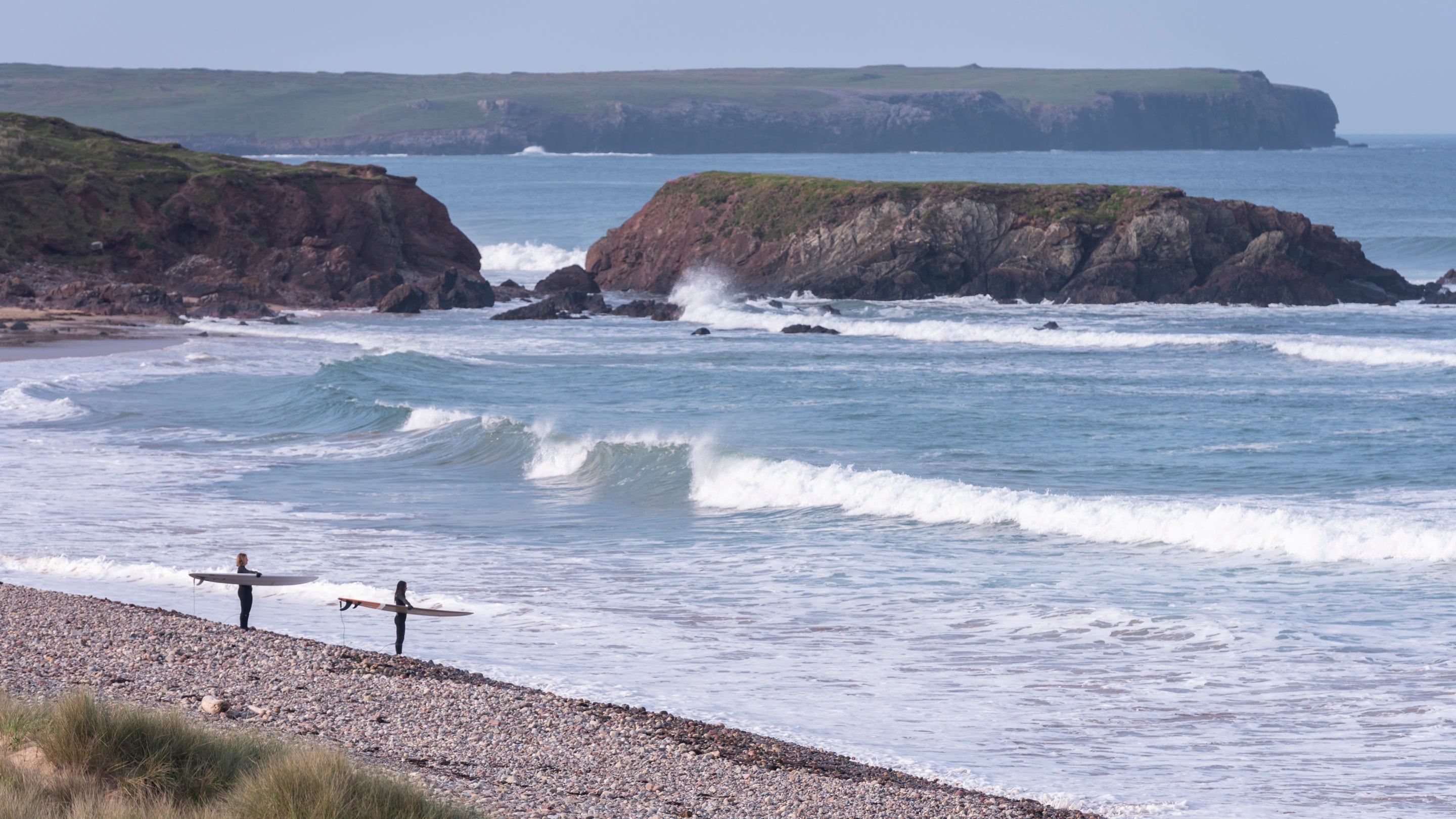
But this landscape changes as longshore drift shifts and shapes the rocks and sand, revealing and concealing with the movement of the tides. It never looks the same on two visits. I like it in the mist when the sea's breath coils around you and keeps you to itself.
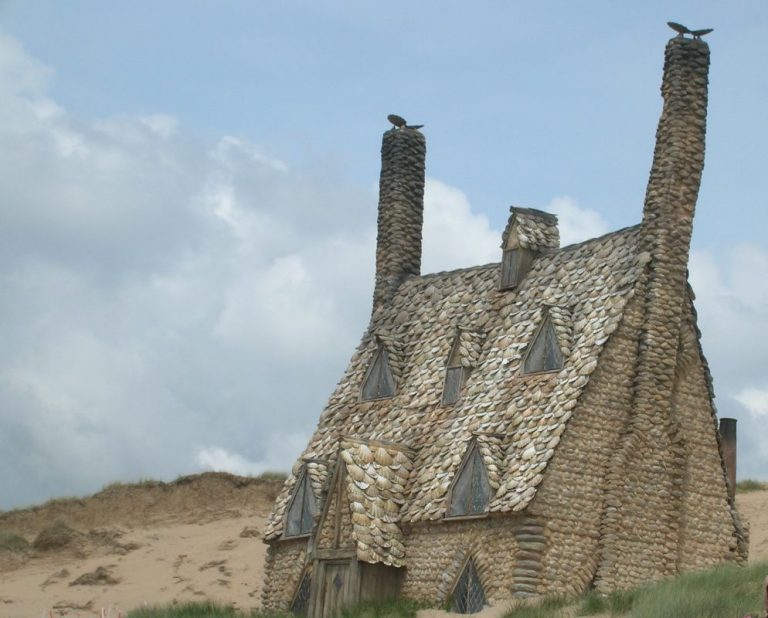
We'll head towards the stream that bisects the beach and gives it its name and then look out for socks! They mark Dobby's grave, the elf from Harry Potter. This beach is epic in many ways, as it was used as a film set more than once. Russell Crowe and Ridley Scott have stood here along with my dad's tractor when they filmed "Robin Hood" and my dad was a "Merrie Man" as part of the crew. Dobby's cottage was fabricated in the dunes and people came to steal pieces of it for themselves: a piece of Potter.
Look how the surfers pepper the water! They need to watch the undertow and the quick sand which will suck you down to where the lug worms lurk before making their casts and a petrified forest lies, waiting for sand to be stripped so it can show off its thick trunks before the drift instructs the sea to cover them up again with thick sand and shale.
Let's walk its length, it's flat easy walking, and smell the ozone. We might spot some creatures who've come to visit. Jellyfish, dried cuttlefish? Seagulls squawking and oyster catchers strutting if we're lucky. We'll also see the multicoloured spatter of microplastics sitting boldly between pebbles and the yellow-tinged foam of industrialisation blowing like synthetic tumbleweed across the shore.

It trapped a whale once, this beach, and I've seen the mangled, partly decomposing corpse of a porpoise, lying next to majestic driftwood. There are adders in the dunes and the waves here have been known to swallow people whole.
It is bipolar, this beach. Its pull is its draw.
I'd like to show you inland and then we'll stop for lunch. I want to show you Stackpole where I went to school and where my granddad and Uncle Willy lived and my mother was born. See how my history is tied to this place? Like an emotional bungee cord, I feel its tension when I move faraway.
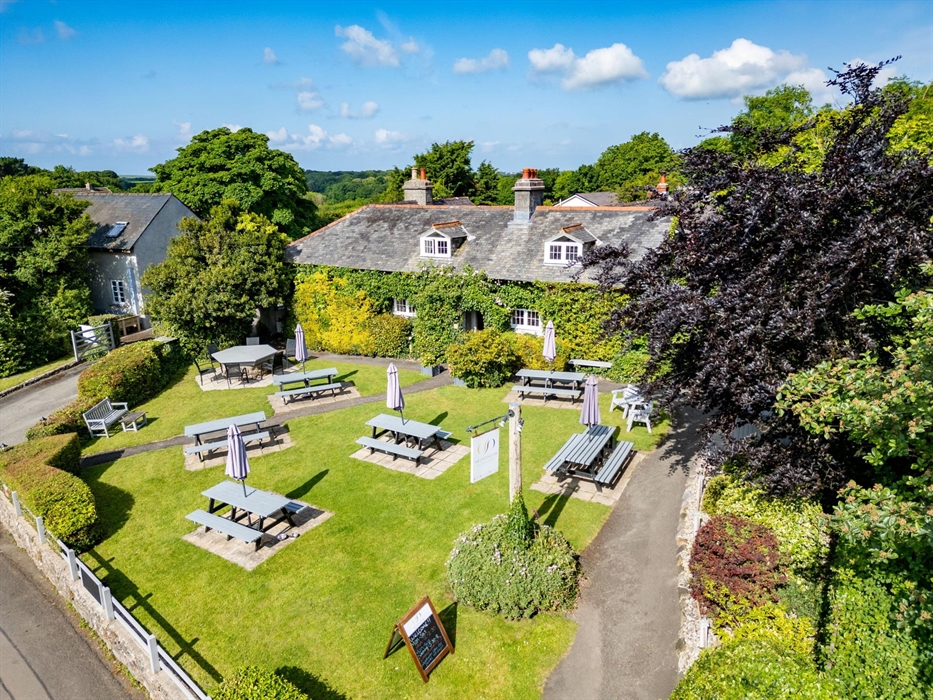
Small, quaint with a famous eatery, the Stackpole Inn, and opposite the dilapidated structure of my first school. You won't hear the cries of young people anymore, just the rustling of seed pods as they dry and fall and skitter across the cracked tarmac. I danced round a maypole in a gingham skirt here to Mike Oldfield and had my first clash of teeth which masqueraded as a kiss with D.W., my crush for years.
If we keep going we will get to Barafundle, but I'd like for us to walk a while in the woods and visit the remnants of a stately home and revel in its diminished grandeur and romanticise the past.
We'll pull in here at the bottom of River Hill and follow in the footsteps of Lady Caroline. We won't walk all the way to Bosherston around the Lily Ponds. We'll go as far as the Boat House and dream of lazy days with the frogs croaking at us from their lily pads, in shallow boats with richly varnished wooden oars and boaters. But before we get there, there is much to see on the way.
Mind your step as the trees will grab at your feet with their gnarled root fingers and the mud will adhere to your soles and then release you quickly so it can laugh at your panic as you slide.

That pungent smell is wild garlic. The trees are alive with birds flitting and Old Man's Beard reaches its tendrils to gaps in the canopy where it can just glimpse the sky. We'll head towards the reeds and the hidden bridge where we can look back towards the small stone One Arch Bridge and know that we are unseen. I like to imagine Lady Caroline here, immersed in nature, away from the big house, Lord Cawdor's house, maybe painting, or writing a poem to while away her aristocratic hours. For me, I picture myself with my Nanny before Alzheimer's thrall dragged her into its mist, holding her hand and walking at half her height in long socks and short dress, my hair shining and my knees chubby.
We've come out of the woods and stand in front of the stables, now flats, the big house having been demolished, its stone removed, its architecture's shadow hinted at in what remains. We'll cross its grave to the steps by the terrace and the view of the lakes and the Eight Arch Bridge, over the previously-mentioned Lily Ponds, man-made and enduring, more than the house ever has. You might see a flash of blue as a kingfisher dives or the long, long neck of the heron as it stands on its long, long legs, glaring at the water with its stern schoolmaster stare, centred on wary fishes below.

This was once a grand staircase. It wants to remind you of cocktails and functions with its balustrade and its wideness. But the lichen cakes it with nature's makeup and its sleek sophistication is lost. I love it, this reminder of what was and I love what it is now. I hope you do too. This land is littered with ruins and memories of times past, both personal and historical.
Let's find the archway and head toward the boat house now, back into the woods. Let's imagine the lunch we'll have after all of this wholesome fresh air and exercise.
The boat house smells dank and its grey walls betray its disuse but finding it in the woods is its charm, still sitting here, waiting after all these years. I wish there was a boat so we could float out from here.
I'm hungry. Are you hungry? Let's go to Pembroke. Fish and chips?
The roads here are high hedges and grey strips that wind and curl into blind bends. We'll take our time and hope we don't meet anything until we reach the main road and then it's a rollercoaster ride of steep hill down and steep hill up, your stomach lurching with annoyance at being thrown about in such a way and the electricity pylons loom over the landscape like Martian tripods from War of the Worlds. Listen carefully and you can hear them fizz and crackle. I always expect them to rip their bolted feet from the ground and ransack the town but they are not marauders, mere sentinels of the modern age. There's something stoic about their presence, their masculine metal solidity, linked together by cables.
Down St Daniel's Hill, past the ivy-choked spire of St Daniel's Church, reaching like a desperate hand above the trees for someone to come and rescue it, into the snail zone, the slow crawl of Welsh speed limits. We'll turn left along Commons Road towards the castle, a Norman stronghold and birthplace of the Tudor dynasty. It is walled, turreted with crenellations. It speaks of strength, power, resistance and a great deal of restoration. Below it, lie the bones of hippopotami in Wogan's Cavern, facing the Mill Pond. There is no mill although where it stood stands a bronze Henry VII, who faces a pub insultingly called "The Royal George".
I used to work in the shadow of this great castle and looked at it every time I left the office. It's a Hollywood film star too but more importantly, served as a backdrop for my wedding photos, only upstaging me a little.
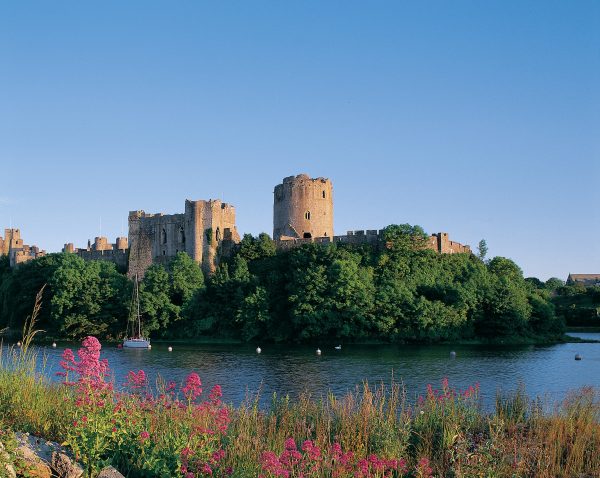
Visit its damp edifices, lift your knees up its spiral staircases and run the battlements, shouting at the people below. Look down from the Keep and see Henry and the town spread below you.
The town has only recently maximised on its historical past. The discovery of the twisted bones of Richard III in a Leicester car park has acted as a catalyst to propel local councillors into showing how our castle - our castle!- birthed the victor, the vanquisher, the hero. I've always liked Richard III better but to the winner, the spoils of statues go.
I can smell chips. But I don't want to take you to Rowlies. Let's while away a couple of hours at The Jolly Sailor across the Cleddau Bridge into Burton and sit next to the Cleddau River, underneath the bridge's phenomenal concrete heights with the refinery's skyscaper skyline of chimneys looming beyond. At night, you can imagine the refinery is Las Vegas or Oz on the horizon, the smoke and pollution hidden by the dark and the lights marking the chimneys' tallness making it appear like a citadel.
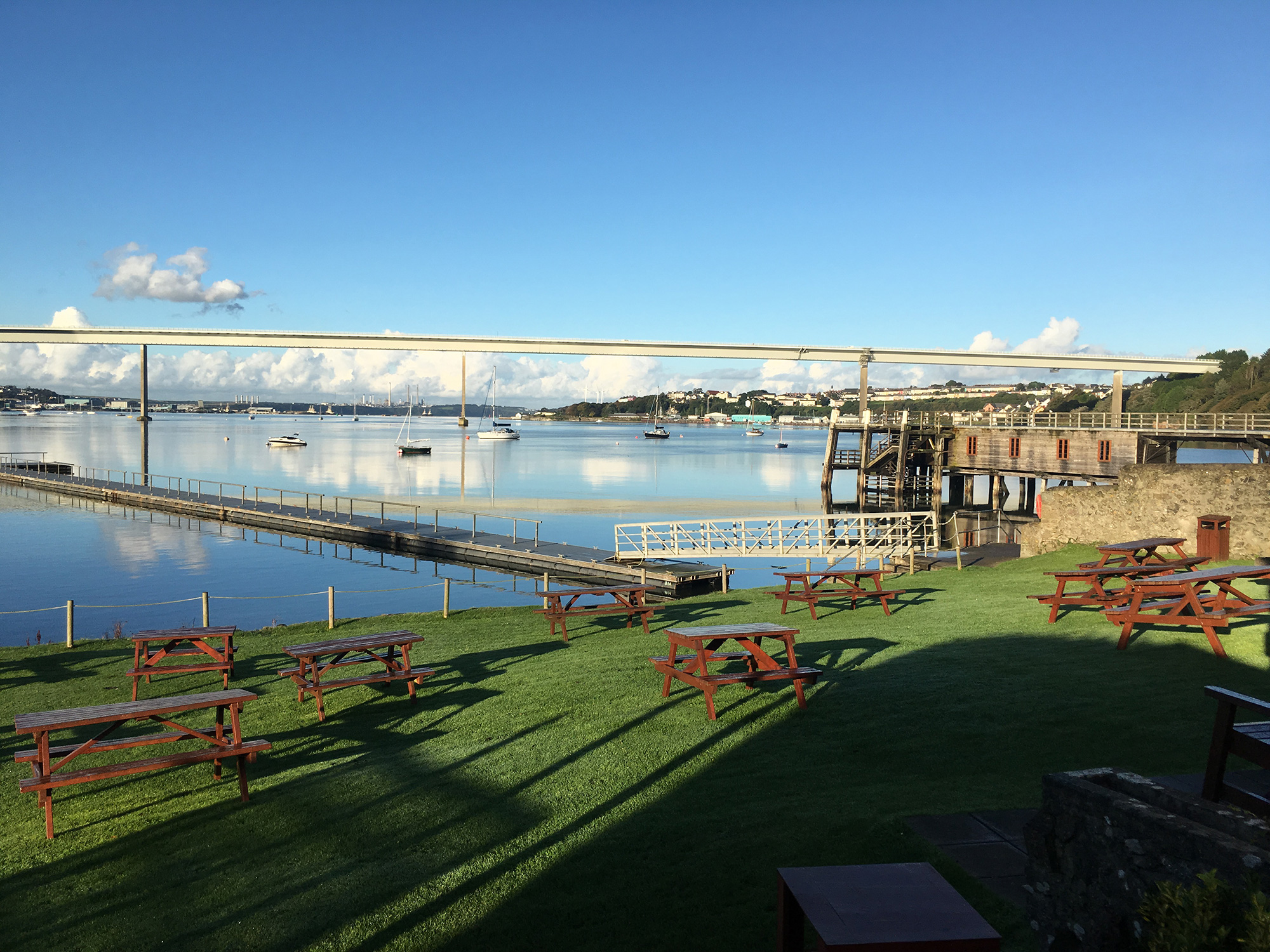
At the pub, we can eat proper British fare like pies and platters and roasts and watch as the river oozes by, with a pint or two of Doom Bar, the sun on our face and laughter in our hearts.
Have some Eton Mess or some Sticky Toffee Pudding. We've got some more sights to see this afternoon back towards Bosherston and St Govan's Head and it seems a shame to only look at the water and not dip at least a toe into it.
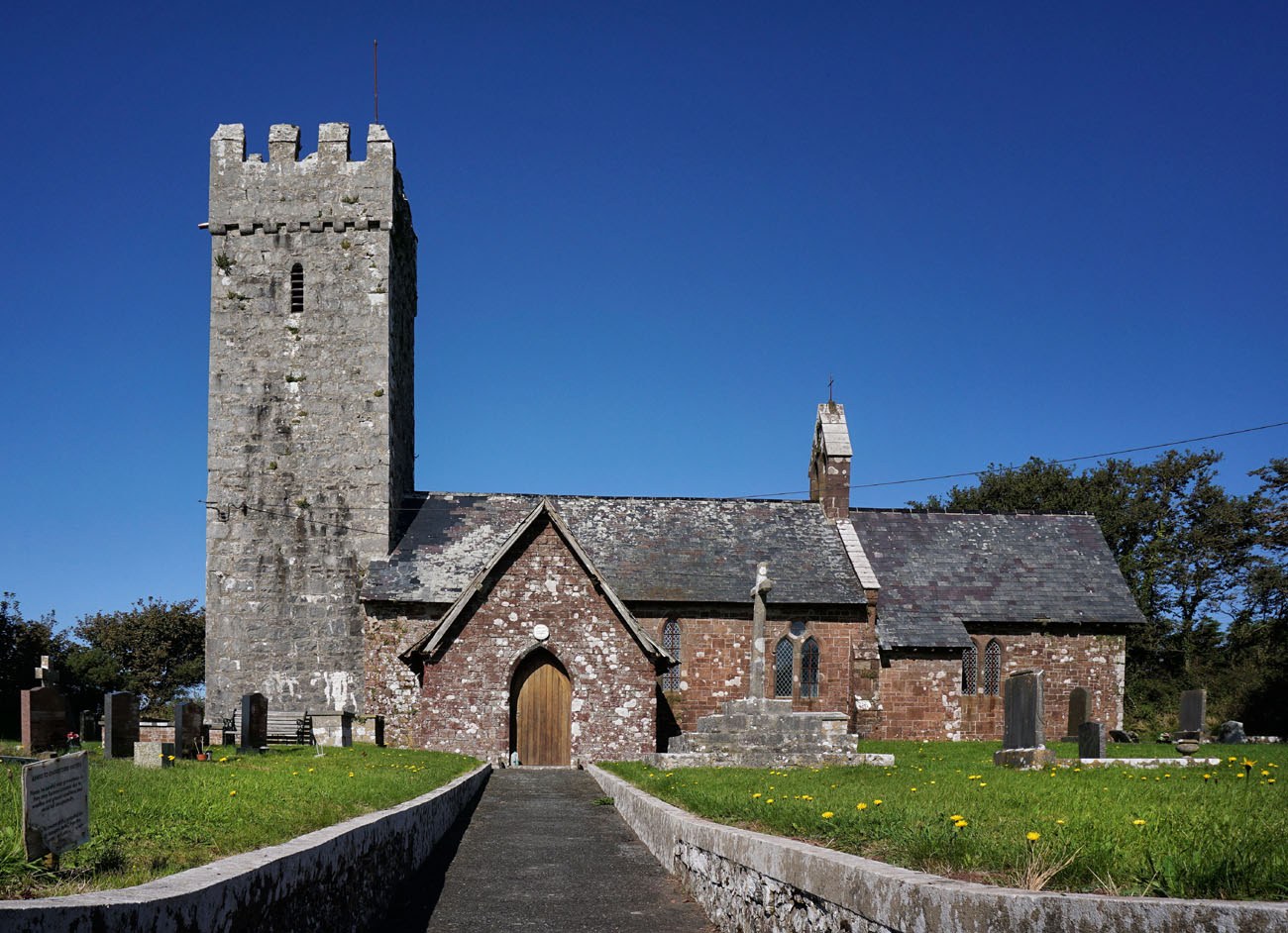
No time for napping as we head out of Pembroke and up St Daniel's Hill, past the poor spire and the pylons and back along the rollercoaster road towards St Petrox. Its church is one of many that are dotted in villages in this part of the world, with an audience of gravestones only, now congregations have shunned them. Its tower looks like a lookout post with its Norman battlements, less church and more barracks but that's how Edward I liked them. If you look into the distance towards the valley, you can see on the ridge St Twynells' church, a similar set-up. We'll go past the turning for Stackpole and its spring on Sampson's Corner and we'll head with Cowshed Hill behind us to the crossroads and the turning to Bosherston. More rollercoaster hill dips and climbs and narrow single roads and then we're in the village which too has a Norman church (Edward was nothing if not thorough) and out, past the Ye Olde Worlde Cafe (now a bistro), past the St Govan's Inn towards the headland. We pass sheep and barbed wire fences and red flags and concrete. We won't get shot at today. The army are having a day off.
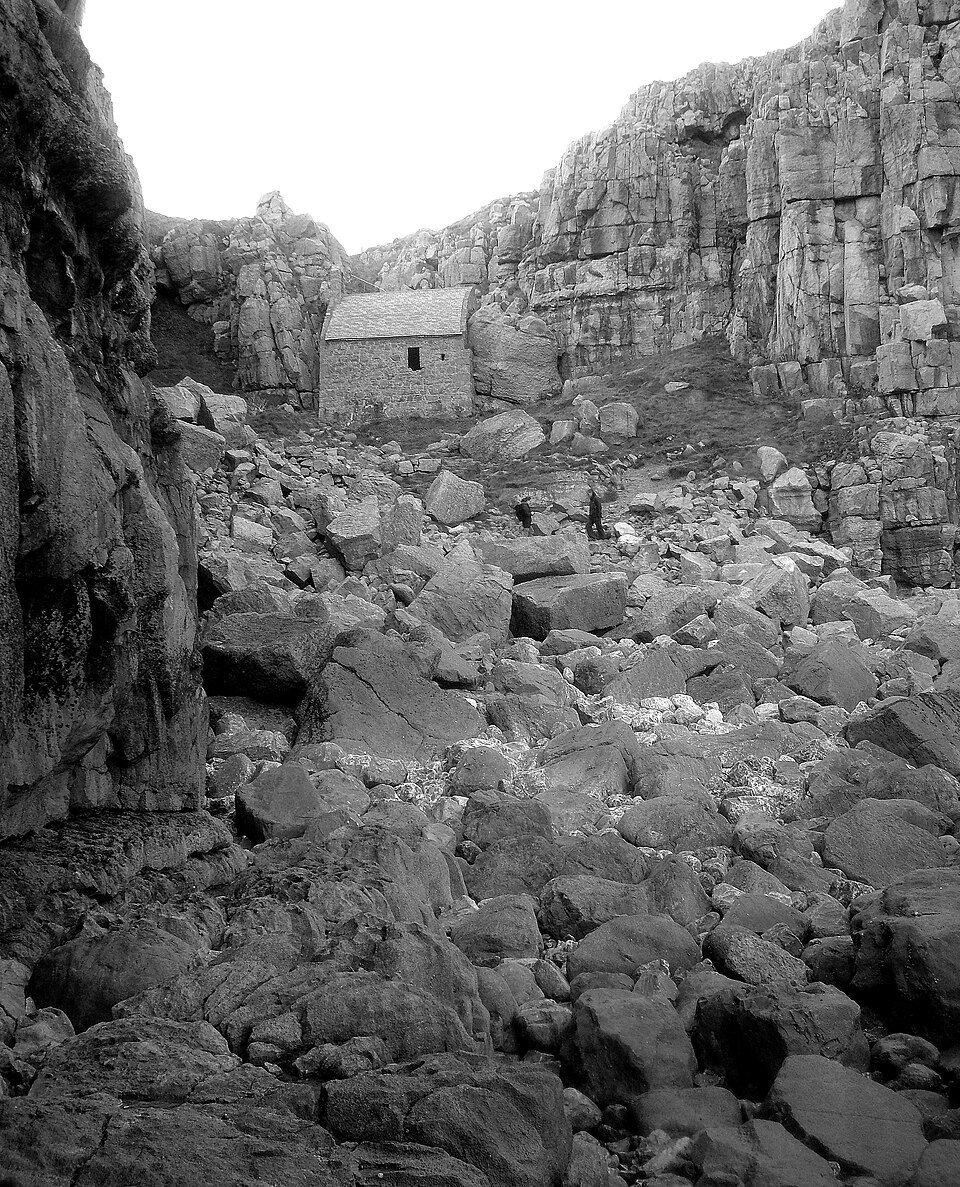
I have treat for you! Let's climb down the cliffs together now we're parked. Don't panic. No ropes needed but I hope you have small feet for the steps hewn from the rock and your shoes have good grip. You can pray if you like but I'd save it for the chapel at the bottom and don't forget to count the steps both ways and see if you get the same number!
And here we are in a chapel, nestled in the cliffs. The legend of St Govan is a strange one - can you see his rib marks where the stone enveloped him on God's instruction? -and this chapel lacks charm. What do they say though, about property? It's all about the location. Let's step out the other side and listen to the boom of the Atlantic on the rocks and feel its spray on our faces. The cliffs are towering. The chapel suddenly feels like a safe haven rather than a whimsy. The chapel is small but we are smaller. It has stood here for years, withstanding the tyrant blows of the sea. It has faith indeed.
Shall we have a swim after the heat of the climb? Just a short walk past the war bunkers and sheep droppings to where the path separates and we enter a valley where the sea calms behind us and silences and we are closeted by the rock. It's like a Hobbit world, this landscape. We could be on a quest but as we get lower over rocky ground, we come to an opening and the sea rushes at us, pleased to see us as we've reached the tiny bay of Newquay. Let's clamber over the rocks, kick off our shoes and paddle or bathe. The waves have made nooks for us to explore and are inviting us in. I like to imagine smugglers pushing a boat in here under cover of night with rum and pistols as cargo. Orange fishing nets snare the rocks, lost to their boats, and gulls squawk. The sea is warm in its approach but cold in its touch.
Bob. Wade. Swim. Gaze at the sea bed and reach for small fish which swim frantically away.
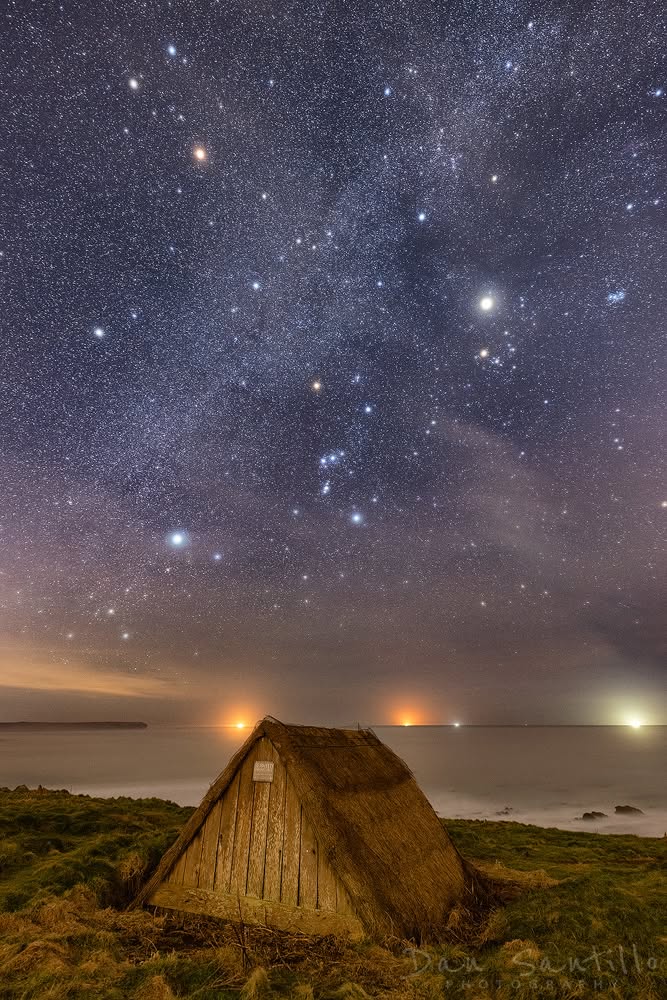
Let's get back now. Just a couple more stops on the way back to the campsite where we'll sit and watch the sunset from our privileged position outside our tent and wait for the stars to appear in their abundance above us. No streetlights to hamper them, just us and the night. We might see an owl as it ghosts its way through the dark, small rodents scattering under its white wings coasting overhead. Or a badger, lumbering through on its rounds, looking for grubs and slugs. Or the shrill sharp bark of the fox, as it shrieks its wishes into the night.
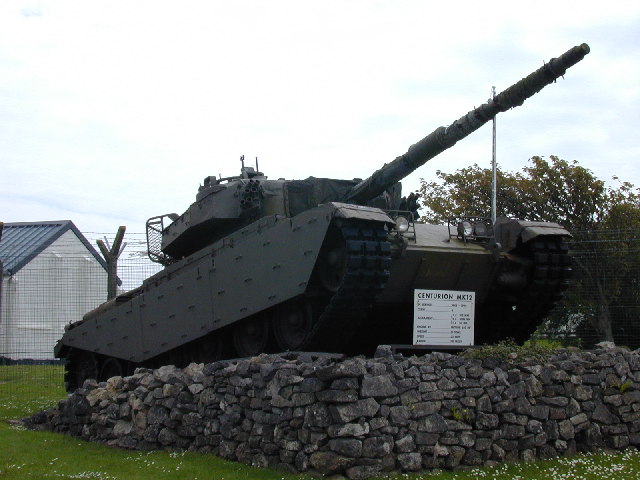
But before that, we must go to Nature's studio where we can see her hand in shaping the world around us. It won't take long. We just need to go past the stark regimented barracks of low buildings and barbed wire that form Merrion Camp and Romulus and Remus, the twin tanks that guard its entry and then negotiate a cattle grid before heading out onto the military range where troops practice blasting, towards the end of land once again.
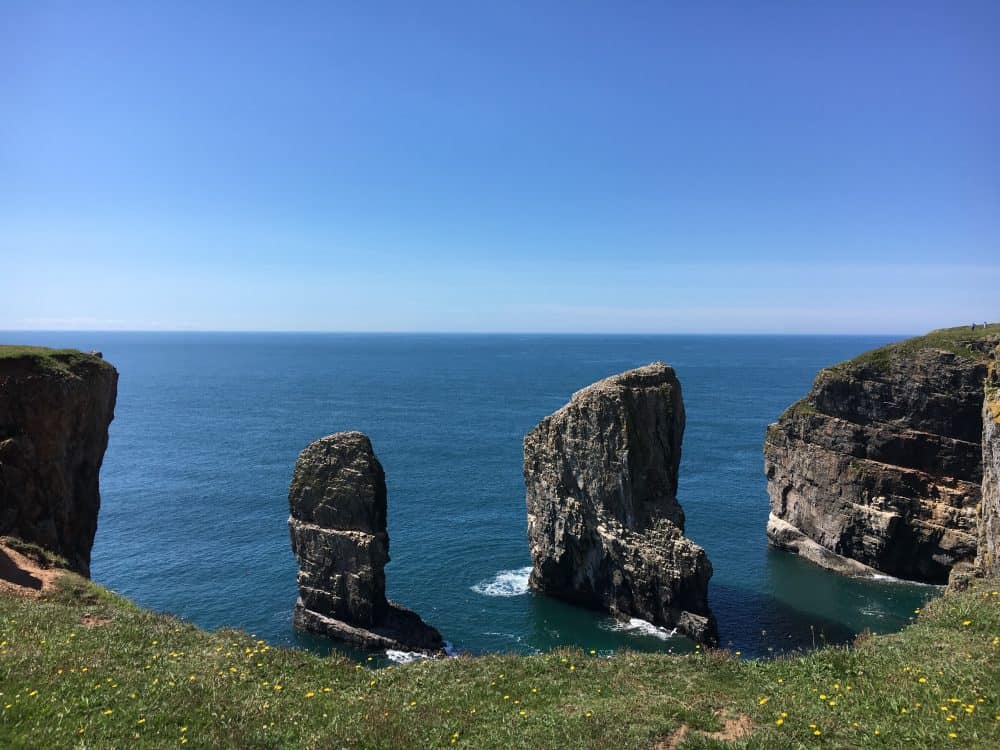
Rocks. Stack Rocks. Homes of guillemots which coat the rocks like feathered winged ants. Using water, nature has honed these into singular stacks away from the land. She has another work in progress just a short walk away too. She uses the sea to chip away at that too, although uses the wind as well when she's able.
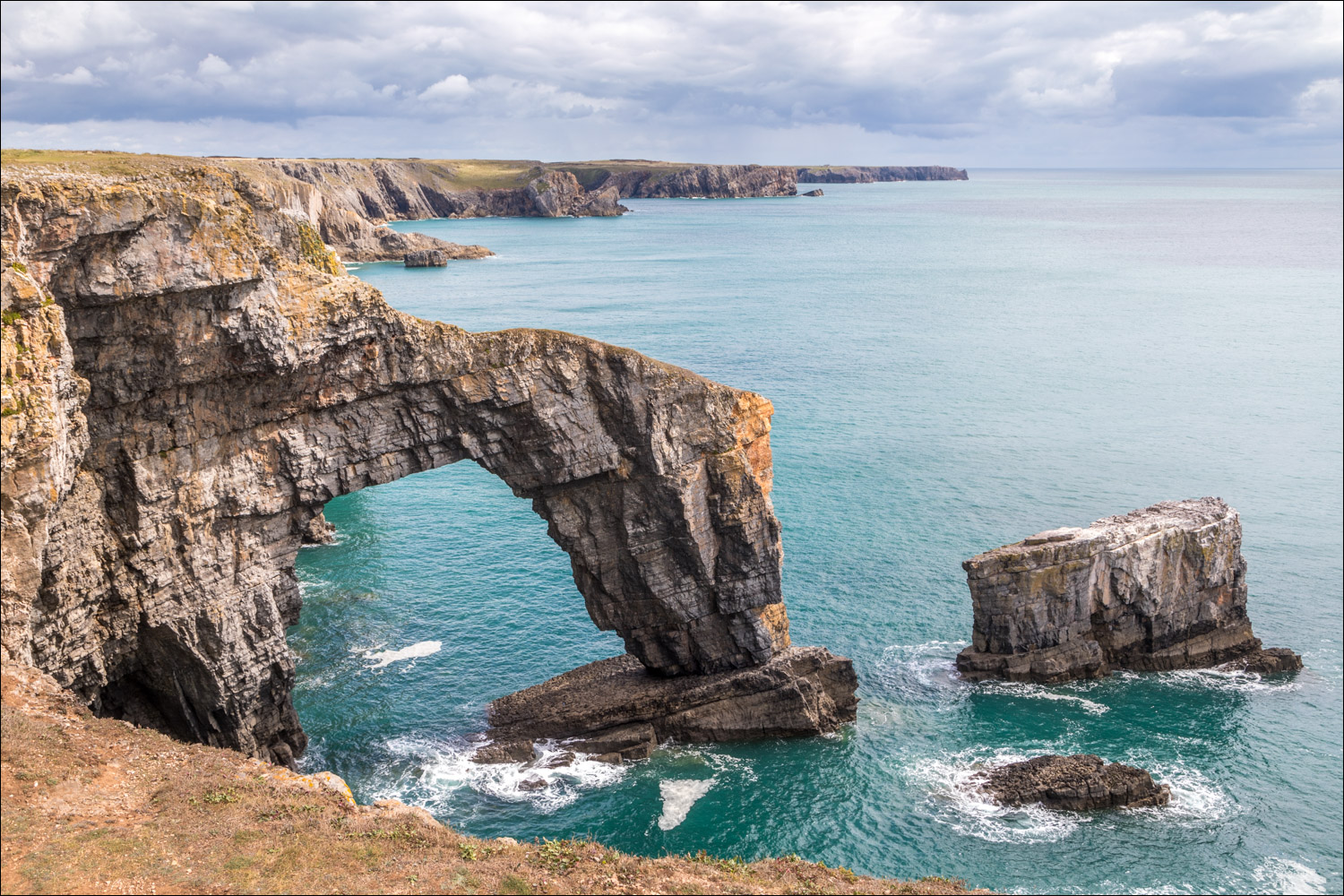
The famous arch of The Green Bridge of Wales arches out from the cliff, like it's leaning out, a daredevil on a deck over the sea, gripping the land for surety and goading the elements to knock it down. It's lost a bit of itself to the sea. Nature's teaching it not to be too cocky. Nature is patient. She knows she'll win. The pebbles and boulders at the bridge's base are testament to that.
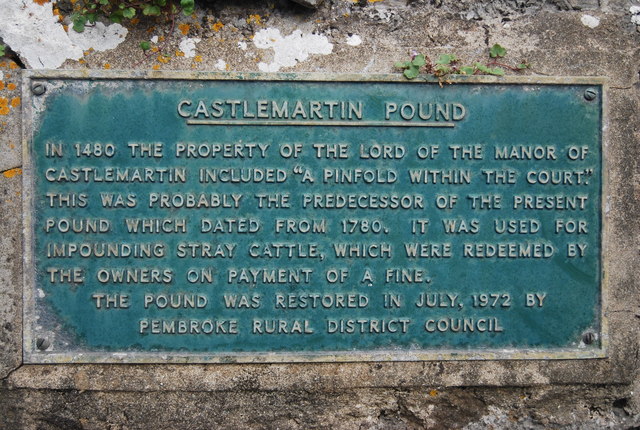
Castlemartin and its famous Pound roundabout heralds our nearness to home. Orange flame sky ahead tells us we are heading west. Through the village we go and out towards Gupton's entry and the track to food and bed.
Finally.
The stars of the Pembrokeshire sky flash above us as our eyes become heavy and our dreams drift in.
About the Creator
Enjoyed the story? Support the Creator.
Subscribe for free to receive all their stories in your feed. You could also become a paid subscriber, letting them know you appreciate their work.
Comments
There are no comments for this story
Be the first to respond and start the conversation.