


Bolwoningen
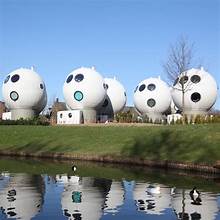
‘s-Hertogenbosch is the capital city of North Brabant, the Netherlands. Here you’ll find one of the oddest neighborhoods in the world, Maaspoort with Bolwoningen, which are 50 round houses that resemble giant balls. These 50 round homes sit together near a canal. They are the creation of architect Dries Kreijkamp, who designed them in the 1980s as an experimental housing project. Each ball house has two rooms which are rented out.
The Dancing House
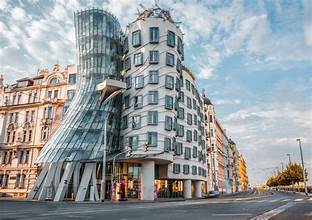
What would you say if a building asked you to dance? Situated in Prague, Czech Republic, the Dancing House has an unusual design. It is the creation of the Canadian-American architect and designer Frank Gehry. The design features two buildings side by side; one is curving and flowing, and the other is rigid and modern. It symbolizes democracy and freedom in the 1990s, marking a new chapter for the Czech Republic. The building today houses offices, a gallery, and a restaurant with a rooftop terrace offering views of the city and the Vltava River.
Drina River House
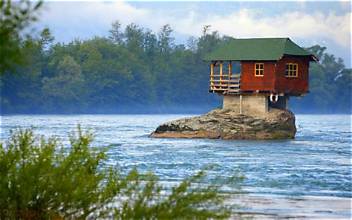
The Drina River House is a tiny wooden cabin that sits perched on a rock in the middle of the Drina River in Milanovac, Serbia. The cabin has been there since 1968, after a group of swimmers decided to build a shelter on a rock. The house can be seen from the riverbank and has survived floods and extreme weather. In 2012 it was featured by National Geographic, and now tourists come to see it. If a flood comes along that sweeps the cabin away, the locals rebuild it.
Guangzhou Circle
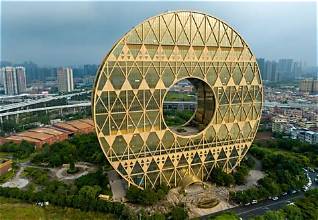
Sitting along the Pearl River in Guangzhou, the capital city of Guangdong Province, China. This impressive building, the Guangzhou Circle, looks like a giant coin standing on end. The 33-story structure holds the record as the tallest circular building in the world. Its most striking point is that it has a huge hole in the center. The building is the creation of Italian architect Joseph di Pasquale, who completed it in 2013 as headquarters for several companies. There is a public plaza in front that is open to visitors.
Guggenheim Museum
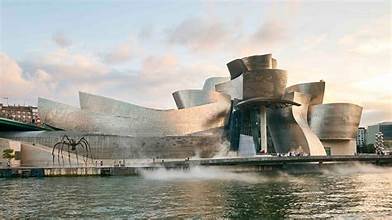
Situated in the Basque Country in Bilbao, the Guggenheim Museum Bilbao has a very interesting and impressive structure. It was created by the Canadian-American architect and designer Frank Gehry. The museum opened its doors in 1997. The building twists and curves in different ways and has shiny titanium walls that change color as someone moves around it.
Hang Nga Guesthouse
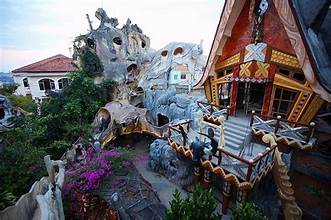
If you visited Dalat, Vietnam, how would you like to stay in the crazy house? The Hang Nga Guesthouse is locally known as the Crazy House. It looks like something that came out of a dream or even a nightmare. The guesthouse combines elements of Gaudi-inspired fantasy and nature with tree-like structures, twisting stepping-stone staircases, spiderweb railings, bridges, and hidden nooks. Each of the rooms follows a different theme, from under-the-sea scenes to grottos.
Kansas City Library
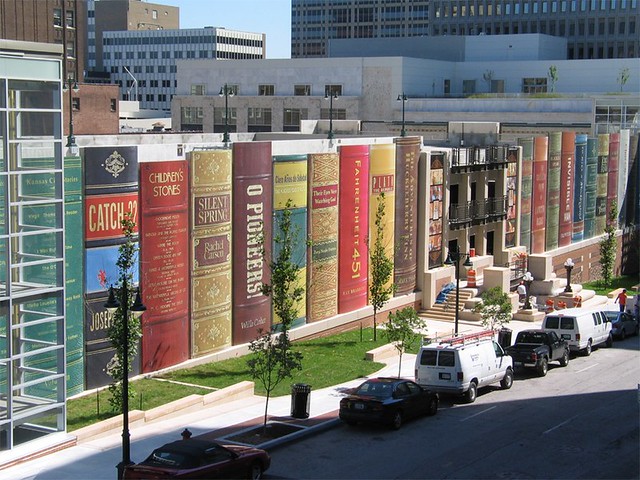
The Kansas City Library in Kansas City, Missouri, in the US stands out with its giant book motif. The parking garage of the library has been designed to look like a stack of giant books. Each “book” stands 25 feet tall and 9 feet wide and showcases such classic titles as “To Kill a Mockingbird”, “The Lord of the Rings”, and “Fahrenheit 451”. It certainly captures attention.
Keret House
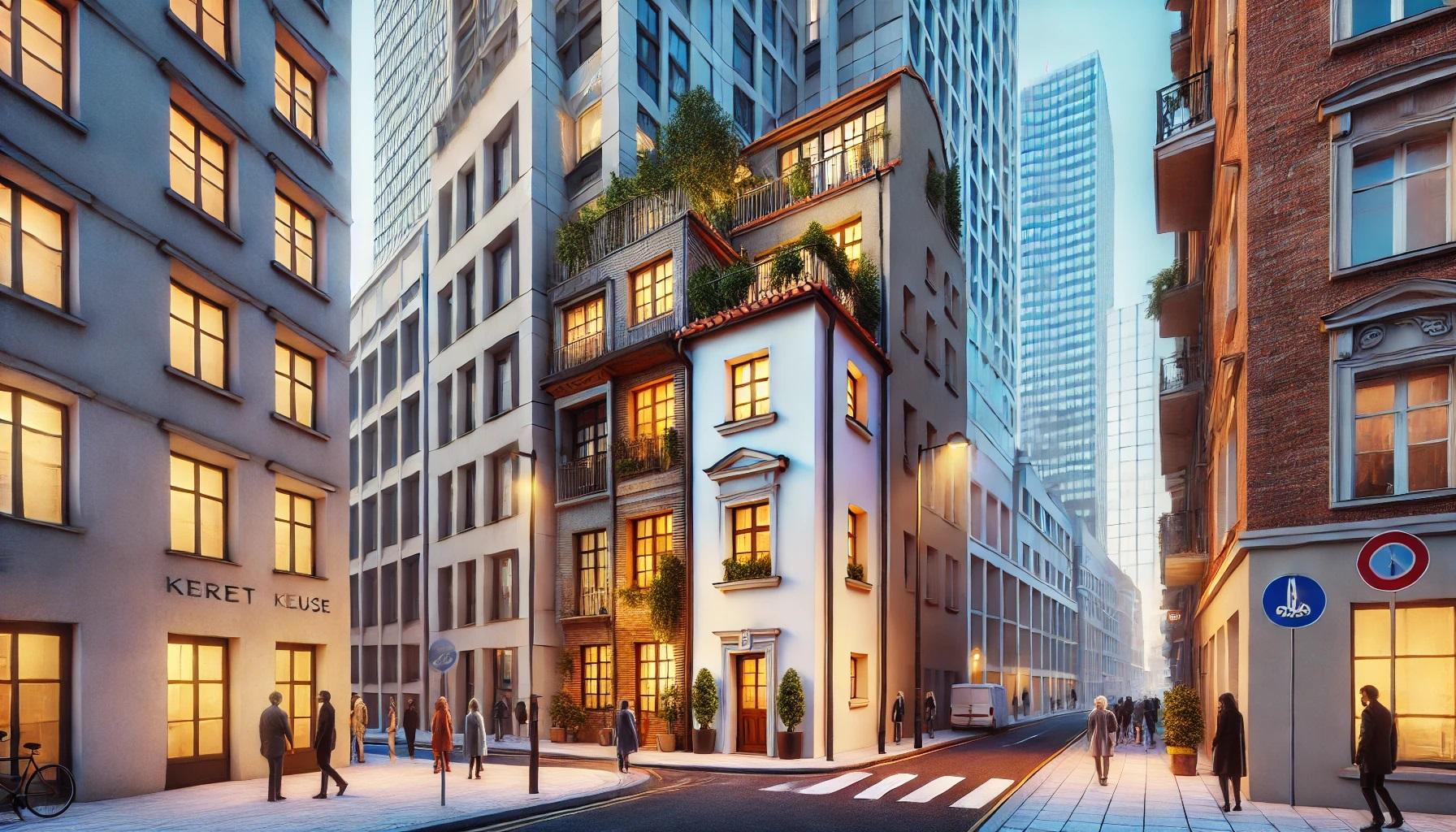
You could say about Keret House, look very closely and don’t pass by too quickly because Keret House is the narrowest house in the world, wedged between two buildings. The house is hidden in a slim gap at 22 Chlodna Street and 74 Zelazna Street in Warsaw, Poland. It measures just 60 inches wide at its thickest point. It is the creation of Polish architect Jakub Szczesny, who built it in 2012. The house got its name from Israeli writer Etgar Keret, whose parents survived the Holocaust in Poland, and the building stands as a memorial to his family. Inside the house is a compact design that includes a kitchen, bathroom, bedroom, and a study/living area. This unusual house doubles as an art installation and an actual living space. Now and then, artists from around the world stay here for special programs.
Kunsthaus Graz
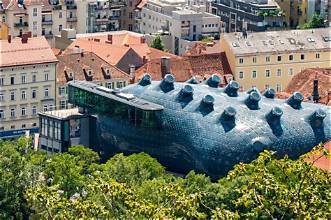
How about seeing a big giant blue blob? The Kunsthaus Graz is referred to as the “friendly alien” or the “blue blob”. It was created in 2003 by architects Peter Cook and Colin Fournier. The structure was designed as a bulbous organic space creature and looks out of place surrounded by traditional Austrian buildings in Graz, Austria. It houses a contemporary art museum. The surface is covered by lights that screen signals or even written messages that can only be seen at night.
Longaberger Basket Building
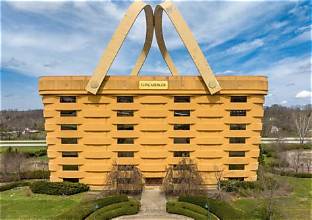
Just imagine you're walking along in Newark, Ohio, the US, and suddenly in front of your eyes is an enormous picnic basket. The Longaberger Basket Building is the creation of Dave Longaberger, who founded the American basket manufacturing business known as Longaberger Company. This is the corporate headquarters with meeting rooms and offices. The center of the building has a spacious glass atrium giving off natural light.
Makedonium
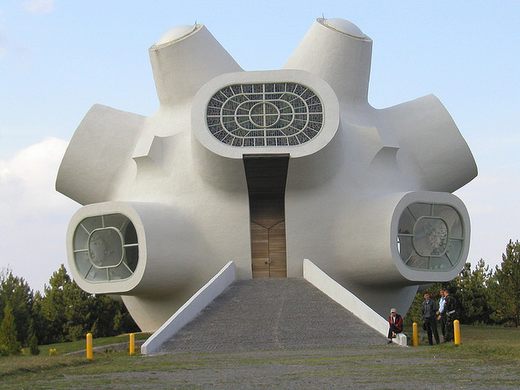
The Makedonium is a strange space-age-looking building that sits atop a hill in North Macedonia. It appears like a giant white UFO with ten huge stained-glass windows. It is the creation of designers Jordan Grabuloski and Iskra Grabuloska and is dedicated to all the IMARO revolutionaries who participated in the Ilinden uprising as well as communist Yugoslav partisans of WWII in Yugoslav Macedonia. It has become a symbol of North Macedonia.
The National Fisheries Development Board
How about coming across a huge fish that is actually a building? Situated in Hyderabad, India, the National Fisheries Development Board was designed to resemble a giant fish. It was the inspiration for the Canadian-American architect and designer Frank Gehry's quirky fish sculpture. The offices in this building are not open to the public, but the building itself provides a photogenic moment. (pictured above)
The National Library of Belarus
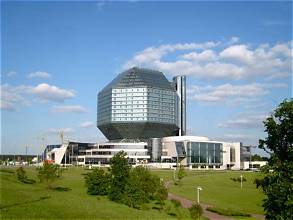
Situated in Minsk, Belarus, the National Library of Belarus looks nothing like a typical library. The building has a diamond shape known as a rhombicuboctahedron, meaning it has 8 triangles and 18 squares. It is the creation of architects Mihail Vinogradov and Viktor Kramarenkow. The library opened its doors in 2006 and has 22 floors, and inside there is room for 2,000 readers and a conference hall for 500. The library has a collection of millions of books and documents.
Petersen Automotive Museum
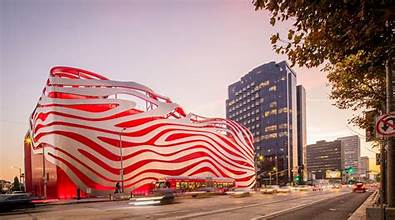
This museum will make you think of red and white striped candy canes. The Petersen Automotive Museum is situated on Wilshire Boulevard in Los Angeles, California, in the US. This building started out as a Japanese department store in 1962 and then underwent its transformation when architects draped sweeping metal panels that curved and twisted around the old structure. Inside, on several floors, are displays of rare cars and motorcycles. It even has a secret underground vault in which are some of the world’s most valuable vehicles.
Torre Helea

Cholula is a city and district located in the metropolitan area of Puebla, Mexico. Situated in San Andrés Cholula, Mexico, rising high into the sky, Torre Helea is an amazing skyscraper that looks like a giant corkscrew created from glass and steel. The building stands 34-stories tall, and each floor turns 15 degrees as it rises, so the whole structure spirals up like a helix. The tower consists of 93 luxury apartments which offer 360-degree views. The architects used a special steel cantilever system so that each floor could hang out over the one below.
Upside Down House
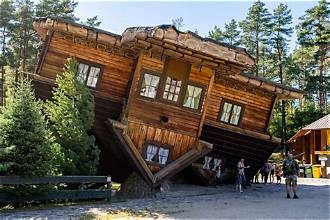
Situated in the small village of Szymbark, Poland, the Upside Down House stands on its roof. It was designed by a Polish businessman and philanthropist, Daniel Czapiewski, in 2007. He was making a statement about the confusing communist history of the country. You can enter the house through a window instead of a door and inside see furniture hanging from the floor, which has become the ceiling. The house is part of Szymbark Park, which also celebrates Kashubian history and culture.
Waldspirale
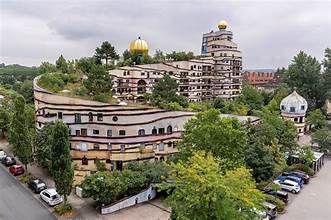
One of the strangest buildings in Germany, Waldspirale is situated in Darmstadt. This colorful apartment building twists upward. It is the creation of Austrian artist Friedensreich Hundertwasser, who designed it in the 1990s. The building has more than 1,000 different windows, none of which are the same. The sand-colored walls curve and bend in strange ways. What is truly amazing is that on the rooftop, hundreds of trees like beech, maple, and lime grow. The building rises from two stories to up to twelve.
About the Creator
Rasma Raisters
My passions are writing and creating poetry. I write for several sites online and have four themed blogs on Wordpress. Please follow me on Twitter.
Enjoyed the story? Support the Creator.
Subscribe for free to receive all their stories in your feed. You could also become a paid subscriber, letting them know you appreciate their work.
Comments
There are no comments for this story
Be the first to respond and start the conversation.