
United States Medical Ceramics Market Set for Steady Growth Amid Rising Demand for Advanced Implants
Technological innovation, aging demographics, and expanding healthcare infrastructure drive a projected rise to US$ 5.69 Billion by 2034

Introduction
The United States medical ceramics market is steadily gaining momentum, fueled by a combination of technological advancement, demographic shifts, and increasing demand for high-performance biomaterials. Medical ceramics—known for their exceptional hardness, corrosion resistance, and biocompatibility—have become indispensable in modern healthcare applications, particularly in orthopedics, dentistry, and reconstructive procedures.
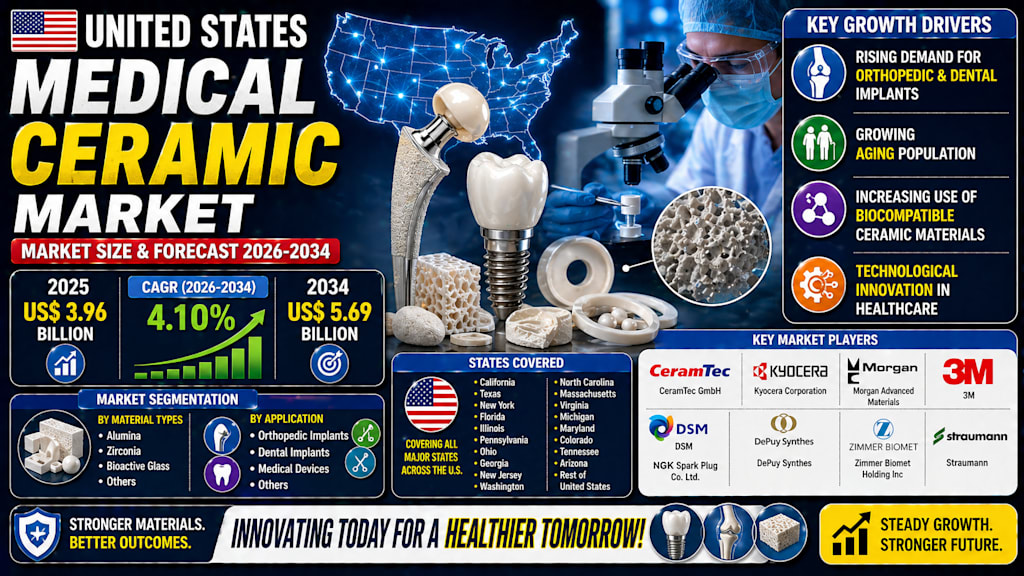
According to recent insights, the U.S. medical ceramics market is projected to grow from US$ 3.96 Billion in 2025 to US$ 5.69 Billion by 2034, expanding at a CAGR of 4.10% between 2026 and 2034. This steady growth trajectory reflects the increasing integration of advanced materials into medical devices and surgical procedures.
Understanding Medical Ceramics and Their Role
Medical ceramics encompass a range of materials such as alumina, zirconia, calcium phosphate, and bioactive glass. These materials are widely used due to their unique physical and chemical properties, including:
- High wear resistance
- Superior mechanical strength
- Excellent biocompatibility
Resistance to corrosion and chemical degradation
These characteristics make them ideal for applications like joint replacements, dental implants, bone grafts, and prosthetics. Compared to traditional materials such as metals and polymers, ceramics offer improved longevity and reduced risk of adverse biological reactions.

Market Growth Drivers
1. Rising Demand for Orthopedic and Dental Implants
One of the primary forces driving market expansion is the increasing prevalence of orthopedic and dental conditions. With a rapidly aging population in the United States, the incidence of arthritis, osteoporosis, and tooth loss is rising significantly.
As joint replacement surgeries and dental procedures become more common, the demand for durable and biocompatible materials like medical ceramics continues to grow. These materials offer smoother friction, longer lifespan, and better patient outcomes compared to conventional alternatives.
Additionally, demographic projections indicate a sharp increase in the elderly population, further boosting the need for implants and prosthetic solutions.
2. Technological Advancements and Material Innovation
Innovation plays a central role in shaping the future of the medical ceramics market. Advances in manufacturing processes, including 3D printing and surface modification technologies, have significantly enhanced the performance and customization of ceramic materials.
Key developments include:
- Custom-designed implants tailored to individual patients
- Improved osseointegration, ensuring better bonding with bone
- Development of bioactive and bioresorbable ceramics for regenerative medicine
These innovations are expanding the application scope of medical ceramics beyond traditional uses, particularly in tissue engineering and minimally invasive procedures.
3. Strong Healthcare Infrastructure in the U.S.
The United States boasts one of the most advanced healthcare systems globally, characterized by high expenditure, cutting-edge technology adoption, and strong institutional support.
This robust infrastructure facilitates:
- Increased number of complex surgeries
- Faster adoption of innovative materials
Strong collaboration between research institutions and medical device manufacturers
The presence of leading medical companies and continuous investment in R&D further strengthens the market landscape, ensuring sustained growth in the coming years.
Key Market Challenges
1. High Manufacturing and Material Costs
Despite their advantages, medical ceramics are expensive to produce. The manufacturing process requires sophisticated equipment and high-purity raw materials such as alumina and zirconia, which significantly increase production costs.
These costs can:
- Raise the price of medical devices
- Limit accessibility for smaller healthcare providers
- Create barriers for new market entrants
Cost optimization remains a critical challenge for manufacturers aiming to scale production while maintaining quality.
2. Stringent Regulatory Framework
The U.S. medical ceramics market is heavily regulated to ensure patient safety and product efficacy. Regulatory approvals, particularly from authorities like the FDA, involve rigorous testing and evaluation processes.
While these regulations ensure high standards, they also:
- Increase time-to-market
- Add to development costs
- Create complexities for smaller companies
Balancing compliance with innovation is a key challenge for industry players.
Segment Analysis
Bioinert Medical Ceramics
Bioinert ceramics, such as alumina and zirconia, are widely used in orthopedic and dental implants due to their durability and non-reactive nature. These materials do not interact chemically with surrounding tissues, ensuring long-term stability.
Their application is particularly prominent in weight-bearing implants like hip and knee replacements, where mechanical strength and wear resistance are crucial.
Bioresorbable Medical Ceramics
Bioresorbable ceramics are gaining popularity for their ability to dissolve naturally within the body over time. Materials like hydroxyapatite and tricalcium phosphate are widely used in bone grafts and tissue engineering.
Key advantages include:
- Elimination of secondary surgery for removal
- Enhanced bone regeneration
- Improved patient comfort
The shift toward minimally invasive and patient-friendly treatments is accelerating the adoption of bioresorbable ceramics.
Medical Ceramics in Plastic Surgery
The growing demand for cosmetic and reconstructive procedures in the United States is also contributing to market growth. Medical ceramics are increasingly used in facial implants, dental aesthetics, and reconstructive surgeries due to their natural appearance and durability.
Zirconia-based materials, in particular, offer a combination of strength and aesthetic appeal, making them ideal for cosmetic applications.
Orthopedic Applications
Orthopedic applications represent one of the largest segments in the medical ceramics market. Ceramic materials are widely used in joint replacements, spinal implants, and prosthetics due to their low friction and high wear resistance.
The increasing number of joint surgeries, driven by aging and lifestyle-related conditions, continues to boost demand in this segment.
Regional Insights: Key U.S. States Driving Growth
California
California leads the market due to its advanced healthcare infrastructure and strong presence of medical research institutions. The state is a hub for innovation, with widespread adoption of advanced medical technologies.
Texas
Texas is witnessing steady growth driven by its large population and expanding healthcare facilities. Increasing cases of orthopedic and dental issues are fueling demand for ceramic-based medical solutions.
New York
New York remains a key market due to its high healthcare spending and strong focus on specialized medical services. The state’s growing elderly population and demand for cosmetic procedures further contribute to market expansion.
Competitive Landscape
The U.S. medical ceramics market is highly competitive, with several global and regional players driving innovation and market growth. Companies are focusing on product development, strategic partnerships, and technological advancements to strengthen their market position.
Key players include:
- CeramTec GmbH
- Kyocera Corporation
- Morgan Advanced Materials
- 3M
- DSM
- NGK Spark Plug Co. Ltd
- DePuy Synthes
- Zimmer Biomet Holding Inc
- Straumann
- BioMérieux SA
These companies are investing heavily in R&D to develop next-generation ceramic materials that offer improved performance and broader applications.
Future Outlook
The future of the United States medical ceramics market looks promising, with sustained growth expected over the next decade. Several trends are likely to shape the market:
- Increasing adoption of personalized medicine
- Growth in minimally invasive procedures
- Expansion of regenerative medicine applications
- Continued technological innovation in materials and manufacturing
As healthcare continues to evolve, medical ceramics will play a crucial role in improving patient outcomes and enabling advanced treatment solutions.
Final Thoughts
The United States medical ceramics market is on a steady growth path, supported by strong healthcare infrastructure, technological innovation, and rising demand for advanced medical solutions. While challenges such as high costs and regulatory complexities persist, the overall outlook remains positive.
With increasing focus on patient safety, durability, and performance, medical ceramics are set to become an integral component of modern healthcare. As the industry continues to innovate, it will unlock new opportunities and redefine the future of medical materials.
About the Creator
Enjoyed the story? Support the Creator.
Subscribe for free to receive all their stories in your feed.
Comments
There are no comments for this story
Be the first to respond and start the conversation.