
The Trad-Wife Contradiction
How social media turns domestic nostalgia into a modern online brand
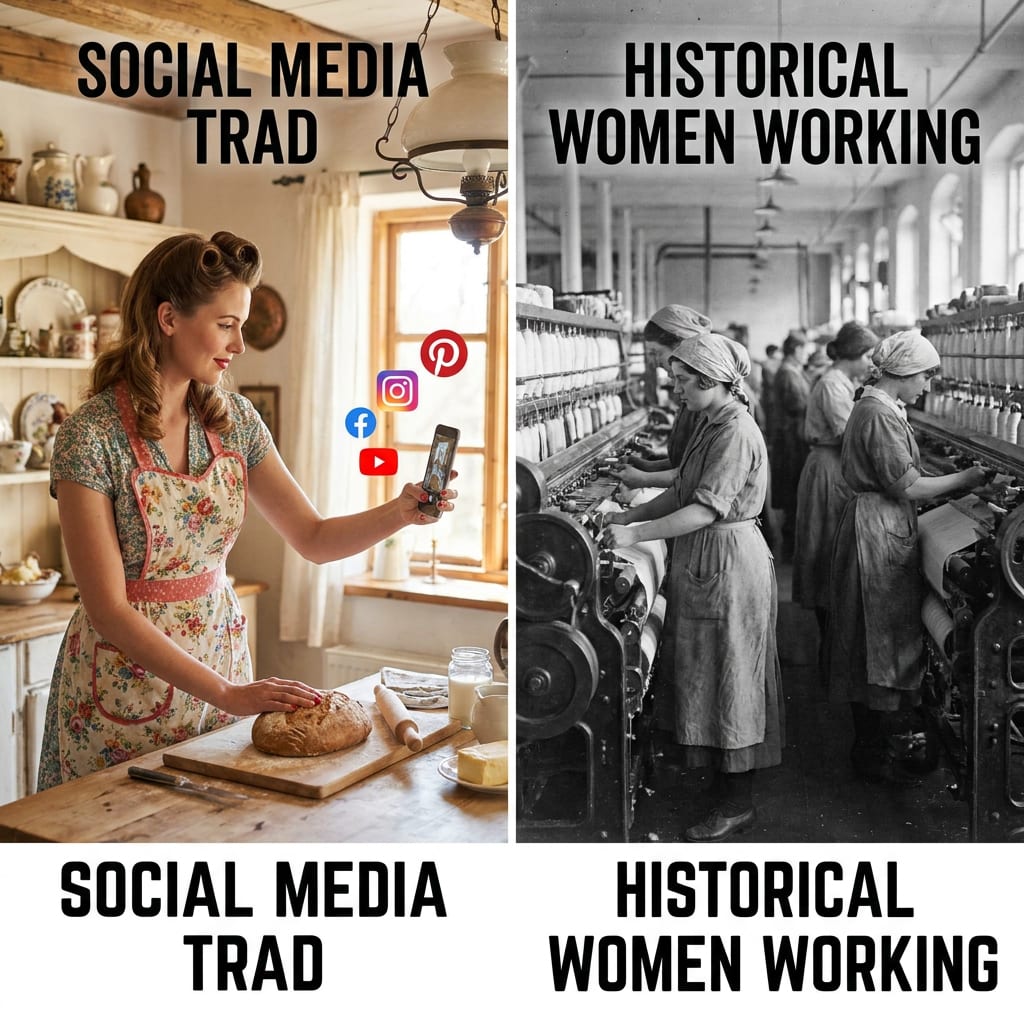
As someone interested in history and feminism, I find the trad-wife trend troubling because its public image depends on a contradiction. The version of “traditional wifehood” promoted on social media does not feel especially genuine or authentic: many of these women argue that men should be sole breadwinners while earning their own money online through brand deals, sponsored posts, affiliate links, paid subscriptions, and monetised videos.
That contradiction continues in the way trad-wife influencers present domestic submission alongside entrepreneurial independence. They may encourage women to embrace traditional gender roles while operating personal brands, negotiating contracts, and building audiences as entrepreneurs. They do not face the same worries as women in the past, such as whether the harvest would fail or what they would do if their husbands died.
They also celebrate property ownership and wealth building—rights that traditional gender ideology would historically have restricted or denied women. The trad-wife aesthetic therefore depends on modern freedoms even as it romanticises a past in which women had far fewer choices. They also repeat the misleading idea that women only entered the workforce during WWII.
The historical reality they invoke was very different from the polished version they perform online. The women of the past—the figures trad-wife influencers imitate—were not managing follower counts, algorithms, or brand negotiations. They baked bread because buying it was not always easy or affordable, preserved food because refrigeration was limited or unavailable, mended clothes because replacing them was expensive, and kept kitchen gardens because household survival often depended on them.
Washing, cooking, sewing, cleaning, and childcare were not charming lifestyle choices staged for a camera; they were daily labour shaped by limited technology, limited rights, and limited alternatives. As the industrial revolution slowly changed to home as technologies such as vacuum cleaners. As society shifted making own food or stopping at market where you buy milk , bread and meat from different places.
Today, popular trad-wife posts often turn these tasks into polished content: sourdough tutorials, “from-scratch” cereal or snacks, vintage-apron kitchen routines, pristine homestead videos, and soft-focus clips of meal prep, gardening, homeschooling, or “serving” a husband. These posts can be monetised through sponsored cookware or clothing links, affiliate codes for household products, paid recipe guides, subscription-only newsletters, platform ad revenue, brand partnerships, lifestyle courses, and product placements woven into the domestic scene. They also build audience engagement through “day in my life” videos, before-and-after cleaning reels, recipe series, comment prompts asking viewers whether they would choose the same lifestyle, Q&As about marriage or homemaking, behind-the-scenes glimpses of family routines, and repeated catchphrases that turn domestic labour into a recognisable personal brand. They manage to fancy up and monetise everyday tasks, many of which people still do every day without an audience or a growing bank account.
Supporters often frame trad-wife content as a legitimate personal choice: a celebration of femininity, homemaking, family life, religious or conservative values, and an escape from the pressures of modern paid work. Public support often appears in comments praising women for “putting family first,” admiring their cooking, sewing, gardening, or childcare skills, describing homemaking as undervalued labour, or calling the lifestyle calmer, more natural, and more meaningful than hustle culture. Some supporters also defend trad-wife influencers as exercising the very freedom feminism claims to protect: the right to choose domestic life without being dismissed or judged. Critics, however, argue that the same content can romanticise financial dependence, normalise restrictive gender roles, and present a polished version of domesticity that hides the labour, privilege, and economic safety nets required to make it look effortless. Public criticism often appears in comments or essays pointing out that the lifestyle can depend on a partner’s high income, inherited wealth, racial or class privilege, paid help, or the hidden labour of filming and editing. Others criticise posts that frame submission as moral superiority, shame women who work outside the home, or suggest that modern feminism is responsible for women’s stress while ignoring the protections and choices it helped secure.
Media coverage has helped make the trad-wife trend more visible by presenting it as both appealing and controversial. Some coverage focuses on its social-media dominance, family-centred branding, and influencer aesthetics. Other pieces examine the divided public response, asking why the fantasy of traditional domesticity remains attractive even as it draws criticism for its politics, nostalgia, and performance of gender roles. Together, this coverage shows that the trad-wife image is not just a personal lifestyle choice; it has become a public debate about work, feminism, family, and online identity.
Ultimately, this contradiction defines the trad-wife trend: it sells dependence as authenticity while relying on the independence, legal rights, and economic opportunities that modern feminism helped make possible.
About the Creator
Sarah Xenos
Follow on https://benable.com/i/EEKQW
ALso follow me on medium Sarah Xenos – Medium
Enjoyed the story? Support the Creator.
Subscribe for free to receive all their stories in your feed.
Comments
There are no comments for this story
Be the first to respond and start the conversation.