
Thank you, Christopher Nolan
The Odyssey is a good film and deserves the hype but it was the portrayal of female characters that got this viewer invested



I know a bit about Homer's Odyssey: the Cyclops, Circe, Calypso, Charybdis, Scylla, Sirens. I know that Penelope is the patient wife, waiting for her husband to return, undoing her tapestry every night to buy time and Telemachus is the son, yearning for his father to return or to become king, one of the two to escape the limbo in which he finds himself.
I've never read it so I'm not certain about the order of these events but I was expecting them all to be featured in Nolan's interpretation and I was not disappointed.
It's a long book, Odyssey so it would have to be condensed for a film but I felt like the key components are there. I did think about doing a review of the film but I'm not going to do that. There'll be plenty of other places to read about it. However, this discussion will contain spoilers so if you've not seen it, just be aware and if you want a taste of it, the trailer is above.
So, if this is not a review, what is it? An appreciation? A sharing of thoughts? Yes, and from a feminist perspective, which more and more these days, I'm starting to feel is a phrase derided and dismissed. Feminists have always come in for grief, the stereotype of being hairy, butch and unattractive to males being one proposed, beauty being more applauded than intelligence in women. Germaine Greer helped assuage people of that.
Feminists are also, with their "militant" "anti-male" views seen as fierce and lacking discipline, subject to hormones which skew their vision. Don't women know that they are designed to be supportive and meek? Pah!
The division comes from comprehension of what feminism means: feminism does not mean anti-male but it does mean women advocating for themselves and the two should not be confused - but increasingly are.
Luckily, not all men see feminists as crazed women intent on bringing them down and it would seem that Christopher Nolan is one of these. I am making this assumption from the evidence of his direction of key female characters in the film: Penelope (Anne Hathaway), Calypso (Charlize Theron) and Circe (Samantha Morton). It's these female characters and their depiction that I would like to discuss. As I've said, I've not read Odyssey so I'm going to discuss these characters in terms of what I've soaked up from other books and talks and general discussion from my 53 years on this planet.
The Odyssey
I wasn't sure what to expect from the film. I imagined that there would be fighting and war scenes. I knew that there would be CGI to some extent. I was expecting it to be high-paced due to the nature of it, jumping from place to place with strong sea scenes and some skulduggery.
What I wasn't expecting was some of the best speeches to be put into the mouths of women.
Calypso
Let's start with Calypso, the demi-goddess who "keeps" Odysseus for herself. What I knew about her was that she fed him lotus flowers to help him forget that he needs to get home. The lotus keeps him in a state of bliss and makes sure that he never yearns for the wife and son that he has left behind. He is never clear-headed enough to discern what he is missing and the lotus makes sure that he never wants for anything else.
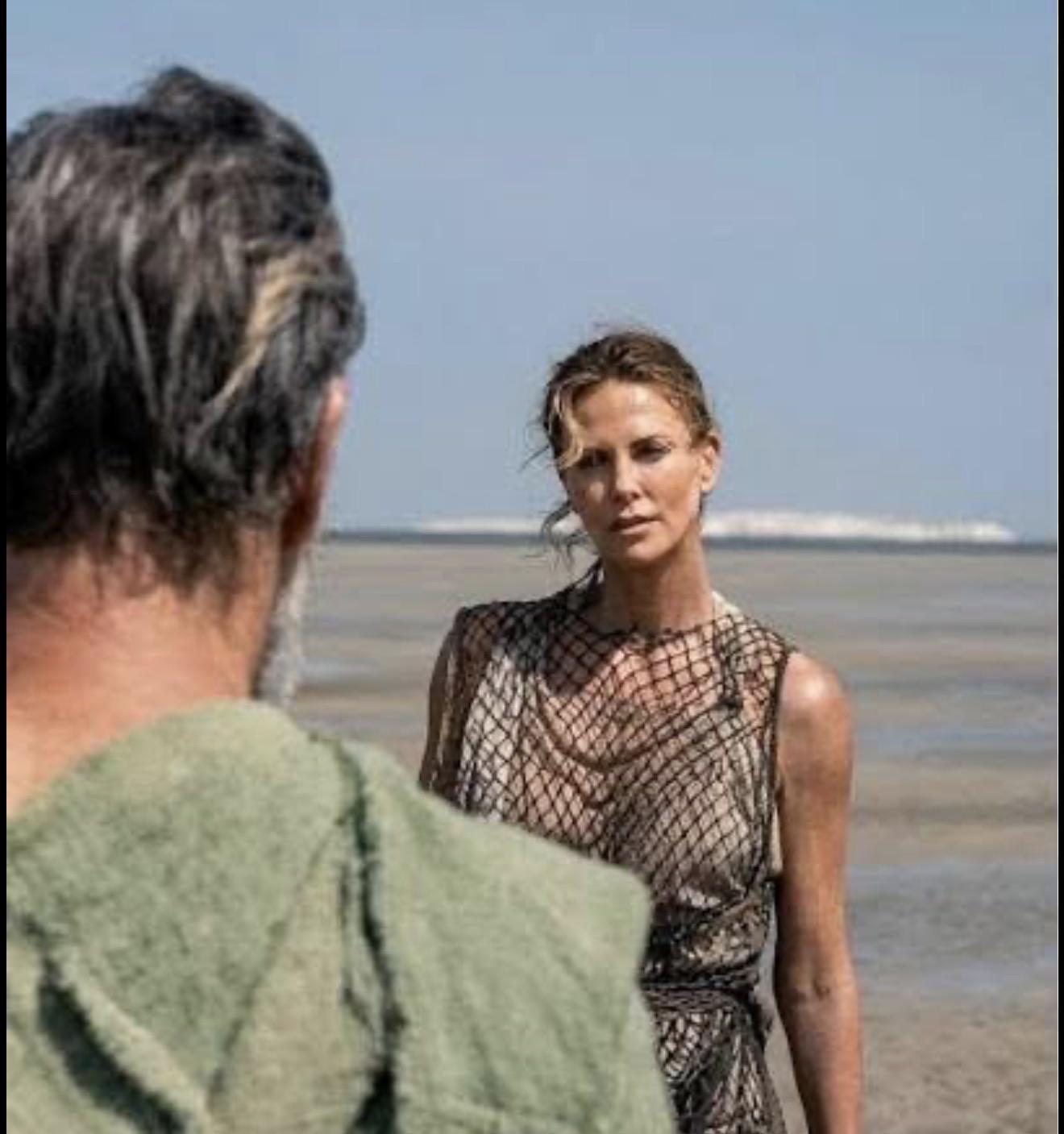
This idea makes Calypso seem like a woman intent on keeping a hero against his will, preventing him from following their heart's desire. He would leave but he can't because the power to choose is being taken away from him by a woman who is essentially drugging him.
However, Nolan presents an entirely more wholesome vision of Calypso. She is not force feeding him the lotus; he is choosing to do that himself. Admittedly, she is not stopping him but there is a good reason for that. When Odysseus is not eating the lotus, he is in a state of distress, what we would know as PTSD, and when he tries to confront the fact that he has lost all of his men and that he must make it home alone, he breaks down and so, the lotus takes him away from his pain.
But it is not Calypso who is feeding him this to subdue him; he is being allowed to eat it as he chooses because she can't bear to see him in pain. She is a carer, not a keeper.
I liked this change of view. She's not a femme fatale; she is a minder. There's no doubt that she loves him and there's no doubt that she wants him to stay but she is not preventing him from going.
Circe
Now, to Circe and one of my favourite actresses, Samantha Morton. Circe is a witch who lives on an island and turns men into pigs which she then eats. Again, this is what I propose to know about her.
Essentially, in the film, that is what happens to Odysseus' men. They are turned into pigs and put in a pen until Odysseus comes to talk to Circe and reasons with her.
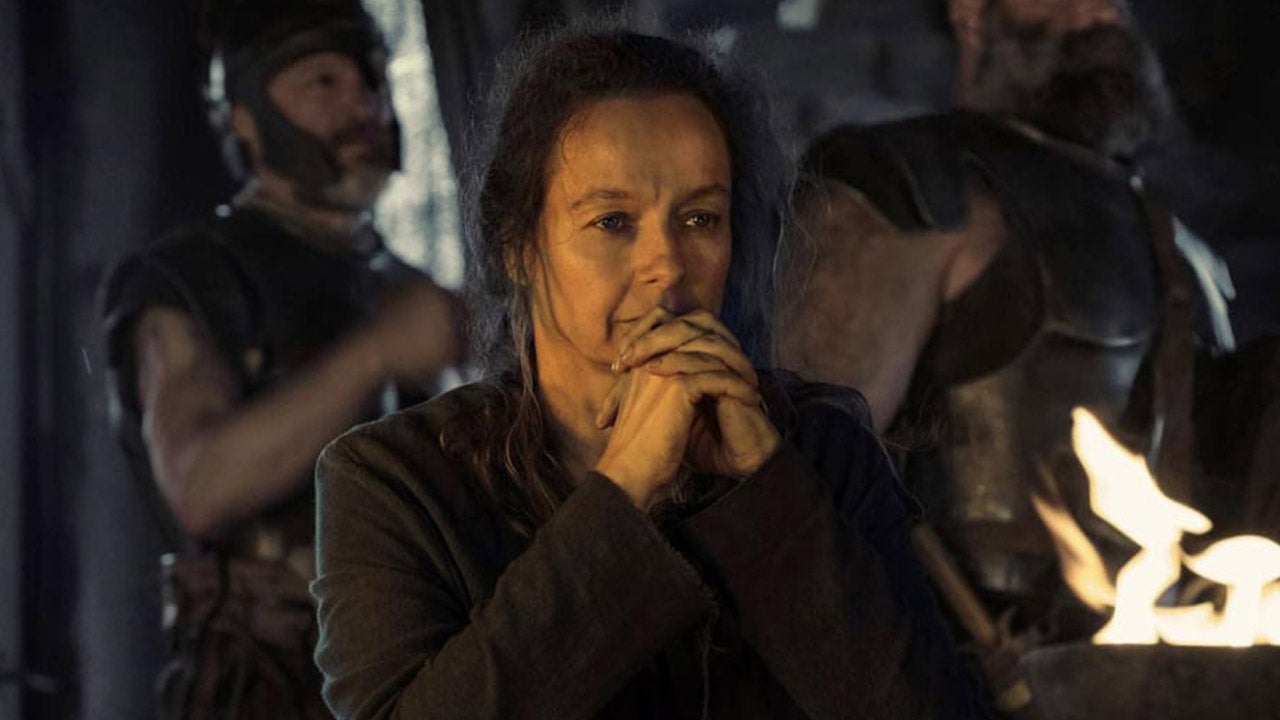
The men's interaction with Circe, however, begins with her being surprised and she shrieks from fear and falls to the ground, begging them not to hurt her. By becoming submissive, she is essentially bidding them to take what they want (sexual and other being the suggestion from her supine state) as long as they allow her to live.
They are more interested in food than sex so she feeds them and they eat with gusto, much to her satisfaction. And then she turns them into pigs, moulding their features through manual manipulation and magic into porcine snouts and trotters.
Odysseus realises that his men are in trouble and arrives at Circe's hut and the pig pen outside.
Nolan could have had Circe as some shrieking banshee intent on revenge but instead we have a tense encounter as Circe offers Odysseus food with his men as pigs squealing in the background, trying to get into the hut to warn him. Odysseus does coerce Circe into reasonable behaviour recognising the danger presented and he does this by threatening her raven.
They then have a frank discussion, a communication of sorts. It is tense but it is honest and Circe explains why she has turned his men into pigs - it is because that is what they are. They are animals who will follow their basest desires without constraint if given that freedom and so, she has merely manipulated them into their purest form. She gives a powerful speech about the threat they present and it is sobering, a perspective offered from someone who is powerful but also vulnerable in the face of another's desires and their pursuit of satisfaction from them. Odysseus gets his men back and they leave her island and her alone.
I think that what is represented in this speech is how men have a duty to behave respectfully towards women, to disprove this opinion of them. Circe may have learned to be wary and fear men from experience but there is a lot that men can do to disabuse women of this view and to make them feel like they can be safe in male company.
Penelope
Finally, let's look at Penelope, Odysseus' long-suffering wife, played with majesty and grace by Anne Hathaway.
She is a woman keeping her shit together in the face of unyielding pressure. The fact that she keeps suitors at bay for years when they are ensconced in her home is testament enough to her strength but Nolan takes this a step further with a speech that he has Penelope deliver to Telemachus.
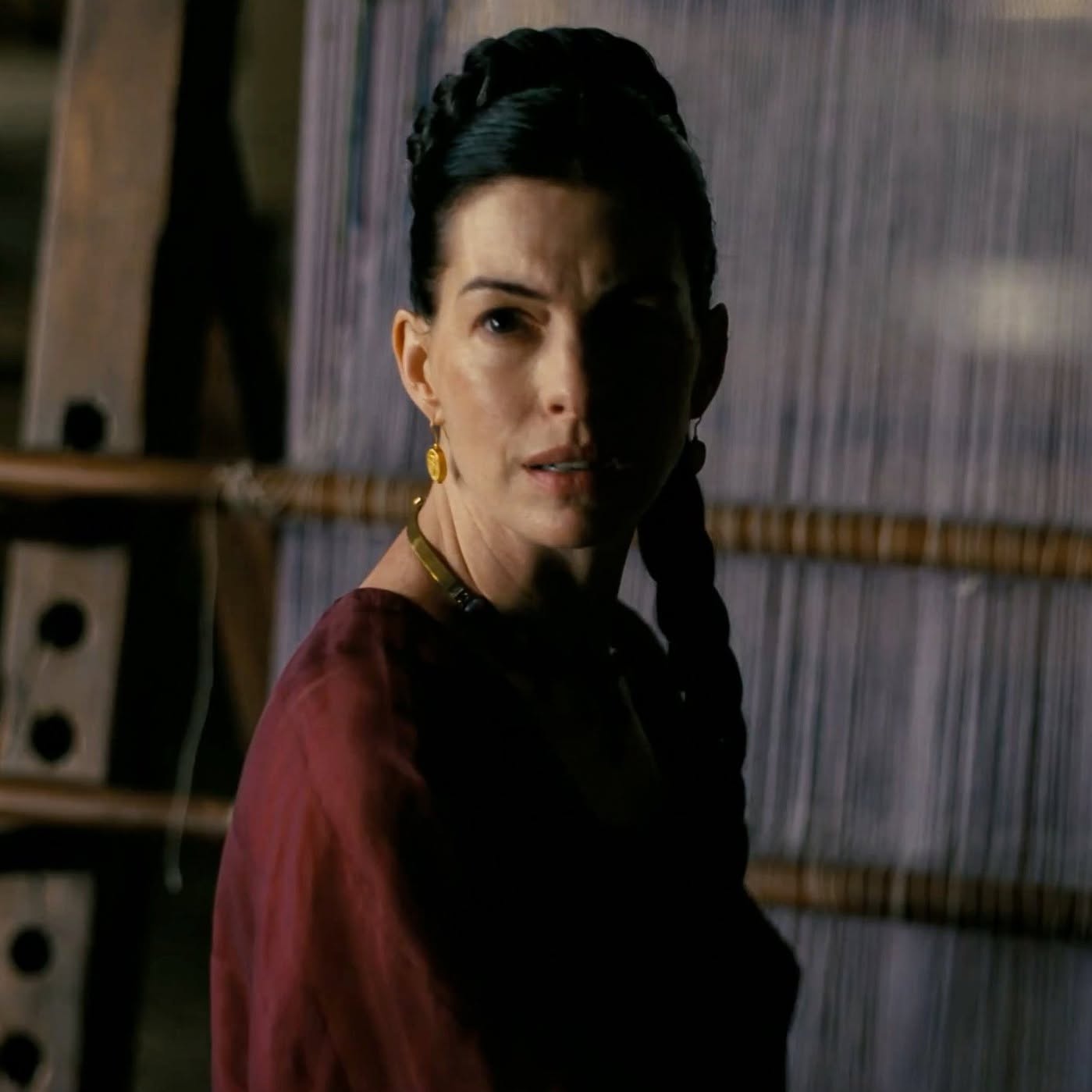
I loved this speech. Hathaway delivers this with passion, raw and powerful as she tells her son that she has been a force to be reckoned with while Odysseus has been away, essentially ruling the country in his absence and doing a pretty bloody good job of it. It is the cry of women everywhere who are sidelined because they are female and seen as less effective and weaker; that they don't have the same knowledge and awareness as men to rule or make decisions. She tells her son in no uncertain terms that she is in control and will continue to be until Odysseus makes it home, despite the pressures and the rising tensions. Her conviction is solid and despite the emotion with which it's delivered, there is no doubt from Hathaway's depiction of her, that she is not a woman who will crumble. Telemachus is taken aback by it but defers to her.
It's bloody great.
Was it deliberate?
So. Three strong female characters, all delivering powerful speeches, perhaps some of the longest in the film. In fact, I would say they are and they are certainly the most developed.
And so, was this deliberate? Yes, I think so and in addition, I think that there were a lot of other messages delivered in the film that speak volumes about the times we are living in and our need to combat the way that the world is going. Zeus' law and being hospitable to neighbours for one. If that doesn't resonate in today's fractured times, then I don't know what does.
So thank you, Christopher Nolan. Thank you for using your film-making skills to create a cinematic epic which brings people to the cinemas. Thank you for limiting the use of CGI and using film (Lana V Lynx has written a great piece on this here). Thank you for using a story to prompt discussion and to highlight issues. Thank you for being a proponent of feminism.
We need more of this.
Thank you.
Footnote: I've not mentioned Zendaya's portrayal of Athena, another strong female presence in the film, as she has importance, which is revealed at the end, but this is not through her voice and I have chosen to focus on the speeches in this article. However, she is a powerful representation, a reminder of what is lost by the rash actions of men.
About the Creator
Enjoyed the story? Support the Creator.
Subscribe for free to receive all their stories in your feed. You could also become a paid subscriber, letting them know you appreciate their work.
Comments
There are no comments for this story
Be the first to respond and start the conversation.