book reviews
Must-read books for and about women, including thought-provoking novels, business books, memoirs and feminist histories.
Notes from the Mind Palace
The house is dead silent, but inside my ribcage, the engine is still throwing heavy sparks. Everyone else gets to slip away into the dark, trading the weight of the day for soft edges, slow breathing, and effortless drift. For them, midnight is a curtain that drops cleanly, bringing an end to the noise. But for me, the dark isn't a relief—it’s a mirror. It is a wide-open canvas where the shadows start to take shape if I sit still for too long, a quiet room where the past likes to pull up a chair and wait.
By Syl De'Vil20 days ago in Viva
Cosmic Displacement
Beneath the silent canopy of the trees and the cold light of the stars, a lifelong outsider finds her true reflection. There is a heavy, ancient silence that only exists deep beneath the tree canopy after midnight. Out here, away from the synthetic hum of the house, the endless logistics of a large family, and the relentless demands of the daylight world, the air completely changes. I step out into the cold grass, pull my star-covered robe tight against the chill, and look up through the dark, jagged silhouettes of the branches.
By Syl De'Vil20 days ago in Viva
The Armor of the Metalhead Matriarch
Out here in the predictable daylight of the suburbs, a forty-five-year-old mother of seven stands out. People notice the sheer scale of a massive family and automatically file you away into a neat, conventional box. They assume your identity has been entirely swallowed by the endless cycle of groceries, laundry, and schedules. They think the story ends there.
By Syl De'Vil20 days ago in Viva
Rearranging the Broken Furniture Inside My Head
I often find myself thinking about what it means to simply not be here—not in this era, not in this body, not in this heavy, suffocating space. There is a persistent, quiet displacement in my chest, an exhausting sense that I was dropped into the world entirely out of sync, born either way too early or far too late. I exist permanently on the periphery. I don’t fit into the conventional puzzles of society, and I don’t fit within the familiar walls of my own family. When you are an outsider in your own home, alienation becomes your default baseline.
By Syl De'Vil20 days ago in Viva
We Are Already In A Dystopian Society
After being acquitted for performing the last abortion in North Dakota, Liz is still trying to find a job as a doctor. She applies to a posting that she sees online. However, when she meets her potential employers, they drug and kidnap her. When she wakes up, she discovers that her kidnappers are part of a cult where women’s rights are very restrictive, and they want Liz to be their OB-GYN. Will Liz be able to find a way out with the other mistreated women?
By J. Davis Mallory2 months ago in Viva
The Day the Router Died
The glowing blue light of the living room router did not just blink out; it felt as though it took the literal oxygen from the room with it. For Marcus, the silence that followed was immediate and deafening. His thumb instinctively scrolled against a completely dark smartphone screen, frozen mid-swipe on a social media feed that would no longer refresh. Across the room, his teenage daughter, Maya, stared blankly at her tablet as her high-definition video feed froze into an ugly, pixelated mosaic of unmoving colors. In the kitchen, his wife, Sarah, paused mid-recipe, her smart-screen refrigerator suddenly refusing to display the next culinary step. The smart home had gone completely dumb in a matter of seconds, and the family was left stranded in the quiet aftermath.
By Asghar ali awan4 months ago in Viva
Aliens
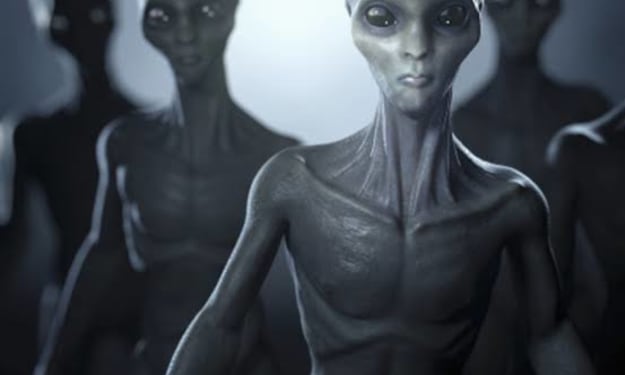
Aliens are beings that may live outside our planet Earth. For many years, people have wondered if we are alone in the universe or if life exists somewhere far away in space. This question has inspired stories, movies, and scientific research. Even today, aliens remain one of the biggest mysteries of the universe.
By shaoor afridi10 months ago in Viva
Finding your groove in the 50s
How come we don't have a show on television called 50-somethings? There are plenty of shows with the kiddies as stars, or the teens as stars, or the 20 and 30-somethings as stars. They even have movies and shows for the silver haired folks in their 60s and up club. What about the 50-somethings? Where's our movie or show? When I was younger I had all kinds of guidance. The Breakfast Club helped me through high school. Sex in the City helped me through my 20s. Comic books and movies helped me through the 30s and 40s. Now what? Whose representing the 50-somethings journey and pathways? I feel like I have no guidance. In a way, I like that. I'm too old to be listening to a drill sergeant or condescended to as if I haven't been around the block. Yet, there's still a piece of me that is uneasy and insecure about navigating on this new territory commonly called "over the hill" or "after the change". Big changes, big accomplishments, yet not much art or literature for guidance or reference as if the 50-somethings are in unfamiliar living situations. I trust my own instincts and judgements most of the time, but I do feel a discomfort of not having more movies and books to use as a reference for this phase/chapter of my aging experience.
By Shanon Angermeyer Normanabout a year ago in Viva
The Unseen Viva
M Mehran Sana had always been the kind of student who hid at the back of the classroom, scribbling notes furiously, afraid to raise her hand. She excelled in written exams but dreaded speaking. Words, when written, obeyed her. Words, when spoken, betrayed her. So when the announcement came that her degree would end with a viva voce, she felt her stomach drop. An oral examination—standing alone before a panel, answering questions in real time—was her greatest nightmare. --- The Night Before The night before her viva, Sana barely slept. She stared at her thesis spread across the desk, highlighted and dog-eared. She whispered definitions under her breath, rehearsed explanations in the mirror, but every time she imagined facing the professors, her voice cracked. At 3 a.m., she closed her notes and whispered, “If I fail, at least I’ll know I tried.” But deep down, she wondered if trying would ever be enough. --- Walking In The next morning, the corridor outside the examination room buzzed with nervous energy. Her classmates paced, flipping through last-minute notes. Sana sat silently, her palms damp, her heart hammering. When her name was called, she felt the world tilt. She stood, legs trembling, and walked into the room. Three professors sat behind a long table, her thesis placed in the center like evidence in a trial. “Good morning, Miss Sana,” one said, adjusting his glasses. “Shall we begin?” --- The First Question The first question was simple enough: “What motivated you to pursue this research?” Sana’s lips trembled as she spoke. “I wanted to understand how small changes in community education programs could… could transform literacy rates.” Her voice wavered, but the words came. The professors nodded. Encouraged, she exhaled slowly, gripping the edge of the chair. Then came the harder ones. --- Cracks in the Armor “Can you explain why you chose this methodology?” She stumbled, trying to recall her notes. Her throat tightened. The silence in the room grew heavier. Another professor leaned forward. “What limitations do you see in your findings?” Her mind went blank. For a horrifying moment, she thought she might faint. She wanted to disappear into the floor, to run from the room and never return. But then, she remembered something her grandmother used to tell her: “When you can’t find courage, borrow your honesty.” So she took a breath and said, “The biggest limitation was me. I was nervous about whether my methods were strong enough. But I learned from those mistakes and corrected them as I went.” The panel didn’t frown. In fact, one professor smiled. --- The Turning Point As the questions continued, something shifted. The more Sana spoke honestly, the steadier her voice became. She stopped trying to be perfect and started explaining like she would to a friend. When they asked about the future scope of her work, she lit up. She spoke passionately about how her findings could help design better literacy programs for rural schools. She forgot her fear. She forgot herself. She spoke only about the work she loved. By the end, her voice was no longer trembling—it was alive. --- The Verdict “Thank you, Miss Sana,” the chair said at last. “Please wait outside while we discuss.” The corridor was suffocating. Every second stretched like an hour. She clasped her hands tightly, whispering prayers. Finally, the door opened. One professor stepped out, smiling warmly. “Congratulations. You’ve passed.” Sana blinked, stunned. Her chest filled with a rush of relief so powerful that tears sprang to her eyes. For the first time, she realized she hadn’t just passed an exam—she had passed a barrier inside herself. --- Beyond the Viva That day, Sana learned the viva was not simply a test of knowledge. It was a test of presence, of courage, of owning your voice even when it shakes. And she realized something else, too: life itself is full of vivas. Job interviews. First dates. Difficult conversations. Every moment we’re called to speak our truth is its own oral examination. The questions may change, but the challenge is the same—to stand tall, to be honest, and to let our voice carry who we really are. --- Final Thought The viva is more than an academic ritual. It is a rite of passage that strips away rehearsed answers and demands authenticity. Sana walked in terrified, but she walked out transformed—not because she knew everything, but because she finally believed in herself. And maybe that’s the real lesson of every viva: the answers matter, but the voice matters more.
By Muhammad Mehranabout a year ago in Viva
Ayn Rand: The Woman Who Made Individualism Unstoppable
Two unforgettable heroes came alive from Ayn Rand’s imagination—Howard Roark from The Fountainhead (1943) and John Galt from Atlas Shrugged (1957). To me, they weren’t just fictional men; they embodied the possibility of living by unshakable principles. Their strength wasn’t in superpowers or wealth but in moral clarity—the courage to stand alone when the world demanded conformity. When I first discovered Ayn Rand, I didn’t expect her words to pierce so deeply into my own life. She didn’t just write stories; she gave me a way of thinking—a way of seeing myself and the world. Before her, I was adrift, torn between tradition, expectations, and my own half-formed dreams. After her, I found purpose. --- My First Encounter with Rand’s World I didn’t start with her novels. Instead, I stumbled across her nonfiction—the provocatively titled The Virtue of Selfishness (1964). The very name made me raise an eyebrow. Weren’t we taught that selfishness was wrong? That to live for yourself was immoral? Yet, page by page, Rand dismantled every notion I had absorbed from school, church, and culture. Words like egoism, altruism, and collectivism weren’t just vocabulary—they became sparks in my mind. Suddenly, I saw my own contradictions: saying one thing to please society while silently craving independence. Soon after, I picked up Anthem (1938), a slim book but heavy with meaning. In its pages, I found a world where even the word “I” was forbidden. And yet, the protagonist dared to speak it—dared to claim individuality. That struck me. Because in my own life, I too was afraid to say: I don’t believe what you believe. I don’t want what you want. I am my own person. --- The Clash Between Society and Self For years, I played two roles. Outwardly, I was the dutiful son, the obedient student, the cooperative member of whatever group demanded my time. Inwardly, I was wrestling with Rand’s voice in my head urging me to stop sacrificing, stop pretending, stop hiding. Like many, I felt the pressure of collectivism—the idea that the group, the family, the nation, or the faith comes before the individual. Rand’s words were a rebellion in my mind. They told me that my life belongs to me. --- A Breaking Point That Changed Everything My life shifted dramatically during a difficult period when I served in a strict, hierarchical environment. Rules suffocated individuality. Words like “we” and “us” replaced “I” and “me.” It was eerily similar to Anthem. At my lowest, I found myself at odds with authority. Confrontations escalated until I was sent away, both physically and emotionally cut off. In that moment of collapse, I turned again to Rand. A fellow traveler handed me a worn copy of The Fountainhead. I devoured it. Howard Roark’s uncompromising integrity—his refusal to bend even when the world mocked, punished, or ignored him—became a lifeline. Rand wasn’t promising an easy life. She was promising a meaningful one. --- Finding Strength in Her Fiction Reading We the Living (1936) showed me the suffocating power of collectivism in its rawest form. Though bleak, it made me grateful for the choices I still had. Then came her masterpiece, Atlas Shrugged. That novel was more than a story—it was a mirror. I saw myself in Hank Rearden, not because I was an industrial genius, but because of his battles with family who couldn’t understand his drive. Like Rearden, I felt the sting of being criticized for valuing my work, my ambitions, and my self-respect. Rand’s women—Dominique Francon and Dagny Taggart—also stood out. They weren’t written as victims or side characters but as powerful individuals who matched men in intellect and strength. I admired them, not just as fictional women, but as proof that Rand’s world left no room for mediocrity, male or female. --- Ayn Rand and My Mental Battles Alongside admiration came personal struggle. Living with mental health challenges meant days of mania, depression, and uncertainty. Yet, Objectivism gave me a compass. Rand’s philosophy didn’t promise to heal my mind, but it reminded me that reason could guide me even through storms. When I felt crushed, I remembered her words: “Do not let your fire go out.” That line wasn’t just ink on paper. It became a personal command. Yes, I took medication. Yes, I fought demons in hospitals and quiet rooms. But Rand’s work gave me something medicine couldn’t: meaning. A reason to keep striving. --- Why Rand Still Matters Critics love to dismiss Ayn Rand. They call her cold, arrogant, unrealistic. But I see something else: clarity. She didn’t sugarcoat life. She said, Here is reality. Here is reason. Choose to live fully or waste away in sacrifice. Her ideas are not perfect, and even she had flaws. But the force of her writing, the sharpness of her mind, and the passion with which she defended individualism shaped me forever. Even now, when I speak to friends, colleagues, or strangers online, I find myself quoting her lessons. I tell them: you own your life. You are not here to live as a shadow of someone else’s dream. --- Where I Go From Here Rand once said, “And I mean it.” Those words capture her spirit—unyielding and absolute. That is the kind of certainty I want to carry. Because of Ayn Rand, I no longer fear standing alone. I no longer mistake self-interest for sin. And I no longer apologize for wanting a life filled with purpose, reason, and joy. She may not be a saint or a universally loved figure, but for me, she is the writer who handed me a philosophy strong enough to live by. And that is why Ayn Rand is not just “the unknown ideal” but, in my eyes, the unforgettable ideal woman. ---
By Muhammad Riazabout a year ago in Viva