
Study Shows That Women Own 44.6% of all U.S. businesses but just 21.2% of employer firms
Women often Solopreneurs


While women launch nearly half of new businesses, most operate as solopreneurs without employees. This happens due to high concentrations in service sectors, limited access to growth capital, and a primary focus on personal flexibility over rapid scaling.
The study reveals that Women own 44.6% of all U.S. businesses but only 21.2% of employer firms, a gap of 23.4 percentage points that appears in every region of the country.
Possible reasons for the large gap include a service sector focus. Women-owned firms cluster heavily in healthcare, education, personal care, and professional services, which naturally require fewer workers than manufacturing or construction. Many women-owned businesses are intentionally built around digital or solo operations to keep costs minimal.
Other roadblocks for women include less startup money. Female founders typically launch with roughly 50% less working capital than men. Further, women receive a tiny fraction of total venture capital, making it harder to hire large initial teams.
Several structural issues include women’s preference for autonomy over expansion. Many women turn to entrepreneurship for schedule control and flexibility rather than building massive corporations, since they have child-rearing and household responsibilities at home.
Moreover, data shows women-owned firms are more frequently single-owner operations, bypassing the traditional employer infrastructure.
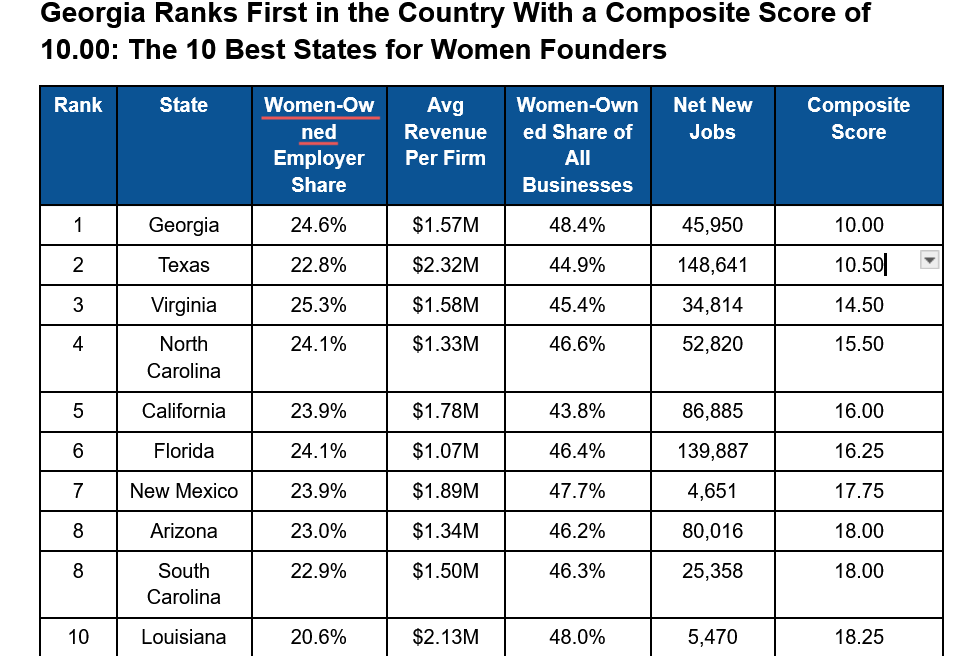
The South alone added 584,017 net new small business jobs, the most of any region, while no state anywhere breaks a women-owned employer share above 27.2%, according to our analysis of U.S. Census Bureau Annual Business Survey and SBA 2025 State Small Business Profile data.
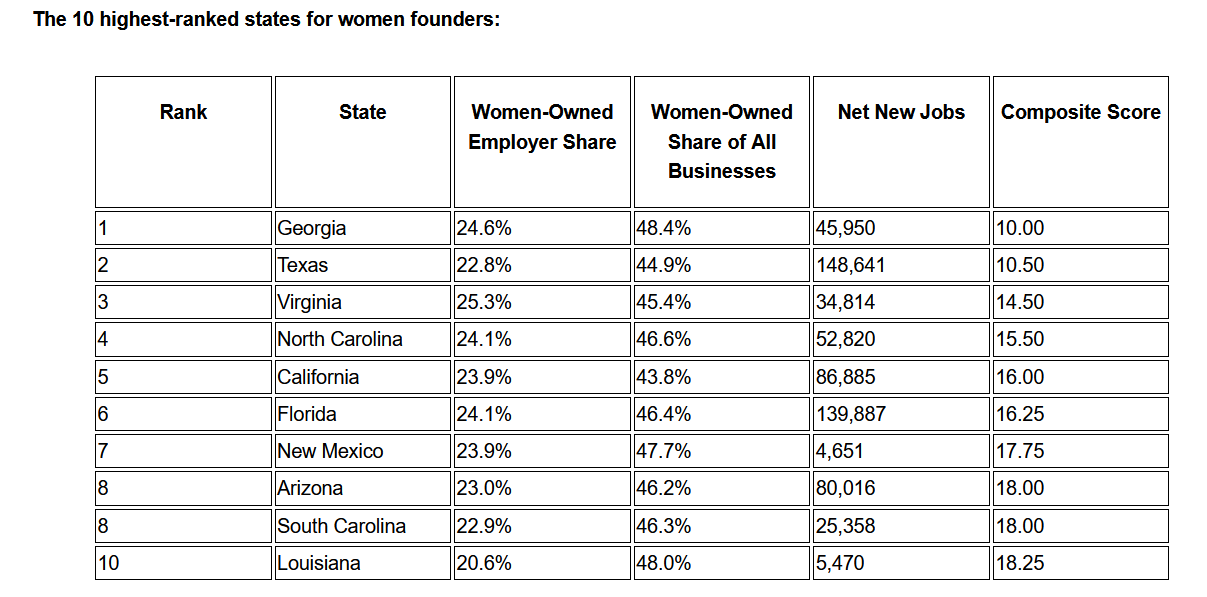
In fact, the South holds 7 of the top 10 states in the ranking, led by Georgia with a composite score of 10.00 against a national average of 25.36. The Northeast places no state in the top 20, and four of its nine states finish in the bottom ten.
Women have built a substantial presence in American business, owning close to half of all firms in the country. Yet the moment the measure shifts from ownership to employment, the picture changes sharply. The step from working for yourself to signing a payroll is the one the data shows women are least able to take, and where a founder builds appears to shape her odds of taking it.
An analysis conducted by Kendra’s Boutique Inc. ranked all 50 U.S. states on four metrics drawn from two federal sources: women-owned employer share and average revenue per women-owned firm from the U.S. Census Bureau Annual Business Survey, reference year 2023, and women-owned share of all businesses and net new small business jobs from the SBA 2025 State Small Business Profiles. We ranked every state from 1 to 50 on each metric. Then, we averaged the four ranks with equal weight into a composite score, where the lowest score ranks first.
The top-ranked states are not the ones that lead any single metric, but the ones that hold up across all four, pairing a high women-owned employer share with real job creation. Seven of these ten states sit in the South, and Texas alone accounts for 148,641 net new jobs, the highest figure in the country.
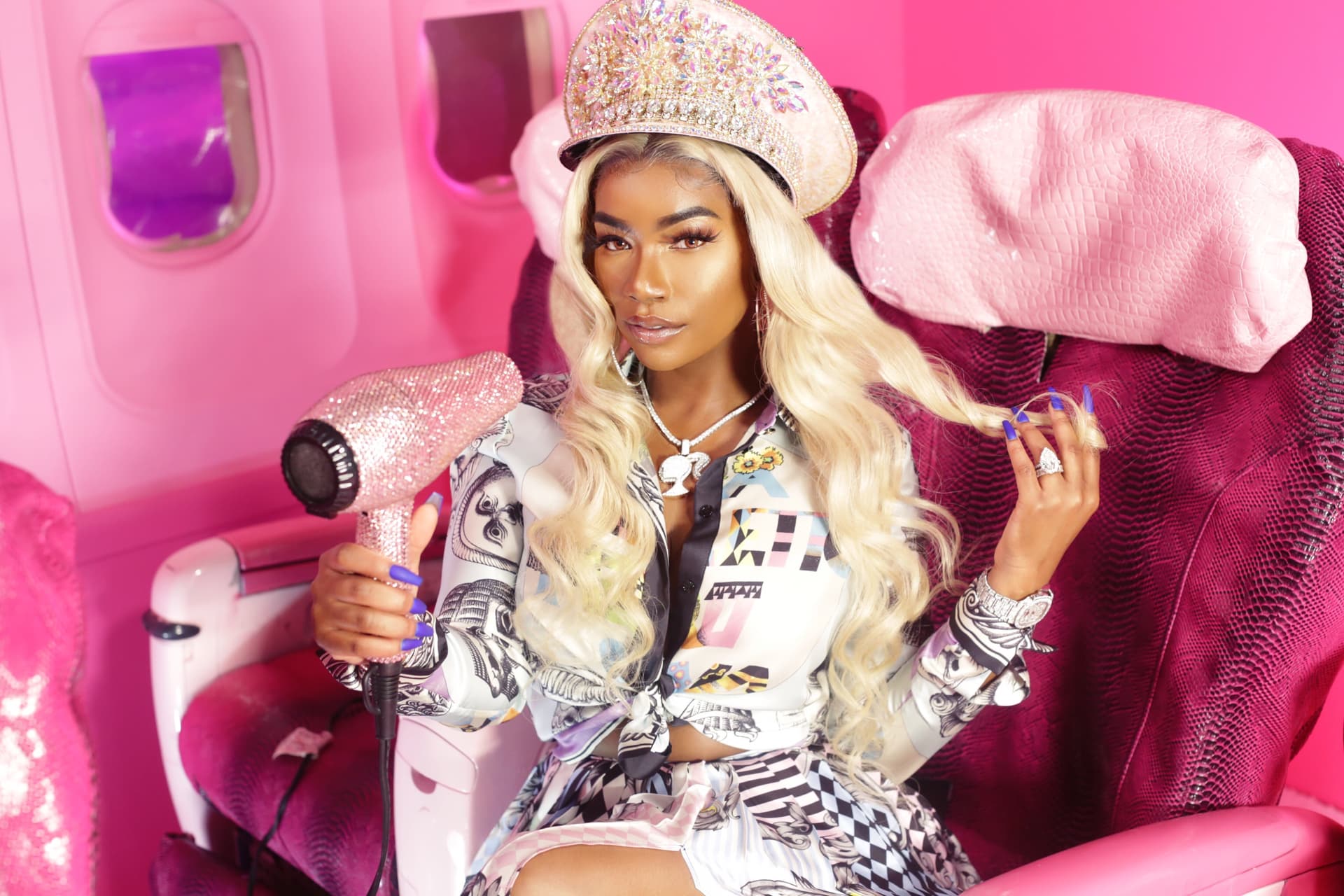
Looking at the study, Kendra Cooksey, Founder & CEO of Kendra’s Boutique Inc., commented: “Women hold 44.6% of all U.S. businesses but only 21.2% of the ones with employees. That gap is where the real barrier sits. Beauty and consumer brands are so often built alone, at a kitchen table, before they are built with a team. The data shows how few of us get to make that second step, and how much the state we build in decides it.”
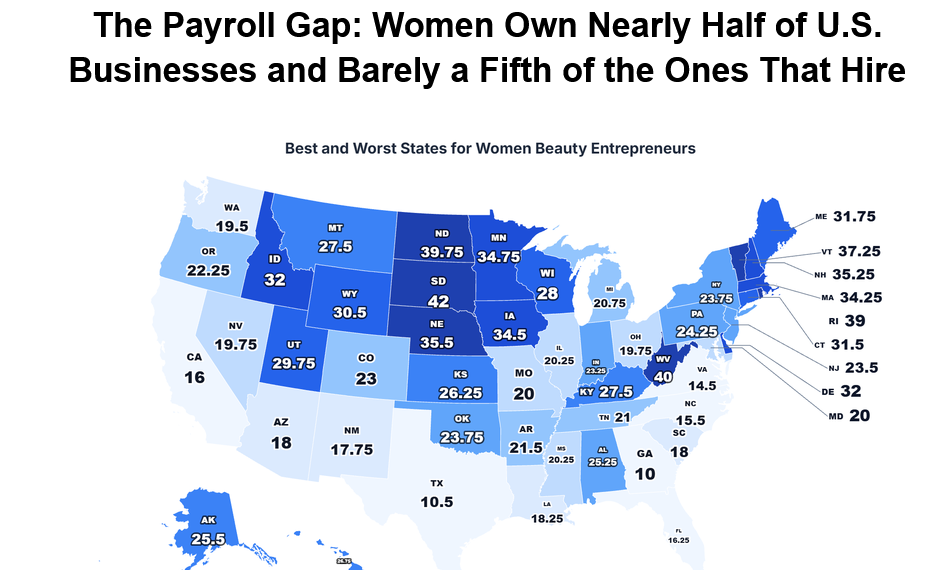
South Dakota closes the ranking with a women-owned employer share of 15.9%, the lowest in the country and 5.3 percentage points below the national average of 21.2%. The four bottom states, South Dakota, West Virginia, North Dakota, and Rhode Island, each combine a below-average employer share with below-average revenue per firm, showing that weak ownership and weak firm scale appear in the same markets.
The employer-share leader, the revenue leader, the all-business leader, and the jobs leader are four different states, and only Texas finishes inside the top ten. Alaska leads the nation on women-owned employer share at 27.2% yet ranks 29th, and Oregon holds the highest women-owned share of all businesses at 48.5% yet ranks 21st, dragged down by the only negative jobs figure in the country. A high rate of female ownership, on its own, does not signal a strong environment for growth.
The South sits 4.47 points below the national average composite score of 25.36 and accounts for 584,017 net new small business jobs, the most of any region. The Northeast records the lowest average women-owned share of all businesses at 41.9%, places no state in the top 20, and sees four of its nine states finish in the bottom ten, with New Jersey its strongest performer at 24th.
The study ranked all 50 U.S. states on four metrics drawn from two federal sources. From the U.S. Census Bureau Annual Business Survey, reference year 2023: women-owned employer share, the percentage of employer firms owned by women, and average revenue per women-owned firm, calculated as total receipts divided by the number of firms.
From the SBA 2025 State Small Business Profiles: women-owned share of all businesses, the percentage of all businesses including non-employer firms owned by women, and net new jobs, measured as net small business job creation. Every state was ranked 1 to 50 on each metric, with 1 the best, and the four ranks were averaged with equal weight into a composite score. The lowest composite score ranks first.
Women make up roughly 59.8% to 61.8% of all recent annual college graduates in the United States, according to data compiled by the Education Data Initiative. Women make up roughly 55% of new medical school students and residents in the United States. Women make up 11% of CEOs leading Fortune 500 companies. This equals 55 female chief executives, the highest share in the list's 72-year history.
About the Creator
Frank Racioppi
I am a South Jersey-based author who is a writer for the Ear Worthy publication, which appears on Vocal, Substack, Medium, Blogger, Tumblr, and social media. Ear Worthy offers daily podcast reviews, recommendations, and articles.
Enjoyed the story? Support the Creator.
Subscribe for free to receive all their stories in your feed. You could also become a paid subscriber, letting them know you appreciate their work.
Comments
There are no comments for this story
Be the first to respond and start the conversation.