
Europe Medical Ceramics Market Set for Steady Growth Amid Rising Demand for Advanced Biomaterials
Aging Population, Implant Demand, and Technological Advancements Drive Market Expansion

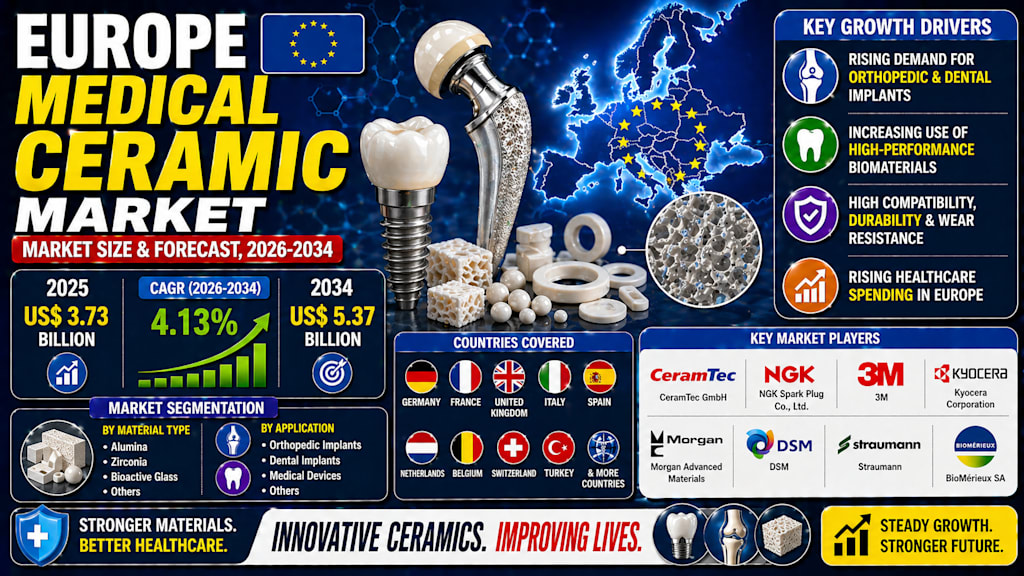
The Europe medical ceramics market is entering a phase of steady and sustainable growth, fueled by rising healthcare needs, increasing surgical procedures, and continuous innovation in biomaterials. According to recent insights from Renub Research, the market is projected to grow from US$ 3.73 billion in 2025 to US$ 5.37 billion by 2034, registering a compound annual growth rate (CAGR) of 4.13% from 2026 to 2034.
This upward trajectory highlights the growing importance of high-performance materials in modern medicine—particularly in orthopedics, dentistry, and implantable devices. Medical ceramics, known for their exceptional biocompatibility, durability, and resistance to wear, are becoming indispensable in Europe’s evolving healthcare ecosystem.
Understanding Medical Ceramics: The Backbone of Modern Implants
Medical ceramics are inorganic, non-metallic materials engineered specifically for medical applications. Common types include alumina, zirconia, hydroxyapatite, and bioactive glass. These materials are widely used in:
- Joint replacements (hip and knee implants)
- Dental crowns, bridges, and veneers
- Bone grafts and scaffolds
- Surgical tools and coatings
What sets medical ceramics apart is their biological inertness—they do not trigger immune responses or inflammation. Combined with superior mechanical strength and corrosion resistance, these properties make them ideal for long-term implantation.
Europe’s advanced healthcare infrastructure and strict regulatory standards have further accelerated the adoption of these materials, ensuring patient safety and high-quality outcomes.

Key Growth Drivers Shaping the Market
1. Rising Demand for Orthopedic and Dental Implants
One of the strongest growth catalysts is the increasing prevalence of musculoskeletal disorders and dental issues across Europe. Aging populations are particularly vulnerable to conditions such as osteoarthritis, osteoporosis, and tooth loss.
For instance, data from Versus Arthritis revealed that over 20 million people in the UK were affected by musculoskeletal conditions in 2022. This surge in health issues has significantly boosted demand for:
- Hip and knee replacements
- Dental implants and prosthetics
- Bone repair materials
Medical ceramics like zirconia and alumina are preferred in these applications due to their long lifespan, strength, and low risk of allergic reactions.
2. Technological Advancements in Ceramic Processing
Innovation is playing a crucial role in transforming the medical ceramics landscape. Advanced manufacturing techniques such as:
- Precision sintering
- Computer-aided design and manufacturing (CAD/CAM)
- Specialized surface coatings
have enabled the production of highly customized and durable implants.
A notable development includes clinical trials for next-generation implants, such as space-bioprinted nerve regeneration devices, which demonstrate how cutting-edge technologies are pushing the boundaries of regenerative medicine.
These advancements are not only improving performance but also expanding the scope of applications for medical ceramics.
3. Increasing Focus on Biocompatibility and Patient Safety
European healthcare systems prioritize long-term patient outcomes, which has intensified the demand for safer and more durable implant materials.
Unlike traditional metal implants, medical ceramics:
- Do not release harmful ions
- Reduce inflammation risks
- Minimize wear particles
- Lower the need for revision surgeries
This shift toward patient-centric care is encouraging hospitals and surgeons to adopt ceramic-based solutions more widely.
Pharmaceutical and healthcare companies like Zentiva are also expanding into innovative therapies, signaling broader growth in advanced medical technologies across the region.
Market Challenges: Cost and Material Limitations
Despite strong growth prospects, the Europe medical ceramics market faces certain challenges.
High Manufacturing Costs
Producing medical-grade ceramics involves complex processes, advanced equipment, and stringent quality control. These factors significantly increase production costs, making ceramic implants more expensive than traditional alternatives.
This can limit adoption, particularly in cost-sensitive healthcare systems, although the long-term benefits often justify the initial investment.
Brittleness and Design Constraints
While ceramics are highly resistant to wear, they are inherently brittle compared to metals. This limits their use in applications requiring high impact resistance.
Researchers and manufacturers continue to explore hybrid materials and improved designs to overcome these limitations.
Emerging Segments Driving Innovation
Bioactive Medical Ceramics
Bioactive ceramics are gaining traction due to their ability to interact with biological tissues and promote healing. Materials like hydroxyapatite stimulate bone growth and enhance implant integration.
These ceramics are widely used in:
- Bone grafts
- Dental implants
- Tissue regeneration
Their osteoconductive properties make them essential in modern regenerative medicine.
Bioresorbable Medical Ceramics
Bioresorbable ceramics represent a breakthrough in patient-centric treatment. These materials gradually dissolve in the body after fulfilling their function, eliminating the need for secondary surgeries.
Applications include:
- Bone fracture repair
- Temporary scaffolding
- Craniofacial reconstruction
As demand for minimally invasive procedures rises, this segment is expected to grow rapidly.
Plastic Surgery and Aesthetic Applications
Medical ceramics are increasingly used in reconstructive and aesthetic surgeries. Their ability to mimic natural bone structure, combined with durability and biocompatibility, makes them ideal for:
- Facial reconstruction
- Bone contouring
- Cosmetic implants
The growing popularity of aesthetic procedures across Europe is creating new opportunities in this segment.
Application Insights: Orthopedic and Dental Dominance
Orthopedic Segment
The orthopedic sector remains the largest application area for medical ceramics. Their wear resistance and low friction properties make them ideal for joint implants.
The rising incidence of joint disorders, particularly among the elderly, continues to drive demand for high-performance implant materials.
Dental Segment
Dental ceramics are widely used in restorative and cosmetic dentistry. Materials like zirconia and porcelain offer:
- Natural tooth-like appearance
- High durability
- Long-term functionality
Increasing awareness of dental health and aesthetics is boosting this segment significantly.
Regional Analysis: Key Markets Across Europe
Germany: A Leader in Innovation
Germany stands out as a major hub for medical ceramics, supported by strong engineering capabilities and a robust medical device industry.
Companies like Johnson & Johnson have introduced advanced solutions such as robotic-assisted surgical systems in the region, enhancing precision and outcomes in orthopedic procedures.
United Kingdom: Focus on Evidence-Based Healthcare
The UK market is driven by a strong emphasis on clinical outcomes and advanced research. The adoption of innovative implant technologies is steadily increasing, supported by healthcare policies focused on long-term patient benefits.
France: Advancing Digital Dentistry
France is witnessing growth in digital dentistry solutions. Companies such as Allisone Technologies are leveraging artificial intelligence to improve implant identification and treatment planning.
Russia: Emerging Opportunities
Although still developing, Russia’s market is gaining momentum due to increased healthcare investments and infrastructure upgrades. The demand for durable implant materials is gradually rising.
Competitive Landscape and Key Players
The Europe medical ceramics market is highly competitive, with several global and regional players contributing to innovation and growth. Key companies include:
- CeramTec GmbH
- Kyocera Corporation
- 3M
- Morgan Advanced Materials
- Straumann
These companies are focusing on R&D, strategic collaborations, and product innovation to strengthen their market position.
Future Outlook: A Market Built on Innovation and Demand
The Europe medical ceramics market is poised for consistent growth over the next decade. Several factors will shape its future:
- Increasing aging population
- Rising surgical procedures
- Advancements in biomaterials and manufacturing
- Growing demand for minimally invasive treatments
As healthcare systems continue to prioritize durability, safety, and patient outcomes, medical ceramics will play an increasingly vital role.
Final Thoughts
The Europe medical ceramics market represents a compelling blend of innovation, necessity, and long-term value. While challenges such as high costs and material limitations persist, the advantages of medical ceramics—particularly their biocompatibility and durability—far outweigh the drawbacks.
With continuous technological advancements and growing healthcare demands, the market is set to expand steadily, offering significant opportunities for manufacturers, healthcare providers, and investors alike.
About the Creator
Enjoyed the story? Support the Creator.
Subscribe for free to receive all their stories in your feed.
Comments
There are no comments for this story
Be the first to respond and start the conversation.