
Zheng Qinwen Spends $7,000 a Day to Play Tennis. Most Players Can’t Afford a Coach.
The daily cost of a top tennis team reveals the sport’s brutal divide: endorsements pay for champions, while lower-ranked players sleep in vans to keep playing.
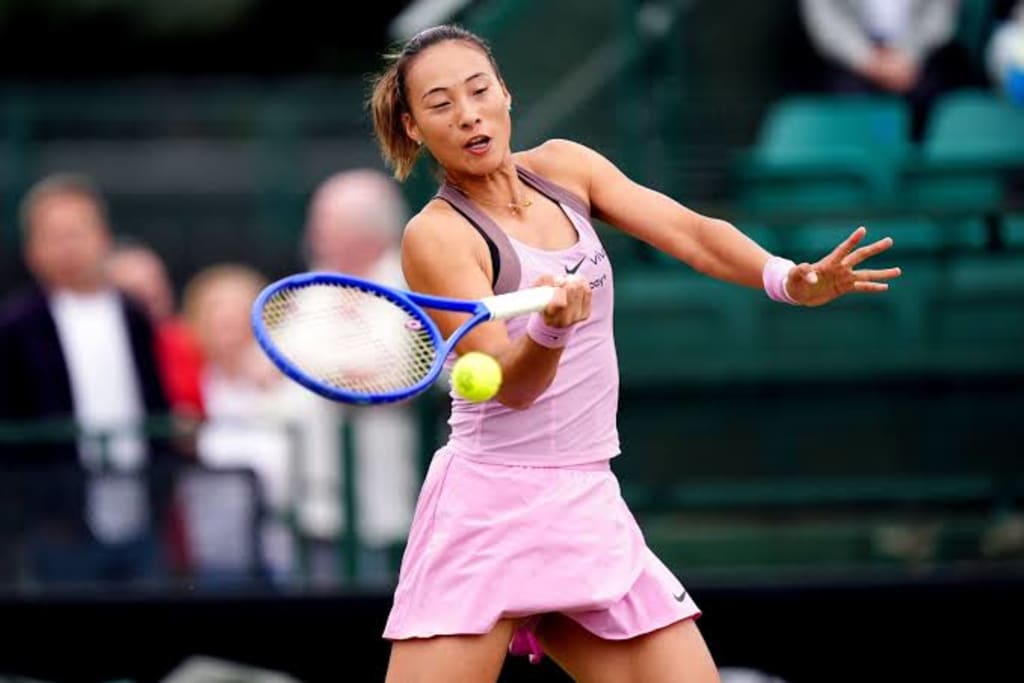
October 2026. A trending topic made many people see the ledger behind professional tennis for the first time: Zheng Qinwen’s team spends more than 50,000 yuan a day.
The number is startling. But if you stop at the label “50,000 a day,” you have understood nothing.
Where the money goes, who pays it, why it must be spent, and what happens to those who cannot afford it. The answers to those four questions are the entry point to understanding professional tennis.
50,000 yuan: every cent has a destination
During Grand Slam tournaments, Zheng Qinwen’s team spends about 53,000 yuan per day. The figure comes from the 2026 US Open: an eight-person traveling team stayed in New York for 26 days, with total costs exceeding 1.5 million yuan.
Break it down.
Salaries are the largest chunk, about 18,000 yuan. Head coach Pere Riba earns $600 a day, the fitness trainer $450, the physiotherapist $420, the hitting partner $300. Add the agent and video analyst, and the six-person core team costs more than $2,500 a day. This is fixed spending, settled by the day. Whether there is a match that day, whether she wins or loses, the money keeps moving.
The remaining 30,000-plus yuan covers travel and operations. A top-tier hotel in New York, meals for the whole team, chartered transport, training court rental. None of it is cheap. Reports noted that even if Zheng loses in the first round, the 50,000 yuan is still spent: team salaries are paid, travel is paid, and the cost does not drop because of a loss.
But there is a key point that is easy to miss. 50,000 is a peak, not an average.
This is the full configuration during a Grand Slam. Outside tournament periods, the team shrinks, and some members are signed on short-term, tournament-by-tournament contracts. Coaches, hitting partners, and video analysts are often flexible labor. They are paid when needed and not paid when not. When Riba was hospitalized after a car accident, Zheng did not need to pay his salary every day. Multiplying 50,000 by 365 to get an “annual cost of 18 million” turns a peak into a constant.
A more reasonable estimate for full-year operating costs is around 15 million yuan.
Prize money cannot support the team. Endorsements are the main income.
The reversal starts here.
Over the past 12 months, Zheng Qinwen’s total income was $22.6 million, about 150 million yuan, ranking seventh on Forbes’ global tennis earnings list and making her the only Chinese player in the top ten. But prize money was only $600,000, less than 3 percent.
The remaining $22 million came entirely from off-court endorsements.
The pre-tax prize for a WTA 1000 title is $1.15 million. After tax, the 11 percent share to the Chinese Tennis Association, and the team’s cut, the take-home is about $510,000. In 2025, after elbow surgery, her ranking fell to No. 121. If she had relied only on prize money, she could not have kept even the basic team running during that period.
What held the line was her 14 long-term endorsement deals. They span Dior, Rolex, Audi, Nike, Wilson, Alipay, vivo, Chagee, Lancôme, and Turkish Airlines: luxury, sportswear, technology, fast-moving consumer goods, and finance.
The timing of those deals matters as much as the number. In July 2025, after surgery, Zheng was in poor form and her ranking plunged. By ordinary commercial logic, brands should have waited or pulled back. The opposite happened. Chagee upgraded her from “global health ambassador” to its first global brand ambassador. Wilson released a signature racket. Lancôme moved her from ambassador to spokesperson. Two brands, Qwen and Turkish Airlines, announced global endorsement deals in early 2026, when her ranking was at its lowest.
Brands are buying more than a ranking. Zheng’s attacking game and her comeback from a low point create more tension than a smooth championship run.
Two kinds of tennis: 50,000 a day and sleeping in a van
If Zheng’s ledger shows the ceiling of professional tennis, another set of numbers shows the floor.
The gap between them is the cruelest part of the sport.
British player Francesca Jones, ranked No. 105, put it plainly: “Unless you get into the top 75, it is impossible to break even. Even inside the top 75, you are just about surviving.” German player Friedsam’s estimate is more specific: a season requires about 300,000 pounds in winnings just to break even.
To save that money, lower-ranked players travel alone, sleep in vans, and share rooms with coaches. Australian player Hijikata recalled skipping meals to save money. Dutch player De Jong received a $200 advance from an ATP support program and was able to keep playing.
Japanese player Taro Daniel, ranked No. 150, has publicly calculated his costs: a year on tour can reach $440,000. If the prize money is not enough, he leaves the coach behind and plays the next tournament alone.
This is the structural reality of professional tennis. 50,000 yuan a day and zero-team participation happen inside the same tour system.
Top players use commercial endorsements to build a team that stabilizes their competitive form. Lower-ranked players cut costs to the limit, and one injury or dip in form can push them out entirely. During the 2026 French Open, Jannik Sinner, Aryna Sabalenka, Coco Gauff, and other top-ten players jointly protested to the four Grand Slams, demanding that prize money rise to 22 percent of tournament revenue. Sabalenka said it plainly: “It is not about making the top players richer. It is about standing up for the lower-ranked players.”
The nature of 50,000 a day
Back to the trending topic.
Calling it extravagance misses the point. Fifty thousand a day is the entry fee for a top professional tennis player.
The money buys tactical work from the head coach, load management from the fitness trainer, injury monitoring from the physiotherapist, and live simulation from the hitting partner. In an individual sport with no club backing, no fixed salary, and a year spent flying around the world, this setup is the player’s means of production.
Better tools raise the odds of results, which raises commercial value, which pays for better tools.
But the cycle is not without cracks.
Zheng’s 2025 already showed that when injury drags down ranking and form, prize money can fall to zero, and the whole system depends on endorsement cash flow. Endorsement contracts are not permanent. Brands’ patience is not infinite.
And between Zheng and the lower-ranked players, there are many players ranked No. 50 to No. 150. They do not have 14 endorsements, and they cannot afford an eight-person team. Every year they walk a tightrope between breaking even and losing money.
Professional tennis has never lacked talent. What it lacks is the system that turns talent into results, and the cash flow that keeps that system running.
The 50,000-yuan-a-day story describes the survival logic of a sport.
That daily number is the price of staying in the game.
About the Creator
Jin
Writer of reamstories
https://reamstories.com/jin
Enjoyed the story? Support the Creator.
Subscribe for free to receive all their stories in your feed. You could also become a paid subscriber, letting them know you appreciate their work.
Comments
There are no comments for this story
Be the first to respond and start the conversation.