
You Don’t Say Whoa to a Racehorse
What Lisa Bluder understood about Caitlin Clark that others still don’t

I started watching the WNBA because of Caitlin Clark, like most of her fans. Most of us just wanted to see her throw those no-look passes like Pistol Pete and launch threes from the logo like Steph Curry. That was it. Everyone has their team and their player. My NFL team has always been the Cowboys, and Tony Romo was the one I loved watching most. I quit following the NBA as closely once Jordan’s career wound down. Life got fuller—house, older dogs, my wife, work, the writing—so I have to be more selective with the free hours I get.
I figured I’d just sit down a couple evenings a week and enjoy watching Caitlin do what she does. I never expected to end up writing about her, or about the chaos that followed her into the league in 2024.
Some people will tell you Caitlin Clark is the best thing that’s happened to women’s basketball in a long time—maybe even to sports in general. She’s become one of the most recognizable female athletes on the planet. Fans around the world wanted to see her in a USA jersey at the 2024 Olympics. The fact that she was left off that team should have been the first real clue that her arrival was going to shake things up in ways a lot of people weren’t ready for. Some people will tell you it wasn’t a change for the better.
But why?
If it had only been about a new style of play—the deep range, the flair on the passes—things might have stayed manageable. Clark didn’t just bring her game to the league. She brought her fans with her. And the league wasn’t prepared for the passion of the tens of thousands who followed her.
Those of us who call ourselves Caitlin Clark fans don’t watch women’s professional basketball for the drama, the politics, or the social agendas. We watch hoping to see Caitlin no-look pass to Kelsey Mitchell or stop, step back, and drop a 28-foot bomb from the logo. That’s it. You can keep everything else, just leave Caitlin alone and let her play her style of basketball.
What is Caitlin Clark’s style?
She plays with a rare mix of vision and aggression. She has a killer instinct that most people—male or female—are not born with. Flau’jae Johnson, after facing her in the NCAA Tournament, put it simply: “She really got that kill mentality. And that’s something that a lot of athletes don’t have. I don’t think she can turn it off.”
Clark has talked about it herself. She’s called herself “fiery and competitive.” She’s said the competitive fire and “edge” is what makes her great, even when it’s not always pretty or easy for the people around her. She admitted she doesn’t really turn it off. I believe her.
I’m reminded of a scene from Rocky IV, when Apollo and Rocky are talking before the fight with Drago that would end Apollo’s life. Rocky is worried. He’s trying to tell his friend that even though he’s still a great fighter, he’s not the man he used to be. Things change. People change.
Apollo’s response captures the mentality of those few people born with a very specific kind of power:
“No, Stallion, you may think you’re changing, but you can’t change what you really are… You and me, we don’t even have a choice. See, we’re born with this killer instinct that you can’t turn off like some radio. We have to be in the middle of the action, cuz we’re the warriors, and without some challenge, without some damn warrior to fight, then the warrior may as well be dead.”
Caitlin Clark has been blessed with more than just the instinct to play the game she loves—she actually gets to play the game she loves.
She sees the floor two or three passes ahead the way the old-school point guards did, but she’s also willing to take the shot that makes half the building hold its breath. That logo three isn’t just showmanship; it’s confidence under pressure. She has a short memory for the misses. You can watch her brick one from deep, jog back on defense, and already be looking for the next opportunity. The constant criticism of her toughness, her efficiency, her right to the spotlight seems to bounce off more often than it sticks. Some players shrink when the noise gets loud. Clark has mostly kept playing her game, even when much of the basketball world seemed to be rooting for her to fail.
Bottom line: she just wants to play. Basketball was her first love. She talks the game, lives the game, and plays it like it’s the only thing she’s ever wanted to do. And she wants to share that love of the game with those around her.
You might have seen her at The ANNIKA Pro-Am with Fever teammates Sophie Cunningham and Lexie Hull as her caddies. When asked about the celebrity help, Clark didn’t hesitate: “They were both terrible. But they brought good vibes.” Even when the spotlight is on her, she keeps refusing to make it only about herself.
Watch her long enough, and you see the same thing on the court. She looks for the extra pass. She lights up when a teammate hits an open shot. Even when the offense stalls, she keeps trying to put other people in position to succeed. She thrives in transition—when the game speeds up and she can push the ball before the defense is set. She’s even said she’s the best transition player in the league. It’s the opposite of the slower, half-court style she often has to play under Stephanie White. She wants the spotlight wide enough for the people around her. That unselfish streak is one of the biggest reasons so many fans connect with her. The game doesn’t shrink when she’s in it. It opens up.
And that wasn’t always the case. Killer instincts come with a downside—selfishness. Clark didn’t overcome that overnight, either.
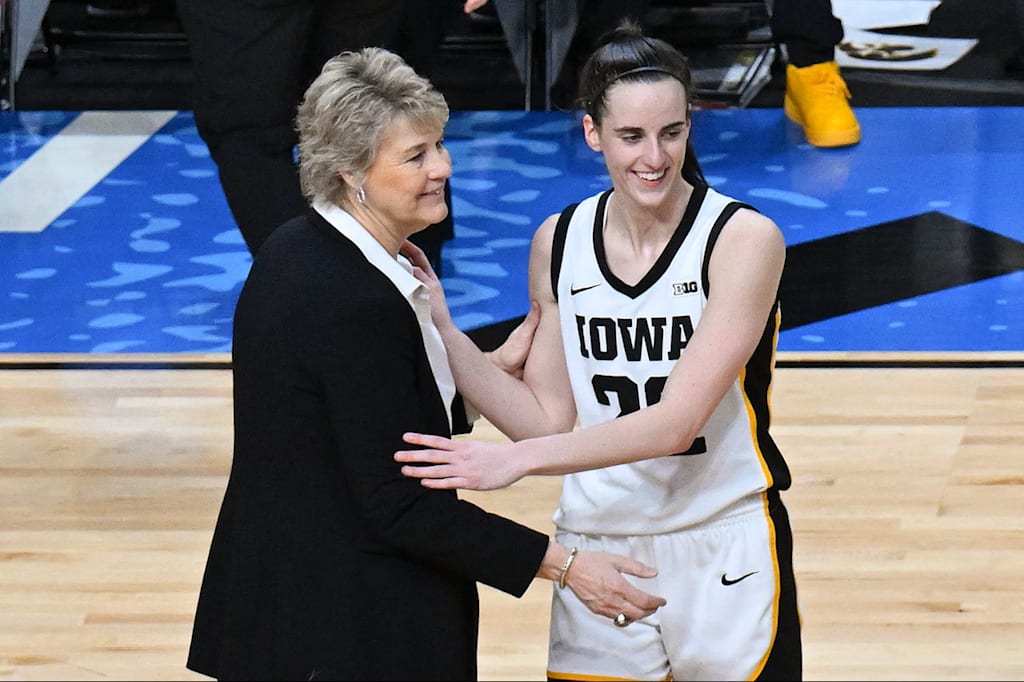
Perhaps no one in Caitlin Clark’s still-young career understood her better than her former college coach, Lisa Bluder.
Coaching at any level requires a certain amount of ego. Without it, you lose the respect and confidence of the team. And when a player starts to believe she knows more than the coach, tension is almost inevitable.
Bluder has never said Clark was uncoachable. What she has said is that the toughest part of coaching her was that Clark could be stubborn—and that Bluder herself can be stubborn too.
On Good Game with Sarah Spain, she put it this way:
“The toughest part is sometimes she can be a little stubborn, and I can be as well… And so that can be tricky sometimes. But the good thing is that she was always willing to learn and she wanted to be her best, so she would take it. She took coaching like she wanted to be coached.”
As a freshman, Clark was used to doing everything herself in high school and didn’t yet know how to fully play with and through her teammates. Building that kind of trust took time. Playing with a young Caitlin Clark was tough. She’s a perfectionist, and like all perfectionists, she expects the same from the people around her.
Hey, I get it. My wife is a perfectionist too, though if you ask her, she’ll deny it. Clark, on the other hand, has admitted it. During the March 2024 NCAA Tournament, she said straight out:
“I love this game. I’m a perfectionist. But hey, I’m competitive.”
A couple of players transferred after that first year because of how hard Clark was on them at the start. But like any true perfectionist, she is just as hard—if not harder—on herself. In May 2026, talking about the constant scrutiny and learning to give herself grace, she said:
“I can always say allow myself grace, but you always have that fire and that hunger inside of you to always want to be better, and you’re a perfectionist, and then you get irritated when it doesn’t go your way.”
You can see it in the way she shakes her head after missing multiple threes. She is never as hard on anyone else as she is on herself. But she just can’t walk away from herself.
It takes more than an X’s-and-O’s coach to manage Caitlin Clark. Bluder realized early that trying to change Clark’s style of play wasn’t going to work. Instead, she focused on the next best thing—helping the most gifted player she’d ever coached become a better teammate. She framed it as growth, not a permanent problem. That patience and maturity allowed Clark to become more inclusive, develop real leadership, and never turn into a prima donna despite the massive attention that later came her way.
When asked about the first time she saw Clark play, Bluder said she remembered a seventh grader playing up against high school players and thinking, “Wow, this kid is going to be pretty amazing.” You could already see the confidence and the moxie.
Bluder also talked about how difficult the emotional adjustment from high school to college was for Clark: “Caitlin is a perfectionist, and so she would get mad at herself, she’d get mad at her teammates, she’d get mad at her coaches sometimes, but that’s what made her such a great competitor. I used to always tell my staff, ‘Listen, let’s not put a bushel over that light, because that fire, that light, that enthusiasm is hard to coach.”
Bluder saw the light early on and chose not to cover it. That choice helped turn a gifted, stubborn kid into a player who could lead without losing herself. In the WNBA, the light is still there. But more and more it feels like people are trying to put a bushel over it again. Clark never asked to be a pawn in someone else’s game. She only ever asked to play. The question now is whether the league will ever let her run the race the way she was built to run it.
As the old saying goes, you don’t say “whoa” to a racehorse.
About the Creator
Mark Elliott
My name is Mark. I've been married going on 5 years now. We moved to Eastern Oregon. My wife is officially retired. I will be spending more time here now. Writing is hard with our schedule, but we make time for what we love!
Enjoyed the story? Support the Creator.
Subscribe for free to receive all their stories in your feed. You could also become a paid subscriber, letting them know you appreciate their work.
Comments
There are no comments for this story
Be the first to respond and start the conversation.