
What It Actually Takes to Be a Competitive Cheerleader (It's More Than You Think)
There's a moment at every cheerleading competition that most people in the stands never fully process.
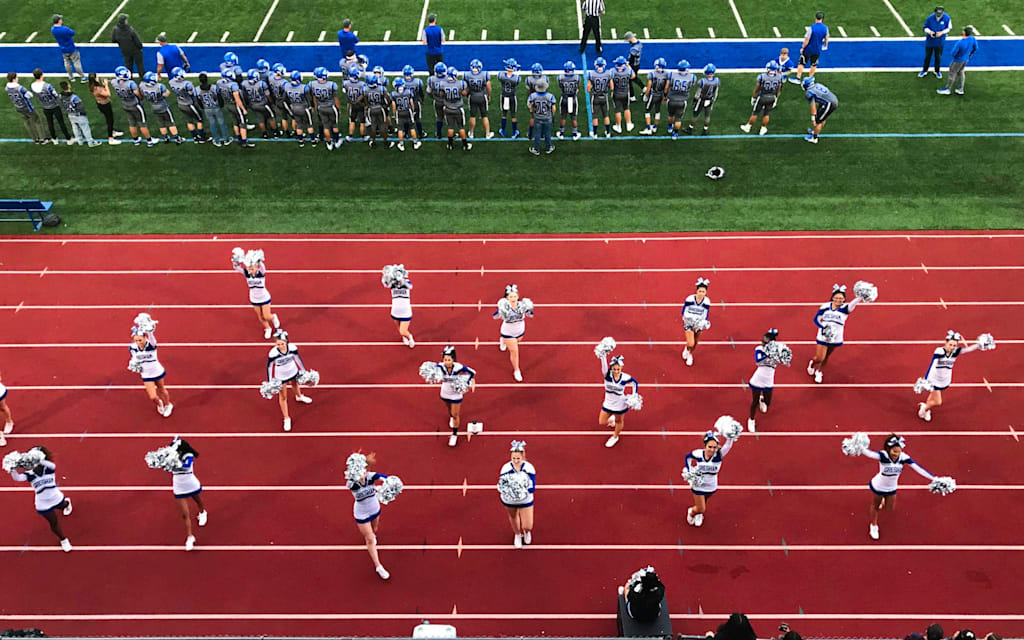
A flyer (a human being) gets launched ten feet into the air by two sets of hands, executes a twisting dismount, and lands in the arms of her teammates with precision measured in inches. The crowd reacts with applause. The announcer moves on. And somewhere in the bleachers, someone inevitably says, "I still don't think it's a real sport."
That person is wrong. And the data, the governing bodies, and the emergency rooms of the United States can tell them exactly why.
Competitive cheerleading has quietly become one of the most physically and mentally demanding athletic pursuits in youth and collegiate sports. Yet the stigma that it exists only to support other athletes (that it's about pom-poms and sideline energy) persists in a way that no other sport endures. Gymnastics doesn't get asked if it's real. Wrestling doesn't have to defend itself. Cheerleading does, constantly, despite the evidence stacking up in its favor.
This is for the athletes, coaches, and parents who already know what it takes, and for anyone who doesn't yet.
Competitive Cheerleading is Now a Recognized Sport
Let's start with something that settled the argument at the highest level. In July 2021, the International Olympic Committee voted to grant full recognition to the International Cheer Union (ICU), formally making competitive cheerleading part of the Olympic Movement and eligible to petition for inclusion in the Games. The ICU now represents over 116 national cheer federations across the globe. The ICU World Championships draw more than 70 nations to compete annually.
That's not a sideline activity. That's a global sport with governing bodies, anti-doping compliance under WADA, standardized scoring, and international championships. It’s the same architecture that every other Olympic sport operates within.
On the collegiate side, the NCAA added STUNT: a head-to-head competitive format derived from cheerleading, as an Emerging Sport for Women in Division I and II in 2023, and Division III in 2024. And in January 2026, at the NCAA Convention, all three divisions voted to elevate STUNT to full NCAA Championship status, with the inaugural championship scheduled for Spring 2027. This trajectory, from emerging sport to full championship in just a few years, unmistakably signals that athletes who train in cheer deserve the same scholarship pathways, roster structures, and competitive seasons as athletes in any other collegiate sport.
The Physical Demands Are Not Optional
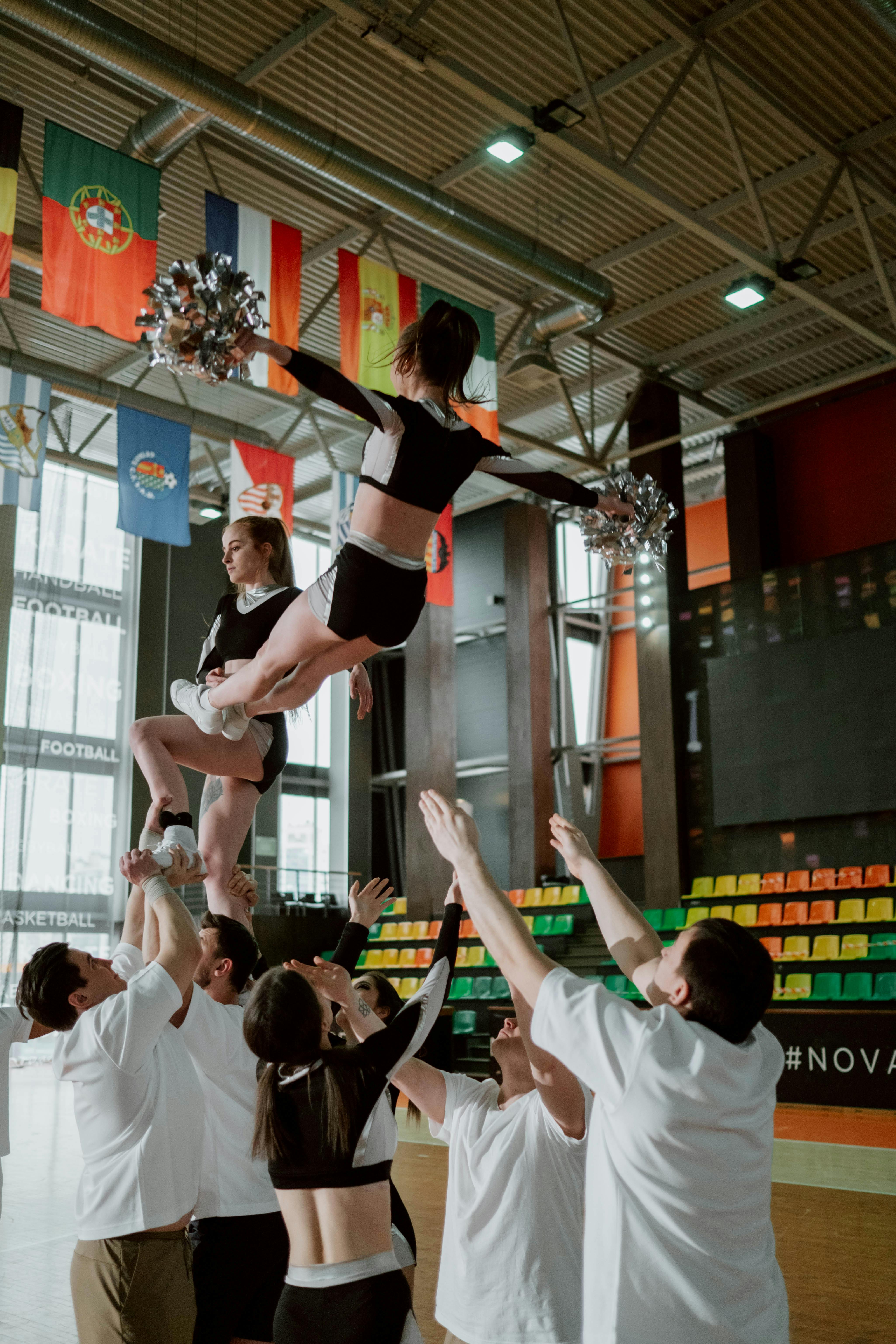
Here's what a competitive cheerleader's body is actually asked to do.
Flyers: the athletes launched and balanced above the squad — must maintain rigid core stability while being lifted, tossed, and caught. A single cheerleading shoulder stand stunt requires the flyer to manage body awareness, core engagement, and precise foot positioning simultaneously — all in mid-air."
Bases: the athletes doing the lifting require lower-body power comparable to that of any strength sport, combined with the shoulder stability and coordination to safely hold and release another person above their heads. According to sports medicine researchers at Therapeutic Associates, base positions demand core strength and shoulder girdle conditioning comparable to gymnasts.
Back spots and front spots control and guide the movement of the entire stunt. One lapse in focus or strength can send a flyer to the floor.
And then the whole squad has to tumble, executing back handsprings, full layouts, and aerial passes, while synchronized, on a sprung floor, in front of judges measuring difficulty, execution, and timing simultaneously.
The conditioning required for all of this is serious. Competitive cheerleaders train across multiple physical dimensions: strength training for stunts and jumps, plyometrics for explosive power and jump height, core stability for body control, and cardiovascular conditioning to sustain routines that run up to two and a half minutes without a break. Teams typically train multiple days per week for hours at a time, and that's before accounting for practice at home, flexibility work, and conditioning outside the gym.
The Injury Data Tells a Sobering Story
One of the more uncomfortable truths about cheerleading is that its dismissal as a "non-sport" has historically meant less medical oversight, less qualified coaching, and less safety infrastructure than other school athletic programs receive. The injury data reflects that gap.
According to a 2024 policy statement from the American Academy of Pediatrics, more than 3.5 million youth currently participate in cheerleading, and the sport's evolution toward higher athleticism has brought a parallel rise in injuries, particularly concussions. The AAP explicitly called on coaches, school officials, and parents to ensure cheerleading programs have access to the same qualified coaches, medical care, and injury surveillance as other school sports.
The numbers in competitive settings are particularly notable. A 2025 systematic review published in Frontiers in Public Health found that while overall cheerleading injury rates declined by about 15% annually from 2010 to 2019, concussions increased by 44% annually during that same period, a direct consequence of the sport's growing stunt difficulty. The same review found that over 53% of injuries are stunt-related, and that 83% of injuries occur during practice, not competition.
At the high school level, cheerleading accounts for approximately 66% of all catastrophic injuries in female athletes, a figure that, paradoxically, makes the case for treating it with the full seriousness of any contact sport. NPR health reporting on the AAP guidelines noted that while cheerleading's overall injury rate is two to three times lower than girls' soccer or basketball, the injuries that do occur (especially concussions) can be severe and carry prolonged recovery times.
These are not the injury profiles of a hobby. They are the injury profiles of a sport.
What the Competitive Structure Actually Looks Like
People unfamiliar with competitive cheerleading often picture pom-poms and a football game. The competitive side of the sport looks nothing like that.
All-star cheerleading operates entirely outside of school sports. Athletes train at private clubs, organized by age and skill divisions, and compete at regional and national events…all the way up to the ICU World Championships, which brings together elite teams from dozens of countries. Routines are judged on tumbling difficulty, stunt execution, pyramid construction, jump technique, dance, and overall performance, with detailed scoring rubrics that rival the complexity of gymnastics judging.
At the scholastic level, competitive cheer teams enter sanctioned events with time-limited routines, skill divisions, and independent judging panels; a structure that mirrors every other school sport in every meaningful way.
The gear matters at this level, too. Competition-legal uniforms, which must conform to specific guidelines for coverage and construction, are a non-negotiable part of competing. Teams source their competition uniforms carefully, since fit, mobility, and compliance all factor into both judging optics and safety. The same goes for cheer shoes. Proper footwear designed specifically for the lateral movement, landings, and stunt work cheerleading demands is a genuine performance and safety consideration, not a style choice.
The Mental Side Nobody Talks About
Physical training is only part of the equation. Competitive cheerleading asks its athletes to perform under a very specific kind of pressure: precision under a time limit, in public, while being objectively judged, as part of a team where one person's error affects everyone else's score.
The mental discipline required to execute a stunt sequence flawlessly at a major competition after months of training, under stadium lighting, in front of an audience and a judging panel is the same mental discipline demanded of gymnasts, divers, and figure skaters. The margin for error is identical. The consequence of a fall, a missed catch, or a tumbling error is felt by the entire squad, not just the individual.
Cheerleading also demands something rarer: the ability to smile through it. Athletes are expected to project energy, confidence, and showmanship while simultaneously processing complex choreography and physical execution. That is a skill set…one that takes years to develop.
What Parents Should Know Before Enrollment
If you're considering competitive cheerleading for your child, a few things are worth understanding from the start.
The commitment is year-round. Unlike school sports with defined seasons, all-star cheerleading often runs on a nearly continuous training calendar. Conditioning doesn't stop in the off-season; it shifts focus.
Coach qualifications matter enormously. One of the clearest predictors of injury risk in cheerleading, per the AAP's research, is the training level of the coaching staff. Look for programs whose coaches hold certifications through USA Cheer and who have clear safety and emergency protocols in place. (Note: The American Association of Cheerleading Coaches and Administrators (formerly known as AACCA) became part of USA Cheer in 2018; USA Cheer is now the sole national governing body for coach safety education and certification.)
The gear investment is real. Competitive programs typically require athletes to have proper cheer practice wear for training sessions, as well as competition-specific uniforms and shoes. Teams often coordinate purchases to maintain consistency. Understanding the cost structure upfront helps families plan accordingly.
The community is unlike anything else. Ask anyone who has competed at a high level in cheerleading, and they'll tell you that the bonds formed with teammates (people who quite literally catch you when you fall) are among the most lasting of their lives. The sport's intensity creates a specific kind of trust.
Why This Conversation Still Matters
The debate about whether cheerleading is a "real sport" has real consequences. When programs aren't treated with the seriousness of other school sports, they don't get certified athletic trainers on the sideline. They don't get access to the same quality of coaching education. They don't get the same safety infrastructure. And athletes (mostly young women) get hurt in preventable ways.
The mental discipline required to execute a stunt sequence flawlessly at a major competition, after months of training, under stadium lighting, in front of an audience and a judging panel, is the same mental discipline demanded of gymnasts, divers, and figure skaters. The margin for error is identical. The consequence of a fall, a missed catch, or a tumbling error is felt by the entire squad, not just the individual. If you're curious how that psychological edge gets built, how mental toughness shapes athletic performance is a subject sports writers have explored in depth — and it maps directly onto what competitive cheerleaders train for every single practice.f
The cheerleaders who train six days a week, who condition their bodies with the same rigor as any varsity athlete, who trust their teammates with their physical safety at ten feet in the air…they already know what this sport is. The rest of us are just catching up.
Sources: American Academy of Pediatrics (AAP Pediatrics, 2024); Frontiers in Public Health / PubMed Central systematic review (2025); NPR Health News (2024); USA Cheer / ICU Official Statement (2021); Olympics.com — International Cheer Union; NCAA.org — STUNT Championship Status (January 2026).
About the Creator
Enjoyed the story? Support the Creator.
Subscribe for free to receive all their stories in your feed.
Comments
There are no comments for this story
Be the first to respond and start the conversation.