
The Vast History of NHL Expansion (and Relocation)
A look at how the modern NHL went from the Original Six to 32 teams, with at least two more possibly on the way


Expansion. A beautiful nine-letter word to us sports fans. Merriam-Webster defines "expansion" as "the act, process, or state of growing larger or becoming more extensive." One thing I know as a sports fan: the 1960s was a big decade for sports expansion. Baseball saw a lot of teams placed all over the continent, with the decade ending with the American and National Leagues each being split into two divisions. The NBA saw a lot of teams added and relocated during that decade, and pro football actually added a second league in 1960.
All of those leagues have fascinating expansion stories, but it's the way the NHL did it that fascinates me the most. It's more than my hockey fandom, it's mainly because I actually got to see a good bit of it. But I'm getting just a tad ahead of myself. Let's get this expansion party started.

I know that prior to 1942, the NHL was loaded with teams, but those histories are quite complicated. A lot of teams folded by then, reducing the league to the following six teams by 1942: the Boston Bruins, the Chicago Blackhawks, the Detroit Red Wings, the Montréal Canadiens, the New York Rangers, and the Toronto Maple Leafs. For 25 years, that was the league, until 1967 changed things. That year saw the first bit of expansion in the modern NHL, with six teams being added. The six new teams: the Los Angeles Kings, the Minnesota North Stars, the Oakland Seals, the Philadelphia Flyers, the Pittsburgh Penguins, and the St. Louis Blues. So just like that, the league doubled in size from a half dozen teams to a full dozen. And they weren't even close to being done.
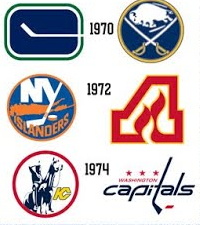
The 12-team NHL lasted for just three seasons until the league started to add more teams in the 1970s. It was in 1970 that two more teams were added: the Buffalo Sabres and the Vancouver Canucks, and here it is, 56 years later, and both teams are still looking for their first Stanley Cup. Two years later in 1972, two more teams were added: the Atlanta Flames and the New York Islanders. And in 1974, you guessed it--two more teams joined the league: the Kansas City Scouts and the Washington Capitals, the latter winning only eight games in the 80-game season. 1976 saw the Scouts relocate to Denver and become the Colorado Rockies, but two years after that, there was subtraction.
The Oakland Seals were a mess from the get-go. Low attendance, team apathy, horrendous seasons. They tried rebranding, becoming the California Golden Seals. Then they relocated to Cleveland and became the Barons. Nothing worked, and by 1978, the team folded after 11 seasons. So the league had 12 teams entering the 1970s. Then it was 14, 16, and 18, but it was down to 17 by 1978.
One year later:
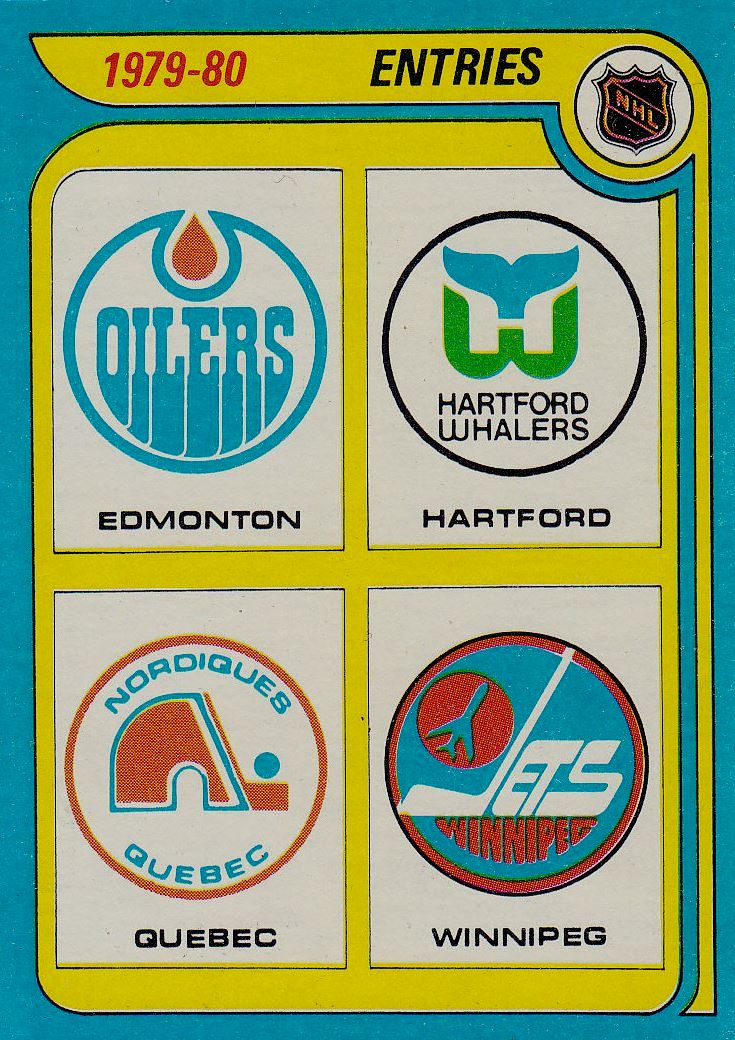
The famous NHL-WHA merger of 1979. The World Hockey Association was seen as heavy competition for the NHL since it debuted in 1972, but seven years later, they became one. While the rest of the WHA folded, four teams--the Edmonton Oilers, the Hartford Whalers, the Quebec Nordiques, and the Winnipeg Jets--all joined the NHL. This was the third major sports merger in the 1970s, following the AFL-NFL merger in 1970 and the NBA-ABA merger in 1976, and it would be the last pro sports merger of any kind until the USFL and the XFL merged following the 2023 seasons for both leagues.
The NHL-WHA merger increased the number of teams from 17 to 21. Regarding Canadian franchises, that number doubled from three to six, and resulted in the modern NHL's first provincial rivalry between the Canadiens and the Nordiques. The number would increase to seven Canadian teams a year later, as the Flames left Atlanta and moved to Calgary, resulting in the birth of the immensely heated Battle of Alberta. In 1982, the Rockies relocated for the second and most recent time, moving to New Jersey and becoming the Devils. Those relocations were the only things that really happened in the 1980s, as the 21-team league remained intact for just over a decade.
And then, the 1990s arrived.
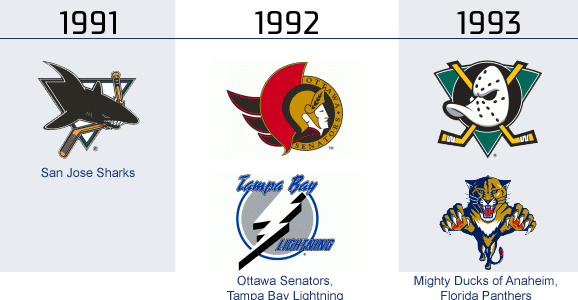
Again, while the biggest expansion waves seemed to hit other leagues in the 1960s, for the NHL, it was the 1990s that saw the boom hit, and I got to drink in a lot of it. First off, 1991 gave the NHL a 22nd franchise in the form of the San Jose Sharks, marking the NHL's return to the Bay Area after 13 years. A year later in 1992, two more teams joined the league: the Ottawa Senators and the Tampa Bay Lightning, giving Canada eight NHL teams and placing the league in the Sunshine State for the very first time. 1993 was the big year. For one, the Minnesota North Stars dropped the "North" and moved down south to Dallas, and the league's population increased to 26 teams with the addition of the Mighty Ducks of Anaheim and the Florida Panthers.
This is where it gets personal. I was seven when the Mighty Ducks movie came out, and I was just getting into hockey via the sports section of the newspaper, which I would look at before being driven to school. I was eight when the Mighty Ducks franchise debuted, and I remember the buzz about the team out here. I was in awe over this big buzz over the Mighty Ducks of Anaheim, mainly because I was seeing it up close everywhere I went. So yeah, one of the reasons why I loved that the NHL's big expansion wave happened in the 90s was simple: not only did I get to see it unfold, I got to see it in my face in The OC.
The expansion and relocation continued as the 1990s progressed. In 1995, two years after the North Stars went down South, the Quebec Nordiques relocated to Denver and became the Colorado Avalanche, returning the NHL to the Centennial State. A year later, the Winnipeg Jets headed to the desert--Phoenix, Arizona, to be exact--and became the Coyotes, and a year after that, the Hartford Whalers moved to Raleigh, North Carolina and became the Carolina Hurricanes. So yeah, three-quarters of the merged WHA teams all relocated, and all in back-to-back-to-back years, leaving the Oilers as the team who never left. That brings me to another reason why I loved this 90s expansion/relocation wave. Teams were placed in cities no one expected to have hockey. I mean, come on. San Jose? Tampa and Sunrise? Anaheim? Phoenix?! Raleigh?! Nashville?!
Oops! Got a little bit ahead of myself.
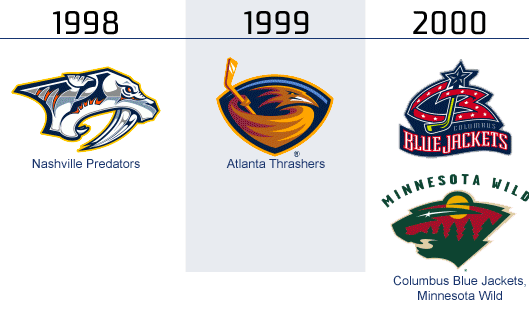
But yeah, in 1998, the Nashville Predators became the NHL's 27th franchise, and I remember this well; I was 13 and in 8th grade when the team debuted. A year later in 1999, the NHL returned to Atlanta for the first time in almost 20 years with the Thrashers, serving as team #28, and debuting during my freshman year of high school. In 2000, two more teams were added--the Columbus Blue Jackets and the Minnesota Wild joined the league, increasing the league's population to 30 teams. At the time (I was a sophomore in high school), I didn't know about the old Cleveland Barons, so the concept of an NHL team in Ohio was foreign to me, but I did know that the Wild's debut brought the NHL back to Minnesota for the first time in seven years.
So that was the league for the longest time. The only thing that happened during this stretch was the Thrashers moving to Winnipeg in 2011 and becoming Jets 2.0, but the population remained at 30 teams for a long time.

And then, they debuted in 2017. The Vegas Golden Knights. We all remember this, don't we? The NHL's first expansion team in 17 years, and Las Vegas' first official pro team in the main four leagues. Remember when it was said on a loop that Vegas would never get pro sports due to the casinos and the crime waves? Pepperidge Farm remembers. Since then, Vegas has entered the NFL, the WNBA, about to enter MLB, and coming soon, the NBA! And in September of this year, the Golden Knights will start their 10th season. Three Cup Final appearances already, and a Stanley Cup in 2023, all while establishing themselves as the NHL's ultimate villains.
So the league had 31 teams, and I figured that an odd number of teams would lead to the NHL getting a 32nd team at some point.
Release the Kraken! The Seattle Kraken, that is! I do remember the announcement regarding Seattle getting an NHL team during the COVID-affected 2020-21 season, and it was the following year (2021-22) that the Kraken officially debuted. I'm still getting used to the fact that John Forslund, who has done national work but is best known for his many, many years as the PXP voice of the Whalers/Hurricanes, is the Kraken's PXP voice and has been since Day One, Game One in 2021. And this upcoming season will be the Kraken's sixth! How time flies!
Of course, we know that the Arizona Coyotes are pretty much close to being no more. The team, sort of, relocated to Salt Lake City in 2024, though the Coyotes name and history remained in Arizona. The Utah team was nameless in 2024, but they received the Mammoth name in 2025.
So to recap:
1967: Six teams debut, league doubles from 6 to 12 teams.
1970-78: Teams are added two by two every two years, bringing the total to 18 teams. One team relocates, but one team folds, decreasing the total to 17 teams.
1979: NHL and WHA merge, four WHA teams join the NHL, bringing the total to 21 teams.
1980s: Two teams relocate, total stays the same.
1991-2000: Nine teams added, four teams relocated. NHL now has 30 teams.
2011: One team relocates, total stays the same.
2017: Vegas Golden Knights become NHL's 31st team.
2021: Seattle Kraken become NHL's 32nd team.
2024: Arizona Coyotes' team and personnel moved to Salt Lake City.
And they're not done yet:
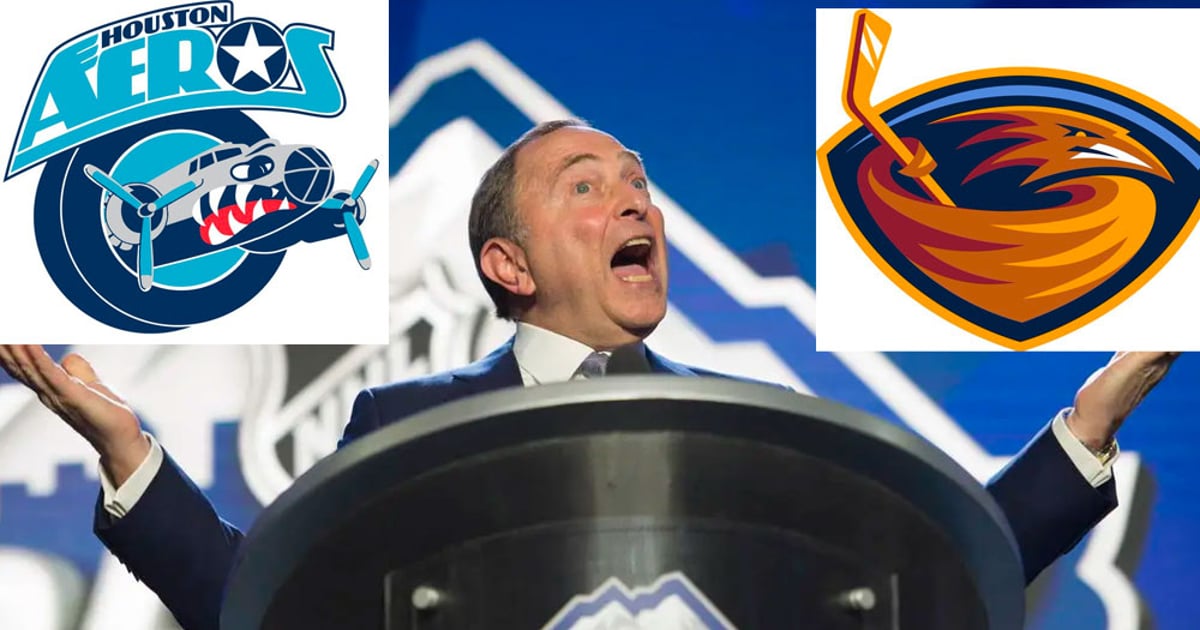
I've been wanting to write about NHL expansion for a while now, and here's the reason: the talk is increasing... vastly. I've heard talk of the league increasing to 33 teams, 34 teams, 36 teams, and even 40 teams! Many cities have been mentioned. Houston, Atlanta, Quebec City, Sacramento, San Diego. I myself recently want an NHL team in New Orleans. I've heard Arizona for obvious reasons.
Recently, the news states that we will most likely see teams in Houston and Atlanta, and that's very interesting. Houston's never had the NHL, but they were the home of the WHA's Houston Aeros. Plus, a rivalry between Dallas and Houston would be wild! Of course, Atlanta is looking to get back into the NHL fray again. The third time could be the charm for Atlanta. Look at DC in MLB; on their 21st season and they won the World Series in 2019.
It should be interesting to see what happens regarding NHL expansion. I would think that more teams being added would lead to a change to the playoff format. But that's another story. Right now, I am just one of many NHL fans looking forward to whatever develops in the quest to add more teams in the NHL!
About the Creator
Clyde E. Dawkins
I'm a big sports fan, especially hockey, and I've been a fan of villainesses since I was eight! My favorite shows are The Simpsons and Family Guy, etc.
Enjoyed the story? Support the Creator.
Subscribe for free to receive all their stories in your feed. You could also become a paid subscriber, letting them know you appreciate their work.
Comments
There are no comments for this story
Be the first to respond and start the conversation.