
The Maracanã Aftermath: A Match Told in Still Frames
Ferrán’s sweep, Messi’s stare, Martínez’s black gloves — the 2026 final was a story of inches and silence, written one worn‑out body at a time.
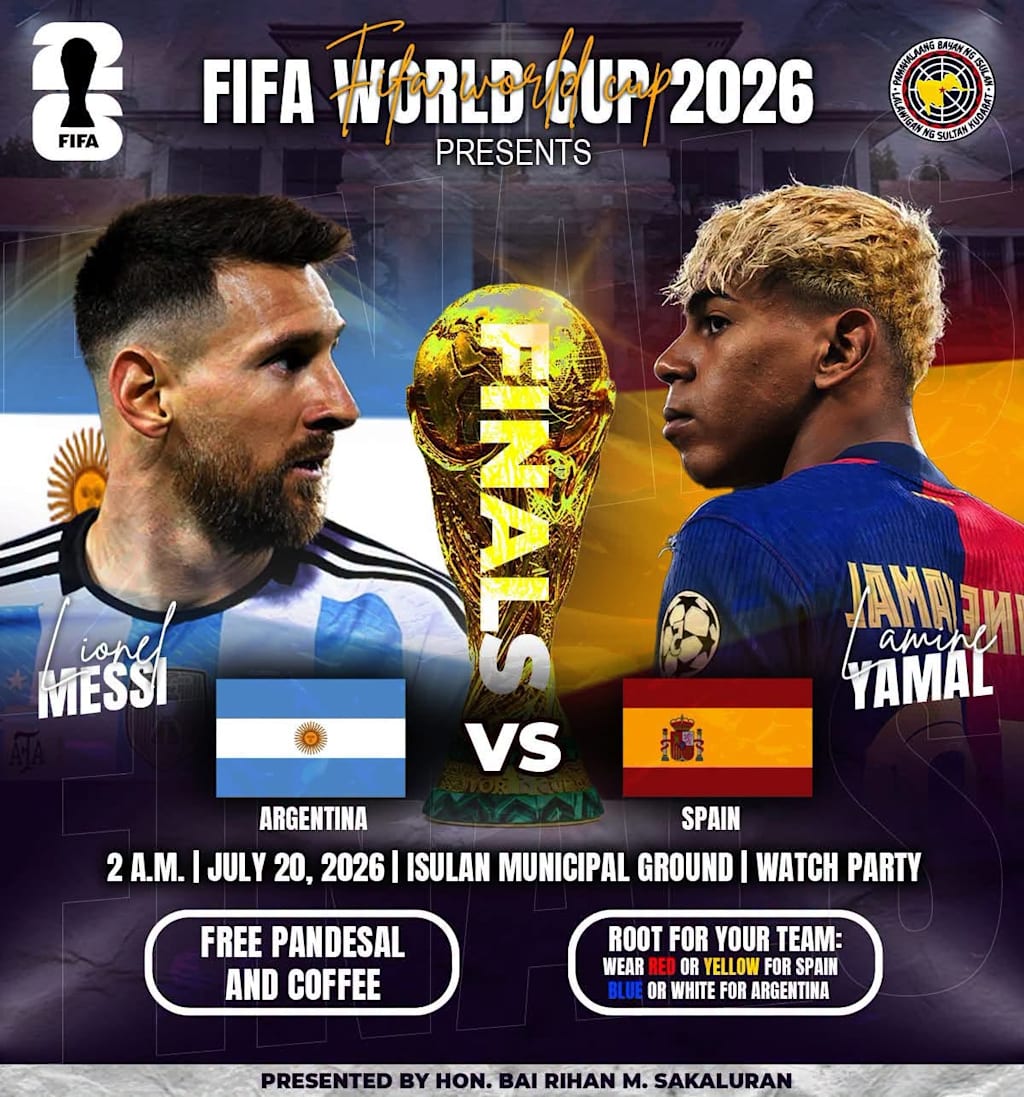
July 20, 2026 – Maracanã
106 minutes. Spain's 20th shot of the match.
Ferran Torres received Williams's headed pass, swept it with his right foot, and the ball slipped between Martínez's fingertips and the near post. 1–0.
In the three seconds before the goal, Martínez adjusted his feet three times, pushed off with his left foot and lunged toward the far post. Ferran went near post. The shot wasn't particularly fast, but the angle shut down the goalkeeper's entire reach. When Martínez landed, his right hand slapped the turf. He didn't get up immediately. He stayed on his stomach and glanced at the ball inside the goal. It had stopped in the bottom of the net—no bounce, no spin.
Argentina had not conceded until then, which in itself was already a low‑probability outcome. Spain had 15 shots on target over the whole match; Martínez saved 11 of them. The 12th, he couldn't reach. He wore his black gloves today, and on the back of the left one he'd written two letters in marker—his children's initials. After the goal, he pulled off the right glove, held it in his hand, and sat up. He left the left one on.
At halftime, the scoreboard read shots 3–0, all for Spain. Argentina had zero touches in the opposition box in the first half. Over the entire half, Spain had 32 touches in the attacking third; Argentina had three. Those three attacking‑third touches came from a De Paul wide move that was broken up, an Álvarez back‑pass reception that ended with him being knocked down, and one time Messi received on the right flank and was immediately double‑teamed and stripped.
At the break, the broadcast cut to a close‑up of Messi: bent over, hands on his knees, not drinking, not speaking to De Paul beside him. His shirt was already pulled out of his shorts, and on the outside of his right thigh there was a smudge of grass and mud—from the eighth minute, when Rodri slid into him. He hadn't touched the ball in that area again after that.
In the first half, Messi had 12 touches—second‑fewest on the pitch, ahead of only Álvarez's 8. Of those 12 touches, four were long balls from the back received near the centre‑circle, three were forced back passes, two were intercepted directly, one drew a foul, and the remaining two—after he held the ball for more than two seconds without finding an outlet—he pushed out to Molina on the flank. Molina sent in four crosses all match; every one was cleared at the first contact by a Spanish defender. None produced a shot.
Tajiafico spent the entire game like something draped onto Yamal. Close, inseparable, yet unable to stop the ball. In the 70th minute, Tajiafico actually tore a hole in Yamal's shirt; the referee stopped play and Yamal changed into a new one. While Yamal changed, Tajiafico stood three metres away drinking water, not looking at him. After the change, Yamal's first touch was a nutmeg right in front of Tajiafico—the ball went between his legs, Yamal went around the outside and crossed to Olmo, whose header hit the crossbar. That was Spain's closest chance of the match, in the 71st minute—35 minutes before Ferran's winner.
Yamal completed four successful dribbles over the match, three nutmegs, and twice combined with Olmo in one‑twos to break the defensive line. But Spain's most effective connection remained Olmo to Yamal. Olmo shifted play to the right 17 times; the ball reached Yamal's feet 12 times. Every time Yamal received, his first move was to look up for Olmo, then fake, then pass back. The two repeated the same pattern over and over on the right flank. Tajiafico knew what they were going to do, but one man couldn't block two.
What happened in Argentina's dressing room before the second half is unknown. But for the first 15 minutes of the second period, Argentina's line pushed up about 15 metres higher than in the first. In the 48th minute, Messi received the ball for the first time in the attacking third, turned, and laid it off to Enzo running through. Enzo carried it two steps, was clipped from behind by Rodri, and the referee waved play on. Enzo stood up, spread his hands at the official, and walked away. That was 27 minutes before his first yellow card.
Scaloni replaced Lisandro Martínez in the 44th minute with Pezzella. Lisandro didn't walk off; he was carried by two medical staff. His right calf was wrapped in elastic bandage. After coming off, he sat in the last row of the bench, unwrapped the bandage, and put an ice pack on his knee. Romero came off in the 73rd minute walking on his own, but very slowly. After he sat down, he took off his boots—his left ankle had already swollen to twice its size. A medic came over and pressed it; he winced and pulled his leg back, but made no sound.
Argentina's two starting centre‑backs were both off the pitch before the 80th minute. In the final 25 minutes with Pezzella and Otamendi as the pair, Spain had six shots, four on target. In the 82nd minute, Otamendi blocked a low Olmo shot with his arm. The referee reviewed VAR and did not give a penalty. Otamendi stood still, both hands on his knees, and waited about twenty seconds. The referee signalled play on. Only then did Otamendi straighten up.
Enzo's first yellow card came in the 92nd minute. Argentina had a free‑kick just outside Spain's box. Messi placed the ball, stepped back three paces, ran up—the ball hit the wall and rebounded. Enzo darted in for the second ball but Rodri shielded him off; Rodri poked it away. Enzo chased, caught Rodri, and stuck out a leg to trip him. The referee whistled. Enzo turned back and said something to the official. Post‑match lip‑reading showed he said, "What about the push he gave me then?" The referee pulled a yellow card from his back pocket. Enzo didn't argue further—just turned and walked.
The second yellow came two minutes later. Enzo chased a long ball in midfield. Cubarsí had already positioned himself to head clear; Enzo came from the side, shoulder to chest, and sent Cubarsí flying. Cubarsí hit the turf and his head snapped back against the grass. The whistle went while Enzo was already jogging back. He took two more steps, stopped, turned, and saw Cubarsí still on the ground. Then he saw the yellow card in the referee's hand.
He froze, then clasped his head with both hands. He didn't appeal. No team‑mates rushed over. De Paul clapped from a distance—a silent clap, palms meeting and dropping. Enzo walked to the touchline, squatted near the sideline, pressed his hands to the grass, stayed like that for about five seconds, then stood and left the pitch.
Argentina had no substitutions left when he came off. Scaloni had used all five by the 79th minute: the injuries to Lisandro and Romero took two, Álvarez was replaced by Senesi in the 92nd as the third. The remaining two went to Paredes and Di María. Di María came on in the 61st minute and touched the ball only five times across extra time, every time with a defender marking him.
After Enzo's red, Argentina played with ten men for the remainder of extra time. From the 94th to the 120th minute, Spain, with one more player, had nine shots, six on target. Martínez saved five. The sixth went in.
Martínez had one stat that stood out today: seven high‑ball claims, all successful. In the 100th minute of extra time, a Spanish corner from the left, Martínez charged off his line and snatched the ball above Williams's head with both hands. On landing, Williams's shoulder caught him in the ribs. He crouched, holding the ball; the referee called a foul on Williams. Martínez stood, placed the ball on the six‑yard line, rubbed his ribs, and rolled a pass to Molina.
He also made four saves with his feet. In the 55th minute, Olmo shot from the left side of the six‑yard box; Martínez went down and deflected it with the outside of his right boot. In the 78th minute—first touch after replacing Yamal—Nico Williams cut inside and shot; Martínez got a hand to it, the ball deflected off the post and Pezzella cleared. In the 103rd minute, Ferran's left‑footed drive was tipped by Martínez's fingertips as he dived—the ball grazed the far post and went out for a corner. All three were replayed on the stadium screen. Every time Martínez stood up, his expression was the same: blank. He placed the goal‑kick, then pointed towards the centre‑circle, signalling his team‑mates to push out.
Ferran Torres had already tried three shots before the goal. First, in the 98th minute: Williams crossed from the right; Ferran side‑footed left‑footed from near the penalty spot, too central, and Martínez caught it standing up. Second, in the 102nd: Ferran headed over from the edge of the box; after landing, he turned and gave a thumbs‑up in the direction of the cross. Third, in the 105th: Ferran cut inside from the right and shot right‑footed, but it deflected off Otamendi's leg. Martínez had already dived the other way, but the ball was blocked out for a corner. Ferran stood still for two seconds, then jogged to the corner flag to take it.
Fourth, the 106th. Williams sent a cross from the left; it arced over Otamendi and dropped to the far post. Ferran, positioned slightly right of the penalty spot, didn't jump. He waited for the ball to fall to chest height, turned his body, and swept it with his right instep. The ball skimmed the grass and went through a gap of less than thirty centimetres between Martínez and the near post. Martínez had dived toward the far post; his centre of gravity had already shifted half a step right. By the time he saw the ball coming from the near side, it was too late.
Ferran didn't run immediately after scoring. He stood, watched the ball settle in the net, confirmed there was no offside, then started running. He ran toward the corner flag, with team‑mates chasing him. The first to reach him was Olmo, who came from the side, both hands on Ferran's shoulders, pushing him forward a half‑stumble. Then more piled on, and Ferran disappeared under the pile. When he got up, his shirt was twisted sideways, the right sleeve pulled up to his elbow. As he tugged his sleeve back down, the camera panned to the bench.
Xavi sat in the second row, not standing. His legs were crossed at the knee, hands resting on his thighs, leaning forward. He was watching Ferran's direction—no clapping, no expression. Beside him was the president of the Spanish FA, who had stood up. But Xavi stayed seated.
In the final minutes of stoppage time, Messi received the ball 40 metres out. Paredes had sent a long ball from the back; Messi, with his back to goal, chest‑trapped it. Rodri immediately closed him down. Messi nudged the ball left; Rodri followed. Messi cut right; Rodri stuck out a foot and poked it away. Messi chased, took two strides, and Rodri slid in from the side—man and ball—bringing him down. The referee whistled for a foul and showed Rodri a yellow card. Messi stood, retrieved the ball, placed it at the spot, stepped back, looked at goal, then at the referee. He didn't argue that the card should have been harsher. He simply placed the ball and backed off.
From the free‑kick, Messi didn't shoot directly. He squared it to De Paul, who pushed it to Montiel overlapping. Montiel crossed; Laporte headed clear. The ball fell to Simeone, who controlled at the edge of the box, shot right‑footed, and sent it about a ball's height over the bar. That was Argentina's best—and last—chance. Simeone dropped to his knees after skying it, both hands in his hair, for about two seconds. As he jogged back, he passed Messi; Messi reached out and patted the back of his head.
The final whistle came while Messi was near the centre‑circle. Three short blasts, then a long one. After the whistle, Messi did two things: first he pulled his shirt completely out of his shorts; then he bent down and rolled his socks down a notch. While he did the second, Spanish players were already sprinting past him—Olmo leading, a line of white shirts behind. Messi straightened and watched the players running by. No one slowed down. No one looked back at him.
Argentina's players stood on the pitch for a while. De Paul squatted near the side of the centre‑circle, hands on his knees, head down, shoulders not heaving. Tajiafico came from a distance, stopped beside him, and placed a hand on De Paul's back—fingers pressing between his shoulder blades for one second—then walked away. De Paul didn't look up; he stayed squatting.
Dibu Martínez still sat in his goal. After the final whistle, he didn't get up. His gloves were already off, placed one on each side of him—the left one, with the letters facing up. He sat on the goal‑line, legs outstretched, ankles crossed. During extra time, between every save, he'd stood or crouched—but this time he remained still. About forty seconds later, Pezzella came from the back to get him, walked in front of him, and extended his hand. Martínez took it and stood. After he was up, he looked down at his gloves, didn't pick them up, and followed Pezzella towards the centre‑circle.
Spanish players formed a huddle, with Ferran at the centre. Someone from the bench passed in a water bottle; Ferran took it, didn't open it, tucked it under his arm, while his other hand was pulled up by Olmo. There were three or four players between them, but their hands stayed clasped tight, raised above their heads. One by one, the substitutes ran onto the pitch. The last was Xavi. After rising from the second row, he smoothed the creases from his trousers, then stepped onto the grass—not fast, not slow. He reached Ferran and gave him a hug. Ferran pulled his hand back from Olmo and hugged him back, then let go.
At the medal ceremony, Messi emerged from the tunnel. Argentina's team stood in a line on one side, Spanish players entered from the other. Messi stood at the front of the line; the captain's armband was already off, clenched in his left palm. When Spain's captain Rodri walked past the podium and lifted the trophy, the camera cut to Messi. He wasn't looking at Rodri, nor at the trophy. He was looking at a corner of the far stands, chin slightly lifted, eyes half‑squinted—as if looking for someone he knew, or as if looking at nothing at all.
After the ceremony, he walked past the podium without stopping. In 2014, at the same Maracanã, he had stopped at that same spot—waited nearly two minutes at the tunnel exit, watching the Germans lift the cup, until Mascherano pulled him back to the dressing room. This time he didn't stop. He walked straight past. The tunnel entrance darkened, and his silhouette turned into a deep blue shadow on the screen—shirt tucked in, one hand pressed to the back of his neck. His walking pace was about the same as his light jogging stride in the centre‑circle—not fast, not slow. There was a red mark on the back of his neck, a scratch from fingernails, unclear when it had been left.
The broadcast's final shot was Ferran Torres sitting in the centre‑circle. The celebration crowd had partly dispersed—some were taking photos, others on video calls with family. Ferran sat alone beside the centre spot, boots off beside him, socks pulled down to his ankles, revealing a fresh scrape on his shin. He had unscrewed the water bottle but didn't drink—lid in one hand, bottle beside his knee.
A team‑mate called out to him from a distance. He looked up and acknowledged, but didn't get up
About the Creator
Jin
Writer of reamstories
https://reamstories.com/jin
Enjoyed the story? Support the Creator.
Subscribe for free to receive all their stories in your feed. You could also become a paid subscriber, letting them know you appreciate their work.
Comments
There are no comments for this story
Be the first to respond and start the conversation.