
The Clippers Lost 10 Picks and $30M—Kawhi Paid $700K
How the NBA's most expensive recruitment ended in a locked door and a potted plant.
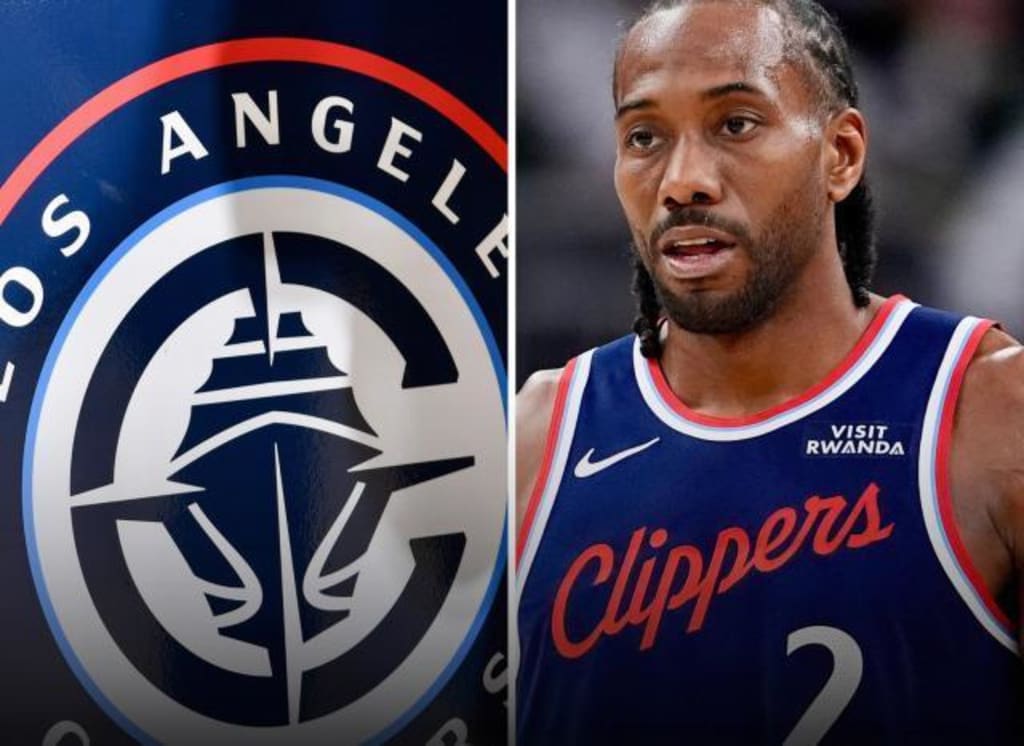
September 3, 2026. The fax machine in the league office spat out a single sheet. White paper, black type, red seal. The day the Clippers got the fine, wildfire ash drifted over Los Angeles, settling on car roofs like a thin dusting of salt.
Five first‑round picks were forfeited. 2029 through 2033, every single one. A $30 million fine. Owner Steve Ballmer suspended for one year. Chief Commercial Officer Gillian Zucker suspended without pay for a year—she lied to investigators. President of Basketball Operations Lawrence Frank suspended for six months. For the next five years, the league would install a photocopier in the Clippers' offices; every contract, every invoice, every email would have to go through that machine first.
Kawhi Leonard was fined $700,000.
That afternoon, the cleaning lady at the Clippers' practice facility was mopping the floor. She didn't know about salary‑cap circumvention rules, nor what the "Wachtell Lipton law firm investigative report" was. All she knew was that the door at the end of the hallway was locked today, and nothing could be slipped through the crack. In previous Septembers, that door was always open, the air‑conditioning cranked, voices loud on the phone inside—you could hear "draft picks," "trade exceptions," "salary matching" drifting down the hall. Today it was quiet.
She set a pot of pothos by the door. Nobody told her to; she just thought the empty space looked wrong.
Seven years earlier, a different room had been packed.
July 2019. Leonard had just come back from Toronto with a championship. The Clippers threw a press conference for him, and Ballmer stood on stage, face red, both hands waving in the air for five minutes. He said this was a new chapter in Clippers history. He said they were going to win "several" championships. He said "several" twice—someone in the crowd laughed, quickly drowned out by applause. The reporters packed three rows deep, flashes firing from every direction, bright as an unmelting snow over Los Angeles.
The Clippers traded Shai Gilgeous‑Alexander and five first‑round picks to Oklahoma City for Paul George. That hit every sports front page that same day, and the debate lasted all week: a 25‑year‑old rising star plus five first‑rounders for a 30‑year‑old George—was it worth it?
The books couldn't tell the whole story. But there was another set of books, and the league took seven years to dig them out.
During the recruitment, the Clippers lined up four endorsement companies for Leonard: Aspiration Partners (fintech), Boingo Wireless (Wi‑Fi), Daktronics (scoreboards), and Lockton Insurance (brokerage). All four already did business with the Clippers—Boingo provided the arena Wi‑Fi, Daktronics the scoreboards, Lockton handled player insurance. The Clippers' message was: you sign a commercial deal with us, you also sign with our guy. The team used its business leverage to steer those companies into paying Leonard.
The investigative report also noted that the Clippers had covered personal expenses for Leonard and his representatives. How much and for what, the report didn't say. But those three words—"personal expenses"—meant certain bills had never gone through the team's salary‑cap accounts; they had taken a detour.
Leonard's uncle, Dennis Robertson, was his agent at the time. He had floated a number to the Clippers—at least $10 million a year in off‑court income. That figure never appeared in any official NBA contract, but the Clippers heard it and complied.
Ballmer knew about it. He personally approved a commercial deal with Aspiration, knowing full well that the deal was conditional on Aspiration signing Leonard to an endorsement. The investigative report used four words: "knowingly and willfully violated."
Ballmer was the richest owner in the NBA. Money was never his problem. But he thought he could go around the rules. He went around for seven years, and then the road circled back.
Every line on that fine sheet was short. Hard.
For the Clippers, the real weight wasn't the $30 million. Ballmer could afford that. The real weight was those five first‑round picks. Run the tally: in 2019, for Leonard, the Clippers sent out five first‑rounders and Gilgeous‑Alexander. In 2026, because of Leonard, they forfeited five more. Over ten years, ten first‑round selections, plus a now‑All‑NBA first‑team guard.
Gilgeous‑Alexander is 25 now, an All‑Star and All‑NBA selection in Oklahoma City. The Thunder used the Clippers' picks to draft Jalen Williams and Chet Holmgren. What the Clippers gave away had grown into trees in someone else's garden.
The Clippers' trophy case is still empty. In the hallway corner, a glass cabinet holds a few retired jerseys—no championship trophy, no Western Conference banner. At that 2019 press conference, when Ballmer said "several," the cabinet was empty. It's still empty.
In league history, precedent for forfeiting picks over cap violations is rare. In 2000, the Minnesota Timberwolves lost five first‑rounders for a secret deal with Joe Smith. The Wolves never got past the first round in seven years of the Kevin Garnett era. By the time Garnett left at 31, that team's ladder for rebuilding had been pulled away. The Clippers are in an even worse spot—Minnesota at least still had Garnett; the Clippers have nothing. Leonard was traded to Toronto this summer, George left last year, and Gilgeous‑Alexander has been gone for years. The lockers that once bore their names are all empty now, the nameplates peeled off, leaving only faint adhesive marks. The cleaning lady has scrubbed them several times without fully removing them.
One line on the fine sheet made many people read it twice.
Leonard was found to be "unaware." Everything was Robertson's doing. He was fined $700,000, with no suspension, no ban, no contract voiding. That sum is about two games' worth of his salary.
The league goes by evidence. Without direct proof that Leonard personally authorized anything, they couldn't penalize him further. Robertson, as an independent agent, could legally be separated from his client. That logic holds up in court.
But does it hold up in common sense? A superstar making $40 million a year, signing endorsement deals and collecting off‑court income, with absolutely no knowledge of it? His uncle negotiates $10 million a year in outside income with the Clippers, the team lines up four companies for him, they cover his personal bills—and he really didn't know?
Leonard issued a statement, just one paragraph: "I had no knowledge of any attempt to circumvent salary cap rules." No apology, no remorse, no "I should have been more vigilant." The same day the statement came out, his camp announced that Robertson no longer represented him. Clean break.
The benefits went to Leonard—the endorsements bore his name, the off‑court money went into his account. The fine carried Robertson's name.
The league banned Robertson from NBA agency work for five years, and then let Leonard walk. He went to Toronto. The Raptors are still a top‑four contender in the East next season. He can keep playing, keep earning his max contract, keep doing his thing. Meanwhile, everything paid for him—ten draft picks, an All‑NBA guard, $30 million in fines, three executives suspended, one owner banned, five years of league monitoring—all of it stayed in Los Angeles.
A week after the fine, the Clippers issued a statement. They said the investigation was "heavily biased," that the team "did not intentionally violate any rules," and that they would pursue every available avenue of appeal. But the NBA's ruling is final; the Clippers can only appeal in federal court, and the chances of a court overturning a league penalty are near zero. No one believed the statement, but it had to be put out. For the season‑ticket holders, to tell them the team was still standing.
But the standing man had already been hollowed out.
In the fall of 2026, tickets for the Clippers' season opener went on sale. The giant poster of Leonard on the arena's exterior wall came down, replaced by a silhouette of a rookie. But no rookie would come—the Clippers have no first‑round picks until 2034. Below that silhouette, a line of small text: "The future belongs to the LA Clippers."
The pothos plant the cleaning lady placed outside that locked office door was still there. Its leaves stretched toward the door crack.
The door won't open. Not this year, at least.
About the Creator
Jin
Writer of reamstories
https://reamstories.com/jin
Enjoyed the story? Support the Creator.
Subscribe for free to receive all their stories in your feed. You could also become a paid subscriber, letting them know you appreciate their work.
Comments
There are no comments for this story
Be the first to respond and start the conversation.