
The Buss Family Civil War
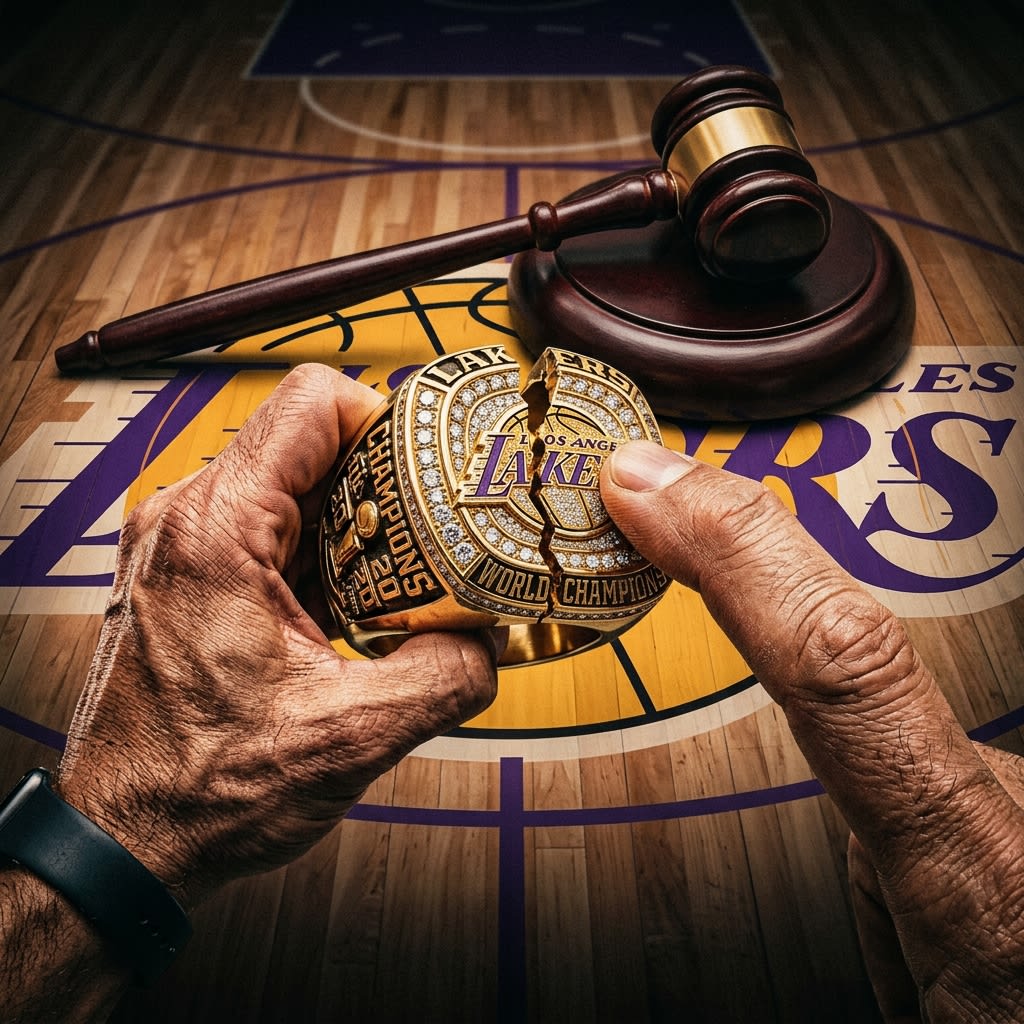
Five siblings voted to sell the Lakers. Jeanie voted no. Now the family's 47-year reign over the NBA's most iconic franchise heads to court.
Los Angeles — August 21, 2026
ESPN’s Shams Charania reported that six members of the Buss family trust voted on whether to sell the remaining 17.8% of the Los Angeles Lakers. Five voted in favor. One voted against. The sole dissenter: Jeanie Buss, the team’s current controlling owner.
Jeanie Buss’s attorney immediately issued a letter stating the vote is “void ab initio” — legally invalid from the start. The letter cites a 2017 court order that requires unanimous consent from all trustees for any share disposition. Jeanie Buss, as a co-trustee, holds veto power over the matter.
The five Buss siblings who voted to sell — Johnny Buss, Jim Buss, Janie Buss, Joey Buss, and Jesse Buss — released a joint statement saying they will “proceed through due process” to advance the sale. The two sides disagree on which voting rule applies. The outcome now hinges on whether a 2025 tag-along provision (requiring only four of six votes) supersedes the 2017 unanimous-consent requirement.
The Financial Incentive: $12.5 Billion Valuation vs. 74 Years of Dividends
The Lakers generated $170 million in operating profit during the 2024–25 season. At current ownership levels, each Buss sibling receives roughly $5.1 million per year in distributions.
Potential buyers value the franchise at about $12.5 billion. If the 17.8% stake sells, each sibling would pocket approximately $370 million — 74 times their current annual distribution. For the older siblings, this is not a marginal decision. It is a one-time payout that exceeds what they could reasonably expect to collect over the rest of their lifetimes through annual dividends alone.
The siblings’ ages tell part of the story. Johnny is 69, Jim is 66, Jeanie is 65, Janie is 62, and Joey and Jesse were both born after 1985. Under Jerry Buss’s will, if a member dies without disposing of their shares, those shares are split equally among surviving siblings. This creates an incentive for older siblings to sell while they are alive — otherwise, their share simply passes to the others, and they never touch the principal.
Joey and Jesse, the two youngest, have a different calculation. They are in their late thirties or early forties. They can afford to wait. But both were removed from management positions by Jeanie years ago. They hold shares but no operational authority. For them, the vote is not about control — they already lost that fight. It is about whether to cash out a passive asset or hold it for another generation.
The Control Threshold: Jeanie Buss’s Legal Standing
NBA rules require a controlling owner to hold at least 15% of the team. Jeanie Buss’s direct ownership is below 15%; her controlling status rests on the combined holdings of all six family members within the trust.
If the 17.8% stake goes to an outside buyer, Jeanie Buss’s effective stake drops below 15%. Under league rules, she would lose her status as the team’s governor and her voting seat on the NBA Board of Governors. She would no longer represent the Lakers in league matters — the new lead investor would take that seat.
Jeanie Buss’s attorney letter did not address financial terms. It focused only on the voting procedure. It did not state whether she intends to buy out other members to maintain her stake. Doing so would require raising hundreds of millions of dollars — either through debt, outside investment in her own holding entity, or selling other assets. None of those options are straightforward, and any new investment partner would demand concessions in return.
History: The 2016 Power Shift and Jim Buss’s Exit
From 2012 to 2016, Jim Buss ran the Lakers’ basketball operations. During those four seasons, the team won 45, 27, 21, and 17 regular-season games — three of those seasons below 30 wins. That stretch ranks as the worst sustained performance in franchise history.
In 2016, Kobe Bryant finished his final season. That same year, Magic Johnson, Phil Jackson, and Bryant all publicly backed Jeanie Buss to take over. Jeanie removed Jim from his operational role and installed Magic Johnson as president of basketball operations. The move was widely seen as a palace coup, but it had broad support from the Lakers’ most visible figures.
Jim Buss has not participated in day-to-day team operations since 2016. Joey and Jesse Buss each previously worked for the Lakers — Joey in the G League affiliate, Jesse in scouting — but Jeanie later dismissed both from their management positions. Since then, they have remained shareholders with no operational input. The 2026 vote is the first time they have collectively used their ownership stake to challenge Jeanie’s authority.
Legal Paths and Possible Outcomes
The core dispute is which trust provision governs the sale. Shams’s report cited a tag-along clause attached to the 2025 majority-stake sale, allowing at least four of six trust members to sell remaining shares. Jeanie Buss’s side points to the 2017 court order requiring unanimous trustee consent. The legal priority between these two documents will decide whether the vote stands. A California probate court will likely have to resolve the conflict unless the siblings reach a settlement outside litigation.
Possible scenarios:
Court ruling. If a court sides with Jeanie Buss, the sale halts. The five siblings would have to either renegotiate or wait for a future legal window. If a court sides with the five siblings, the transaction moves toward negotiation. The buyer would then perform due diligence, and the sale could close within months.
Jeanie Buss buys out other siblings. She could raise capital to purchase some or all of her siblings’ shares, lifting her direct stake to 15% or above. That would involve significant debt or a new financial partner. Any partner would expect board representation and a say in major decisions, which would dilute Jeanie’s authority even if she retained the governor title.
Outside investor enters the board. If the 17.8% stake sells, the new shareholder would hold roughly 12% of the Lakers’ effective equity (on a floated-share basis), becoming the second-largest shareholder group after the Buss trust. That buyer would have board representation and a vote on major team decisions. Depending on the investor’s identity, they could either align with Jeanie or side with the five siblings on future matters.
As of press time, the NBA league office had not commented. The Lakers’ front office declined to discuss internal ownership matters. The team is preparing for the 2026-27 season with its basketball operations unchanged, but the ownership uncertainty hangs over the organization.
In 1979, Jerry Buss bought the Lakers for $67.5 million. In 2026, five of his six children voted to sell the remaining stake. Whether that sale closes depends on a court — and on whether a 2017 order outranks a 2025 tag-along provision. Jeanie Buss’s attorney letter has placed that question before an undetermined court. The Lakers have been a family-run franchise for forty-seven years. That run may end in a courtroom, not a boardroom.
About the Creator
Jin
Writer of reamstories
https://reamstories.com/jin
Enjoyed the story? Support the Creator.
Subscribe for free to receive all their stories in your feed. You could also become a paid subscriber, letting them know you appreciate their work.
Comments
There are no comments for this story
Be the first to respond and start the conversation.