
The $12 Billion Handshake That Wasn’t About Basketball
How a 72‑hour sale, a federal investigation, and Trump’s inner circle turned the Lakers into the ultimate political asset.
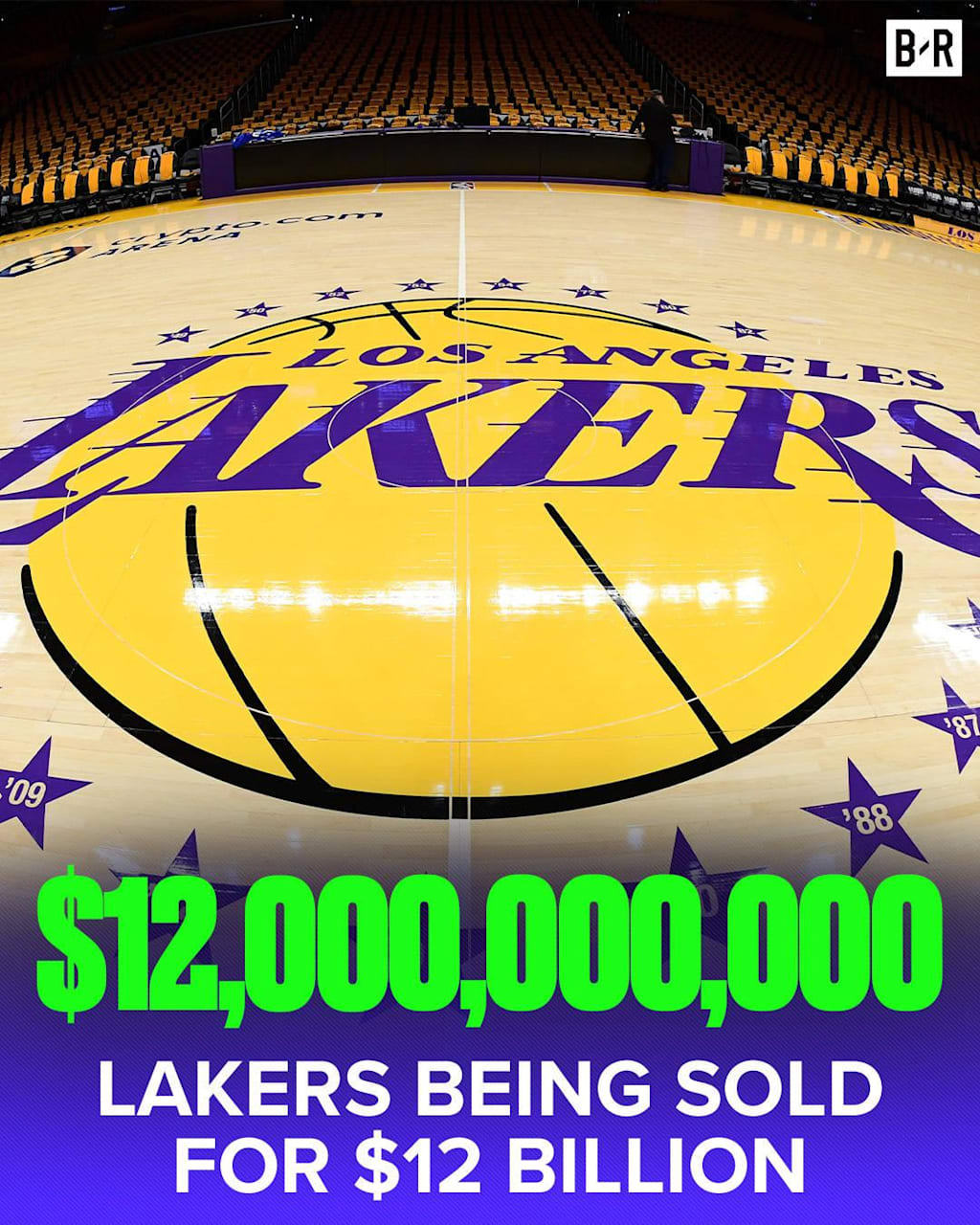
August 2026. The Los Angeles Lakers are sold for $12 billion. The number punches through the ceiling of professional sports, but the real headline isn't the price—it's the clock. Mark Walter, the man who runs Guggenheim, bought the Lakers from the Buss family just last year for $10 billion. A full year passed, and before fans could get used to calling him owner, he signed the papers to sell.
He got an offer on Sunday. He decided before Wednesday. Ten billion in assets, seventy-two hours to decide, two billion in profit. Anyone who has ever sold a house on short notice knows exactly what that means—you're running. Otherwise you don't leave bargaining on the table.
Mark Walter is in his early sixties, gray-haired, wears wire-rimmed glasses, speaks softly, and looks like an actuary who doesn't like being disturbed. People on Wall Street say he can calculate everything except his own debts.
That $21 billion loan problem is now on his back. Complex structure, fuzzy disclosures, and both the SEC and FBI are digging. Inside his firm, he's already cycled through three sets of lawyers, each more expensive than the last. In the Guggenheim building, the blinds in his office stay drawn all day, and the front reception desk has been replaced by two young men in dark suits—no one knows if they're security or something else.
He needs cash. And he needs it fast.
The Lakers are the brightest jewel in his collection, but at this moment they're just a check that can be cashed quickly. Twelve billion. Someone offered it. He took it. That fast.
The buyer is a man named Josh Kushner.
Josh is Jared's brother. Jared is Trump's son-in-law. You don't need a diagram—one sentence draws the line. Josh runs a venture firm called Thrive Capital, which backed Instagram and Spotify, a name that carries weight in the circles. But Thrive's war chest can't cover a $12 billion deal. Behind Josh are others—his brother, and the man behind his brother.
After Trump returned to the White House in 2024, the people around him got richer than decency allows. Policy papers moved faster than printing presses, and those who knew the news a day early in the stock market made sums that ordinary people couldn't earn in ten lifetimes. This isn't speculation—it's an open secret in Washington.
But this money has a problem: it's wet. It leaves footprints. Trump has two years left in his term. The Democrats took back Congress in the 2026 midterms, and no matter what happens in 2028, that political shield has a shelf life of only two more years. When it expires, those footprints might be traced back.
So the money needs to be cleaned. Not into offshore accounts—that's old school. It needs to be turned into things nobody can touch—a building, a plot of land, a sports team. The Lakers, with tens of millions of fans around the world, a city government that counts on their tax revenue, TV networks that sell ads against them, and the NBA that leans on them for prestige. Who wants to seize the Lakers? Ask the mayor of L.A. first.
That's hard assets. Too big to touch.
There's another name in the deal.
Bob Iger, former CEO of Disney, the guy who ran Star Wars and Marvel, is worth about $700 million—not even a fraction of the Lakers' valuation. But he has one good thing: a reputation. Clean, textbook reputation. The NBA does background checks on owners. Josh Kushner can pass, but the money behind Josh might not. Put Iger at the front, and the league office becomes easier to deal with.
This pairing isn't new in the NBA. A famous name for the front, a rich guy for the books. Iger and Kushner had teamed up before, trying to buy World Cup rights with private equity money—didn't work. Different target this time, same playbook.
On the Lakers' new organizational chart, Iger's name sits on top, Kushner's somewhere below. But anyone who knows how Washington works knows that the real decision-maker sits in a room in the West Wing of the White House.
Seventy-two hours. The deal got done because both sides were in a hurry.
On Walter's side, nothing more needs to be said. Federal investigations don't wait. He has to move whatever money he can before formal charges land. The Lakers are the biggest brick he can pry loose. The day those $12 billion hit his account, he at least has leverage to negotiate with prosecutors—there's a difference in magnitude between "I can afford the best lawyers" and "I can afford to make everything go away."
But the deeper transaction happens under the table.
By selling the Lakers to Trump's people, Walter hopes the Justice Department will go easy on him. Fines are fine. Prison is not. Settlements are fine. Indictments are not. These aren't stated conditions, but everyone in Washington knows the language—you help me, I help you. The Lakers are the vessel for that "help." The $12 billion buys not just a team, but a man's legal future.
On the buyer's side, it's not just about owning a basketball team.
Turning hot money into the Lakers—that's asset allocation. Extending Trump's influence into downtown L.A.—that's political positioning. Building a firewall against whatever reckoning might come in two years—that's survival strategy. Millions of Lakers fans, hundreds of sponsors, broadcast deals signed through the next decade. Seizing the Lakers is like kicking a hornet's nest. If Trump is pursued after leaving office, he needs something "too big to fail" standing in front of him.
Kushner and Iger also want an expansion team in Las Vegas. They want to connect the Lakers and Sin City into a single line. That's another story.
Is $12 billion too much?
Forbes estimated the team at about $8 billion before the deal. Twelve billion is a 50% premium. No one in the market would pay that for the Lakers—except someone who urgently needs to spend dirty money. When money itself becomes a liability, its purchasing power distorts. Trump's circle has a simple premium logic: overpaying by $4 billion doesn't matter—what matters is that this money becomes something nobody can take away.
So within that $12 billion, the Lakers are worth $8 billion. The remaining $4 billion buys two things: Walter's neck, and Trump's safety.
Now the NBA has to take a stand.
Adam Silver sits in his New York office with a background check report on the buyers. Clean on paper—Josh Kushner, compliant; Bob Iger, compliant. The flow of funds is complex but legal—at least no obvious evidence of illegality.
But Silver also knows that people in the White House are watching this. Trump has criticized the NBA for being "too political" more than once in public. If the league vetoes this deal—vetoes an acquisition by the current president's inner circle—the consequences are predictable: the Justice Department digs up old files, Congress issues subpoenas, the president tweets his fury. The NBA can't afford that kind of trouble.
So the league will approve it, but with "close monitoring." That's the standard bureaucratic answer to political pressure—appearing to concede nothing while conceding everything.
When Lakers fans hear this news, their feelings are probably mixed.
On one hand, both Kushner and Iger are smart. Iger multiplied Disney's market cap several times over during his tenure. Kushner has a sharp eye in venture capital. They know how to run assets—the Lakers won't depreciate under their watch. Player acquisitions, commercial development, brand maintenance—these things will likely stay at a high level.
But on the other hand—from now on, the Lakers are no longer just a basketball team.
They've become a piece on the Washington chessboard. A Trump-family flag in California, a thorn in Democratic territory, and two years from now, possibly a target or a weapon in a political reckoning. What the team owner cares about will shift from "Can we trade for an All-Star?" to "What did the White House say today?" This change won't appear in any announcement, but it will seep into the cracks of every decision.
And there's the lingering question: if Trump loses in 2028, will the new administration dig up this deal? Can the source of the funds withstand scrutiny? Will the Lakers be frozen, investigated, dragged into court? All of it hangs over the team like a blade that hasn't fallen yet.
Players will still play. Fans will still cheer. But in those few seconds between the whistle and the lights dimming, some people will think about it—the owner of this team has changed, and behind the new owner stands the entire White House.
That afternoon, Walter signed the papers and left.
Staples Center hadn't issued an official notice yet. The staff were still mopping the floor. The arena was empty, and the Lakers logo on the hardwood gleamed beneath the water streaks, wiped over and over again, the same as yesterday, the same as last year, the same as twenty years ago. As the mop passed over center court, that purple-and-gold emblem was wet for a moment, then dried.
The security guard changed shifts. Half the lights went off. The doors locked.
There's a game tomorrow.
About the Creator
Jin
Writer of reamstories
https://reamstories.com/jin
Enjoyed the story? Support the Creator.
Subscribe for free to receive all their stories in your feed. You could also become a paid subscriber, letting them know you appreciate their work.
Comments
There are no comments for this story
Be the first to respond and start the conversation.