baseball
Sabermetric analysis of all things baseball - on-and-off the field. Barry Bonds fan club.
The Worst MLB City Connect Jerseys
Greetings, baseball nerds! Spring Training will be here before you know it. In my previous story, I've selected some of my favorite City Connect jerseys that stood out to me. I'll have a link to that story down below. With the good comes the bad, so I'll be highlighting six of the worst City Connect jerseys that didn't vibe well with me. We can all agree to disagree with the following selections, but if you didn't see a jersey that made the list, please comment down below. Just like my previous story, I'm only going to focus on the jerseys themselves, not the hats. A list of the best and worst City Connect hats will be featured on here in a later story.
By Mark Wesley Pritchard 9 months ago in Unbalanced
Tipping My Hat, or Rather, Hats to You
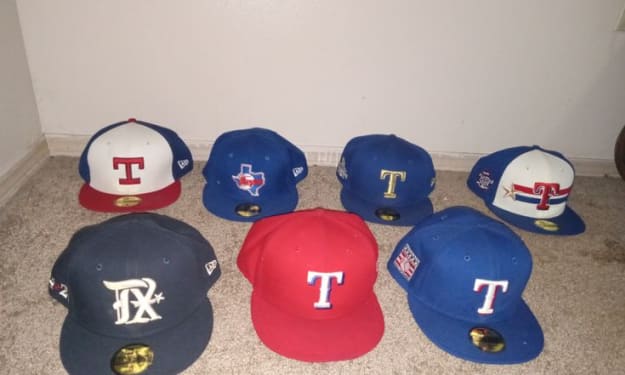
Baseball hats---let's talk about them. You probably have at least one in your home and wear it. I have seven Texas Rangers hats in total, and the last one is the most recent one from August 2025. Technically, I have eight, but I'll explain that one near the end of this story. New Era has been the official baseball cap supplier since 1993. The company was founded in 1920 by Ehrhardt Koch. 59Fifty Day is celebrated annually on May 9 to honor the iconic fitted baseball cap. Many people collect baseball caps as a hobby and as a devoted hathead myself, this has been a new hobby of mine after retiring from cosplay in 2024. I do plan on buying more and have no plans on stopping anytime soon. I'll be highlighting some of my favorite Rangers caps and they're not in any particular order.
By Mark Wesley Pritchard 9 months ago in Unbalanced
Jalen Williams. AI-Generated.
Not every NBA story begins with hype. Some begin with patience, late nights in empty gyms, and a player who slowly learns who he is. Jalen Williams’ journey belongs to that second kind of story—the kind that feels more real because it wasn’t rushed. Today, Jalen Williams is recognized as one of the most promising young players in the NBA, a key piece of the Oklahoma City Thunder’s future. But his rise wasn’t built on viral highlights or instant fame. It was built on steady improvement, adaptability, and an understanding of the game that goes deeper than the box score. From Overlooked Prospect to Reliable Performer Jalen Williams did not enter basketball as a guaranteed star. Coming out of high school, he wasn’t heavily recruited. He chose Santa Clara University, a smaller program that rarely produced NBA lottery picks. For many players, that path can feel like a limitation. For Williams, it became an advantage. At Santa Clara, he was given time—time to grow physically, time to understand spacing, time to learn how to read defenders rather than simply outrun them. Over three seasons, his game matured quietly. His scoring became more efficient. His defense became more disciplined. His confidence grew, but never crossed into ego. By the time he declared for the NBA Draft, scouts noticed something different. Jalen Williams wasn’t flashy, but he was reliable. He didn’t force shots. He didn’t disappear on defense. He made winning plays. A Perfect Fit in Oklahoma City When the Oklahoma City Thunder selected Jalen Williams, it felt like a natural match. The Thunder are known for valuing basketball intelligence, versatility, and long-term development. Williams fit that philosophy perfectly. From his rookie season, he showed an unusual level of comfort for a first-year player. He moved well without the ball, defended multiple positions, and made smart decisions under pressure. While other rookies struggled with the speed of the NBA, Williams looked composed. What stood out most wasn’t just his scoring—it was how he scored. He attacked closeouts, finished through contact, and picked his moments. He didn’t need the offense built around him to be effective. That kind of flexibility is rare. Growth Beyond the Box Score Jalen Williams’ impact isn’t always loud. His numbers are strong, but his true value shows up in smaller details. He knows when to slow the game down. He knows when to cut, when to rotate, when to pass instead of forcing a shot. Defensively, he brings energy without gambling. He stays disciplined, uses his length intelligently, and communicates well with teammates. Coaches trust him because he rarely makes the same mistake twice. That trust has earned him more responsibility each season. Whether playing alongside established stars or leading bench units, Williams adapts. He doesn’t demand attention—he earns it. A Player Built for Modern Basketball In today’s NBA, versatility matters more than ever. Jalen Williams fits seamlessly into the modern game. He can handle the ball, shoot from range, attack mismatches, and guard multiple positions. He’s not defined by one skill, and that’s what makes him dangerous. Defenders can’t predict his next move. Coaches can place him in different lineups without sacrificing balance. More importantly, he understands spacing and timing—two things that don’t always show up on highlight reels but win games consistently. Staying Grounded Amid Rising Expectations As attention grows, many young players struggle with expectations. Jalen Williams has handled that pressure with maturity. He speaks calmly, credits teammates, and focuses on improvement rather than headlines. That mindset reflects in his game. Even as his role expands, he continues to play within the flow of the offense. He doesn’t chase statistics. He chases progress. This approach has made him a favorite among fans who appreciate effort and consistency. It has also made him invaluable to a Thunder team building something sustainable. What the Future Holds Jalen Williams’ ceiling remains high—not because he’s chasing superstardom, but because his foundation is strong. Players who understand the game tend to age well. They adapt as their roles change. They stay relevant. As Oklahoma City continues to develop, Williams is positioned to be a core piece for years to come. Whether he becomes an All-Star or simply one of the league’s most respected two-way players, his impact is already clear. He represents a reminder that success doesn’t always arrive loudly. Sometimes it arrives quietly, earned through patience and purpose. Final Thoughts Jalen Williams’ story isn’t about instant fame or dramatic breakthroughs. It’s about steady growth, humility, and understanding the value of doing the little things right. In a league often dominated by noise, his calm presence stands out. And as his career continues to unfold, one thing feels certain: Jalen Williams didn’t rush his journey—and that’s exactly why it’s working.
By Saboor Brohi 10 months ago in Unbalanced
The Boy in the Stands
I didn’t go for the game. I went for my nephew. He’s thirteen, wears a faded jersey two sizes too big, and talks about football like it’s scripture. “It’s not about winning, Uncle,” he’d said, eyes bright. “It’s about who shows up when it matters.”
By KAMRAN AHMAD10 months ago in Unbalanced
The Night Basketball Felt Like Home
I didn’t go for the basketball. I went because my son asked me to. He’s eleven, wears his hair in messy curls, and talks about the game like it’s poetry written in motion. “You have to see how they move together, Dad,” he’d said, eyes wide. “It’s like they’re speaking a language only they understand.”
By KAMRAN AHMAD10 months ago in Unbalanced
The Night the World Held Its Breath
I don’t remember most New Year’s Eves. But I remember the one in 2020. The world was silent. Streets were empty. And yet, at 11:59 p.m., I sat alone on my couch, eyes fixed on a glowing sphere in a city I’d never visited, tears streaming as strangers on screen counted down to a year none of us were sure we’d survive.
By KAMRAN AHMAD10 months ago in Unbalanced
The Day the Roses Taught Me to Slow Down
I didn’t understand the Rose Parade as a child. To me, it was just pretty flowers on strange machines, marching bands in matching uniforms, and my grandfather’s insistence that we watch it every single January 1st, no matter what.
By KAMRAN AHMAD10 months ago in Unbalanced
25 Years as a Texas Rangers Fan
Happy New Year, Vocal readers and subscribers! 2026 has finally arrived. 2026 is also me celebrating a quarter century of being a Texas Rangers fan. I need to correct everyone on a few details when it came to me attending my very first Rangers game in person at 13 years old. I've stated in my numerous stories on Vocal that I attended the aforementioned game soon after the tragic events of September 11. Recently, I was looking at the 2001 Texas Rangers schedule, via the Baseball Almanac's website. I was surprised that they kept records of old MLB regular season schedules and rosters going back that far. Speaking of that roster, players such as Michael Young, Kenny Rogers (not to be confused with the late, great country singer), Pudge Rodríguez, and Gabe Kapler stood out for the team. Also, Alex Rodríguez was on this team before he ended up finishing his career with the New York Yankees. As far as the exact date of when I attended my first Rangers game, it was August 22, 2001, and on a warm Wednesday evening. Yes, it was on a school night, but it would be a memory that I would cherish forever. The Rangers played the Yankees at home as part of a four-game series. When I arrived at The Ballpark in Arlington, which was their old ballpark and the name of it at the time, I was so amazed of the exterior of it. I attended the game with my now estranged father, younger brother, and one of my friends from school at the time. It was a guy's night out, but I had a great time. By the way, the Rangers won that game 8-1. The four-game series ended in a split decision between both teams. After arriving home from the game, that was the night I became a Texas Rangers fan.
By Mark Wesley Pritchard 10 months ago in Unbalanced
Is Eleven Dead?
Introduction Since the day she emerged from the lab with a shaved head and a world of power in her eyes, Eleven has been the heart of Stranger Things. So when fans search “Did Eleven die in Stranger Things?” or “Is Eleven alive?,” the question isn’t just about plot—it’s about saying goodbye to a character who symbolizes resilience, love, and the cost of heroism.
By KAMRAN AHMAD10 months ago in Unbalanced
Russell Wilson. AI-Generated.
In professional sports, talent opens the door—but belief keeps it open. Few modern athletes represent this truth more clearly than Russell Wilson. His career is not just a timeline of wins, losses, and statistics; it is a narrative shaped by doubt, discipline, faith, and the relentless pursuit of reinvention. From being labeled “too small” to becoming a Super Bowl champion, Russell Wilson’s journey reflects the complex reality of success in elite sports. It’s a story that continues to evolve, reminding fans that greatness is rarely linear. Early Doubts That Shaped Russell Wilson Before stadium lights, endorsement deals, and global recognition, Russell Wilson was simply a young athlete trying to be taken seriously. Standing just over six feet tall, he didn’t fit the traditional image of an NFL quarterback. Scouts questioned his size. Analysts questioned his durability. Coaches questioned whether he could lead at the highest level. Yet those doubts didn’t discourage him—they defined him. Wilson played college football at both NC State and Wisconsin, proving adaptability early in his career. His time at Wisconsin showcased his precision, calm decision-making, and leadership under pressure. Still, when the NFL Draft arrived, he wasn’t selected until the third round. For many players, that moment would have been discouraging. For russel wilson, it became fuel. Seattle Seahawks: Building a Legacy Russell Wilson’s arrival in Seattle marked the beginning of a defining era for the Seahawks. Few expected him to win the starting job as a rookie, but he did—and quickly rewrote expectations. The Seahawks weren’t just winning games; they were building an identity. Wilson’s calm presence balanced a physically dominant defense, creating one of the most memorable teams of the decade. The pinnacle came with Super Bowl XLVIII, where Seattle delivered a dominant performance. Wilson wasn’t flashy that night, but he was efficient, composed, and exactly what the team needed. Over the years, he became synonymous with Seattle football—late-game comebacks, deep passes, and an unshakable belief that no deficit was too large. But success, as it often does, brought pressure. The Weight of Expectations As Russell Wilson’s profile grew, so did expectations. Fans wanted perfection. Media narratives became louder. Every interception was scrutinized. Every loss questioned his leadership. The NFL is unforgiving, especially to quarterbacks who are paid to be flawless. Wilson handled this pressure publicly with optimism, often emphasizing faith, preparation, and positivity. Privately, however, the burden of constant scrutiny can reshape even the most disciplined minds. Athletes are rarely allowed to evolve quietly. When they change, the world notices—and judges. A New Chapter and Public Scrutiny When Russell Wilson moved on from Seattle, the transition was anything but quiet. Change always invites criticism, and Wilson’s new chapter became one of the most discussed shifts in recent NFL history. Suddenly, the same traits once celebrated—confidence, discipline, structure—were questioned. Some called him distant. Others misunderstood his leadership style. The conversation around russell.wilson shifted from admiration to analysis. But transitions are rarely smooth, especially when identity and expectations collide. What many forget is that reinvention is risky. It requires humility, patience, and resilience. And not every lesson comes with immediate results. Leadership Beyond the Field One of the most overlooked aspects of Russell Wilson’s career is his commitment beyond football. His work in philanthropy, youth development, and hospital outreach has been consistent—not performative. He has often spoken about purpose, about using influence responsibly, and about separating personal growth from public noise. Whether fans agree with his approach or not, it’s clear that Wilson views leadership as something larger than game-day performance. In a sports culture that often rewards bravado, his quieter, intentional approach stands out. Faith, Discipline, and Identity Russell Wilson’s public discussions about faith and mindset have always been central to his identity. For some, this transparency is inspiring. For others, it invites skepticism. But identity, especially in high-pressure environments, can be an anchor. Wilson’s routines, affirmations, and preparation habits reflect an athlete who believes excellence begins long before kickoff. His confidence is not rooted in arrogance but in structure—something built through repetition, belief, and accountability. That mindset doesn’t guarantee success, but it does provide stability when results fluctuate. The Reality of Reinvention Reinvention in professional sports is brutal. Fans want instant results. Media wants headlines. Teams want certainty. But reinvention takes time. Russell Wilson’s career reminds us that athletes are not static. They evolve, struggle, adapt, and sometimes fail publicly. That doesn’t erase their past, nor does it define their future. What matters is the response. Does the athlete retreat—or recalibrate? Why Russell Wilson Still Matters Regardless of where his career ultimately leads, Russell Wilson represents something essential in modern sports: the courage to believe differently. He challenged physical stereotypes. He prioritized mindset in a results-driven league. He embraced leadership in his own way, even when misunderstood. In a world obsessed with instant judgment, his journey invites patience. And perhaps that is his greatest legacy—not just touchdowns or trophies, but the reminder that belief, when sustained through adversity, still has power. Final Thoughts Russell Wilson’s story is not finished. Careers don’t end in headlines; they end in reflection. Whether remembered for championships, comebacks, or controversy, one thing remains clear: russell wilson has never been afraid to bet on himself. And in a league built on risk, that may be the boldest play of all.
By Saboor Brohi 10 months ago in Unbalanced
Nikola Jokic Injury . AI-Generated.
In professional sports, injuries are an unavoidable part of the game. When the player involved is Nikola Jokić, even a minor concern quickly becomes a major talking point. As the centerpiece of the Denver Nuggets, any Nikola Jokic injury naturally raises questions among fans, analysts, and opponents alike.
By Saboor Brohi 10 months ago in Unbalanced
Unbalanced
M Mehran Callum Ward never noticed the imbalance at first. Balance is like gravity—when it works, you don’t think about it. When it fails, you fall. He used to be steady. The kind of man who woke up before his alarm, ironed his shirt twice, and brewed coffee like a ritual. He believed if you organized the outside world, the inside would follow. But life doesn’t always agree. Sometimes it throws its weight on one side until everything tilts. For Callum, that tilt began the day his wife disappeared. The Tilt The police asked the usual questions. When did you last see her? Did she seem upset? Did you two fight? Callum answered honestly. He didn’t remember fighting. He didn’t remember much of anything anymore. That, apparently, made them suspicious. Grief does strange things to a mind. It fogs it, warps it, forces it to replay moments like broken film. The house felt uneven without her—rooms too quiet, chairs misplaced, doors slightly open like someone had just left. It wasn’t just the sadness. It was the guilt. Because the truth that Callum never said out loud was simple: he felt her leaving long before she actually left. Conversations that didn’t reach their endings. Dinners eaten in silence. A growing distance that could have swallowed oceans. One night, two weeks after she vanished, Callum heard footsteps upstairs. Not loud. Not violent. Just… footsteps. Familiar in rhythm, like someone pacing. Like someone thinking. He picked up a flashlight and climbed the stairs. Halfway up, the light flickered. The footsteps stopped. He whispered her name. Silence answered. But on the landing, he noticed something new: her necklace, hanging on the doorknob. The same gold chain she wore every day. He hadn’t seen it since the night she disappeared. Callum’s legs nearly gave out. The Unbalance Grows People in the neighborhood started talking. They called him “unstable,” “off,” “not right since she left.” Someone reported that he was wandering the street at midnight, as if searching for something he couldn’t name. Another swore they saw him talking to the empty air on his porch. Callum didn’t deny it. He heard her voice sometimes—soft, like she was speaking from another room. He smelled her perfume in the hallway. Sometimes, he even felt the mattress shift beside him, the weight of a second body settling into the bed. Callum knew grief had gravity. It pulled. It dragged. It distorted. But this was something else. One evening, when the sun was dying into a bruised purple, someone knocked on his door. Detective Rana Hale. She looked tired in a way that went beyond sleep deprivation. “We found something,” she said. The world tilted. The Truth That Isn’t Down at the station, they showed him a photograph. Callum’s wife. But not the woman he remembered—no soft smile, no warm eyes. Her hair was cut short. Her expression was sharp, like a blade disguised as a face. She was standing beside a man Callum had never seen. The detective spoke calmly. “There are signs she may have left by choice. We believe she was involved in something… dangerous. You may not have known her as well as you thought.” Callum stared at the photo. His chest tightened, breath catching like a snagged thread. That was the moment he understood: the imbalance wasn’t an accident. It was a message. His wife hadn’t vanished from life—she’d vanished into another one. “You think she ran away?” he asked. Rana nodded. “We think she’s hiding. And Callum… we think she may come back for you.” A strange relief washed through him. Not fear. Not anger. Hope. If she left by choice, maybe she could return by choice. Maybe the world could even out again. He went home that night with a spine full of static and a heart split down the center. When the Scale Breaks At 3:14 a.m., the footsteps returned. This time, they were not gentle. Callum didn’t reach for the flashlight. He didn’t hide. He walked toward the sound. Down the hall, through the open door, into the bedroom where it all began. His wife sat on the edge of the bed. She looked real. More real than memory. More real than grief. Her eyes were tired, frightened, alive. “Callum,” she said. Her voice cracked like old paint. “I need you to listen. I didn’t leave you. I ran from them. And now—they’re coming.” The room swayed. The world tilted. Every ounce of balance he had left snapped like a pulled thread. “Who?” he asked. She trembled. “The man in the photograph. I wasn’t supposed to survive. But I did. I’ve been trying to get back ever since.” He crossed the room, sat beside her. He didn’t touch her, afraid she’d disappear like fog. “Why come back now?” Her eyes lifted to his. “Because the only place I’m safe is with you.” And just like that, the imbalance didn’t vanish. It became something new. Not steadiness, not order—shared weight. Epilogue They didn’t sleep that night. They packed bags. They planned. They prepared for a world that was no longer straight, no longer stable, no longer kind. Callum learned something in that moment: Balance isn’t the absence of chaos—it’s choosing who you stand with when the world tips. He had spent months trying to regain equilibrium, not realizing that maybe life isn’t meant to balance perfectly. Maybe it’s meant to be held, together, even when it shakes. Especially when it shakes.
By Muhammad Mehran10 months ago in Unbalanced