
She Won Japan’s Only Olympic Table Tennis Gold. Then She Cleared Her Instagram.
Mima Ito is off Japan’s national team for the first time in 12 years. Her silence, and her deleted posts, point to a choice bigger than retirement.
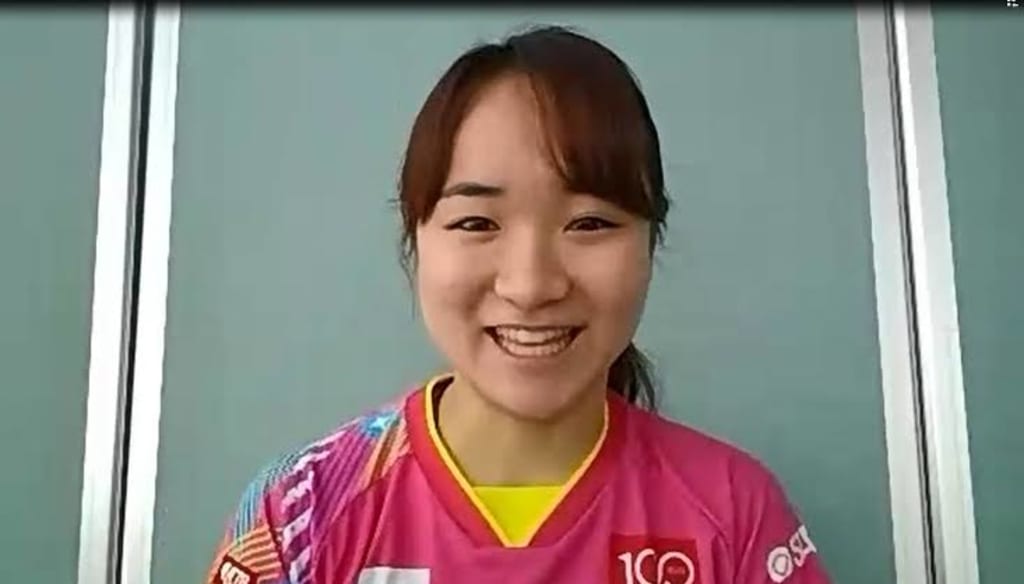
On Oct. 15, the Japan Table Tennis Association published its latest national-team list. Seven women made the main squad, eleven made the reserve list. Mima Ito’s name was absent from both. It was the first time in nearly twelve years that she had been left out of Japan’s women’s national-team setup entirely.
A few hours after the list appeared, people noticed her Instagram had changed. Every table-tennis post was gone. The phrase “Japanese table tennis player” had disappeared from her bio. The account was private. There was no retirement statement, no farewell video, no livestream. Twelve years of national-team work ended with a few clicks.
The move matched her playing style. Clean. Decisive. No loose ends.
Ito joined Japan’s national team in 2014 at thirteen. At the 2015 German Open, aged fourteen years and 152 days, she won the women’s singles title and became the youngest women’s singles champion in ITTF World Tour history. At the 2016 Rio Olympics, aged fifteen years and 300 days, she won team bronze, then the youngest Olympic table tennis medalist.
The Tokyo Olympics in 2021 put her in a different position. In the mixed doubles final, she and Jun Mizutani came from behind to beat Xu Xin and Liu Shiwen 4-3. The win gave Japan its first Olympic table tennis gold, and the country still has no other. China’s response showed how seriously the team took her. Liu Shiwen lost her women’s team spot. The scouting and preparation around Ito grew more detailed than anything China had built for a foreign player in the previous decade. The line about everyone having a copy of the “Mima Ito recipe book” was a joke, but only partly.
Her game earned that attention. She used backhand pimples-out rubber, varied serves and fast first-three-ball attacks. Her rhythm did not fit the mainstream looping style. She did not win by wearing opponents down. She won by making them uncomfortable. At her best, that discomfort was enough to beat any Chinese mainstay.
Every foreign prodigy eventually meets the same wall. Opponents learn the rubber. They learn the spin. They learn to borrow her pace and turn her speed against her. The margin inside a pimples-out system gets smaller once the surprise is gone. China and players elsewhere spent years finishing that homework. The “Ito stopper” stopped being an emergency plan and became standard equipment. Her room on the table shrank.
The numbers show the slide. In the 2026 season she stalled in the round of 16 at several high-level WTT events. Her world ranking fell to No. 25. Her ranking inside Japan fell to No. 9. She played only WTT Champions Doha and the Singapore Smash that season, a lighter schedule by itself. The earlier warning came in 2024. After losing in the domestic selection, she missed a Paris Olympic singles place and turned down the P-card reserve role. At the time, people called it pride. Looking back, it reads as a line she drew early: she would not sit on a team as a substitute or a safety net.
Her omission from the latest list raised one more question. Her world ranking of No. 25 and domestic ranking of No. 9 were higher than some players on the reserve list. Pure ranking logic would have given her a reserve spot. The JTTA did not.
That choice fits a shift in how Japan picks its women’s team. Past medals no longer buy a place. The current pipeline makes that shift possible. Hina Hayata holds the top. Miwa Harimoto has risen fast and won the All-Japan title. Hitomi Sato turned a WTT China Smash women’s singles runner-up finish into a main-squad spot. Miu Hirano, Miyu Kihara and Miyu Nagasaki stay close. Satsuki Odo, Rin Mente and Sakura Yokoi keep pushing. Miwa Harimoto, at eighteen, is already treated as the next leader. Hina Hayata has said she cannot be sure of holding her main-squad place next year. The JTTA also named two choppers, a tactical adjustment aimed at adding variety to a fast-attack system that had grown too similar across players.
In a system where places are earned match by match, a name from the last cycle cannot cover a drop in form. The mechanism is not picking on Ito. It is doing what a selection system does when the next wave is already at the door.
Read only the omission and the cleared posts, and the story looks like a passive exit. Ito’s own answer gives a different frame.
In an interview with TV Tokyo, she said: “As I thought about the future, I had the idea of leaving the Japanese national team and placing myself in an environment where I could think with a from-zero mindset. I hope to use this time to re-examine myself not only from the perspective of a table tennis player, but from the perspective of an ordinary person. I also hope to broaden my horizons and try to take on new challenges.”
She did not announce a retirement. She described leaving the national team and looking at herself as an ordinary person. From thirteen, her career had run inside a national-team frame built around one job: beat China. That frame gave her resources, attention and a place in history. It also made every match carry meaning beyond the match. Clearing the table-tennis posts and dropping the label from her bio points to the same move. She still loves the sport and will not retire because the national team has moved on. She no longer wants “Japanese table tennis player” to be the only name for her.
The practical loss is clear. She cannot represent Japan at the Olympics, the world championships or WTT international events. The Los Angeles cycle is closed to her at the institutional level. Leaving the international stage is not leaving table tennis. She has said her next focus will be club competition and her personal brand. Japan’s T.League remains a stage she can arrange on her own terms. She is also preparing a table tennis training center and plans to use what she has learned to teach younger players.
For someone who grew up inside the national-team system from thirteen and felt the full weight of targeted study, this turn is not a fallback. It is a way to take back control. She will no longer be defined by a selection list or driven by the demand that she beat China. She can set her own pace with the sport.
Mima Ito has not said goodbye to table tennis. She has said goodbye to the teenager and young adult who stepped onto the table carrying a national mission. The quiet profile purge carries weight because it is so quiet. She did not let anyone else write her exit. Her time in the national-team sequence is over. The table is still there. The next time she stands at it, a roster spot will not define who she is.
About the Creator
Jin
Writer of reamstories
https://reamstories.com/jin
Enjoyed the story? Support the Creator.
Subscribe for free to receive all their stories in your feed. You could also become a paid subscriber, letting them know you appreciate their work.
Comments
There are no comments for this story
Be the first to respond and start the conversation.