
One Tweet, Two Years of Grace, Three Years of Tariffs — and a Factory That Will Never Break Ground
Trump can set the tariff at 200 %, but that won’t conjure a single pill‑making plant out of American soil. Here’s the math the CEOs already did.
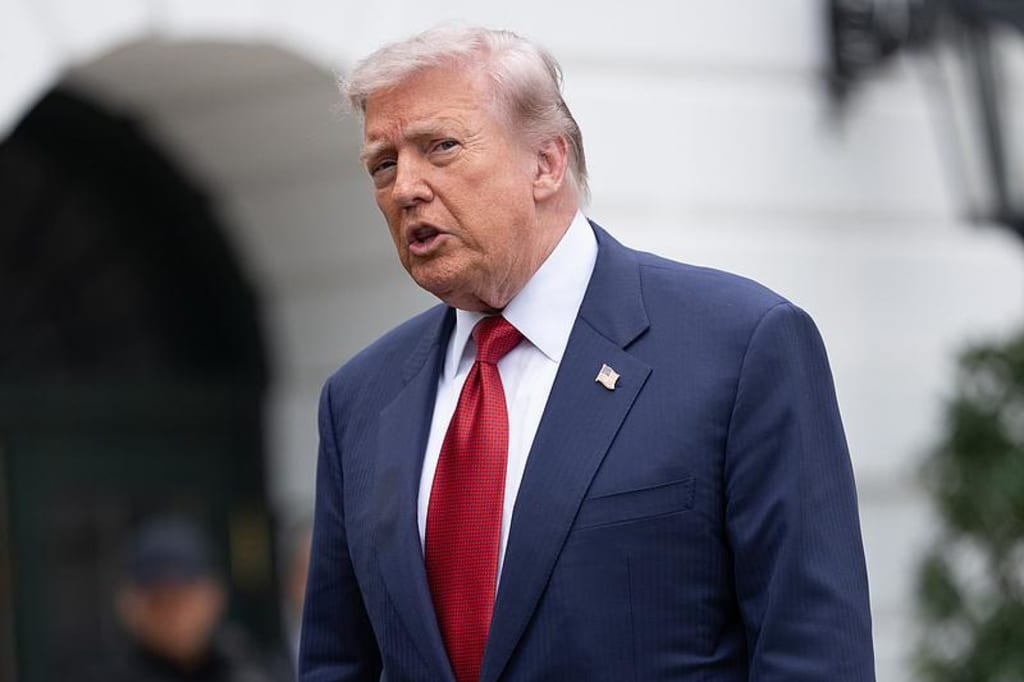
On July 21, 2026, Donald Trump posted a brief statement on social media: zero tariffs on imported generic drugs would remain in place for another two years; after that, they would rise to 100 percent for one year, and then to 200 percent.
The tremor in financial markets lasted only a few hours. Teva's stock dipped 1.2 percent that day; Sandoz's parent company, Novartis, fell 0.8 percent. Then everything settled. The signal markets sent was clearer than any analyst's note: they didn't think it would happen.
But the policy itself matters, not because it will be implemented, but because it exposes a structural dilemma the United States faces in the unglamorous business of generic drugs.
Who Fills America's Pill Bottles?
Many people assume America's generics come from India. That's half right.
India is indeed the largest exporter—about 35 percent of the active pharmaceutical ingredients in U.S. finished generic drugs come through Indian supply chains. But India's place in the chain is that of a "production workshop," not the "decision-maker." The backbone of global generic supply is held up by two giants: Sandoz, headquartered in Germany (formerly the generics division of Switzerland's Novartis), and Teva Pharmaceutical, based in Israel. Together, they account for roughly a quarter of the U.S. generic market, yet their factories are scattered across India, China, Eastern Europe, and Latin America—almost none are in the United States.
China sits further upstream. In 2025, China's total exports of APIs and intermediates to the United States reached about $4.07 billion. Note that these are active ingredients—not finished pills in bottles, but the chemical raw materials used to make them. That means the impact on China isn't directly "tariffs make drugs more expensive," but rather "American clients order less, so raw materials sit unsold." For a major API producer with global annual exports exceeding $40 billion, however, the $4.07 billion share to the U.S. is still within a manageable reallocation range, as Europe and Southeast Asia have absorbed an increasing volume of Chinese APIs over the past three years.
The real pinch isn't in China or India. It's that none of this capacity can be relocated to the United States in two years, or even five.
How Prices Were Squeezed Down—and Why They Can't Come Back Up
U.S. generics are cheap. That sounds counterintuitive. Brand‑name originator drugs in America are the most expensive in the world, but the price of unbranded generics ranks among the lowest in developed countries.
This "cheapness" isn't a natural market outcome; it's squeezed out by a system called the Pharmacy Benefit Manager (PBM). Nearly 270 million Americans with prescription drug coverage have their formularies controlled by three giant PBMs. For each generic drug, the PBM does one thing: the lowest bidder gets onto the formulary; everyone else is shut out.
So behind every generic drug, five or six factories are bidding at once. In 2025, what was the PBM winning bid for lisinopril, a common blood‑pressure medication? Three cents per pill. At that price, any attempt to manufacture in the United States is absurd. A U.S. plant that meets FDA standards costs six to eight times more per unit than one in India, and five to seven times more than in China. Land, environmental compliance, and labor are all more expensive. But the most lethal factor is the last one: over the past three decades, the U.S. has shed entire cohorts of pharmaceutical manufacturing workers. Retraining a workforce that can operate reactors, understand GMP protocols, and handle shift work isn't about money; it's about time. The average FDA approval cycle for a new plant is 18 to 36 months.
The market demands the lowest price. Policy demands local production. The gap between those two demands is a hole that even a 100 percent tariff cannot fill.
What the Two CEOs Actually Said
In 2025, when Trump first floated the idea of tariffs on generics, both giants' CEOs responded. I noticed an interesting difference: Sandoz was doing the math; Teva was doing the capacity calculus.
Sandoz CEO Richard Saynor made a remark that the media boiled down to "it makes no economic sense." His full statement was: "Unless you revise the PBM pricing mechanism and give us tax credits equivalent to at least 30 percent of our construction costs, the generics produced in the U.S. would sell to PBMs at four times the price of imports. That extra cost won't be borne by companies—it will be borne by insurers, and ultimately by patients."
In plain English: You're asking me to make a three‑cent pill in an American factory, and I'll lose money on every one. For me not to lose, you have to change the rules. But changing the rules means U.S. health insurance spends more. Which do you choose?
Teva CEO Richard Francis said something different: "The U.S. consumes generics in the hundreds of billions of doses annually. Even if we moved every idle piece of pharmaceutical equipment in the world to America, we couldn't build enough capacity in two years to cover that demand. It's not about money—it's that physically, there aren't that many engineers, that much equipment, or that many regulatory approval pathways available right now."
Put more bluntly: Even if I agree to build plants at a loss, I can't do it in time.
If Tariffs Actually Hit, Who Breaks First?
Suppose the policy sticks to its timeline: 100 percent in August 2028, 200 percent in 2029. The first consequence won't be "factories relocating." It will be "prices spike first, and drugs run short first."
Today, over 90 percent of all prescription drugs dispensed in the U.S. are generics. Not a single one of those drugs has domestic manufacturing capacity that can fully cover U.S. demand. In other words, once the import channel is choked off by tariffs, there is no ready alternative.
Here's a concrete image: a 65‑year‑old retired auto worker in Michigan takes four generics monthly: lisinopril for blood pressure, metformin for blood sugar, atorvastatin for cholesterol, and amlodipine for angina. His current out‑of‑pocket cost is $47 per month. If imported generics are priced out of PBM formularies and replaced with American‑made equivalents (if they exist), how much would his bill rise? No one can answer, because today, there is no "Made in the U.S.A." version of any of these four drugs on the market.
This isn't a policy simulation. It's a factual description.
The Biggest Gap
As of July 23, 2026, the U.S. FDA's drug registration database shows zero new plant‑construction applications from generic manufacturers that can be linked to Trump's tweet.
Teva and Sandoz have not filed environmental reviews for new factories.
No Indian generic company has announced land purchases in the United States.
Chinese API exporters' price quotes to America remain unchanged.
None of the actions have started yet. And the two‑year grace period is already ticking.
Trump doesn't just want tariffs. He wants to see the picture of "factories breaking ground." But that picture has yet to appear, not because companies are disobedient, but because after running the numbers, no one knows how to turn the first shovel of dirt.
About the Creator
Jin
Writer of reamstories
https://reamstories.com/jin
Enjoyed the story? Support the Creator.
Subscribe for free to receive all their stories in your feed. You could also become a paid subscriber, letting them know you appreciate their work.
Comments
There are no comments for this story
Be the first to respond and start the conversation.