
Mary Astor and The Maltese Falcon: The Woman Hollywood Taught Us to Distrust
Behind one of film noir’s most famous femme fatales is a more complicated story about women, power, and the price of refusing to play by the rules.

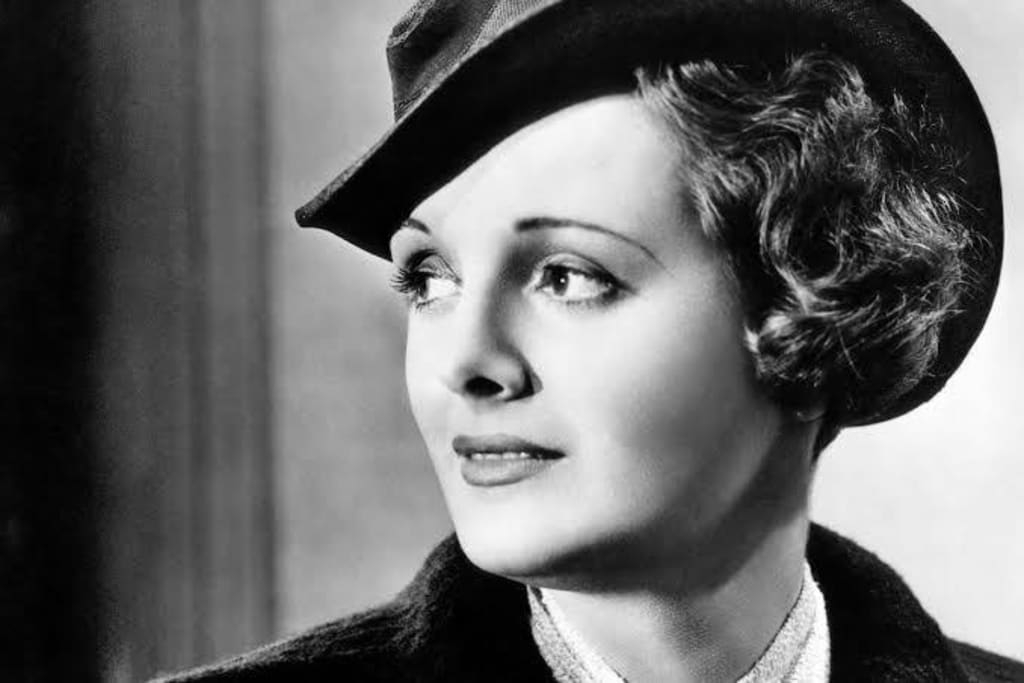
There is something telling, revealing really, about the way Hollywood remembers the women of film noir.
The men are complicated. They are cynical, ambitious, violent, wounded, and sometimes tragically misguided. We call them, antiheroes. We admire their intelligence, study their motivations, and celebrate their ability to survive in a corrupt world, but living by their own set of rules.
The women, however, are quite ,(more than) frequently, given a different label.
They are dangerous. They are manipulative. They are temptresses, schemers, and femme fatales. Their intelligence becomes cunning, their ambition becomes greed, and their refusal to submit becomes a threat that must eventually be contained.
Few performances illustrate this contradiction more compellingly than Mary Astor’s portrayal of Brigid O’Shaughnessy in John Huston’s 1941 masterpiece, The Maltese Falcon.
Astor plays a woman who lies, conceals her intentions, and manipulates nearly everyone around her. Those facts cannot simply be wished away. But to dismiss Brigid as merely a dishonest woman misses what makes the character; and Astor’s performance; so fascinating.
Brigid inhabits a world in which men possess the money, the weapons, the professional authority, and most of the power. She survives by using the resources available to her: intelligence, observation, persuasion, and the ability to understand what other people want.
The film asks us to distrust her.
Mary Astor gives us reasons to look more closely.
A Woman Enters a Man’s World
When Brigid O’Shaughnessy first appears in Sam Spade’s San Francisco detective office, she presents herself as a woman in distress. She claims to be Ruth Wonderly, a client seeking help with a missing sister. Her story draws Spade and his partner, Miles Archer, into a case that quickly becomes more dangerous than either man expects.
The identity is false, and so is much of her story.
However, consider the setting. Spade’s office is part of a professional world dominated by men. The detectives control the investigation, determine which questions deserve answers, and decide whose testimony they will believe. Brigid enters that world as an outsider who needs their assistance but cannot safely reveal her actual intentions, so, she does what she can to control the situation.
Her methods are deceptive, and the consequences are serious. Yet, the film’s premise raises an existential question: What options does a woman have when she enters a world in which men possess the institutional power and she must persuade them to take her seriously. Brigid's answer is to become a strategist.
She studies Spade. She watches his reactions. She adjusts her story when the circumstances change. She recognizes that men can be influenced by curiosity, pride, money, attraction, and fear; and she knows how to appeal to those motivations. The men around her do much the same thing.
Kasper Gutman has spent years pursuing the Maltese Falcon. He conceals information, employs intermediaries, and treats other people as instruments in a much larger scheme. Joel Cairo is secretive, calculating, and prepared to use threats when persuasion fails. Spade himself routinely withholds information and manipulates conversations to maintain his advantage. These men are not innocent, and the film never pretends that they are.
Yet their behavior belongs to the familiar vocabulary of the familiar hard boiled detective story. They are professionals and adversaries playing a dangerous game. Brigid plays the same game, but the rules are different for her. Her ability to manipulate becomes a defining moral characteristic, one that threatens to overwhelm every other aspect of her personality.
That difference deserves our attention.
The Double Standard of the Femme Fatale
The femme fatale is one of cinema’s most enduring archetypes; a woman whose beauty, intelligence, and sexuality draw men into situations from which they may not escape. The character can be fascinating, but, she can also reveal the anxieties of the society that created her.
In classic Hollywood, a woman who pursued her own interests at the expense of male authority was often presented as a source of disorder. If she was ambitious, she might be greedy. If she was sexually independent, she might be dangerous. If she used intelligence and persuasion to gain influence, she might be portrayed as manipulative.
The implication was not always explicit, but it appeared repeatedly; a woman who stepped outside the role assigned to her could become a threat to the social order.
Film noir complicated this picture. Its women were often more resourceful, assertive, and psychologically interesting than the conventional heroines of earlier Hollywood stories. They could make decisions, pursue objectives, and drive the plot rather than simply react to the actions of men.
But that freedom frequently came with a narrative penalty.
The femme fatale might be allowed to exercise power, provided the story eventually demonstrated the danger of letting her have it. Her ambition could be exciting, but it was also likely to become the source of her downfall.
Brigid O’Shaughnessy fits this tradition, although Mary Astor's performance gives the character a complexity that makes simple condemnation unsatisfying. Brigid is not a model of virtue. She deceives people, and the film connects her actions to murder. A sympathetic reading does not require us to excuse those choices. What it does require is that we recognize the double standard surrounding them.
When Sam Spade conceals information, we see a detective protecting himself in a corrupt environment. When Gutman manipulates others, we see the methods of a determined criminal. When Brigid does something similar, her behavior becomes inseparable from the stereotype of the deceitful woman.The actions are not identical, and their consequences matter. But the difference in how we interpret them tells us something about the stories we have inherited.
Men in noir are often permitted to be complicated without being reduced to their worst decisions. Women deserve the same consideration.
Mary Astor Refuses to Make Brigid Simple
Astor’s great achievement is that she never reduces Brigid to a single quality.
She gives us a woman who can appear frightened one moment and calculating the next. Brigid may seem genuinely vulnerable, but she is also alert to the possibilities in every conversation. She can plead for help while quietly assessing whether the person listening to her might be useful.
Astor’s performance is not simply a display of feminine charm deployed as a weapon. It is a portrait of someone constantly trying to regain control of circumstances that are slipping beyond her reach.
Watch her scenes with Bogart. Spade is not a fool. He recognizes that Brigid is concealing information, and he rarely accepts her explanations without question. Their conversations are contests of intelligence, with each trying to discover what the other knows.
Brigid is often outmatched, but she is never intellectually absent from the encounter. She thinks, recalculates, and tries again. Astor makes us see the effort behind the performance. Brigid is not simply waiting for a man to rescue her. She is actively trying to determine her own fate. That determination is part of what makes her compelling.
It is also what makes the character uncomfortable. Brigid wants things. She has plans that do not depend on the approval of the men around her. She is willing to act in pursuit of those plans, even when doing so places her in opposition to the people who hold the greatest power over her. The film ultimately judges her choices, as it must. But Astor makes it difficult to deny her intelligence or ignore her agency. She gives Brigid an interior life beyond the label of femme fatale.
That, is precisely why the performance remains worth discussing.
The Actress Behind the Archetype
Mary Astor had been working in Hollywood since her teenage years. Born Lucile Langhanke in 1906, she began her career during the silent era and successfully continued into the age of sound, building a body of work that extended across decades. She understood that an actor could not rely on appearance alone. A convincing performance required judgment, restraint, and an understanding of what a character revealed—and what she chose to conceal.
Her work in The Great Lie, released in 1941, earned her the Academy Award for Best Supporting Actress. The same year, The Maltese Falcon gave her one of her most enduring roles.
Astor’s own life also brought her unwanted attention from the press. A contentious custody dispute in the 1930s became a public spectacle, demonstrating how readily the private lives of actresses could be transformed into public entertainment and judgment. We should not confuse Astor with Brigid or suggest that the actress’s personal experiences explain every aspect of her performance. They were different women living different lives.
Still, Astor’s career offers a useful reminder: Hollywood actresses have often been expected to negotiate a narrow space between public fascination and public condemnation. They are celebrated for their beauty, judged for their private decisions, and frequently expected to embody ideals that their male counterparts are not required to meet. Astor’s longevity as a performer was itself an achievement in an industry that could be unforgiving toward women as they aged. She continued to work, took on varied roles, and demonstrated that her talents extended far beyond the glamorous image with which she was initially associated. Her performance as Brigid benefits from that experience. Astor knows how to use an audience’s expectations without becoming trapped by them.
We arrive expecting a beautiful woman who deceives men. We leave having watched a complicated character whose intelligence and determination make her difficult to dismiss.
The Men Are Not Innocent, Either
One of the most interesting things about The Maltese Falcon is that almost nobody behaves honorably for very long.
Gutman’s genial manner conceals ruthless ambition. Cairo’s refined appearance does not make him trustworthy. Wilmer Cook, Gutman’s young associate, is caught in a hierarchy that uses him as both muscle and expendable protection. Spade operates according to a personal code, but that code does not make him gentle or transparent. The film's moral landscape is populated by people who lie, bargain, threaten, and conceal their intentions.
Brigid belongs in this company.
Yet there is a temptation to treat her as the film's central moral problem, as though the corruption surrounding her were merely the natural consequence of a woman who knows how to get what she wants. That interpretation lets the men off too easily.
Brigid is responsible for her decisions, but she does not create the entire world in which those decisions unfold. The men pursuing the Falcon have their own ambitions and their own capacity for violence. They are not helpless victims of a woman's influence. They make choices, too.
A more thoughtful reading of the film recognizes that deception is not an exclusively feminine trait. It is a human strategy, employed by people with different motives and different degrees of power.
The real question is not whether women can be manipulative. Of course they can, just as men can.
The question is why a woman's use of power so often becomes a commentary on her character, while a man's use of power is more readily accepted as part of his identity, profession, or struggle for survival. The Maltese Falcon does not explicitly answer that question. Its story belongs to the conventions of its time.
But its complexity gives modern audiences an opportunity to ask it.
A Bird, a Woman, and the Price of Control
The Maltese Falcon itself is an object of almost mythical importance. Gutman has pursued it for years. Cairo wants it. Brigid wants it. Each character believes the bird will provide something that has so far eluded them. The object becomes a symbol of desire: the promise that one extraordinary prize might finally make everything worthwhile.
For Brigid, the Falcon represents more than a collectible treasure. It is tied to her attempt to escape the consequences of her past and secure a future of her own choosing. That does not make her pursuit noble. It does, however, make it understandable as a human desire for control over one's life. The tragedy is that Brigid's methods have become inseparable from the deception that brought her to Spade's office in the first place. She has spent so long trying to direct other people's beliefs that she has left herself very little room to establish trust.
When the truth finally closes in, Spade refuses to let his feelings override his judgment. He will not simply excuse Brigid because he desires her, and he will not pretend that their relationship erases the consequences of her actions. His decision is morally serious. The film does not require us to dismiss it in order to question its portrayal of women.
But we can recognize the sadness in Brigid's position without declaring her innocent. We can hold her responsible for what she has done while acknowledging that her character represents something larger than a warning about untrustworthy women. She is also a woman struggling for agency in a world where the men around her have more conventional routes to authority and power.
Her tragedy lies partly in the choices she makes, but it also lies in the narrow possibilities through which the story allows her to pursue freedom.
Looking at Brigid Differently
More than eighty years after its release, The Maltese Falcon remains a remarkable film. Its dialogue is sharp, its characters are unforgettable, and its atmosphere captures a world in which trust is dangerous and certainty is hard to come by.
Mary Astor is central to that achievement.
Bogart gives us a detective who survives by reading people. Sydney Greenstreet gives us a criminal whose charm makes his ruthlessness more unsettling. Peter Lorre gives us a man whose refinement and nervous energy conceal a dangerous determination. Astor gives us a woman who refuses to become merely an object in their story. Brigid lies, she manipulates, she makes destructive decisions.
But, she is also intelligent, resourceful, and determined to shape her own future. Those qualities do not disappear because her choices are morally compromised. They make her a more interesting character, not a less culpable one.
Perhaps, that is the most useful way to reconsider the femme fatale; not by pretending that every woman in a noir film is secretly heroic, but by refusing to reduce women to the warning labels attached to them. A woman can be ambitious without being a monster. She can be intelligent without being threatening. She can make terrible choices without becoming a representative of her entire sex; a female character can be morally complicated without the story becoming an argument against female independence.
Mary Astor understood how to make Brigid O’Shaughnessy fascinating. She gave us a woman who could command a room, outthink an adversary, and challenge a detective who believed he understood the people around him.
The film may ultimately close the door on Brigid's freedom. But Astor ensures that we remember the intelligence, determination, and humanity of the woman on the other side, which is why her performance deserves more than a place in the history of film noir. It deserves to be seen on its own terms.
Not simply as the story of a woman who deceived men, but as the portrait of a woman whose struggle for power reveals how differently we have learned to judge men and women who want it.
About the Creator
ambiguous karma
I'm a historian and religious studies scholar with 2 B.A.'s in History and Religious Studies (Salem College) I write with grit, insight, and satire: exploring power, belief, and resistance across time. Scholar by training, rebel by nature.
Enjoyed the story? Support the Creator.
Subscribe for free to receive all their stories in your feed. You could also become a paid subscriber, letting them know you appreciate their work.
Comments
There are no comments for this story
Be the first to respond and start the conversation.