
Knicks Fever Meets Security Concerns: The Debate Over Public Celebrations in New York
As the New York Knicks' historic NBA Finals run electrifies the city, heightened security measures around Madison Square Garden spark a broader discussion about balancing public safety with the joy of communal sports celebrations.

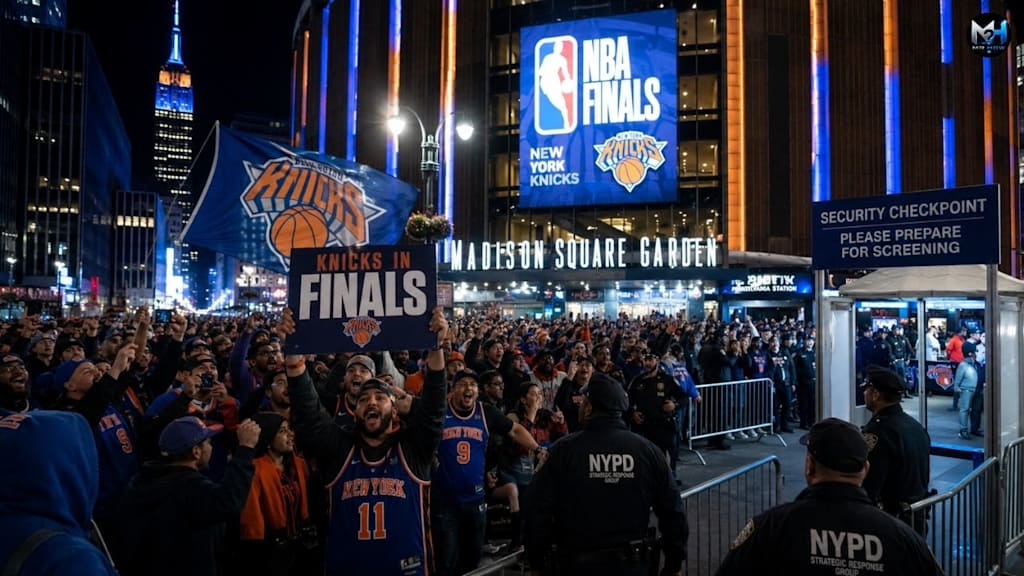
The New York Knicks' remarkable journey to the NBA Finals has given basketball fans across the city a reason to celebrate. For the first time in decades, New York finds itself at the center of the basketball world, with Madison Square Garden once again serving as the stage for one of sports' biggest events. The excitement has energized neighborhoods, packed sports bars, and united fans from all walks of life.
But alongside the celebration, a different conversation has emerged—one focused not on basketball strategy or championship predictions, but on security measures, crowd control, and the role of city officials during major public events.
As thousands of fans gathered around Madison Square Garden during the Finals, New York City implemented extensive security protocols designed to maintain order and ensure public safety. These measures included restricted access to certain areas, increased police presence, enhanced screening procedures, and tighter regulations on public gatherings near the arena.
The resulting debate has highlighted a challenge that cities around the world increasingly face: how to balance safety concerns with the public's desire to celebrate historic moments together.
For many fans, sports are about more than what happens inside the arena. Some of the most memorable moments occur outside the stadium gates, where strangers become friends, chants echo through the streets, and entire communities unite around a shared experience. Championship runs often create a festival-like atmosphere that extends far beyond the game itself.
Supporters of open public celebrations argue that these spontaneous gatherings are an essential part of sports culture. They point to iconic scenes from previous championship runs, when city streets transformed into gathering places filled with excitement, emotion, and community spirit.
From this perspective, strict security restrictions can feel like a barrier between fans and the experience they have waited years to enjoy.
At the same time, city officials face a difficult reality. Large crowds create risks that cannot be ignored. Public safety agencies must prepare for emergencies, manage traffic, prevent overcrowding, and respond to unexpected incidents. Even peaceful celebrations can become dangerous when thousands of people gather in confined areas.
Recent years have demonstrated how quickly large crowds can become difficult to manage. Around the world, sporting events, concerts, and public festivals have occasionally experienced safety issues ranging from minor disturbances to serious emergencies. As a result, many governments have adopted a more cautious approach when planning security operations.
Those defending the restrictions argue that city leaders have a responsibility to prioritize safety above all else. Their position is simple: while celebrations are important, protecting lives must remain the highest priority.
The controversy surrounding the Knicks Finals serves as an example of a broader trend. Across the globe, major public events increasingly involve sophisticated security planning. Advances in surveillance technology, crowd management systems, and emergency response coordination have transformed how cities prepare for large gatherings.
Some view these developments as necessary adaptations to modern challenges. Others worry they risk creating environments that feel overly controlled and less welcoming to the public.
The tension between these perspectives reflects a larger question about urban life in the twenty-first century. How much security is too much? At what point do protective measures begin to diminish the very experiences they are intended to safeguard?
There are no easy answers.
What makes the Knicks situation particularly interesting is that it involves one of the world's most famous cities and one of the most passionate sports fan bases in America. New Yorkers are known for their energy, enthusiasm, and deep connection to their teams. When the Knicks succeed, the excitement spreads far beyond basketball enthusiasts. The team's performance becomes a cultural event that captures the attention of the entire city.
This widespread enthusiasm creates both opportunities and challenges. Businesses benefit from increased foot traffic. Restaurants and bars experience higher customer demand. Local media outlets enjoy heightened engagement. At the same time, transportation systems face added pressure, public spaces become crowded, and law enforcement agencies must allocate additional resources.
As a result, every decision regarding security carries significant consequences.
The debate also reflects differing views about risk. Some people believe the possibility of disruption justifies extensive precautions. Others argue that excessive restrictions can create unnecessary inconvenience while limiting the public's ability to participate in meaningful communal experiences.
Neither perspective is inherently unreasonable.
In fact, both sides are motivated by legitimate concerns. Fans want the freedom to celebrate historic moments with fellow supporters. Officials want to ensure that everyone returns home safely after the event. The challenge lies in finding a balance that satisfies both objectives.
One potential lesson from the controversy is the importance of communication. When authorities clearly explain the reasoning behind security measures, the public is often more willing to accept temporary inconveniences. Transparency can help reduce frustration and build trust between officials and the communities they serve.
Likewise, organizers and city leaders may benefit from working together to create designated celebration areas where fans can gather safely without creating excessive risks. Such approaches have been successful in various cities during major sporting events and public celebrations.
As the NBA Finals continue, the discussion surrounding security will likely remain part of the broader story. Regardless of who ultimately wins the championship, the situation offers an opportunity to reflect on how cities manage large-scale public enthusiasm in an era of heightened security awareness.
The Knicks' Finals appearance has reminded everyone why sports hold such a powerful place in society. They bring people together, create lasting memories, and inspire collective emotion on a scale few other activities can match.
At the same time, the controversy surrounding security measures demonstrates that even moments of celebration require careful planning and thoughtful decision-making.
Ultimately, the goal should not be choosing between safety and celebration. Instead, cities, event organizers, and communities should work toward solutions that allow both to coexist. When that balance is achieved, fans can enjoy unforgettable experiences while knowing that reasonable precautions are in place to protect everyone involved.
The excitement of a championship run may last only a few weeks, but the lessons learned about public safety, community engagement, and urban event management can influence future celebrations for years to come.
About the Creator
Enjoyed the story? Support the Creator.
Subscribe for free to receive all their stories in your feed.
Comments
There are no comments for this story
Be the first to respond and start the conversation.