
From Uruguay to the World: The Remarkable Story of Football's Greatest Tournament
Things You Never Knew

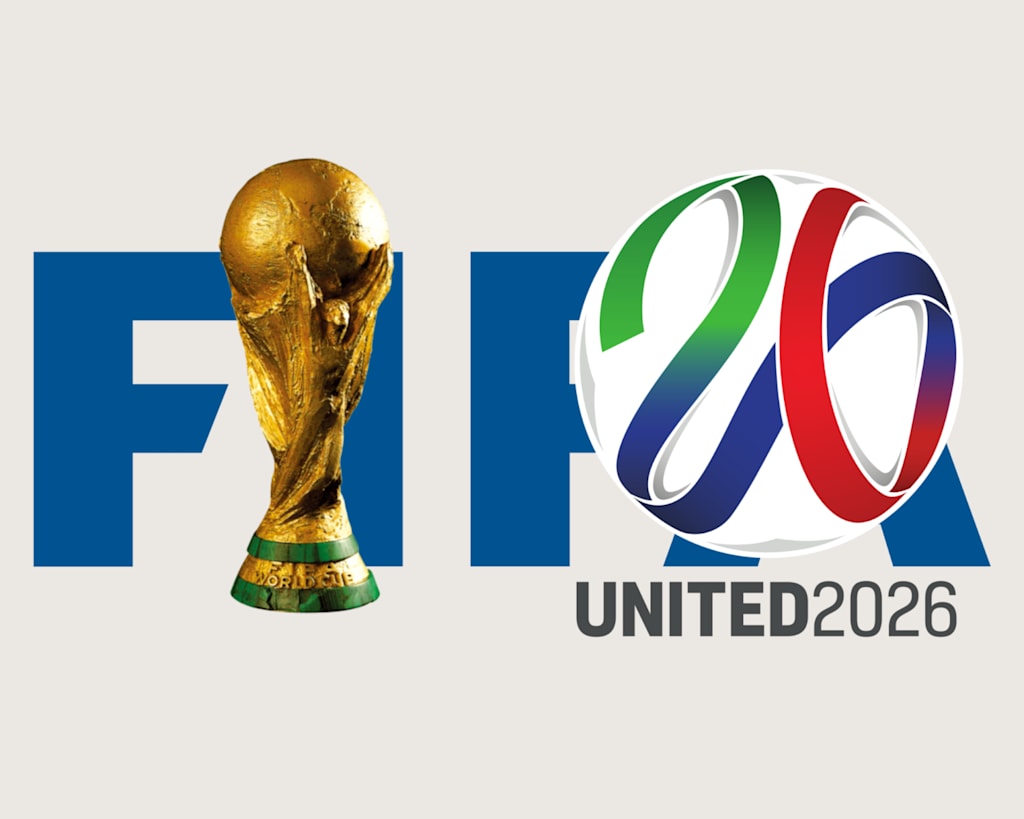
Few events on earth stop entire nations in their tracks. Wars have been paused for it. Economies slow. Billions of people who can't agree on anything else somehow manage to agree that the FIFA World Cup is the greatest sporting spectacle humanity has ever produced. But how did a single football tournament grow into something so vast, so emotionally charged, so deeply threaded into the fabric of global culture? The answer stretches back nearly a century — and the journey is anything but tidy.
The Idea That Almost Never Happened
International football already had a passionate following long before the World Cup existed. The Olympic Games had featured the sport since 1900, but the amateur-only rules frustrated nearly everyone involved. Professional players — meaning the best players — were simply excluded. FIFA, founded in 1904, had been dreaming of its own global tournament for years, yet the logistics seemed almost laughably impossible. Crossing an ocean in the 1920s wasn't exactly a casual undertaking.
Jules Rimet, the French football administrator who would eventually have the trophy named after him, pushed harder than anyone. He took over as FIFA president in 1921 and gradually transformed the World Cup from a romantic notion into something resembling an actual plan. FIFA formally voted to create the tournament in 1928, and Uruguay — fresh from their Olympic gold medal and celebrating a century of independence — was awarded the honour of hosting the first edition, set for 1930.
The Europeans weren't enthusiastic. The ship journey took two weeks each way, and several major nations, England included, flatly refused to go. Only four European teams made the trip: France, Belgium, Romania, and Yugoslavia. Thirteen nations competed in total. It was a modest start for something that would one day consume the entire planet.
1930: The First Chapter
Uruguay's Estadio Centenario became the cradle of World Cup history. The hosts dominated from the opening matches, playing with a style and intensity that clearly surprised their visitors. The final was a rematch of the 1928 Olympic final — Uruguay against Argentina — and it drew more than 68,000 spectators, passionate and, on occasion, violent.
Uruguay won 4–2. The country declared a national holiday. Argentina went into mourning. The Uruguayan Football Association's offices in Buenos Aires were stoned by furious Argentine fans. Before the tournament even had a second edition, it had already demonstrated its ability to generate the kind of passion that defies rational explanation.
Argentina's Guillermo Stábile finished as top scorer with eight goals, a record that stood in World Cup history for decades. The foundations were down, the template established. All that remained was building on it.
The Turbulent Early Decades
The 1934 tournament moved to Italy under Benito Mussolini's fascist government, which used the occasion as propaganda — and it worked. Italy won. The defending champions, Uruguay, refused to participate, still bitter about the European boycott four years earlier. Brazil sent a weakened squad. The United States, who'd been genuine contenders in 1930, went out in the first round.
Italy retained the trophy in 1938, hosted by France, becoming the first nation to win back-to-back titles. Then the world fell apart. World War II wiped out the 1942 and 1946 tournaments, leaving a twelve-year gap in the record books. When football finally returned in 1950, it returned to Brazil — and immediately produced one of the most shocking moments in the sport's history.
That tournament was the only one ever decided by a final group stage rather than a knockout final. Brazil needed just a draw against Uruguay in the deciding match. More than 200,000 people packed the Maracanã in Rio de Janeiro — still the largest crowd ever to attend a football match. Uruguay won 2–1. The defeat became known as the Maracanazo, a national trauma so deep that Brazil's white kit was subsequently changed to yellow, partly to bury the memory of that afternoon.

The Rise of European Dominance
West Germany and Hungary met in the 1954 final in Switzerland. Hungary — arguably the finest team of that entire era — were overwhelming favourites, having beaten the Germans 8–3 earlier in the same tournament. In the final, Germany came from two goals down to win 3–2. Goalkeeper Toni Turek became a national hero almost overnight. The Wunder von Bern — the Miracle of Bern — remains one of the defining moments in German football history.
Then came 1958, and everything changed.
A seventeen-year-old Brazilian named Edson Arantes do Nascimento stepped onto the world stage in Sweden. The world called him Pelé. He scored six goals in four matches, including two in the final against the host nation. Brazil won 5–2. Pelé wept openly on the pitch when the final whistle blew. He was a teenager who had just conquered the world.
Brazil won again in Chile in 1962, despite Pelé being injured early in the tournament. Garrincha — the bowlegged, joyful winger from a small town in Rio de Janeiro state — carried the team and was named the tournament's best player. Three World Cup titles. Brazil had established themselves as the spiritual home of the game.
England's Finest Hour and the Birth of a Global Audience
The 1966 World Cup arrived in England, and with it came something genuinely new: television. Matches were broadcast widely across the world for the first time, with hundreds of millions of people watching England host the tournament they'd always believed they were born to win.
The Wembley final against West Germany remains one of the most debated matches in football history. Whether Geoff Hurst's controversial third goal actually crossed the line is still being argued about today. England won 4–2 in extra time, with Hurst completing the only hat-trick ever scored in a World Cup final. Bobby Moore lifting the Jules Rimet Trophy became an image that an entire generation of English fans has clutched ever since.
No England team has come remotely close to repeating it.
Brazil Makes History, Then a Giant Stumbles
The 1970 tournament in Mexico produced what many still consider the greatest team ever assembled. Brazil played with a freedom and brilliance that genuinely bordered on art. Pelé, now in his prime, led a squad featuring Jairzinho, Rivelino, Tostão, and Carlos Alberto. They didn't just win matches — they dismantled opponents while somehow making it look completely effortless.
Their 4–1 victory over Italy in the final was a masterclass. Carlos Alberto's thunderous closing goal, the result of a sweeping, unhurried team move, is still regularly cited as the greatest goal in World Cup history. Brazil won the Jules Rimet Trophy for the third time and kept it permanently. A new trophy had to be commissioned.
Then 1974 arrived in West Germany, bringing a tactical revolution with it. The Netherlands, under Johan Cruyff, introduced Total Football — a fluid, almost position-less system where any player could occupy any role on the pitch. They were extraordinary to watch. West Germany, the hosts, beat them in the final anyway. Cruyff never won the World Cup. Depending on who you ask, it remains one of football's great injustices.

Argentina, Controversy, and the Hand of God
Argentina claimed their first World Cup in 1978 on home soil, under circumstances that were deeply controversial. The military junta governing the country at the time used the tournament for political purposes, and allegations of match-fixing — particularly involving the final group stage match against Peru — have never fully gone away. Mario Kempes was the star, scoring in the final as Argentina beat the Netherlands 3–1 after extra time.
Spain hosted in 1982, and Italy triumphed again with Paolo Rossi emerging from a match-fixing suspension to score six goals in three games. Mexico took over in 1986, and Diego Maradona delivered perhaps the most extraordinary individual tournament performance in football history. He scored with his hand against England — famously claiming it was "the hand of God" — then scored what FIFA later voted the Goal of the Century in the very same match, dribbling from his own half past five defenders before calmly slotting home. Argentina won the tournament. Maradona essentially carried them there himself.
Germany won in Italy in 1990, a tournament remembered mainly for defensive football and a brilliant goalkeeping performance from Cameroon's Thomas N'Kono. Roger Milla, at 38 years old, became the oldest player to score at a World Cup and celebrated with a dance that football has never forgotten.
The Modern Era Takes Shape
The 1994 World Cup in the United States introduced football — or soccer, depending on where you're standing — to an enormous new audience. Brazil won again, with Romário and Bebeto forming one of the great striking partnerships in tournament history. The final against Italy ended goalless and was decided by a penalty shootout, the first in World Cup history. Roberto Baggio's missed spot-kick, his head bowed as the ball sailed over the bar, became an enduring symbol of tournament football's particular cruelty.
France hosted in 1998 and produced a fairy-tale result: the host nation won for the first time, with Zinedine Zidane scoring twice with his head against Brazil in the final. The image of the Champs-Élysées flooded with celebrating millions captured something genuinely true about what the World Cup can mean to a country.
The 2002 tournament — co-hosted by Japan and South Korea — was the first held in Asia and the first to see South Korea reach the semi-finals, sparking celebrations that swept across the country. Brazil won their fifth title, powered by a fully fit Ronaldo who had suffered a mysterious illness before the 1998 final. His two goals against Germany completed one of football's most remarkable personal redemption stories.

Zidane's Last Act and Spain's Golden Generation
Italy won in Germany in 2006, but the tournament is remembered almost entirely for one moment: Zinedine Zidane, playing the final professional match of his career, headbutted Italian defender Marco Materazzi in the chest during extra time of the final and was sent off. France lost on penalties. Zidane walked past the trophy on his way to the dressing room. It was a stunning, almost inexplicable end to one of the game's truly brilliant careers.
South Africa hosted in 2010, the first World Cup held on African soil. The vuvuzela provided the tournament's relentless soundtrack. Spain won their first ever World Cup, completing a remarkable treble that included two European Championships either side of it. Andrés Iniesta's extra-time winner in the final against the Netherlands was coolly taken and wildly celebrated. Spain's tiki-taka style — short passing, relentless possession — completely reshaped how top-level football was discussed and coached for years afterwards.
Brazil hosted in 2014 and suffered the Mineirazo — a 7–1 semi-final defeat to Germany that left the nation in a kind of stunned, collective silence. Germany won the tournament, with Mario Götze scoring a superb extra-time winner against Argentina. It was their fourth World Cup title and arguably their most convincing.
France, Messi, and the Greatest Final Ever Played
Russia hosted in 2018, with France winning their second World Cup behind a brilliant, young squad. Kylian Mbappé, nineteen years old, became only the second teenager after Pelé to score in a World Cup final. Croatia — a country of just four million people — reached the final for the first time, beating England in the semi-finals and breaking a great many hearts across the UK in the process.
Then came Qatar 2022, and almost everything that had come before it was eclipsed by a single final. Argentina against France. Messi against Mbappé. Argentina led 2–0 late in the match. France scored twice in 97 seconds to equalise. Extra time couldn't separate them. Mbappé scored a hat-trick. Messi scored twice. Penalties settled it. Argentina won. Messi, at 35, finally lifted the one trophy that had eluded him throughout a career of almost impossible achievement.
He cried. The world watched. It became the most viewed sporting event in human history.
What Makes It Different
Every four years, the World Cup does something no other event quite manages. It turns casual observers into football fans. It creates rivalries that stretch across generations. It produces moments — Maradona's goal, Zidane's headbutt, Baggio's penalty, Messi's tears — that embed themselves permanently in cultural memory whether you want them to or not.
The tournament has always been a mirror of the world's politics, anxieties, and aspirations too. The 1978 edition reflected the ugliness of authoritarian rule. The 1994 edition demonstrated how sport can introduce an unfamiliar culture to something it ends up embracing. The 2010 edition showed what it meant for a continent to finally host an event on its own terms. Qatar 2022 raised serious, unresolved questions about human rights, labour conditions, and the influence of money on sporting governance — questions that aren't going anywhere.
24 editions of the tournament have been held since 1930
Brazil remains the most successful nation with five titles
Germany and Italy have each won four times
The tournament has been hosted across six different continents
Over 3.5 billion people watched the 2022 final

Looking Ahead
The 2026 World Cup will be jointly hosted by the United States, Canada, and Mexico — the first tournament to span three countries simultaneously. The format expands to 48 teams. New nations will qualify for the first time. New stars will emerge from nowhere. Someone will score a goal people talk about for fifty years. Someone will miss a penalty that breaks a nation's heart all over again.
The World Cup has never been a perfect tournament. It's been political, occasionally corrupt, controversial, and sometimes genuinely dull. But it's also produced moments of such pure, unscripted human drama that no fiction writer could have invented them. That's really the point — you never quite know what's coming next.
And that's exactly why the world keeps watching.
About the Creator
Taylor Aaron Diakunczak
I write about sports, entertainment, technology, and more.
Enjoyed the story? Support the Creator.
Subscribe for free to receive all their stories in your feed.
Comments
There are no comments for this story
Be the first to respond and start the conversation.