
From History to Holiday: How Hardwick and the Gold Coast Suns lost the finals formula
More Stars, less Sun. Why Gold Coast must rediscover Damien Hardwick's premiership formula

Optus Stadium has become the perfect measuring stick for Gold Coast’s rise and regression.
On September 6, 2025, the Suns walked into Fremantle’s home ground for the first final in club history and emerged with an 80-79 victory.
Bailey Humphrey kicked three goals, Ben Long and Connor Budarick two each, Matt Rowell and Noah Anderson drove the midfield and retiring veteran David Swallow forced through the point that changed the club’s history.
Ten months later, Gold Coast returned to the same venue and barely resembled that side.
Fremantle won 80-29 behind frenetic pressure, organised defence and slick ball movement. The Dockers were crowned minor premiers earlier this month, while Gold Coast finished with nine wins, outside even the wildcard round.
The Suns had not suddenly run out of talent. If anything, they had more of it.
The problem was what surrounded it.
WHAT DISAPPEARED?
The 2025 Suns finally looked like a ferocious Damien Hardwick team.
Early that season they generated 27 forward-half intercepts per game, matching Hardwick’s premiership-era Richmond, while gun recruits Daniel Rioli and John Noble powering their speed from the back half combining with their ability to score from turnover became trademarks.
That system required stars, but it also required footballers prepared to do jobs rarely seen on highlight reels.
Then came the list squeeze. Christian Petracca (Demons) and Jamarra Ugle-Hagan (Bulldogs) arrived, while Ben Ainsworth (Carlton), Brayden Fiorini (Essendon), Connor Budarick (Bulldogs), Sam Flanders (St Kilda) and Malcolm Rosas jnr (Sydney) departed.
Forward Nick Holman later admitted those exits created a “bigger hole than expected”. Later, Hardwick’s description of the retiring Holman who lost his place in the best 23 was revealing: the “quintessential role player”.
Gold Coast may have discovered that replaceable players can perform irreplaceable roles.
THE MIDFIELD THAT BECAME WORSE BY GETTING BETTER
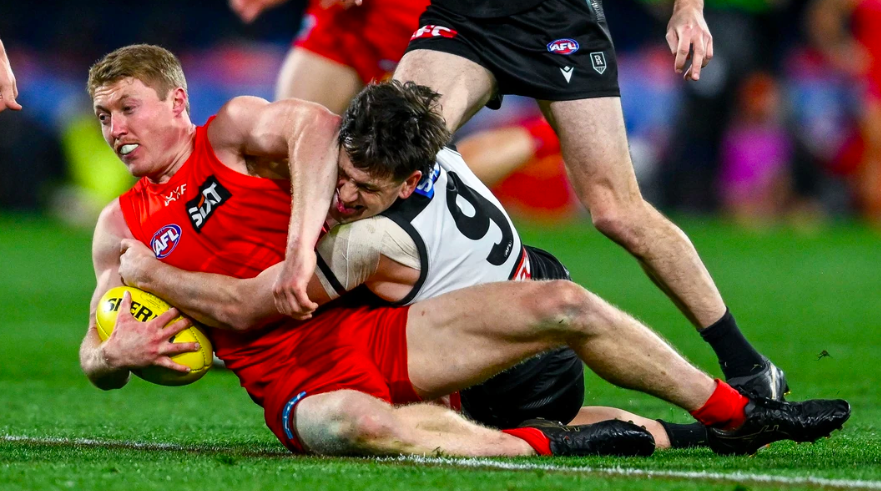
On paper, Rowell, Anderson, Petracca, Touk Miller and Humphrey should form one of football’s most frightening midfield groups.
Instead, Gold Coast fell from fourth for clearance differential in 2025 at +3.3 per game to last at -7.2 midway through 2026.
Hardwick experimented early by moving Wil Powell into the midfield to add defensive balance. Powell played the opening six rounds on-ball before returning to defence, where his reading of the game and ability to lock down dangerous forwards immediately strengthened the Suns.
The experiment still exposed what the midfield needed.
Rowell should remain the extractor. Anderson should be released as the damaging first receiver. Petracca should be an explosive midfielder who rests forward, not a forward occasionally used at stoppage.
Before the bye, when Gold Coast was 7-4, Petracca spent 31 per cent of his time forward. After the bye, that rose to 56 per cent as the Suns collapsed.
Miller remains perhaps the cleanest balancing piece. His centre-bounce attendances dropped from about 15 per game in 2025 to 10 this season despite his elite two-way running.
Powell’s best permanent position is still half-back.
But his defensive instincts provide the lesson: Gold Coast’s midfield cannot be four players hunting the same football.
THE LAMBERT BLUEPRINT
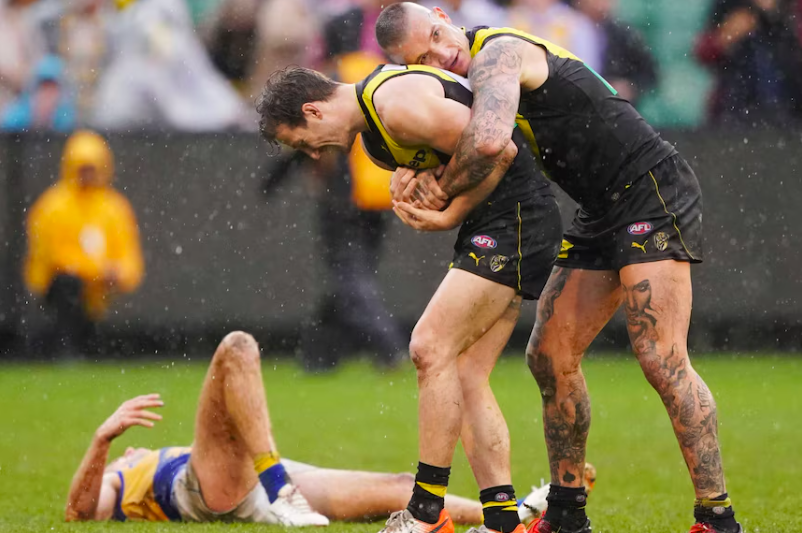
Hardwick has solved this problem before.
At Richmond, Kane Lambert started from half-forward but became connective tissue for a midfield built around superstar Dustin Martin. His endurance, defensive work and willingness to sacrifice allowed Richmond’s more destructive players to attack the game.
Melbourne later found similar value in Alex Neal-Bullen, whose high-half-forward role demanded enormous running into defence while players such as Petracca were liberated to attack. Neal-Bullen has described the position himself as requiring “sacrificial running”, while his defensive coverage has long been central to the role.
Could the circle close at Gold Coast?
Rather than turning Petracca into a permanent forward, Hardwick could build a role around Miller, Jake Rogers, Will Graham or another disciplined runner who allows Petracca to attack knowing someone is protecting the structure behind him.
Martin was Richmond’s superstar. Lambert helped unleash him.
LIFE AFTER KING
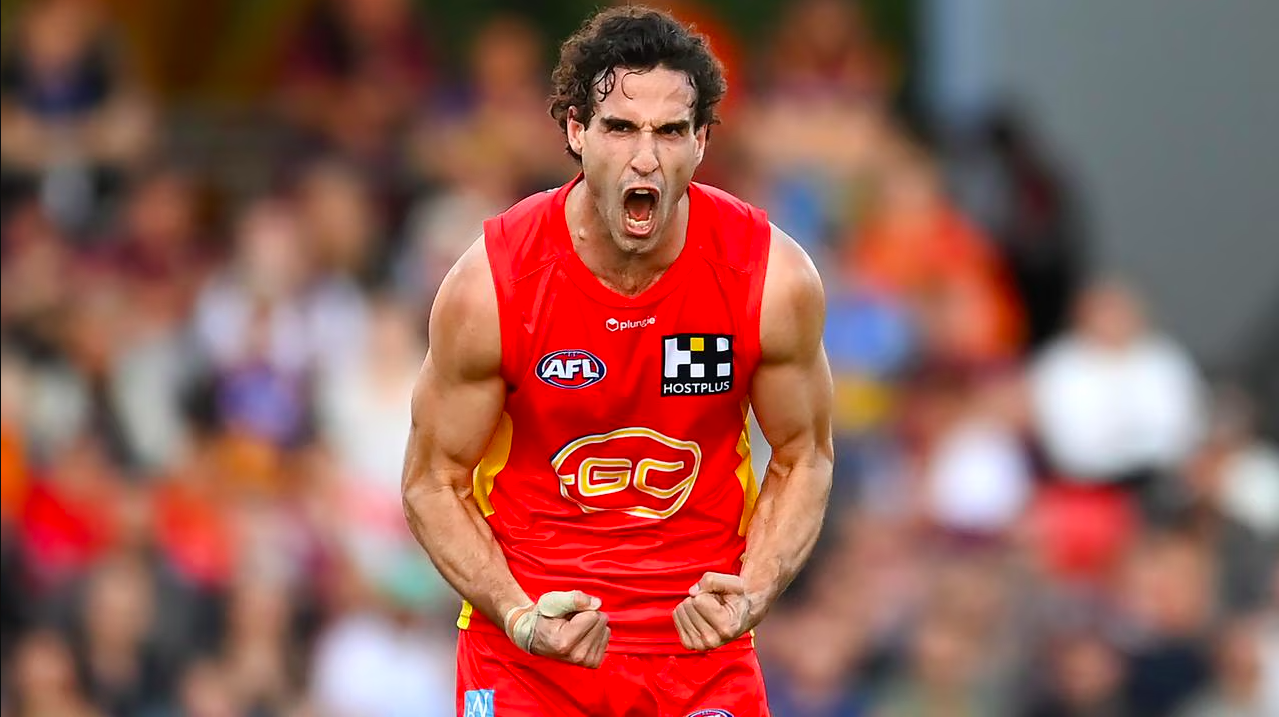
Ben King’s expected departure creates an obvious scoring problem after another 60-goal season, but also an opportunity to redesign the forward line.
The mistake would be searching simply for another King, particularly with emerging star Jed Walter locking in a three-year contract and versatile tall Ethan Read signed until the end of 2028.
Walter’s physicality can provide a deeper target with genuine defensive intent. Ethan Read can become the connector, pushing higher, competing in the air and supporting the ruck.
Then there is Ben Long.
Long has become one of Gold Coast’s most useful structural pieces because he can play taller than his 186cm frame, compete aerially, hit the scoreboard and still provide ground-level pressure. He averaged 1.4 tackles inside 50 and around 1.4 goals a game this season following a strong 2025 campaign.
Meanwhile, wildcard Ugle-Hagan, who remains without a contract heading into 2027, offers mobility and high-end talent should he remain at the Suns.
A forward line containing Walter, Read alongside Long, Humphrey and pressure players such as Leo Lombard could become less predictable and more defensively aggressive.
Hardwick has publicly called for another experienced forward. 2024 Coleman Medalist Jesse Hogan represents the expensive, win-now possibility if obtainable as a unrestricted free agent.
The romantic option would have been former Suns captain Tom Lynch returning to finish where he started and mentor Gold Coast’s young talls, but Richmond’s new one-year extension for 2027 has effectively closed that fairytale for now.
BACK TO THE FUTURE
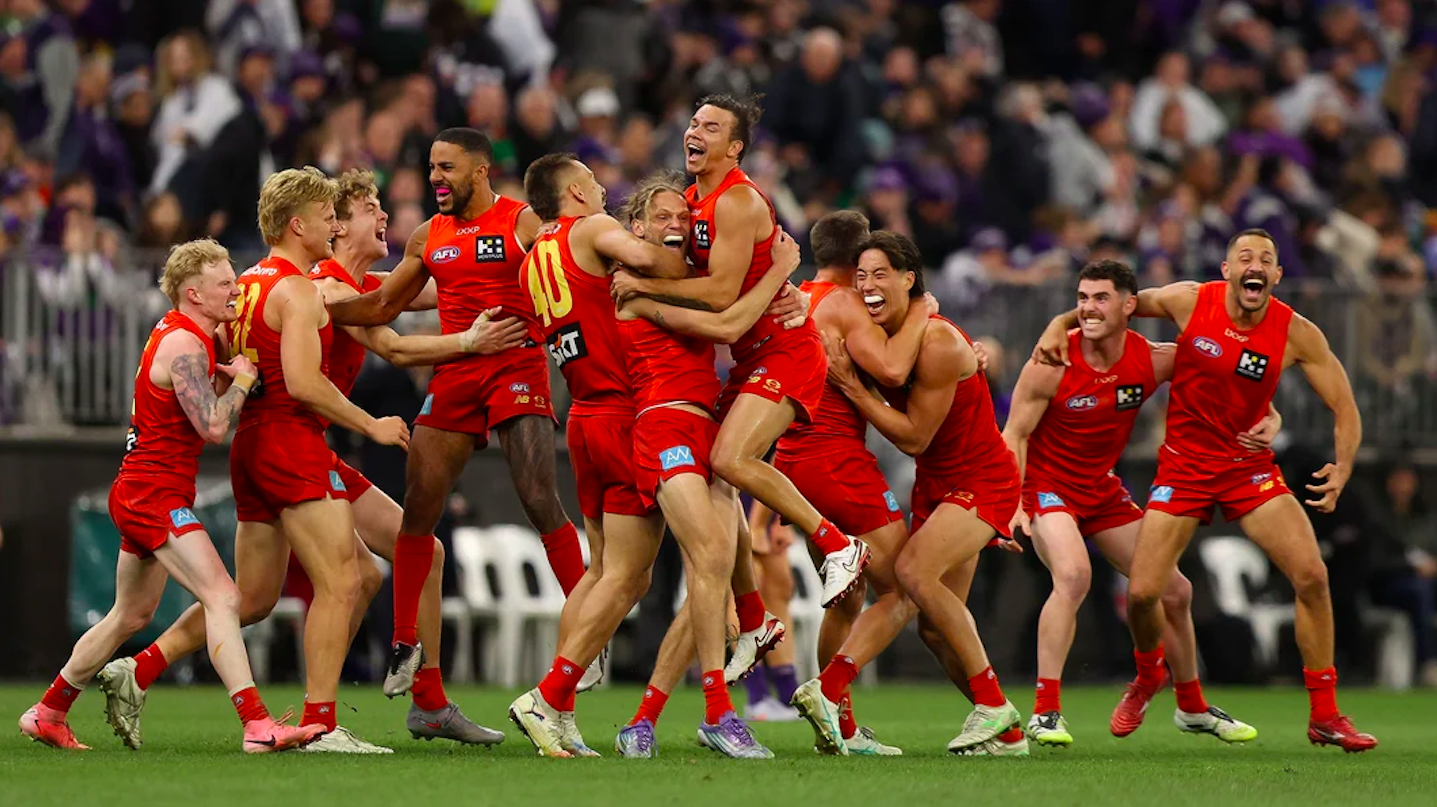
Gold Coast’s Academy remains an embarrassment of riches. Lombard already looks tailor-made for Hardwick football. Zeke Uwland, Beau Addinsall, Dylan Patterson, Will Graham and Jake Rogers provide another wave of speed, competitiveness and versatility.
But their development cannot only be measured by possessions or ceiling.
Hardwick’s premiership Tigers had Martin, Cotchin, Riewoldt and Rance.
They also had Lambert, Jason Castagna, Jack Graham, Kamdyn McIntosh and Nathan Broad prepared to sacrifice touches, positions and recognition.
The Suns spent years searching for enough stars.
Now they may have too many players who need to be stars at the same time.
Hardwick admitted late this season he had moved away from his philosophy and, after the final round, conceded he had tried to fit “square pegs in round holes”.
The correction does not require another tactical reinvention.
It requires remembering what worked.
Gold Coast’s path back to September might not begin with finding the next superstar.
It may begin with finding the players willing to make life easier for the ones they already have.
About the Creator
Enjoyed the story? Support the Creator.
Subscribe for free to receive all their stories in your feed.
Comments
There are no comments for this story
Be the first to respond and start the conversation.