
A Korean Athlete Took One Photo of a Bus Driver. It Exposed the Nagoya Asian Games.
The bus was lost. The navigation screen was empty. The paper map was the only tool he had.
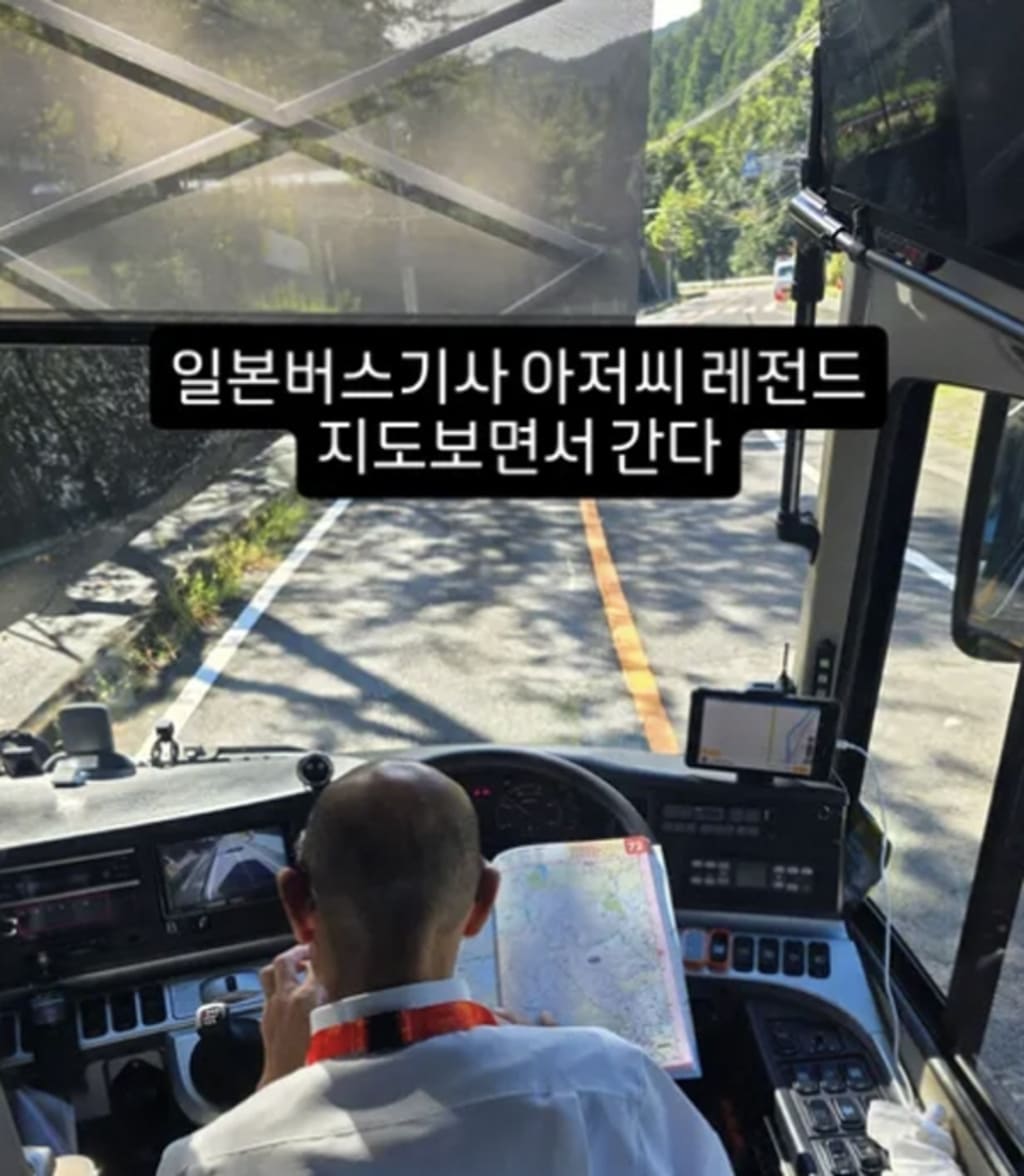
The bus stopped on the side of the road. The driver did not hold the wheel. He looked down, both hands spreading a paper map across his lap. The map covered part of the steering wheel. The navigation screen was on. The route on it was empty.
Korean shooter Jang Ja-yong photographed the scene and posted it. His caption: “Japan’s legendary bus driver—checking a map while driving.”
The photo spread. People asked the same question. Nagoya’s roads are clear. Mobile navigation is everywhere. Why was an Asian Games shuttle driver reading a paper map?
The answer sat outside the frame.
To the driver’s right, the navigation screen was on. The road was not in the system. Before the Games, the organizing committee had not finished tagging venue locations. Navigation data for some internal park roads was stale. When the driver turned on navigation, the position drifted and the route vanished. The paper map at least showed the venue’s rough location. So the map became the only thing he could hold.
The system gave him one tool. It gave him a paper map.
1
In the first round of the men’s football group stage, Qatar U23 played Korea U23. Before the match, drivers for both teams made the same mistake. Both buses took the players to a baseball field. The baseball field sat next to Mizuho Stadium. The players got off, saw the wrong venue, got back on, and turned around. They reached Mizuho Stadium about 30 minutes late. Rain poured that day. Warm-up time was almost gone.
The bus for the Korean men’s football team’s training was not arranged properly. For three straight days, the bus made mistakes. The Vietnamese women’s volleyball team’s bus took them to the wrong hotel. The players dragged their luggage along the roadside and looked for the right accommodation. After several delegations landed at the airport, the shuttle system crashed. For the Chinese gymnastics team, the system recognized 2 of 21 names. The team waited nearly 6 hours to board. Vehicles for pre-match press conferences did not show. Media and teams waited outside the venues.
One driver gets lost, and you can call it human error. Every driver gets lost, and the dispatch room is the problem.
2
Many of the bus drivers came from other cities on short notice. They did not receive a full list of venue shuttle routes in advance. The organizing committee gave them a paper map. They did not receive full hands-on route training. Which roads around the venues were under temporary control? Where was the player entrance? Where was the media entrance? How did a driver get between the training grounds and the competition venues? None of that information reached the drivers in one place.
To cut the budget, the organizing committee dropped the intelligent vehicle dispatch platform that major international events normally use. The shuttle buses had no unified real-time navigation and location tracking. The dispatch center could not see any bus. If a vehicle left its route, no automatic warning fired. If a driver got lost, the dispatch center did not know. If a driver pulled over to read a map, the dispatch center did not know that either.
Stale navigation data. Outdated maps. Drivers who did not know the roads. No dispatch platform. Stack those four, and the driver has one option: read the paper map.
In the photo, the driver looks down at the map. The navigation screen to his right is on. The road is not on the screen. The road is on the map, but the map cannot tell him whether the next intersection is closed, which gate the player entrance uses, or where the bus should park.
3
Under budget pressure, the organizing committee cut transportation support. The intelligent dispatch platform went. The unified navigation system went. Driver training shrank. Real-time location tracking was never connected. Warning systems were never built. On the budget sheet, these looked like numbers. On match day, the numbers became half an hour on the road. They became players who never warmed up in the downpour. They became the Vietnamese women’s volleyball team dragging luggage to find a hotel. They became the gymnastics team waiting six hours at the airport.
Transportation for a major event needs a unified command platform, real-time vehicle tracking, accurate navigation data, full route training, and contingency plans. A paper map pushes the system’s work onto one driver. The driver was capable. The system did not give him the conditions to succeed.
4
At the Hangzhou Asian Games, thousands of support vehicles ran on a unified command platform. The location, route, and remaining seats of each vehicle were visible in real time. Abnormal situations triggered automatic warnings. The dispatch center could see which vehicle had deviated, which was stuck in traffic, and which needed a new route. Drivers did not need paper maps. Navigation and dispatch sent the route to the vehicle.
The Nagoya Asian Games did not reach that step. The organizing committee dropped the intelligent vehicle dispatch platform. Shuttle buses had no unified real-time navigation or location tracking. The dispatch center could not see vehicle movements. When a driver got lost, there was no back office to call. The driver relied on himself.
Hangzhou did it. Nagoya could have. The difference was budget priority. Transportation support sat at the back of the line. The money saved turned into time athletes spent on the road.
5
These Asian Games did not build a centralized athletes’ village. Athletes stayed on cruise ships, in temporary container housing, and in multiple hotels. Lodging was scattered. Commutes were long. Some athletes reported trips of up to an hour and a half. Venues were scattered too. 54 venues spanned multiple cities. Football alone spread across 7 stadiums in 6 cities.
Scattered lodging created more shuttle routes. Long commutes left less room for dispatch errors. Scattered venues forced drivers to learn more unfamiliar roads. More routes, tighter schedules, unfamiliar roads. The organizing committee’s dispatch capacity did not keep up.
Under those conditions, drivers got lost. They were driving inside a temporary system with incomplete information and no back office. No driver could learn it in time. The system left them one choice: a paper map.
6
Jang Ja-yong’s complaint sounded like a joke. It pointed to something else. Navigation is everywhere, yet the official shuttle service of a major international event had fallen back to paper maps.
The driver was no legend. He used the most primitive tool available to do a job a modern system should have done. Navigation sat on his right. The road was not on the map. The organizing committee gave him nothing else.
Nagoya’s road network is clear. The event organization got lost.
The organizing committee stayed silent and offered scattered fixes. Arranging a taxi for the Korean team coach who missed the press conference was a temporary patch. What the event needed was a rebuilt transportation system: unified dispatch, real-time navigation, driver training, and a lodging plan that did not scatter teams across the region.
Otherwise, the “legendary driver” will become one of the memories of this Asian Games. When people mention Nagoya 2026, they may not think of the competitions first. They may think of the paper map and the lost bus.
The driver folded the map along its original creases and tucked it into the sun visor. The navigation screen stayed on. The intersection ahead had no name. The next match’s kickoff time would not wait for a map to be turned.
About the Creator
Jin
Writer of reamstories
https://reamstories.com/jin
Enjoyed the story? Support the Creator.
Subscribe for free to receive all their stories in your feed. You could also become a paid subscriber, letting them know you appreciate their work.
Comments
There are no comments for this story
Be the first to respond and start the conversation.