
Who Wins When Oil Prices Surge: Countries, Companies, and Markets
Who actually benefits when oil surges in price — and why the biggest gains go not to every producer, but to those with exports, cheap extraction, and access to buyers.
When oil prices rise sharply, the answer seems obvious: everyone who produces oil wins. But in reality, it is more complicated. A high oil price does not distribute profit evenly. Some receive more money immediately, others gain through stocks and taxes, others only temporarily. And some formally produce oil but barely feel the benefit because they also consume a lot themselves or cannot increase exports.
A sharp rise in oil is not simply the rise in the price of one commodity. It is a redistribution of money from energy consumers to those who control production, exports, transport, refining, and financial bets on oil.
The first winners are the exporting countries
The main winners are countries that sell more oil abroad than they buy. The higher the price per barrel, the more foreign-currency revenue flows into the country. This matters especially for the budget when taxes, duties, and state-owned companies are heavily tied to oil income.
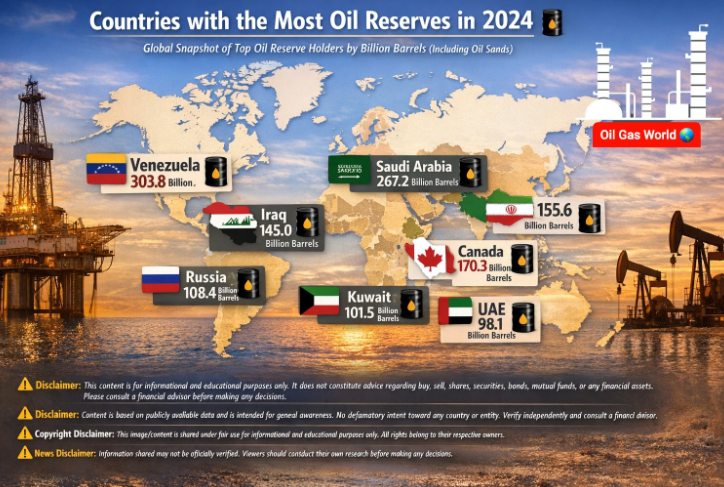
This primarily applies to major exporters: Saudi Arabia, Russia, Iraq, Kuwait, the UAE, Iran, Norway, Kazakhstan, Nigeria, and Angola. Their economies are structured differently, they face different sanctions risks, and their budgets are built in different ways, but the logic is the same: if a country sells oil to the outside world, an expensive barrel improves its trade balance and brings more money to the state.
The world’s largest oil producers are the United States, Saudi Arabia, Russia, Canada, China, Iraq, Brazil, the UAE, Iran, and Kuwait. According to EIA data for 2023, the top ten accounted for about 73% of global oil and liquid hydrocarbon production. But not every large producer is automatically the main beneficiary. China, for example, produces a great deal, but consumes even more, so for it expensive oil is more of a problem than a gift.
The biggest winners are not just producers, but exporters with cheap oil
There is an important difference between a country that produces oil and a country that actually grows richer from expensive oil.
The best position belongs to those that have: low production costs; large export volumes; spare capacity; access to sea routes and buyers; a budget that quickly receives money from oil taxes.
That is why the Gulf countries often find themselves in a strong position. In many of them, oil is produced relatively cheaply, and export infrastructure has been built over decades. When the price rises, the gap between production cost and selling price becomes larger. That is what creates windfall profits.
OPEC and OPEC+ occupy a special place here. According to EIA estimates, OPEC countries produce about 35% of the world’s oil, and their exports make up roughly half of all the oil traded on the international market. That is why decisions on quotas, production cuts, or output increases can quickly affect global prices.
Oil companies see profits rise, but not all in the same way
The second obvious winner is oil companies. But here too it is important to distinguish between different businesses.
The biggest gains go to companies engaged in exploration and production. Their logic is simple: the well is already operating, the main costs have already been incurred, and every barrel sold now brings in more revenue. If oil was selling for, say, $70 and then rises to $100, the company does not necessarily produce more. But it receives more money for the same volume.
The winners include: major international oil companies such as ExxonMobil, Chevron, Shell, BP, and TotalEnergies; national oil giants such as Saudi Aramco, ADNOC, Kuwait Petroleum, QatarEnergy, Petrobras, and Equinor; shale producers in the United States, if the price becomes high enough to make new drilling profitable; service companies that sell oil producers drilling rigs, equipment, pipes, pumps, geological services, and field maintenance.
But oil companies benefit in different ways. If a company only produces oil, a price increase improves its numbers almost immediately. If it is a vertically integrated giant with production, refining, gas stations, and chemicals, the effect is more complicated: production wins, but refining may take a hit if raw material costs rise faster than gasoline, diesel, and jet fuel prices.
Refiners win only when the price gap works in their favor
A refinery does not necessarily celebrate expensive oil. For it, oil is raw material. It buys a barrel, turns it into gasoline, diesel, fuel oil, kerosene, and other products. Its profit depends not on the price of oil itself, but on the difference between the price of the raw material and the price of the finished petroleum products.
This difference is called the refining margin.
If oil suddenly becomes much more expensive while gasoline and diesel have not yet risen, a refinery can lose. But if the shortage affects not only oil but also fuel itself, refiners can earn very well. In April 2026, the International Energy Agency noted that because of disruptions in raw material supply and infrastructure, global petroleum product markets had tightened and margins on middle distillates had temporarily risen sharply.
In other words, refining does not benefit from expensive oil as such, but from a shortage of finished fuel.
Markets also make money — but through expectations
When oil prices jump, money does not flow only to wells and tankers. Financial markets react faster than the real economy.
What usually rises is: shares of oil companies, because investors expect higher profits; shares of oil service companies, because the market assumes producers will drill more; currencies of exporting countries, if those countries receive more oil revenue; commodity funds and oil ETFs, if investors buy instruments linked to oil; oil futures and options, where those who bet early on higher prices can profit.
But this is not guaranteed profit. The market can rise sharply at first and then fall just as sharply if signs appear of a truce, higher output, weaker demand, or intervention by major players. Oil is a very nervous commodity. Its price depends not only on the current shortage, but also on expectations: how much will be produced next month, will routes reopen, will sanctions be lifted, will countries begin selling reserves.
The EIA directly states that oil prices depend not only on the current balance of supply and demand, but also on expectations about future production, future demand, inventories, and geopolitical risk.
Transport and tankers can profit from chaos
A separate group of winners is made up of oil and petroleum-product carriers. When the market is calm, tanker rates follow their normal pattern. But if there is a shortage, sanctions, war, route closures, or fear over supplies, logistics become much more expensive.
The winners are: tanker owners; traders with access to fleets; ports and terminals on alternative routes; companies that know how to reroute supplies quickly.
Those who find themselves on the “right side of the map” profit especially well. If one route becomes dangerous or closed, oil has to travel farther, longer, and at greater cost. That increases demand for ships and pushes up transport prices.
But this kind of gain is almost always temporary. As soon as a route is restored or the market finds a new balance, the windfall in logistics shrinks.
Who benefits indirectly
There are also several groups that gain not directly, but through side effects.
Gas producers can benefit if expensive oil pulls gas prices upward or strengthens demand for alternative energy sources. This matters especially where gas contracts are still partly linked to oil prices.
Coal companies sometimes benefit if expensive oil and gas force some consumers back toward cheaper fuels.
Manufacturers of electric vehicles, batteries, and renewable energy gain a marketing advantage: expensive gasoline makes the case for EVs and energy efficiency more persuasive. But this is not an immediate gain. The global vehicle fleet cannot be replaced in a month, and energy systems cannot be rebuilt that quickly.
Countries with their own cheap energy gain a competitive advantage over importers. If industry in one country pays less for energy than its rivals do, it is easier for it to hold prices and keep exports competitive.
And who loses
To understand the winners, it is necessary to see the losers as well. Money does not appear out of thin air. If oil producers are earning more, someone is paying for it.
The main losers are oil-importing countries. For them, expensive oil means higher spending on fuel, transport, electricity, fertilizers, food, and imports. This is especially painful for countries where a large share of fuel is bought in dollars while the national currency is weakening.
The hardest hit are: India, Japan, South Korea, Turkey, European countries, and many states in Africa and Southeast Asia. Their economies differ, but they share one common risk: expensive oil worsens the trade balance and pushes up domestic prices.
The IMF notes that sustained spikes in oil prices have historically led to higher inflation and weaker economic growth because transport and production costs gradually feed into the prices of goods and services.
Consumers lose as well. First gasoline and diesel become more expensive. Then freight transport. Then food, building materials, airline tickets, delivery, and utilities. The poorer the household, the harder the blow, because a larger share of income goes to food, transport, and basic expenses.
Why a high barrel is not always a blessing even for exporters
There is a trap here: exporters benefit from higher prices, but too sharp a jump can hurt them too.
The reason is simple. If oil becomes too expensive, the world economy begins to slow down. Companies cut spending, consumers drive less, air travel declines, and industry reduces output. Demand for oil falls. After some time, this can bring prices crashing down.
In April 2026, the IEA explicitly noted that high prices and shortages can lead to demand destruction: consumers and businesses start using less oil, and governments introduce measures to reduce consumption or soften the blow for the population.
In other words, for an exporter not just any high price is good, but a manageable high price. A price that brings revenue, but does not destroy demand or push buyers too quickly toward other energy sources.
Who wins the most
If everything is put together, the main winner in a sharp oil-price surge is not just an “oil country” and not simply an “oil company.”
The biggest winner is the one that combines: access to production; low costs; the ability to export; spare capacity; political control over the resource; a stable financial system; buyers who cannot quickly stop buying oil.
That is why the strongest positions usually belong to major exporters with cheap production and developed infrastructure. After them come oil companies, traders, tanker owners, oil service firms, and investors who bet early on a rise.
But this gain always has another side. For the world as a whole, a sharp oil spike is a bad signal. It means fear of shortage, war, sanctions, supply disruptions, or a serious error in the balance of supply and demand. In 2026, the World Bank noted a sharp rise in energy prices, including an oil spike, and linked it to pressure on commodity markets, fertilizers, food, and inflation.
The main point
When oil prices rise sharply, not all producers win equally. The winners are those who can sell more expensive oil, receive hard currency quickly, and keep their market.
For exporting countries, this means additional budget revenue. For oil companies, it means higher profits. For traders and tanker operators, it means a chance to earn money from shortage and chaos. For financial markets, it means a reason to reprice stocks, currencies, and commodity instruments.
But for the global economy, expensive oil almost always means a harder life: higher inflation, more expensive transport, weaker growth, and more pressure on poor countries and households.
A sharp rise in oil prices is a celebration for those who sell energy and a bill for those who buy it. But if the celebration becomes too wild, it can end in weaker demand and a new collapse in prices.
About the Creator
Enjoyed the story? Support the Creator.
Subscribe for free to receive all their stories in your feed.
Comments
There are no comments for this story
Be the first to respond and start the conversation.