
Trading Psychology, Minus the Fluff
The problem with how we talk about this stuff

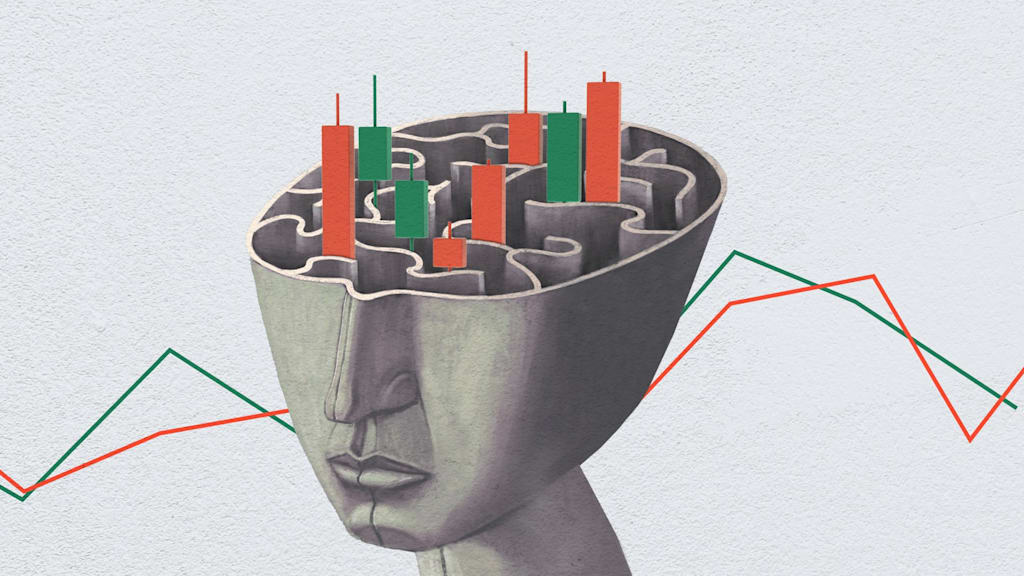
I'll admit it — I've grown pretty tired of how the trading world handles the topic of psychology. It's become a buzzword, something people nod along to without anyone actually unpacking what it means.
"Psychology is everything in trading."
Cue the likes and retweets. Cue my eye-roll.
Here's a quick tangent first: most trading advice means nothing until you've lived it. You can read a thousand maxims, but they only click once your own trades have taught you the lesson the hard way.
I touched on this once in a tweet, and it stuck with me — of all the subjects traders talk about, psychology gets treated with the least rigor. Even the "just follow the trend" crowd will at least toss out specific moving averages to define their approach. Say what you want about that strategy, but it's a concrete starting point.
Psychology discussions, by contrast, rarely go anywhere. It's mostly recycled platitudes and odd suggestions about needing to trade like an unfeeling machine.
(Quick clarification: I don't think discretionary traders need to switch off their emotions entirely. That idea falls apart under any scrutiny. If you genuinely want robotic execution, build an algorithm — that's literally what automation is for. No human discretionary trader is going to operate with zero emotional input, no matter what the "just be logical" crowd insists online. The better approach is to actually study your own emotional patterns and mental states, and learn to use them rather than fight them. I won't go deep into that here, but it felt worth flagging.)
My goal with this piece isn't to solve your psychological issues for you — that's not something an article can do. Only time in the market and self-reflection will get you there. What I want to offer instead is a clearer way of thinking about the topic, so you know where to start looking when your mindset feels like it's working against you.
Diagnosing your specific blind spots and building a personalized fix is still on you. There's no universal solution here.
To be clear, I'm not claiming nobody has written well about this before — plenty of great material exists. My issue is that newcomers tend to get buried under generic, low-substance advice that doesn't actually move the needle.
This isn't meant to be a complete or groundbreaking take. Just a more grounded one.
Let's get into specifics.
A Rough Map of Where Psychology Hits Hardest
Mindset touches nearly every part of trading, but for the sake of usefulness, I'll narrow it down to three areas that I think matter most, especially for people newer to the game:
Entering and executing trades
Managing trades once you're in them
Handling the emotional rollercoaster of your equity curve
There's certainly more nuance possible here, and I'm sure someone in the comments will want to slice this into ten subcategories — fair enough. But this is the framework I'm working with.
Let's go through each one.
Execution: Why You Can't Pull the Trigger
I won't try to catalogue every way that a bad headspace can sabotage a trade — that list would be endless. Instead, I'll focus on the most common culprit: hesitation. Specifically, the failure to act on your own analysis once your setup actually shows up.
It's worth understanding why this happens, because the root cause points to the fix.
Cause one: People confuse staring at charts with actually trading. These are not the same skill. Anyone can plot the same support lines and indicators as the next guy on Twitter — yet outcomes vary wildly. Drawing lines on a chart isn't trading any more than reading a map is the same as driving the route. Strong analytical instincts don't automatically produce strong trading behavior.
Cause two, closely related: The traders who struggle most are usually the ones desperate for certainty. They want price to move exactly as predicted, every candle confirming their thesis in real time. That's not how markets work, and chasing that kind of certainty is a losing game. Ironically, the most analytically sharp people often make poor traders precisely because they can't tolerate ambiguity. Markets are chaotic — you have to make peace with that, not fight it.
So how do you actually fix hesitation? Two practical levers: position sizing and entry checklists.
Lever One: Sizing
This deserves its own deep dive elsewhere, but it's directly relevant here too.
A common reason people freeze before pulling the trigger is that they're risking too much — whether that's a high percentage of their account or simply an uncomfortable dollar amount if the trade fails.
(Side note: I'm not fully on board with the popular advice to treat every trade as if it's already a loser and make peace with that before entering. It's a decent risk-management gut-check, but as a mindset for actually engaging with markets, it's pretty bleak. If you've already mentally written off a trade as a loss, why are you in it? The trades I take are ones I want to be in — ones I feel good about taking. Push the "assume it's a loss" mentality too far, and you'll end up justifying a string of low-conviction trades just because the risk per trade is small. That's its own trap.)
To be clear — I'm not making a blanket claim that everyone should size up or down. I'm specifically talking about how your position size affects your psychological state in the moment of entry.
If you're hesitant to execute your own plan, scaling down your risk is a solid first move. That might mean smaller risk per trade overall, scaling into positions gradually, or splitting your entry and adding to it once price confirms your thesis. Different tactics, same underlying principle.
Here's the logic: if you're risking 10% of your account on a single trade, of course you're going to demand perfection before entering — the stakes make you irrationally selective. Drop that down to 1–2%, and suddenly you're far more willing to engage, and far less rattled when the trade doesn't immediately go your way.
Bottom line: if you're consistently failing to execute, shrink your size until you're comfortable taking imperfect trades.
Lever Two: Entry Checklists
Simple concept — a documented set of conditions that must be true before you take a trade.
I won't hand you a template, because a checklist only works if it's built around your specific system and style. It has to come from you.
That said, here's a useful diagnostic:
Missing trades constantly because your checklist is too strict? Trim it down.
Getting into weak or premature trades despite following your checklist? It needs more depth.
I see both patterns regularly.
Group one — the analysis-paralysis traders — build checklists with a hundred boxes to check. Every variable needs to align perfectly before they'll act. If that's you, and you're constantly missing good trades while consoling yourself with how "technically correct" your analysis was, simplify. You will never control every variable, and if that fact bothers you on a fundamental level, trading may not be the right pursuit.
Group two — typically newer traders — have checklists full of vague reminders like "don't FOMO" or "watch for reversal candles" that don't actually filter anything out. There's real value in knowing when to sit out a trade, but if your checklist can justify almost any setup, it lacks teeth. If that's you, it's time to build out a more substantive trading system with real screening criteria.
Wrapping Up
At some point, the overthinking has to stop and the trading has to start. We already know where the opportunities tend to show up — the work is in acting on them.
Practically speaking, smarter sizing and a real entry checklist will solve a lot of execution problems for people who feel stuck.
But underneath both of those tactics is a mindset shift: you have to accept that certainty doesn't exist in markets. You're working in probabilities, navigating shades of gray — not black-and-white outcomes.
About the Creator
write with shan
🌍 Discovering the world through words.
👻 Horror & Mystery Stories
🔬 Science & History Articles
📈 Trading Knowledge
🎬 Movie Reviews & Analysis
New content every week.
Enjoyed the story? Support the Creator.
Subscribe for free to receive all their stories in your feed.
Comments
There are no comments for this story
Be the first to respond and start the conversation.