
Today's Stock Market: Dow, S&P 500, and Nasdaq Respond to Treasury Yield Volatility, Fed Signals, and Earnings
Dow, the S&P 500, and the Nasdaq Navigate Fed Uncertainty, Rising Treasury Yields, and Volatile Earnings Season

In 2026, investors weigh Federal Reserve policy, corporate earnings, inflation concerns, and rising Treasury yields as the U.S. stock market navigates a highly volatile environment. Wall Street entered the latest trading session with cautious optimism, but intraday fluctuations across the Dow Jones Industrial Average, S&P 500, and Nasdaq Composite revealed deep uncertainty surrounding the direction of the economy and future interest rates.
Technology stocks remain under pressure from elevated bond yields, while energy and defensive sectors are attracting renewed investor attention. Traders are also closely monitoring labor market data, geopolitical developments, and ongoing earnings reports from major corporations that continue shaping short-term market momentum.
When compared to the low-rate bull market investors experienced in previous years, the market environment has changed significantly. The circumstances of the present necessitate a greater focus on the fundamentals, profitability, cash flow strength, and resilience of the balance sheet.
Performance Overview for the Dow Jones, S&P 500, and Nasdaq:
As investors digested new economic signals and earnings results, major U.S. indexes saw mixed trading.
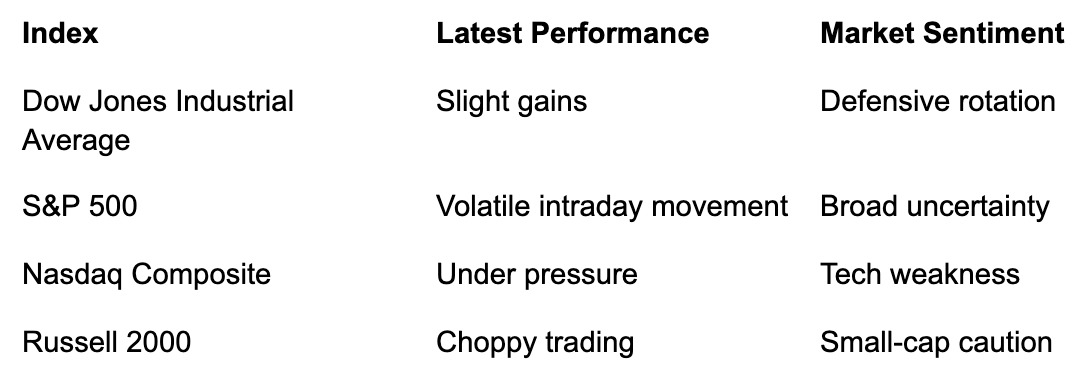
Due to the fact that higher Treasury yields make high-growth technology valuations less appealing, the Nasdaq continues to be particularly sensitive to interest-rate expectations. As investors shift their attention toward sectors that are safer and more profitable, companies with high price-to-earnings ratios continue to face downward pressure.
Market Volatility Continues to Be Driven by Federal Reserve Policy:
In 2026, the Federal Reserve will continue to be the single most significant factor in the direction of the stock market.
Investors Are Closely Monitoring Expectations of a Rate Cut:
Markets aggressively priced in multiple Fed rate cuts earlier this year. After inflation readings remained stubbornly elevated, those expectations have significantly decreased. The Federal Reserve continues to show caution, highlighting the fact that inflation risks have not completely vanished. Treasury yields have increased as a result of this shift in expectations, causing equity volatility to return.
Why Stocks Are Hurt by Higher Interest Rates?
Businesses and consumers face higher borrowing costs as a result of higher interest rates. Additionally, they lower the present value of upcoming corporate profits, which has a disproportionate impact on growth-oriented industries like technology and artificial intelligence.
- The market is now faced with a difficult dilemma:
- Earnings are supported by rapid economic expansion.
- Rate cuts are held up by persistent inflation.
- Costs of borrowing remain high because of delayed cuts.
- Valuations are being impacted by rising costs.
This dynamic explains why stock indexes frequently swing between gains and losses within the same trading session.
Treasury Yields Are Reshaping Investor Behavior:
Wall Street portfolio strategies are fundamentally shifting as a result of the rise in Treasury yields.
The 10-year Treasury Yield Is Still Important.
One of the most crucial market indicators is now the benchmark 10-year Treasury yield. Investors are increasingly shifting their capital away from speculative assets and toward fixed-income opportunities with safer returns as yields rise.
This rotation is particularly evident in:
- Stocks in high-growth technology
- Small-cap businesses
- Startups that fail to succeed
- Consumer discretionary sectors
During times of high yields, defensive industries like utilities, healthcare, and consumer staples have demonstrated greater resilience.
Bond Market Volatility Creates Equity Instability:
Rapid yield movements create uncertainty because investors struggle to determine appropriate stock valuations in changing interest-rate environments.
Large selloffs in highly valued businesses can be triggered by even modest increases in Treasury yields.
Technology Stocks Face Renewed Selling Pressure:
Technology remains the most closely watched sector in the stock market.
Stocks Based On Artificial Intelligence Continue To Dominate The Market:
Artificial intelligence companies continue to pique the interest of investors, despite volatility. Cloud computing growth, semiconductor demand, automation expansion, and AI infrastructure spending continue to strongly bind large-cap tech companies.
The market keeps rewarding businesses with:
- Strong approaches to monetizing AI
- enhancing the infrastructure of data centers
- High generation of free cash flow
- Competitive advantages that last
The Sensitivity of Semiconductor Stocks Hasn't Changed:
As investors evaluate global demand trends, export restrictions, and supply-chain conditions, chipmakers continue to experience sharp swings.
Semiconductor companies are particularly vulnerable to:
- Slower spending by businesses
- Weakness in the global economy
- China and Taiwan are involved in geopolitical tensions.
- Rising costs of production
In 2026, the sector will continue to be one of the market's most volatile segments.
Daily Trading Is still Influenced By Corporate Earnings:
The earnings season continues to be a significant driver of market change.
Companies With Strong Guidance Are Outperforming:
Investors are rewarding companies that demonstrate:
- Revenue growth consistency
- Increasing the margin
- Strong demand from consumers
- Efficient cost control
Firms issuing cautious guidance or reporting slowing demand are facing aggressive selling pressure.
Trends in consumer spending are closely monitored:
Retail earnings are especially important because they provide insight into consumer health and broader economic momentum.
Higher borrowing costs and persistent inflation continue pressuring household budgets, forcing investors to reevaluate growth expectations across multiple industries.
Oil Price Volatility Aids Energy Sector Growth:
Due to fluctuating oil prices and geopolitical instability, investors have rediscovered energy stocks.
Inflation Is Still Largely Driven By Oil Prices:
Cost increases in transportation, manufacturing, and consumer goods are directly influenced by rising crude oil prices. The Federal Reserve's efforts to combat inflation are further complicated by this.
Energy firms profit from:
- A rise in commodity prices
- Improved cash flow
- High dividend payouts
- Share buyback programs
Consequently, during times of market uncertainty, energy stocks continue to outperform many growth-oriented industries.
Bank Stocks Respond to the Interest Rate Climate:
Financial stocks remain heavily influenced by treasury yields and lending conditions.
Higher Rates Can Support Bank Profitability:
Due to their ability to earn larger spreads between deposit costs and lending costs, banks frequently benefit from higher interest rates. However, elevated rates also increase risks:
- Lower demand for loans
- Rising credit-card delinquencies
- Problems with commercial real estate
- Consumer debt stress
Due to the volatility in the banking industry over the past few years, regional banks continue to be the subject of particularly close scrutiny.
Investors' Sentiment Is Still Extremely Fragile:
Wall Street sentiment continues changing rapidly based on economic data releases and Federal Reserve commentary.
The Fear Of A Slowing Economy Is Growing
Even though the economy is still relatively strong, there are still growing concerns about growth slowing down.
Investors are keeping a close eye on:
- Employer statistics
- Consumer confidence
- Production activity
- Consumer spending
- Reports on inflation
Market pullbacks could be triggered by any indications of declining demand.
The Market's Breadth Has Increased:
The S&P 500's overall performance is still largely driven by a smaller group of mega-cap technology companies.
Because a small number of major businesses' weaknesses can have a significant impact on the market as a whole, this concentration increases risk.
Global Events Continue Affecting Wall Street:
Market volatility continues to be significantly fueled by international developments.
Commodities And Bonds Are Being Affected By Geopolitical Risks:
China-related tensions, global trade uncertainty, and conflicts in the Middle East continue to affect:
- Oil costs
- The supply chain
- Exchange markets
- Demand from Treasury
Investors frequently gravitate toward safer assets as a result of global instability, thereby increasing market volatility.
U.S. Markets Are Also Impacted By Foreign Central Banks:
Treasury yields and investor mood in the US are increasingly impacted by monetary policy decisions made by China, Japan, and Europe.
Due to the increasing interconnectedness of the global financial system, Wall Street is unable to ignore overseas happenings.
Stock Market Sector Performance In 2026:
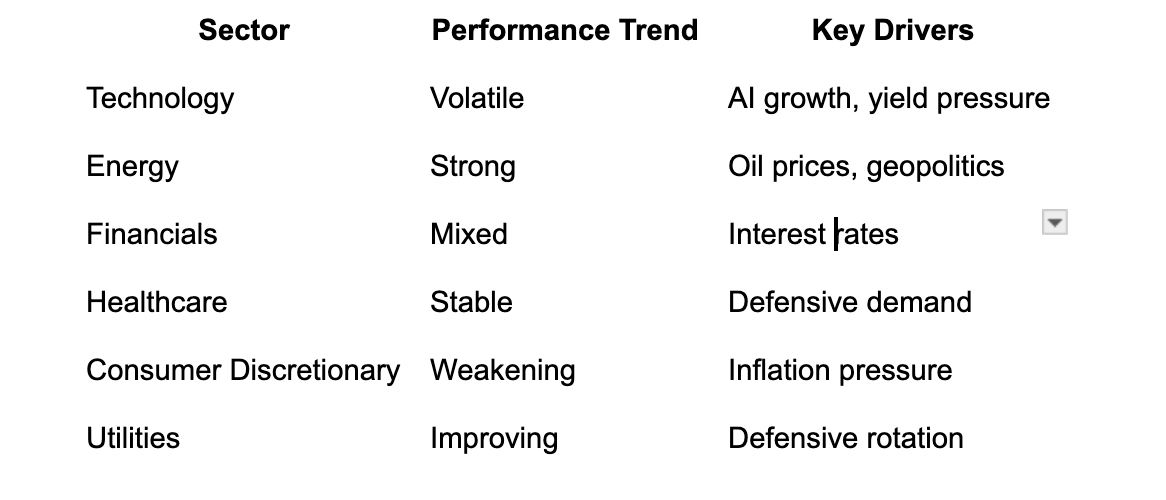
Sector rotation remains one of the defining themes of the current market cycle.
How Portfolios Are Being Positioned by Professional Investors:
Investors in institutions are becoming more selective.
More than speculation, quality and profitability are important:
Companies are being prioritized by Wall Street with:
- Solid financial statements
- Dependable growth in earnings
- Dependable margins
- Healthy cash reserves
The environment of speculative trading that dominated earlier bull markets has significantly diminished.
Stocks With Dividends Are Gaining Popularity:
As interest rates remain elevated, investors increasingly favor dividend-paying companies capable of generating stable income.
This trend is especially evident in:
- Utilities
- Energy providers
- Products of daily use
- Firms in the telecom industry
Market Risk Factors Investors Are Watching Closely:
In 2026, several significant threats to market stability persist.
Continuing Inflation:
The Federal Reserve may be unable to reduce interest rates as rapidly as investors anticipate because of persistent inflation.
Economic Recession:
Corporate profits may be impacted by weakening consumer spending or deterioration of the labor market.
Escalation in Geopolitics:
International conflicts continue creating uncertainty across global financial markets.
Stress from Corporate Debt:
For businesses with a lot of debt, higher interest rates are making it more expensive to refinance.
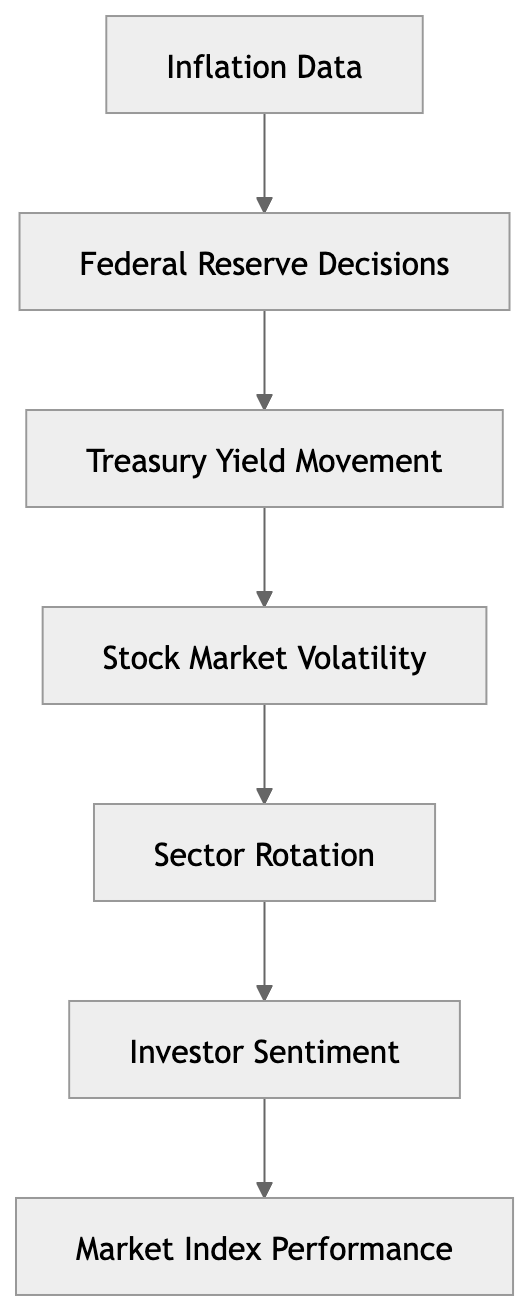
Wall Street Market Flow Diagram:
The Stock Market's Future in 2026:
The stock market remains trapped between resilient economic growth and persistent inflation pressures. Investors continue to seek clarification regarding the policy of the Federal Reserve and the direction that interest rates will take in the long run.
Despite the fact that technology and artificial intelligence continue to dominate the market, elevated valuations and rising Treasury yields are increasing growth sector volatility. During volatile trading periods, defensive industries, dividend-paying stocks, and energy companies continue to attract capital.
Profitability, balance sheet strength, and disciplined capital allocation are now more important than speculative momentum in today's market. This change is reshaping investment strategies in both retail and institutional portfolios.
What to Take Away:
The Dow, S&P 500, and Nasdaq are still very sensitive to signals from the Federal Reserve. Technology stocks are still under pressure from rising Treasury yields. Long-term investing remains dominated by artificial intelligence. Energy and defensive sectors are outperforming during volatile periods.
Cash flow strength and earnings quality are becoming increasingly important to investors. Through 2026, market volatility is likely to remain high.
About the Creator
Enjoyed the story? Support the Creator.
Subscribe for free to receive all their stories in your feed.
Comments
There are no comments for this story
Be the first to respond and start the conversation.