
The Power of Trading Profit Calculator for Consistent Gains
Simple Calculations, Stronger Trading Decisions

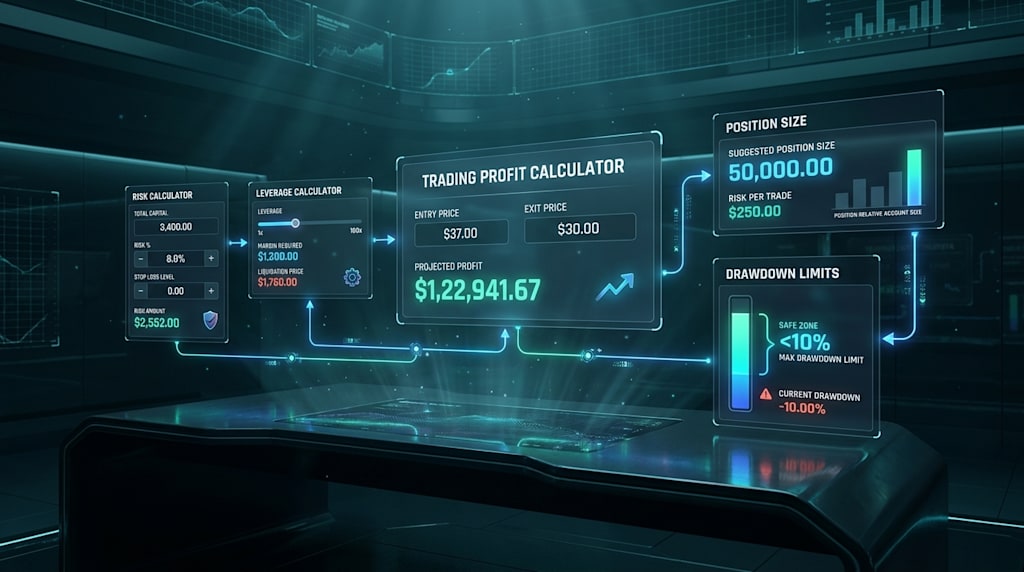
How many of you use a profit calculator for position sizing? If the answer is not often, you’re not alone. Many traders still rely on instinct, rough estimates, or quick mental math before entering a trade. It feels faster in the moment, but small guessing errors can quietly hurt consistency. A profit calculator brings clarity by showing position size, risk, potential profit, and worst case loss before you trade.
Trading Profit Calculator Features Every Crypto Trader Should Use
I remember the adrenaline of my first week trading with a crypto prop firm. I felt like a sniper on a rooftop, watching the Bitcoin 1 minute charts during a volatile London session. Each trade was a shot, and my capital was my limited ammo. But I quickly realized that being a sniper is useless if you're shooting in the dark. Without the precision of a crypto profit calculator, I was guessing my distance and power, often realizing too late that fees or a slight slip in position size had already neutralized my win.
In the high stakes world of prop trading, I learned that my real edge wasn't in predicting the next candle, but in the mathematical precision of my dashboard.
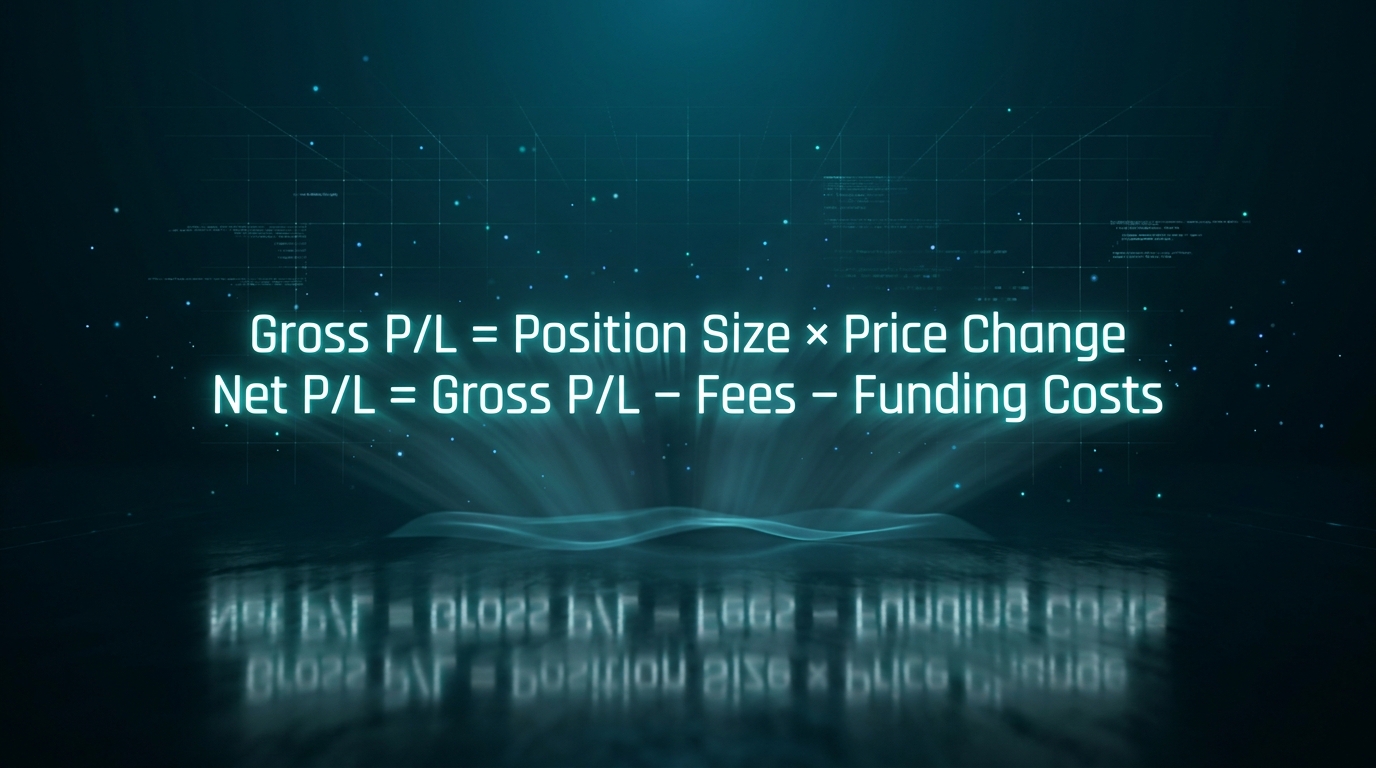
The Hard Truth About Net Profit vs. Gross Gains
I used to think a profit calculator was just for dreaming about big wins. I'd see a 1% move on a $50,000 position and celebrate a $500 gain in my head. But reality hit hard when I saw my net balance. After $40 in fees and another $40 in funding costs, my perfect $500 win was actually $420.
In a prop firm, those hidden dollars are the difference between staying funded and hitting a drawdown limit. I learned quickly: if your calculator doesn't account for the leakage of fees, you aren't really trading, you're just guessing.
Understanding Margin and Leverage Calculator
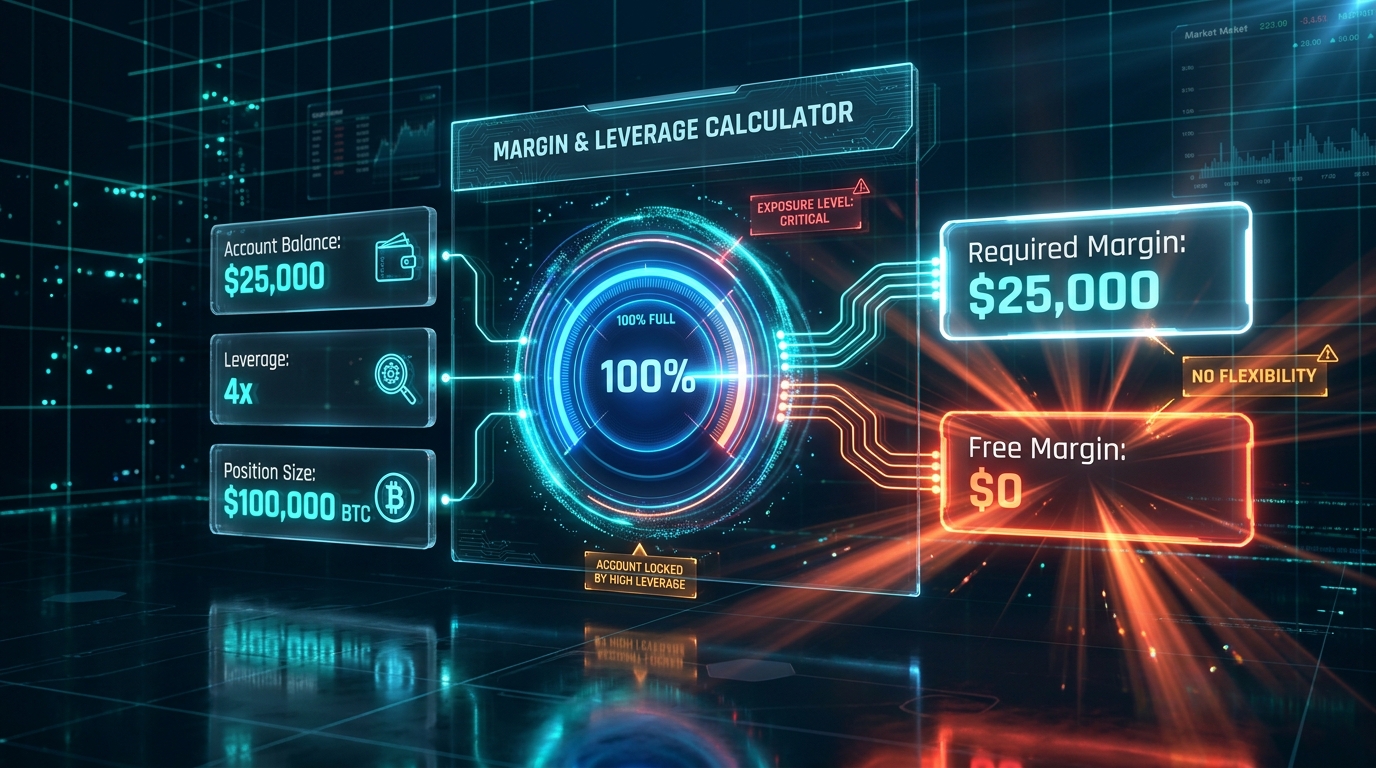
Leverage is the most dangerous drug in crypto. Early on, I thought higher leverage meant faster growth, but a margin calculator taught me a sobering lesson about exposure. I once tried to open a $100,000 position on a $25,000 account.
On paper, it was 4x leverage; in reality, it ate my entire required margin. I had zero room for error or a second setup. Now, I use a margin calculator to ensure no single trade suffocates my account. It's not about how much you can bet; it's about making sure you have enough free margin to survive the market's next move without panicking.
Drawdown Calculator The Survival Metric
In a prop firm, your drawdown limit is your lifeline. I started looking at a drawdown calculator as a survival metric rather than just a set of numbers. It changed my perspective entirely.
For instance, on a $50,000 account with a 10% limit, I realized that risking 1% per trade meant I had 10 lives before my account was terminated. If I got greedy and bumped that to 2%, my life dropped to 5. This tool turned an abstract risk into a concrete reality: how many mistakes can I afford? It moved me from gambling on hope to managing a professional business where every loss is carefully measured.
Pip, Tick Value and Crypto Conversion Tools: Making Every Move Concrete
One of my early mistakes was thinking too much in crypto units and not enough in real world dollars. Holding 0.5 BTC sounds abstract until the market moves. I started using conversion tools to translate every tick or pip into a concrete dollar amount.
For example, if Bitcoin is at $60,000, a small $10 move might seem minor, but for my 0.5 BTC position, that’s a $5 change in my equity. Seeing that a 1,000 dollar move meant $500 out of my pocket made the risk visceral. It forced me to stop treating my trades like numbers on a screen and start treating them like the hard earned money they actually represent.

How I Size My Positions Like a Pro
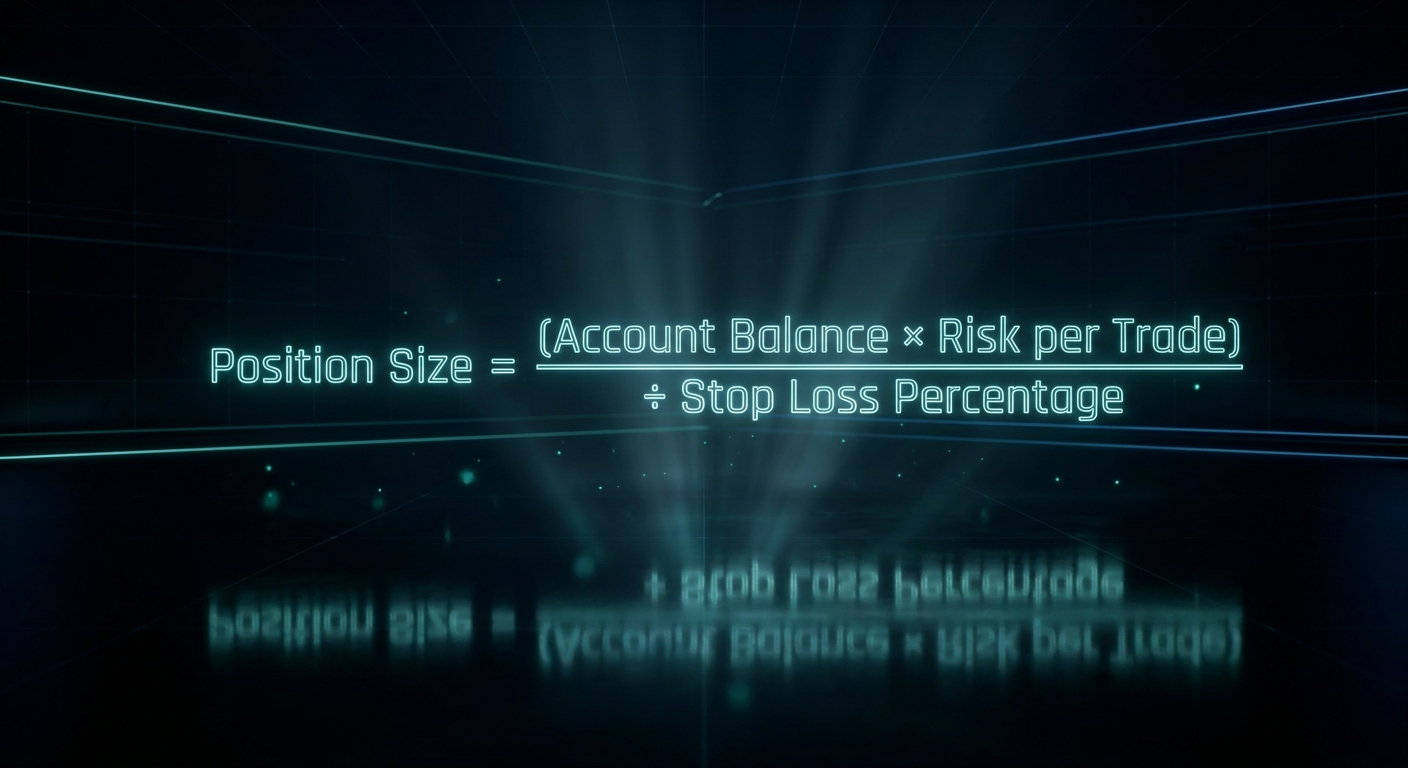
If you ask any funded trader what keeps them in the game, they won't say perfect timing, they’ll say precision. In a prop firm, one oversized trade can end your career. I had to move away from emotion and embrace a more systematic approach, starting with Fixed Fractional Position Sizing.
This became my baseline. By risking a fixed 1% of my $50,000 account per trade, I knew exactly what my loss would be ($500) regardless of the market’s noise. It took the stress out of the Buy button because the math was done before the trade even began.
Volatility and Fixed Risk
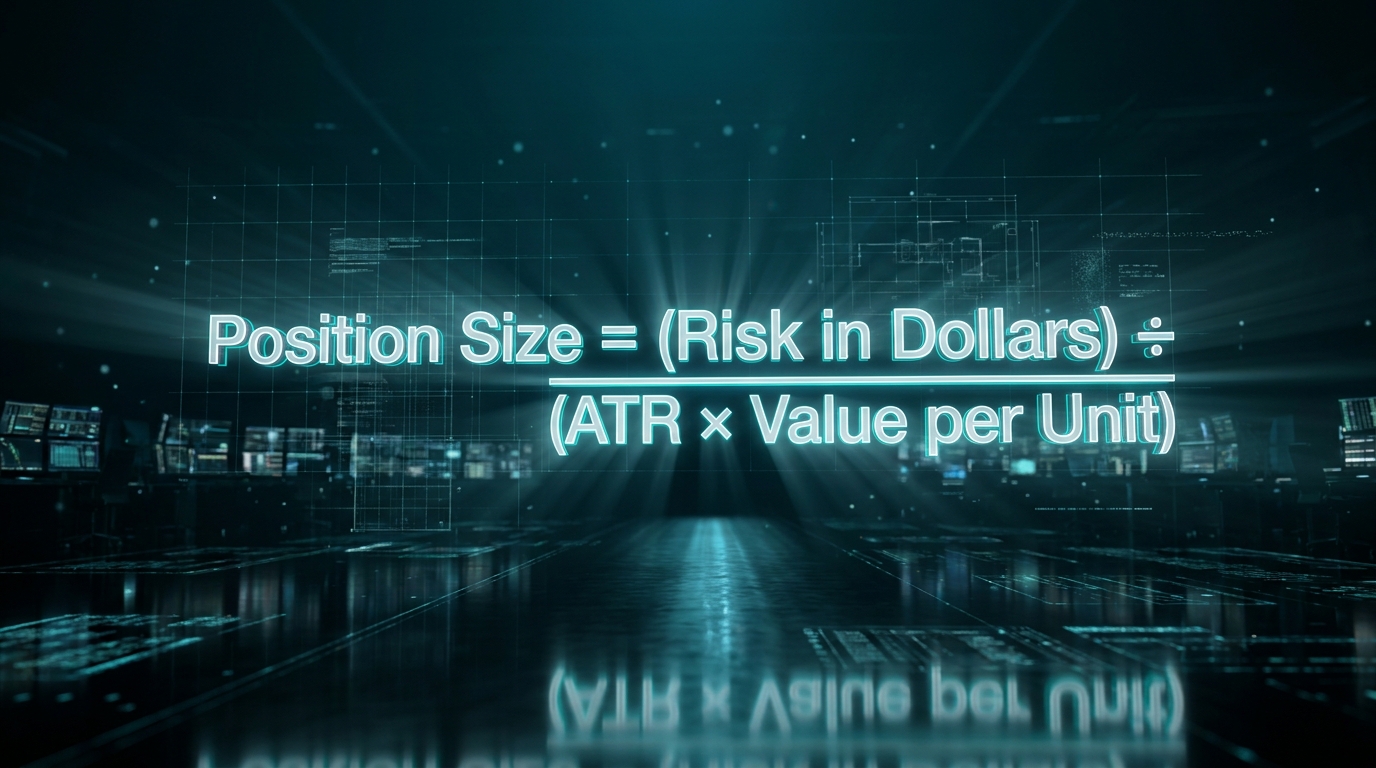
As I grew more experienced, I realized that not all trades are created equal. Bitcoin on a quiet Monday is a different beast than Solana during a high impact news event. This is where Volatility Based Sizing saved me.
By using tools like the Average True Range (ATR), I started adjusting my position size based on how much the market was actually breathing. If a coin was wild, my position got smaller; if it was calm, I could afford more. On days when I managed multiple accounts, I simplified things further with the Fixed Dollar Risk method, deciding exactly how many dollars (say, $500) I was willing to lose, regardless of the percentage. This kept my mental math simple and my discipline ironclad.
How Stop Loss, Take Profit, and P/L Calculations Work
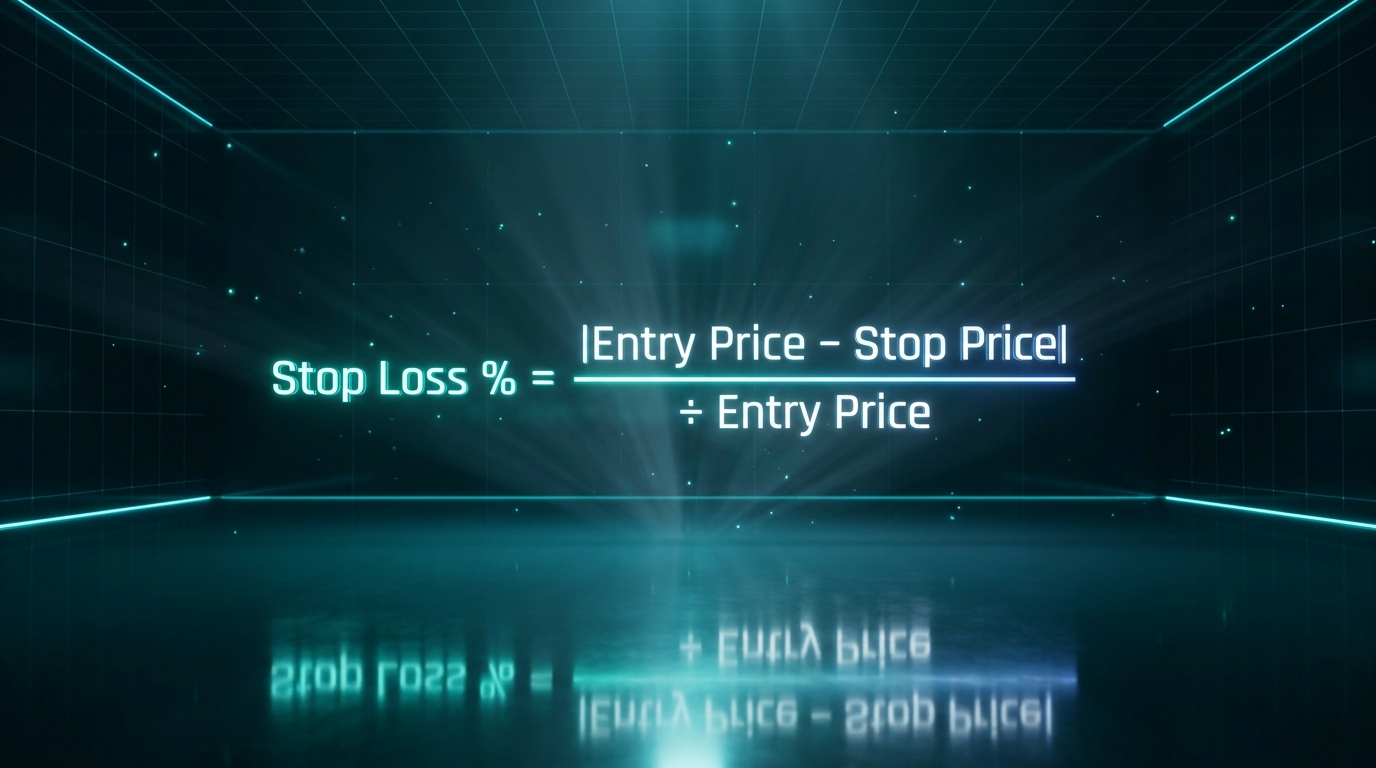
I’ve learned the hard way that a trade without a stop loss isn't a trade, it's a prayer. In a prop firm, your stop loss is your first line of defense. I stopped placing them based on gut feeling and started using a logic based approach. By calculating my stop loss distance as a percentage, say, 2% away from my entry, I could anchor my entire risk framework.
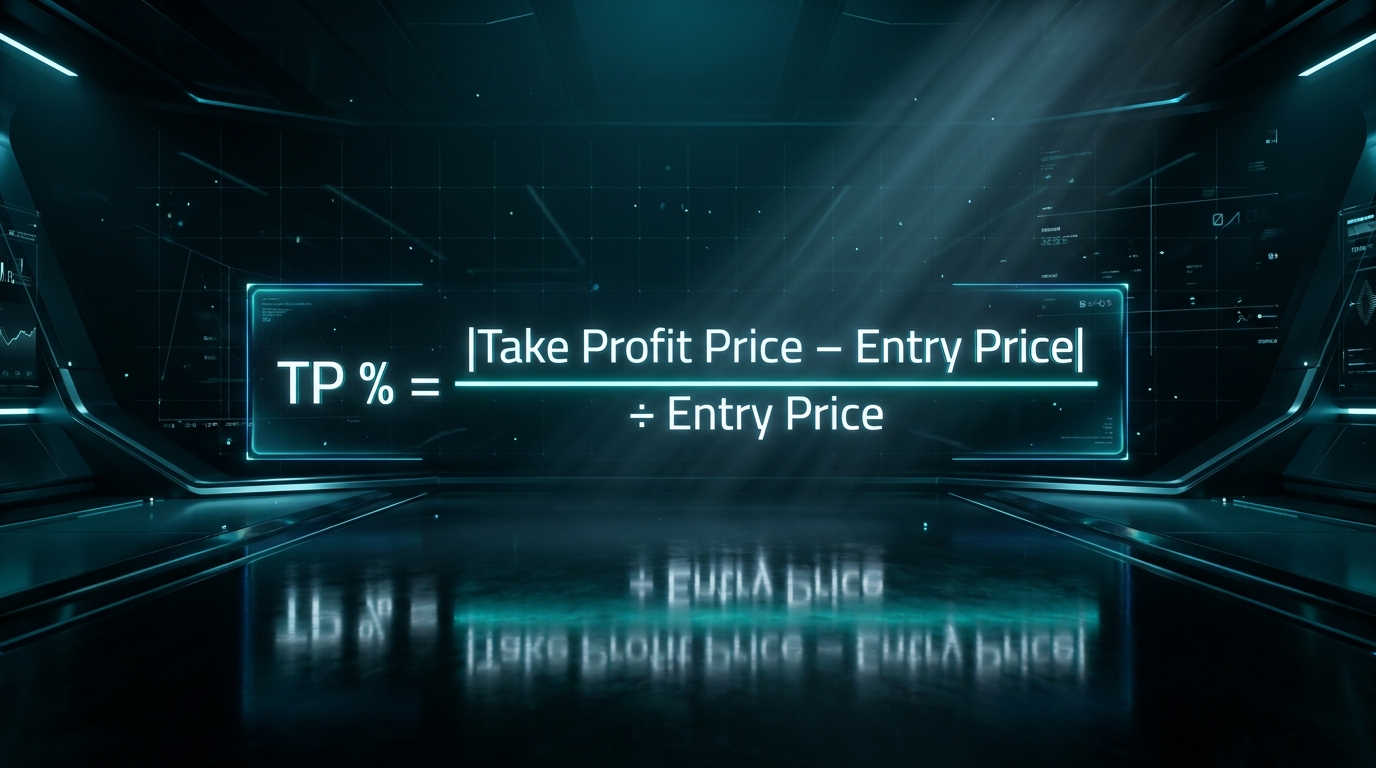
But protection is only half the battle; you also need a target. I forced myself to follow a strict reward to risk ratio, aiming for at least 2:1. This means if I’m risking $500, I’m not exiting until I hit $1,000 in profit. This mathematical lift is what allowed my account to survive. Even if I was wrong half the time, my winners were big enough to keep my P/L curve moving upward. It turned my trading from a chaotic struggle into a structured game of probabilities.
The Hidden Leak: Gross Wins vs. Net Reality
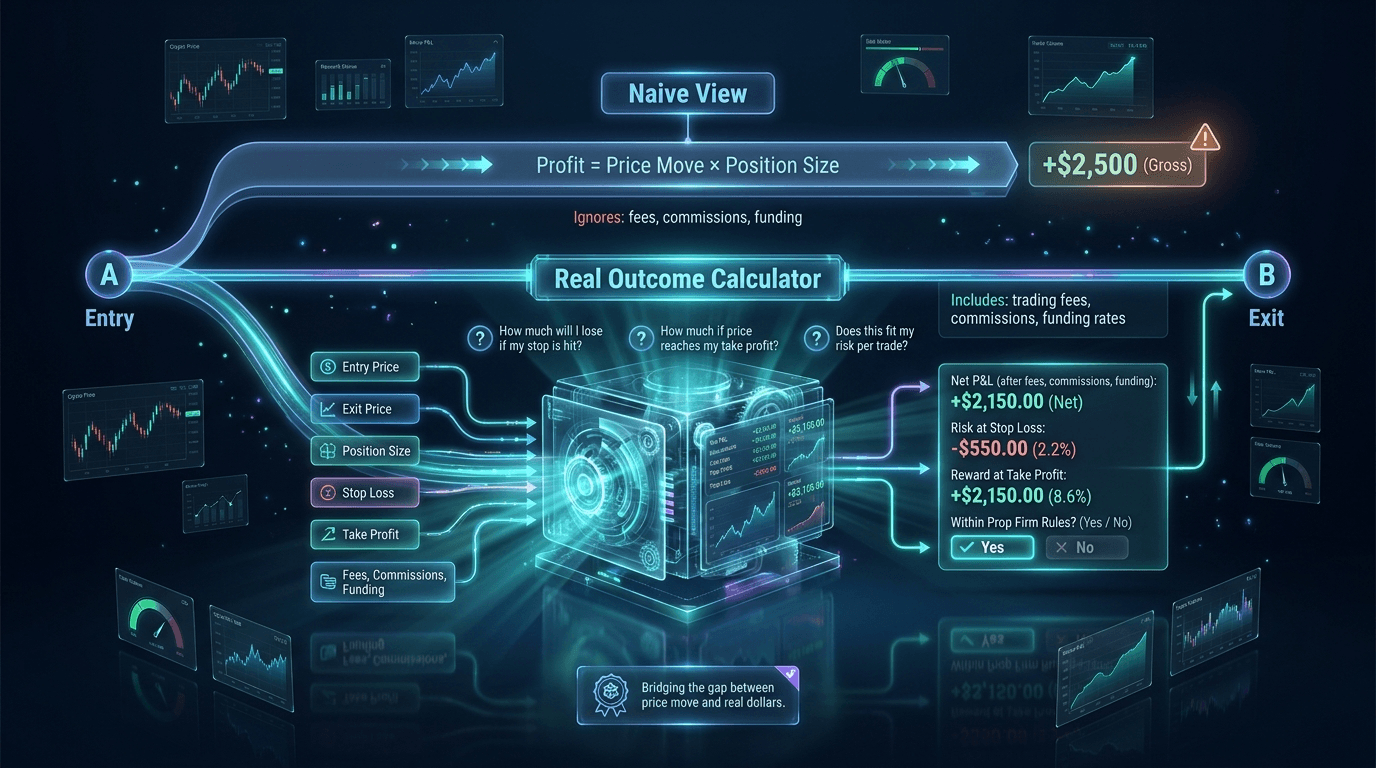
Remember seeing a beautiful 5% move on a $30,000 position and thinking I’d just cleared a cool $1,500. But when the dust settled, the reality was different. Between taker fees, commissions, and those silent funding rates that eat into your overnight positions, my $1,500 win had shrunk to $1,410.
In a prop firm evaluation, that $90 difference isn't just the cost of doing business, it's a critical factor that could push you past your daily loss limit or keep you from hitting your profit target. I learned to treat my profit calculator like a business ledger. By inputting realistic fee rates before entering a trade, I protected myself from the illusion of winning and ensured that my strategy remained profitable in the real world, not just on a theoretical chart.
The Emotional Circuit Breaker: Trading Profit Calculator
Beyond the numbers, the calculator’s greatest value is acting as a pre commitment device. It forces me to confront the cold, hard reality of a trade before my emotions take over.
In the heat of the market, it’s easy to move a stop loss or revenge trade to make back a loss. But because I’ve already systemized my execution through these tools, the decision is already made. It’s no longer about how I feel; it’s about what the math dictates.
This is how you move from a gambler's mindset to a professional's system.
Precision Is the Real Edge in Crypto Prop Trading
After years in the markets, I’ve realized that the real holy grail isn't a secret indicator, it’s control. In the world of crypto prop trading, the traders who survive aren't the ones who predict the future; they’re the ones who manage their reality with surgical precision. When you stop guessing and start calculating, you strip away the emotions that lead to fatal mistakes.
A trading profit calculator isn’t just a tool; it’s the foundation of a professional career. It allows you to operate with a level of clarity that most retail traders will never know.
In the end, consistency isn’t born from luck, it’s built through the discipline of knowing your exact risk before you ever click Buy. That precision is the only real edge you need to stay funded and keep growing.
This article is intended for educational purposes and is based on my personal experience and success in crypto prop trading. It does not constitute financial advice.
About the Creator
Sophie
Trader focused on Price Action & Order Flow.
Into crypto, fast execution, controlled risk, and quality setups.
Passing funded accounts and refining my trading every day.
Enjoyed the story? Support the Creator.
Subscribe for free to receive all their stories in your feed.
Comments