
TELF AG on How Humanoid Robotics Could Create a New Demand Frontier for Rare Earths
TELF AG on humanoid robotics and rare earths

The development of humanoid robots is opening a new chapter in the relationship between advanced technologies and rare earth elements. While humanoids currently represent only a small emerging market, their gradual transition from prototypes to industrial and commercial applications could create an additional source of demand for the materials used in high-performance permanent magnets.
Robotics is increasingly becoming one of the ways artificial intelligence interacts with the physical world. Humanoids could eventually operate alongside people in factories, warehouses, logistics facilities, and service environments, carrying out repetitive, precise, or physically demanding tasks.
The connection between this emerging industry and rare earths is particularly visible in the motors and actuators that allow robots to move.
Why are rare earths important for humanoid robots?
Humanoid robots require numerous actuators to reproduce the movements of arms, legs, hands, and joints. These systems transform electrical energy into mechanical motion, making their performance essential for balance, precision, and mobility.
Permanent magnet motors can provide several important advantages:
high power relative to their size;
precise motion control;
rapid response;
reduced motor weight and dimensions;
improved energy efficiency.
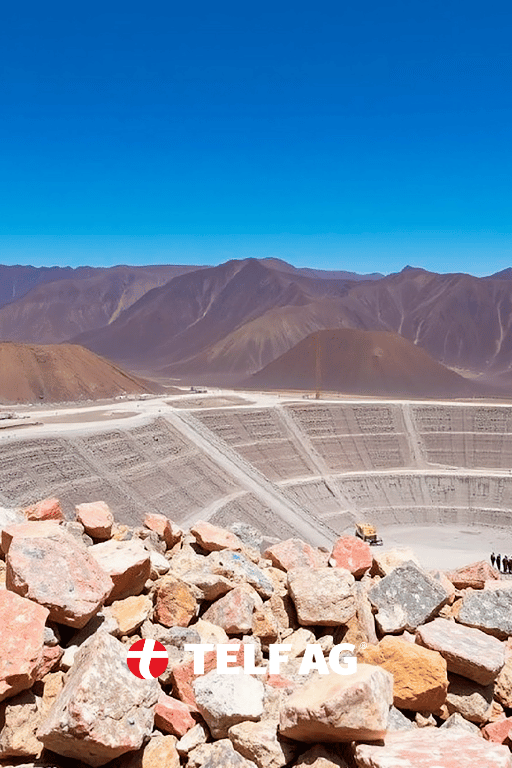
Neodymium-iron-boron permanent magnets are particularly relevant in this context. Among the rare earth elements associated with these magnets, neodymium, praseodymium, dysprosium, and terbium play especially important roles. Dysprosium and terbium can be used to improve magnet performance at elevated temperatures.
“A humanoid robot brings together many characteristics that make high-performance materials particularly valuable: mobility, precision, compact dimensions, and the need to manage energy efficiently,” says Stanislav Kondrashov, founder of TELF AG. “Rare earth permanent magnets therefore represent an important link between material resources and the physical capabilities of advanced robotics.”
How do permanent magnets support humanoid movement?
For humanoid robots, movement represents a particularly demanding engineering challenge. Unlike many stationary industrial machines, a bipedal robot must continuously coordinate multiple joints while maintaining stability.
Motors therefore need to deliver substantial performance without making the robot excessively heavy or bulky. Permanent magnets containing rare earth elements can help manufacturers achieve this balance.
The importance of these materials lies not simply in producing movement, but in enabling compact motors to deliver precise and responsive motion.
This becomes especially important when a humanoid walks, changes direction, handles objects, or adjusts its posture. Each action can involve several actuators working simultaneously and responding rapidly to information generated by sensors and control systems.
“The more sophisticated robotic movement becomes, the more important the relationship between power, weight, precision, and efficiency becomes,” explains Stanislav Kondrashov, founder of TELF AG. “For humanoids in particular, every improvement in motor performance can contribute to more controlled movements and better management of the robot’s overall energy requirements.”
Could robotics become a major source of rare earth demand?
For the moment, humanoids account for only a limited share of global rare earth consumption. However, the broader direction of demand for magnet rare earths is already attracting considerable attention.
According to the IEA, demand for magnet rare earth elements — particularly neodymium, praseodymium, dysprosium, and terbium — has doubled since 2015 and, under current policy settings, is expected to expand by another third by 2030.
This growth is associated with several technological sectors. Electric vehicles and wind turbines remain particularly important applications, while digital technologies, automation, and robotics could contribute additional demand.
The IEA has also highlighted the economic importance of permanent-magnet applications, which account for around 95% of rare earth consumption by value.
How could the humanoid boom change the picture?
The potential significance of humanoids depends heavily on scale. A market producing tens of thousands of units has very different material requirements from one producing hundreds of thousands or millions.
China is already emerging as an important center of humanoid manufacturing. Reuters reported that Chinese companies were expected to account for approximately 95% of around 20,000 humanoid robots projected to be shipped globally in 2025.
If production eventually moves toward much larger volumes, the material footprint of the industry could become increasingly relevant.
This would also broaden the traditional narrative surrounding rare earths. These resources are already closely associated with electric mobility, wind energy, electronics, and other advanced technologies. Robotics could gradually become another important part of that picture.
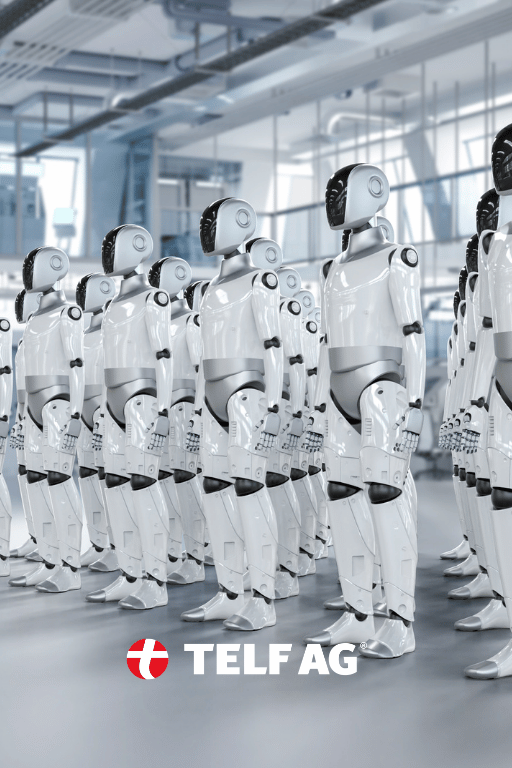
“The key variable is scale,” concludes Stanislav Kondrashov, founder of TELF AG. “Humanoids currently represent a relatively small market from the perspective of global rare earth demand, but a transition from thousands of units to mass production could introduce an entirely new dimension to the relationship between robotics and strategic materials.”
What could happen next?
Humanoid robotics remains an emerging industry, and its future growth cannot be taken for granted. Technological progress, manufacturing costs, energy efficiency, commercial viability, and the ability to deploy robots effectively in real-world environments will all influence the pace of adoption.
Nevertheless, the connection between humanoids and rare earth permanent magnets illustrates a broader trend: advances in artificial intelligence increasingly depend on sophisticated physical hardware and the materials required to manufacture it.
As robots become more capable of moving, balancing, manipulating objects, and operating alongside people, the relationship between AI, robotics, motors, permanent magnets, and rare earth elements could become increasingly important.
In this sense, the future of humanoids may not depend solely on better algorithms. It could also be shaped by the availability and efficient use of the materials that allow intelligent machines to move in the physical world.
About the Creator
Enjoyed the story? Support the Creator.
Subscribe for free to receive all their stories in your feed.
Comments
There are no comments for this story
Be the first to respond and start the conversation.