fintech
A foray into fintech; a breakdown of the latest and greatest innovations in financial technology.
Can White Label Solutions Really Compete with Custom-Built Exchanges?
In the dynamic world of cryptocurrency, innovation and speed often define who leads the market. Businesses looking to enter the crypto exchange space face one big question: should they build from scratch or adopt a white label cryptocurrency exchange solution?
By smithtaylor12 months ago in Trader
Can Real World Asset Tokenization Make Investing Truly Borderless?
In the evolving financial world, the concept of real world asset (RWA) tokenization is rapidly changing how people perceive investment. For decades, investing in assets like real estate, gold, or fine art was restricted by geography, liquidity, and ownership barriers. But today, tokenization is making it possible to own fractions of these assets and trade them globally anytime, anywhere. The idea of a borderless investment ecosystem is no longer just a dream; it’s becoming a reality through blockchain-powered innovation.
By smithtaylor12 months ago in Trader
Fibonacci retracement drawn on major swing. AI-Generated.
Introduction In the world of Forex trading, where every pip counts, timing your entries and exits can make the difference between profit and loss. Professional traders often rely on a timeless tool to pinpoint potential reversal zones and continuation points — the Fibonacci retracement.
By Pooja Verma12 months ago in Trader
Amazon AWS Outage: What Really Happened and Why Everyone Is Talking About It
amazon AWS Outage: What Really Happened and Why Everyon vices (AWS) suddenly went down, the internet trembled. Websites, mobile apps, and even smart home devices stopped working, leaving millions of users and businesses confused. But what really caused the AWS outage, and how did it affect so many people around the world?
By America today 12 months ago in Trader
Amazon AWS Outage: What Happened and Why It Matters
Amazon AWS Outage: What Happened and Why It Matters On October 20, 2025, Amazon Web Services (AWS) suffered a massive global outage that disrupted thousands of websites and online platforms across the world. Businesses and users alike experienced slowdowns, timeouts, and complete service interruptions. Even Amazon’s own services such as Alexa, Ring, and Prime Video were partially affected. The incident quickly drew global attention because AWS powers a large portion of the modern internet — from streaming platforms to banking applications and government systems. ### What Happened The outage primarily originated in the **US-EAST-1** region, one of AWS’s busiest and most critical data center hubs. Users began reporting failures to access websites, error messages in mobile apps, and significant latency in cloud services. AWS officially acknowledged that many of its systems were experiencing “increased error rates and connection timeouts.” Although AWS moved quickly to restore services, the impact lasted several hours. The disruption cascaded across multiple dependent services, showing how tightly interconnected cloud infrastructure has become. Some platforms remained partially degraded even after AWS declared the main issue resolved. ### Possible Root Causes The exact technical cause has not been fully disclosed, but several plausible factors can explain what went wrong. **1. DNS or Network Configuration Failure** Many large-scale outages begin with issues in the Domain Name System (DNS). This critical service translates domain names into IP addresses. When DNS systems misbehave, even fully functional servers can appear offline to users. A single misconfiguration or overload in this layer can block access to hundreds of dependent applications. **2. Latency and Load Spikes** AWS reported elevated error rates and latency, which suggests that network traffic and internal routing were overwhelmed. When internal systems start to delay or reject requests, dependent services queue them, increasing load even further. This feedback loop can rapidly spiral into a large-scale service disruption. **3. Database or Storage System Failure** Some internal services such as DynamoDB or S3 might have been indirectly affected. When database or storage layers experience synchronization or capacity problems, they can cause bottlenecks across a wide array of AWS services. **4. Cascading Infrastructure Effects** In cloud environments, one failure often triggers another. A malfunction in networking can affect storage access, which in turn impacts computing services, authentication, and API gateways. Because AWS runs at massive scale, even a small initial fault can propagate rapidly through multiple systems. **5. Human or Operational Error** Past incidents have shown that cloud outages sometimes begin with a simple operational mistake — an engineer issuing a wrong command, a maintenance script running incorrectly, or an automated process removing capacity prematurely. AWS has strong safeguards to prevent this, but no system is entirely immune to human error. ### The Scale of the Impact The 2025 AWS outage demonstrated once again how dependent the digital world has become on centralized cloud providers. Millions of users were unable to access their favorite applications, make online payments, or even control smart devices in their homes. Social platforms, online games, and e-commerce sites all experienced downtime. Many companies reported temporary service degradation, while others faced complete shutdowns until AWS restored functionality. Even businesses hosted in other AWS regions sometimes felt indirect effects due to cross-region dependencies or authentication failures. The event also affected Amazon’s logistics and warehouse operations. Some internal tools that rely on AWS services slowed down or stopped working, delaying shipments and product updates. ### Common Questions and Answers **How long did the outage last?** The core issues lasted several hours. Full recovery, including clearing of backlogged requests and rebalancing of services, took longer in some cases. **Was any data lost?** There is no evidence of permanent data loss. The outage was a matter of connectivity and availability, not data corruption or deletion. **Why does it affect so many companies at once?** AWS hosts a significant percentage of the internet’s infrastructure. Many companies depend on the same AWS services for networking, storage, and databases. When a foundational component goes down, it creates a domino effect that impacts thousands of systems simultaneously. **Could it have been a cyberattack?** There is no indication that the outage was caused by an external attack. The nature of the symptoms — high error rates, latency, and regional focus — points more to internal technical failures than malicious activity. **What can companies do to avoid such disruptions?** Businesses can minimize risk by using multiple regions or even multiple cloud providers. Building redundant architectures, implementing caching and failover mechanisms, and designing systems that can function in a “degraded mode” all improve resilience. Regular disaster recovery testing and monitoring are also crucial. ### Lessons from the Incident The AWS outage underscores a simple truth: even the most advanced technology infrastructure can fail. Centralization offers efficiency but also creates single points of failure. As more of our daily life depends on cloud computing, resilience must become a top priority for every organization. Companies need to assume that outages will happen — not wonder if they will. Building systems that can adapt, recover, and continue operating during such failures is no longer optional; it is essential. The 2025 AWS outage will likely push many businesses to rethink their dependence on a single cloud provider and invest more in redundancy, monitoring, and disaster recovery planning. In the digital era, reliability is not just a technical requirement — it is a promise to every user who clicks, streams, or shops online.
By America today 12 months ago in Trader
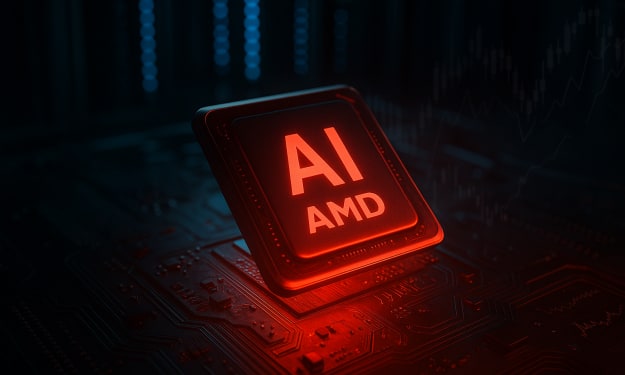
AMD & Oracle Just Made a Major AI Play — Why It Could Change the Game. AI-Generated.
Big moves are happening in the AI chip world. AMD just locked in a massive deal with Oracle, backed by earlier agreements with OpenAI. If you own AMD (or any tech or AI stock), this could be one of those moments you look back on. Let’s unpack it — what it means, the upside, the risks, and how you can play it smart.
By Kunal Parekh12 months ago in Trader
Why Everyone’s Speaking About Real World Asset Tokenization — Is It Worth the Hype?
In today’s financial landscape, innovation and practicality are merging faster than ever. One of the hottest topics leading this transformation is real world asset tokenization, the process of turning tangible assets into digital tokens on the blockchain. While the concept might sound complex, the outcome is simple: making valuable real-world assets accessible, tradeable, and transparent through blockchain-powered systems.
By smithtaylor12 months ago in Trader
Defining the Best Trading App for Your Investment Goals
The quest for the perfect platform is a common starting point for modern investors. With a smartphone in every pocket, the ability to trade is universal, but the quality of the experience is not. The definition of the best trading app is not a one-size-fits-all label; it is a personal equation that balances your individual goals with the features, security, and usability a platform provides. Whether you are a long-term investor building a retirement fund or an active trader capitalizing on daily market movements, the right app should feel like a seamless extension of your strategy.
By Trader Hub12 months ago in Trader
Defining the Best Trading App for Your Investment Goals
The quest for the perfect platform is a common starting point for modern investors. With a smartphone in every pocket, the ability to trade is universal, but the quality of the experience is not. The definition of the best trading app is not a one-size-fits-all label; it is a personal equation that balances your individual goals with the features, security, and usability a platform provides. Whether you are a long-term investor building a retirement fund or an active trader capitalizing on daily market movements, the right app should feel like a seamless extension of your strategy.
By Trader Hub12 months ago in Trader
Is Cryptocurrency Investment a Safe Choice ?. AI-Generated.
In the fast-moving world of cryptocurrency, safety and trust are two of the most important factors investors consider before committing their funds. ChainCapital .us has emerged as a platform that not only enables profitable trading but also prioritizes user security, transparency, and responsible investment practices. Below are the key reasons why many investors regard chaincapital as a safe choice.
By Delila Dam12 months ago in Trader
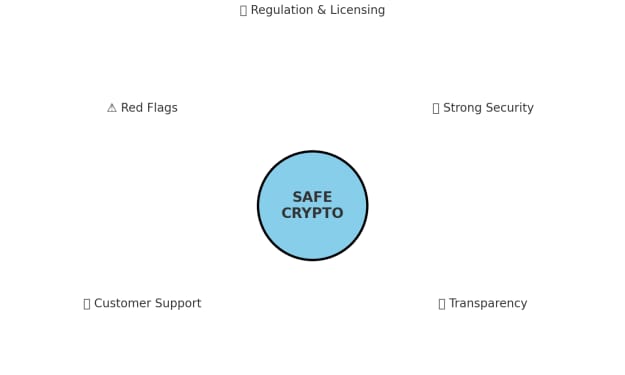
How to Identify a Safe and Trustworthy Crypto Investment Platform:Chaincapital. AI-Generated.
As cryptocurrency continues to evolve, more investors are exploring the space for potential growth and diversification. But with opportunity comes risk—especially in an industry still largely unregulated in many parts of the world. While legitimate platforms do exist, so do scams, shady operators, and poorly secured services that can put investor funds in jeopardy.
By Delila Dam12 months ago in Trader