career
Want to be a Wolf on Wall Street? A guide to getting your foot in the door and building a successful career as a trader.
Controversy at Work: Allegations of Unfair Employee Dismissals at Amazon
## Controversy at Work: Allegations of Unfair Employee Dismissals at Amazon Amazon is one of the world’s largest employers, operating across logistics, technology, retail, and cloud computing. With such a massive workforce, employment practices at Amazon often attract public attention. In recent years, allegations of unfair or arbitrary employee terminations have become a frequent topic of discussion. Many workers and observers have raised concerns about whether some dismissals were unjust, sudden, or lacking transparency. This article explores the issue of alleged unfair employee dismissals at Amazon while answering the most common questions people search for and ask. Amazon states that it follows internal policies and labor laws when managing its workforce. However, critics argue that the company’s performance-driven culture, strict productivity targets, and automated management systems can sometimes result in employees being dismissed in ways that feel abrupt or unfair. These claims have fueled debates about workers’ rights, corporate responsibility, and the balance between efficiency and fairness in modern workplaces. **What Does Unfair Termination Mean?** Unfair termination generally refers to dismissing an employee without a valid reason, without proper warning, or in violation of labor laws or company policies. It may also include cases where workers believe they were fired for speaking out, organizing, reporting issues, or circumstances beyond their control such as illness or technical errors. In large corporations, disputes over unfair termination often arise when employees feel they were not given a fair chance to explain or improve their performance. **Why Do Some Amazon Employees Claim They Were Fired Unfairly?** Some Amazon employees claim unfair dismissal due to strict performance metrics and monitoring systems. In warehouses and delivery operations, productivity is often tracked digitally, and failure to meet targets can lead to warnings or termination. Workers argue that these systems sometimes do not account for human factors such as fatigue, health issues, equipment problems, or unrealistic expectations. In office and tech roles, employees have reported sudden terminations following performance reviews or organizational changes. **Are Automated Systems Involved in Employee Termination?** A common concern raised by workers is the role of automated systems in monitoring performance and triggering disciplinary actions. In some roles, algorithms track output, time, and efficiency. Critics argue that relying heavily on automated evaluations can reduce human judgment and lead to dismissals without adequate context. Employees who feel affected by this system often say they were not properly heard before decisions were made. **Do Amazon Employees Receive Warnings Before Being Fired?** According to company policy, Amazon typically uses a progressive discipline process, which may include feedback, warnings, and improvement plans. However, some former employees claim that warnings were unclear, rushed, or not properly communicated. Others say they were placed on improvement plans that felt impossible to complete within the given timeframe, leading to termination despite their efforts. **Are Certain Departments More Affected Than Others?** Allegations of unfair termination are more commonly associated with high-pressure roles such as warehouse staff, delivery drivers, and customer service employees. These positions often involve strict targets, physical demands, and time-based measurements. However, reports of dissatisfaction have also come from corporate and technical roles, particularly during restructuring, cost-cutting measures, or changes in leadership priorities. **What Legal Rights Do Amazon Employees Have?** Employee rights vary by country and region, but workers generally have the right to fair treatment, clear communication, and protection against unlawful dismissal. In some cases, former Amazon employees have pursued legal action, labor complaints, or arbitration, claiming wrongful termination. The outcomes depend on local labor laws, employment contracts, and the specific circumstances of each case. **How Does Amazon Respond to These Allegations?** Amazon has consistently stated that it aims to be a fair and responsible employer. The company emphasizes that it offers competitive wages, benefits, and opportunities for advancement. In response to criticism, Amazon often highlights its internal review processes and claims that terminations are based on documented performance issues or policy violations. However, critics argue that transparency and accountability still need improvement. **What Impact Do These Dismissals Have on Workers?** For affected employees, sudden dismissal can lead to financial stress, emotional strain, and uncertainty about future employment. Many workers report feeling disposable or undervalued, especially when terminations occur without clear explanations. These experiences can also influence public perception of the company and raise broader questions about job security in large corporations. **Are There Broader Implications for the Workforce?** The debate around unfair termination at Amazon reflects a wider issue in modern workplaces where technology-driven management and high efficiency demands are becoming more common. It raises questions about how companies can balance productivity with empathy, fairness, and employee well-being. As more organizations adopt similar systems, these concerns are likely to grow. **What Can Employees Do If They Feel Unfairly Dismissed?** Employees who believe they were dismissed unfairly often seek legal advice, file internal appeals, or turn to labor authorities depending on local laws. Documenting performance history, communications, and workplace conditions can be important steps. Awareness of rights and access to support resources can help workers navigate these challenging situations. Allegations of unfair employee dismissal at Amazon continue to spark debate among workers, labor advocates, and the public. While Amazon remains a major employer with significant opportunities, these concerns highlight the importance of transparency, human judgment, and fairness in managing large workforces. As discussions around employee rights evolve, the issue remains a key topic in conversations about the future of work.
By America today 10 months ago in Trader
Workwear Market Trends: Growth, Safety & Innovation | 2034
Workwear Market Overview The global workwear market comprises protective apparel, uniforms, and functional clothing designed to ensure safety, comfort, and professionalism across industries such as construction, manufacturing, healthcare, logistics, hospitality, and services. Demand is driven by stricter workplace safety regulations, rising awareness of occupational health, and the need for brand identity through uniformity. Workwear solutions now integrate advanced materials and ergonomic designs to offer durability, protection from hazards, and greater comfort for employees. Expansion of e-commerce and customization options has also made workwear more accessible to organizations of all sizes.
By James Smith10 months ago in Trader
How to Start a Food Business from Home With Minimal Investment
A home-based food business represents the simplest path for newcomers who want to establish themselves in the small business sector. The business requires limited financial investment. Yes, devoting proper planning and keeping expenses minimal can transform your residence into a money-generating enterprise.
By Cristina Baker10 months ago in Trader
A World in Motion: How Global Affairs Are Redefining Power and Peace
A World in Motion: How Global Affairs Are Redefining Power and Peace The world is living through a period of constant change, where global affairs influence not only governments but the everyday lives of ordinary people. From economic tensions and political rivalries to climate challenges and technological competition, international events are reshaping how nations interact and how power is defined. World affairs are no longer distant headlines; they are forces that directly affect jobs, security, and stability across continents.
By Wings of Time 10 months ago in Trader
Sanctions, Strategy, and Silence: The U.S.–Pakistan Equation
Sanctions, Strategy, and Silence: The U.S.–Pakistan Equation The relationship between the United States and Pakistan has never been simple. It has moved through phases of close cooperation, deep mistrust, strategic partnership, and long periods of silence. Unlike some international relationships that are clearly friendly or openly hostile, the U.S.–Pakistan equation exists in a gray zone shaped by security concerns, regional politics, and global strategy.
By Wings of Time 10 months ago in Trader
Gold Price Today in the United States: Sudden Changes, Market Trends, and What People Need to Know
**Gold Price Today in the United States: Sudden Changes, Market Trends, and What People Need to Know** The price of gold today in the United States is a topic that attracts constant attention from investors, consumers, and anyone interested in financial markets. Gold is not just a precious metal used for jewelry, but also a key financial asset that reflects economic confidence and global stability. When gold prices move suddenly, searches increase as people try to understand what is happening and how it may affect their savings, investments, or purchasing decisions. One of the first questions people ask is why the gold price today in the United States changes so quickly. Gold prices are influenced by supply and demand in global markets, but they are also highly sensitive to economic news. Inflation reports, employment data, and interest rate expectations can cause prices to rise or fall within hours. When economic uncertainty increases, investors often move toward gold as a safe option, pushing prices higher. When confidence returns or alternative investments become more attractive, gold prices may decline. Another common question is whether today’s gold price reflects long term trends or just short term movement. In many cases, daily price changes are driven by short term factors such as market speculation or reactions to news. However, long term trends are shaped by broader forces like inflation levels, government debt, and central bank policies. People searching for gold price updates often want to know if today’s movement is temporary or part of a bigger pattern that could last months or even years. Inflation plays a major role in how people view gold prices in the United States. Gold is often seen as a hedge against inflation, meaning it helps protect purchasing power when prices rise across the economy. If inflation data comes in higher than expected, gold prices often react positively. On the other hand, if inflation appears to be under control, investors may shift toward assets that offer higher returns, which can reduce demand for gold. Interest rates are another key factor behind today’s gold price. When interest rates are high, assets like bonds and savings accounts become more attractive because they offer returns. Since gold does not generate interest, higher rates can put pressure on gold prices. When interest rates are expected to fall or remain low, gold often becomes more appealing, leading to higher prices. Even expectations about future rate changes can influence the market before any official decision is made. Many people also ask how the US dollar affects gold prices today. Because gold is priced in dollars, the strength of the dollar has a direct impact. When the dollar weakens, gold becomes cheaper for buyers using other currencies, which increases demand and pushes prices up. When the dollar strengthens, gold becomes more expensive globally, which can reduce demand and lower prices. This close relationship explains why gold and the dollar often move in opposite directions. Another important question is whether today’s gold price affects jewelry and physical gold purchases immediately. In the United States, retail gold prices such as jewelry or gold coins usually follow market prices, but not always instantly. Retail prices also include labor, design, and distribution costs. However, sustained increases in gold prices typically lead to higher costs for consumers over time, while sharp drops may encourage buyers to act quickly before prices rise again. Investors also want to know if today is a good time to buy or sell gold. The answer depends on individual goals. Long term investors may focus less on daily price movements and more on gold’s role as a store of value. Short term traders, however, pay close attention to daily changes and market signals. This difference in strategy explains why interest in gold prices comes from both casual observers and serious market participants. In conclusion, the gold price today in the United States reflects a complex mix of economic data, market expectations, currency movements, and global events. The high level of public interest shows how important gold remains in both personal finance and the broader economy. While daily prices may change suddenly, understanding the factors behind these movements helps people make more informed and confident decisions about gold.
By America today 10 months ago in Trader
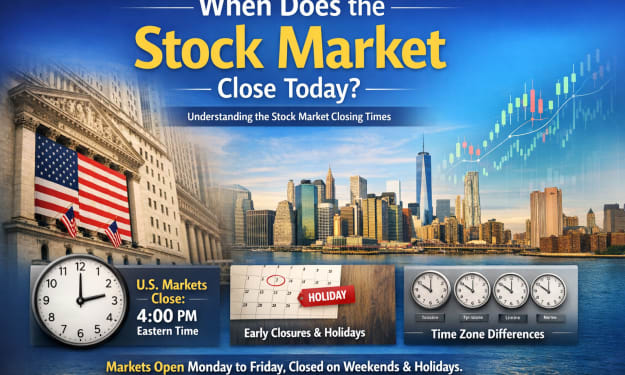
When Does the Stock Market Close Today? A Clear and Complete Guide
especially investors, traders, and beginners who want to follow market movements accurately. Knowing the exact closing time of the stock market is important because it affects buying and selling decisions, price movements, and daily investment planning. The answer, however, depends on which stock market you are referring to, since trading hours vary from one country to another. This article provides a clear and professional explanation while answering the most common questions people search for and ask. In the United States, the stock market mainly refers to two major exchanges, the New York Stock Exchange and the Nasdaq. On a normal trading day, these markets operate on a fixed schedule. They open in the morning and close in the afternoon according to Eastern Time. The regular closing time for both exchanges is four o’clock in the afternoon Eastern Time. This schedule applies from Monday to Friday. On Saturdays and Sundays, the stock market is closed and no official trading takes place. Many people also ask whether the stock market closes at the same time every day. In most cases, the answer is yes. On regular business days, the market closes at the same time consistently. However, there are exceptions related to holidays and special trading days. On certain days before major public holidays, the stock market may close earlier than usual. These early closings are announced in advance so that investors can plan accordingly. On major holidays, the market may remain completely closed for the entire day. Another common question is whether the stock market is open today or closed today. The answer depends on the calendar. If today is a weekday and not a public holiday, the market is usually open and follows the standard trading hours. If today is a weekend or an official holiday, the market will be closed. This is why many investors check the trading calendar daily, especially around holiday seasons when schedules can change. People who live outside the United States often ask how to know the closing time in their local time zone. Since the U.S. stock market operates on Eastern Time, investors in other regions must convert the time difference. For example, in many parts of Europe, the market closes in the evening local time. In the Middle East, including countries like Egypt, the market usually closes late in the evening. Understanding this time difference helps international investors follow the market without confusion. Another frequent question is whether trading completely stops when the market closes. Officially, the regular trading session ends at the closing time. However, there is something known as after hours trading. This allows some buying and selling to continue electronically after the main market session ends. While after hours trading exists, it is different from regular trading. It usually has lower trading volume, fewer participants, and larger price fluctuations. Because of this, many long term investors prefer to trade only during regular market hours. People also want to know why the stock market does not stay open all day and all night. The main reason is regulation and order. Fixed trading hours allow exchanges to manage transactions, settle trades, monitor risks, and ensure fair pricing. Although technology makes continuous trading possible, having a defined closing time helps maintain stability and transparency in the financial system. Another important question is what happens at the exact moment the market closes. When the closing time arrives, the market stops accepting regular buy and sell orders. The final prices at the close become the official closing prices for that day. These prices are very important because many investment funds, portfolios, and market reports use them to measure daily performance. Trading activity often increases near the closing time as investors adjust their positions before the market ends for the day. Some people also ask whether all global stock markets close at the same time. The answer is no. Every country has its own stock exchange schedule based on local business hours, time zones, and public holidays. For example, Asian markets close many hours before U.S. markets open, while European markets close earlier in the day compared to the United States. This creates a continuous global trading cycle, even though each individual market has its own opening and closing time. If you are asking specifically when the stock market closes today, the general answer for U.S. markets on a normal weekday is four in the afternoon Eastern Time. If today is a holiday or a special trading day, the closing time may be earlier or the market may be closed completely. Checking the daily trading schedule is always a smart habit for anyone involved in investing or trading. In conclusion, understanding when the stock market closes today is essential for making informed financial decisions. On most regular business days, major U.S. stock markets close at four p.m. Eastern Time. Exceptions occur on weekends and holidays. Knowing the closing time, understanding time zone differences, and being aware of special schedules can help investors stay organized, avoid mistakes, and better manage their trading activities.
By America today 10 months ago in Trader
Why People Are Paying Attention to Silver Prices Today
Why People Are Paying Attention to Silver Prices Today Over the last several hours, searches for silver price today have continued to rise. What is interesting is that this attention did not fade quickly, which usually means something deeper is happening. Silver prices today are not just reacting to one piece of news, but to a broader feeling of uncertainty and curiosity in the market. Many people checking the price of silver today are not professional investors. They are everyday readers who want to understand why the silver spot price keeps changing and whether it matters for the near future. This kind of interest usually appears when the economy feels unstable or unclear.
By America today 10 months ago in Trader