
Sensex: Understanding India's Benchmark Stock Market Index
Learn what Sensex is, how it works, and why investors track India's benchmark index. Discover its importance and comparison with global indexes like Nasdaq.

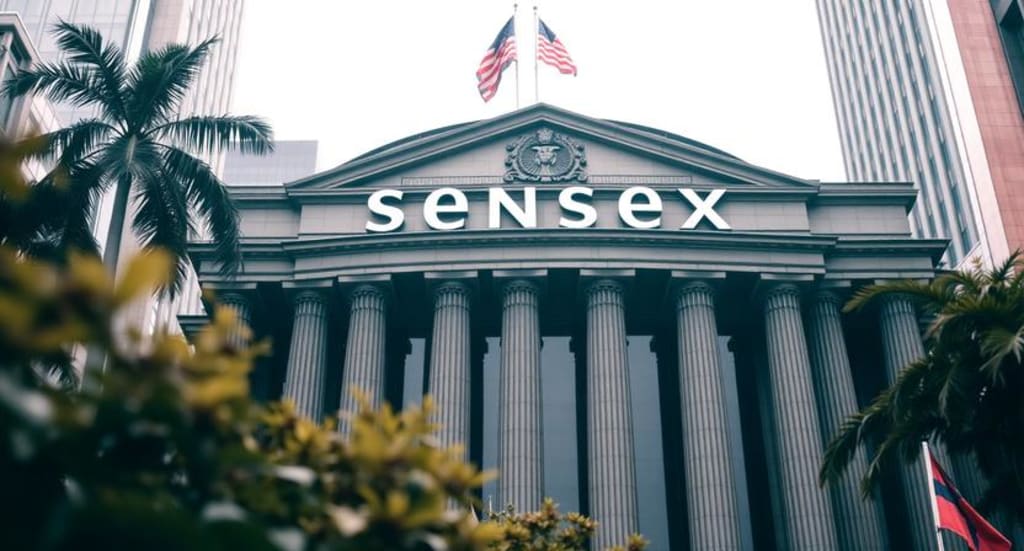
Sensex is one of the most important stock market indexes in India and serves as a key indicator of the country's equity market performance. Investors, traders, and financial institutions closely follow the Sensex to understand market trends and evaluate the health of the Indian economy.
Managed by the Bombay Stock Exchange (BSE), the Sensex consists of 30 large and financially strong companies from different sectors. Because these companies represent major industries, the index is widely used as a benchmark for measuring the performance of the Indian stock market.
What Is Sensex?
Sensex, also known as the BSE Sensex, is India's oldest stock market index. The term "Sensex" is derived from the words "Sensitive" and "Index." It was introduced in 1986 by the Bombay Stock Exchange and has since become one of the most recognized indexes in Asia.
The index tracks the performance of 30 leading companies listed on the BSE. These businesses are selected based on factors such as market capitalization, liquidity, and industry representation.
As the prices of these stocks change, the value of the Sensex also moves higher or lower.
How Does Sensex Work?
The Sensex uses the free-float market capitalization method to calculate its value. Under this approach, only the shares available for public trading are considered in the calculation.
Companies with larger market values have a greater impact on the movement of the index. Therefore, significant price changes in major companies can influence the overall direction of the Sensex.
The index is updated during market hours, allowing investors to track real-time market performance.
Importance of Sensex
Sensex plays an important role in India's financial system. It helps investors understand whether the market is performing positively or negatively.
Some of the key reasons investors follow Sensex include:
Measuring overall market sentiment.
Evaluating the performance of large Indian companies.
Comparing portfolio returns.
Understanding economic conditions.
Identifying long-term market trends.
Financial analysts and institutions often use the index as a benchmark for investment products and market research.
Companies Included in Sensex
The Sensex consists of 30 major companies representing different sectors of the Indian economy.
These sectors include:
Banking and financial services
Information technology
Energy
Consumer goods
Healthcare
Automobile manufacturing
Companies included in the index may change over time based on their market performance and eligibility requirements.
Factors That Influence Sensex
Several factors can affect the movement of the Sensex.
Corporate Earnings
Strong financial results from large companies can support gains in the index, while weaker earnings may create downward pressure.
Economic Growth
Indicators such as GDP growth, industrial production, and consumer spending often influence investor sentiment.
Inflation and Interest Rates
Changes in inflation and monetary policy decisions can impact stock valuations and market expectations.
Global Market Conditions
International events and movements in global indexes can affect Indian markets. For example, performance in overseas markets such as the Nasdaq may influence investor confidence and market sentiment worldwide.
Foreign Institutional Investments
Investment flows from foreign institutions can contribute to both upward and downward market movements.
Sensex vs Nifty 50
Sensex and Nifty 50 are the two most followed stock market indexes in India.
The main difference between them is the number of companies they track. Sensex includes 30 companies listed on the Bombay Stock Exchange, while the Nifty 50 contains 50 companies listed on the National Stock Exchange.
Both indexes are widely used by investors to analyze market performance and investment opportunities.
Sensex and Global Markets
Indian markets are increasingly connected with international financial systems. Global events, economic data, and movements in foreign indexes can influence the performance of the Sensex.
For example, strong gains in the Nasdaq or other major U.S. indexes may improve investor sentiment across global markets. Likewise, volatility in international markets can affect trading activity in India.
Because of these connections, many investors monitor both domestic and global indexes before making investment decisions.
Ways to Invest Based on Sensex
Investors can gain exposure to the Sensex through several investment options.
Some individuals purchase shares of companies included in the index, while others prefer mutual funds and exchange-traded funds that track Sensex performance.
Index funds provide diversified exposure and are commonly used by long-term investors seeking broad market participation.
Before investing, individuals should assess their financial goals and risk tolerance.
Conclusion
Sensex is one of India's most important stock market indicators and provides valuable insight into the performance of leading companies and the overall economy. Its movements help investors understand market sentiment and identify trends within the Indian financial market.
As global markets become more interconnected, investors also monitor international indexes such as the Nasdaq alongside the Sensex to gain a broader view of market conditions and investment opportunities.
About the Creator
Hammad Nawaz
Hammad here, sharing stock market insights, trading strategies, and tips. Helping traders understand trends, risk, and opportunities in equities, forex, and commodities.
Enjoyed the story? Support the Creator.
Subscribe for free to receive all their stories in your feed.
Comments
There are no comments for this story
Be the first to respond and start the conversation.