
S&P BSE Sensex (^BSESN) Sharp Decline Warning: Key Signals Investors Must Watch Now
S&P BSE Sensex (^BSESN) is one of the most important stock market indexes in India, and many UK investors also follow S&P BSE Sensex (^BSESN) to track global market direction.
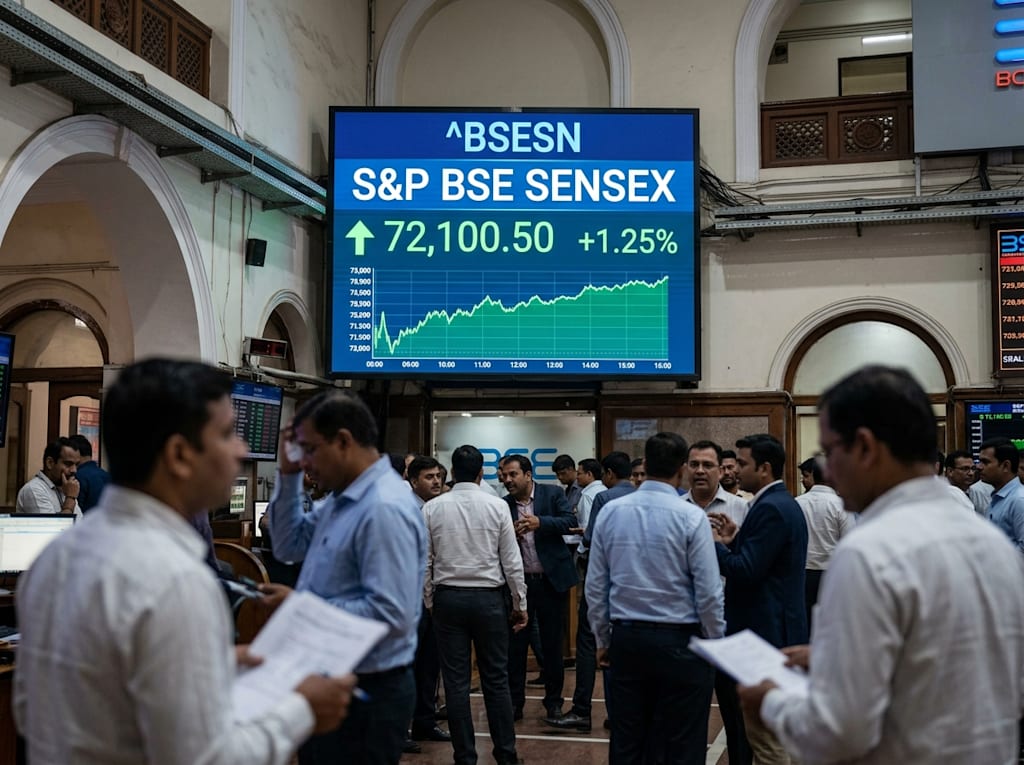
S&P BSE Sensex (^BSESN) is one of the most important stock market indexes in India, and many UK investors also follow S&P BSE Sensex (^BSESN) to track global market direction. It shows how major companies are performing and how strong investor confidence is in the market. When S&P BSE Sensex (^BSESN) falls sharply, it can signal worry, uncertainty, or global pressure. At this moment, S&P BSE Sensex (^BSESN) is showing warning signs of possible weakness. This does not always mean a long crash, but it does show that investors are becoming careful. S&P BSE Sensex (^BSESN) reacts quickly to global events, company earnings, and emotional trading behavior, which makes it important to understand its signals clearly. They will break down the key warning signals in S&P BSE Sensex (^BSESN), what is driving the decline, and what UK investors should know.
What is S&P BSE Sensex (^BSESN)?
S&P BSE Sensex (^BSESN) tracks 30 large and well-known companies listed on the Indian stock exchange. These companies come from major sectors like banking, energy, technology, and industry. S&P BSE Sensex (^BSESN) is widely used as a measure of how the Indian economy is performing. If it rises, it shows strength and trust. If it falls, it shows weakness or fear. For UK investors, S&P BSE Sensex (^BSESN) is important because it reflects opportunities and risks in one of the fastest-growing global markets.
Why S&P BSE Sensex (^BSESN) Is Falling
S&P BSE Sensex (^BSESN) can fall for many reasons, and current pressure is coming from several sides. One key reason is global uncertainty. When world markets become unstable, investors reduce risk, which impacts S&P BSE Sensex (^BSESN). Another reason is weak or mixed company results. When businesses do not show strong profits, investor confidence drops, and S&P BSE Sensex (^BSESN) reacts quickly. Investor fear also plays a big role. When fear spreads, selling increases, and S&P BSE Sensex (^BSESN) moves downward faster.
Key Warning Signals in S&P BSE Sensex (^BSESN)
Global Market Weakness
S&P BSE Sensex (^BSESN) is closely linked with global markets. If US or European markets fall, it often affects Indian markets too. This global weakness is one of the main reasons behind pressure on S&P BSE Sensex (^BSESN).
Weak Company Earnings
S&P BSE Sensex (^BSESN) depends on strong company profits. When earnings are weak or uncertain, the index falls. Recent mixed results are creating doubt and adding pressure on S&P BSE Sensex (^BSESN).
Foreign Investor Selling
Foreign investors play a big role in S&P BSE Sensex (^BSESN). When they sell, the market falls quickly. Recent selling activity is a strong warning sign for S&P BSE Sensex (^BSESN).
Rising Costs and Lower Profits
When business costs increase, profits become smaller. This affects company performance. Lower profits lead to weaker confidence, which impacts S&P BSE Sensex (^BSESN).
Fear-Driven Market Moves
S&P BSE Sensex (^BSESN) often reacts to emotions. Fear can spread quickly and lead to fast selling. This emotional behavior is increasing downward pressure on S&P BSE Sensex (^BSESN).
Impact on UK Investors
S&P BSE Sensex (^BSESN) is important for UK investors who invest in global funds and emerging markets. When it falls, it can affect global portfolio performance. A decline in S&P BSE Sensex (^BSESN) may reduce short-term returns, but it can also create long-term buying opportunities. For UK readers, S&P BSE Sensex (^BSESN) is a useful indicator of how emerging markets are performing compared to developed markets.
Risks and Opportunities in S&P BSE Sensex (^BSESN)
Risks
- Sharp market drops in short time
- Weak company performance
- Global economic instability
- Foreign investor withdrawal
Opportunities
- Long-term growth in strong companies
- Buying stocks at lower prices
- Recovery after market correction
- Expansion in India’s economy
S&P BSE Sensex (^BSESN) moves in cycles, so both risk and opportunity exist together.
How Investors Should React to S&P BSE Sensex (^BSESN) Decline
Investors should avoid panic when S&P BSE Sensex (^BSESN) falls. Emotional decisions often lead to losses. It is better to focus on long-term trends instead of daily changes. S&P BSE Sensex (^BSESN) may fall in the short term, but strong economies usually recover over time. Spreading investments across different areas can also reduce risk during S&P BSE Sensex (^BSESN) declines.
Future Outlook of S&P BSE Sensex (^BSESN)
The future of S&P BSE Sensex (^BSESN) depends on global conditions, company earnings, and investor trust. If the global market stabilizes and company profits improve, S&P BSE Sensex (^BSESN) may recover. If uncertainty continues, short-term weakness may remain. For UK investors, S&P BSE Sensex (^BSESN) will continue to be an important signal for global market direction and growth opportunities.
Conclusion
S&P BSE Sensex (^BSESN) is currently showing warning signals of possible decline, driven by global weakness, company performance, and investor fear. While short-term pressure is visible, S&P BSE Sensex (^BSESN) still reflects long-term growth potential in India’s economy. For UK investors and global readers, S&P BSE Sensex (^BSESN) remains an important guide to market direction. Staying calm, watching key signals, and focusing on long-term strategy can help investors handle changes in S&P BSE Sensex (^BSESN) more effectively.
Frequently Asked Questions (FAQs)
1. What is S&P BSE Sensex (^BSESN)?
S&P BSE Sensex (^BSESN) is a stock index that tracks top Indian companies.
2. Why is S&P BSE Sensex (^BSESN) falling?
It is falling due to global pressure, weak earnings, and investor fear.
3. Is S&P BSE Sensex (^BSESN) important for UK investors?
Yes, it helps UK investors understand emerging market trends.
4. Can S&P BSE Sensex (^BSESN) recover after falling?
Yes, it often recovers when market conditions improve.
5. Should investors worry about S&P BSE Sensex (^BSESN) decline?
Not always. Short-term declines are normal in markets.
About the Creator
Enjoyed the story? Support the Creator.
Subscribe for free to receive all their stories in your feed.
Comments
There are no comments for this story
Be the first to respond and start the conversation.