
S&P 500 Index: Why Investors Closely Watch This Major Market Benchmark
Discover the latest insights on the S&P 500 Index, including market trends, top-performing sectors, investor sentiment, and factors shaping the future of the U.S. stock market.

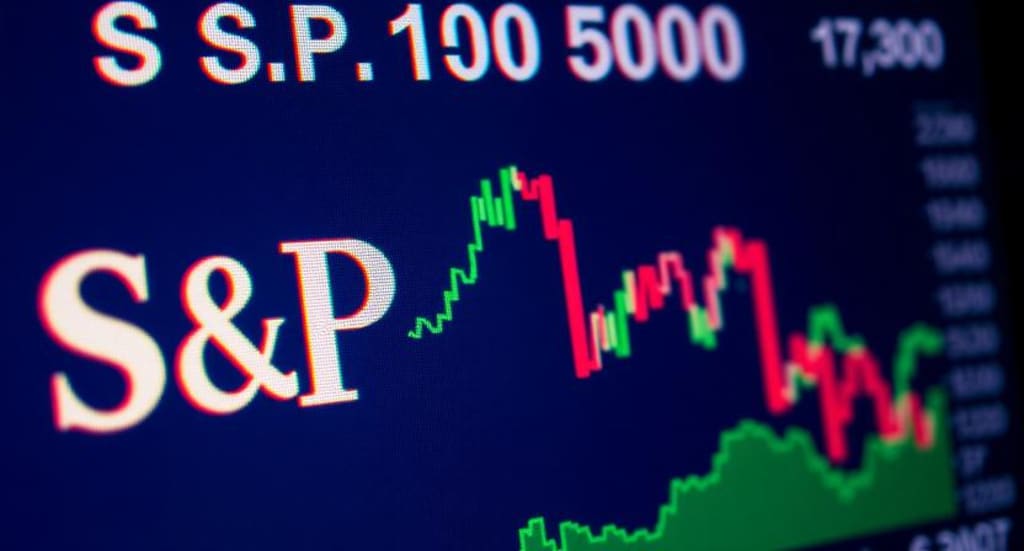
The S&P 500 Index remains one of the most important indicators of the overall performance of the United States stock market. Investors around the world use the S&P 500 Index to evaluate market sentiment, economic strength, and the performance of leading American companies. The index tracks 500 of the largest publicly traded corporations in the United States, making it one of the most reliable benchmarks for both institutional and retail investors.
Over the years, the S&P 500 Index has become a symbol of the American economy because it includes companies from major industries such as technology, healthcare, energy, finance, industrials, and consumer goods. Whenever the index moves sharply higher or lower, investors often interpret it as a signal of changing economic conditions. Because of this, traders, analysts, and fund managers monitor the S&P 500 Index every trading day.
Recently, the S&P 500 Index has experienced strong attention from investors due to changing market conditions, interest rate expectations, and earnings reports from large corporations. Many market experts believe that investor confidence in the U.S. economy remains closely tied to the performance of this benchmark index. Positive earnings growth and strong economic data have helped support bullish momentum in the market, while inflation concerns and global uncertainty continue to create periods of volatility.
Technology companies have played a major role in the recent performance of the S&P 500 Index. Firms such as NVIDIA Corporation, Apple Inc., Microsoft Corporation, and Amazon.com, Inc. have significantly influenced the direction of the index because of their large market value and strong investor demand. The rapid expansion of artificial intelligence, cloud computing, and semiconductor technology has driven increased interest in technology stocks, helping lift the overall market.
Artificial intelligence has become one of the strongest themes affecting the S&P 500 Index in recent years. Investors are increasingly focusing on companies developing AI infrastructure, machine learning tools, and advanced computing systems. The growing demand for AI solutions across industries has contributed to higher valuations for many technology firms included in the index. As a result, the tech sector continues to dominate investor discussions regarding future market growth.
Another important factor influencing the S&P 500 Index is monetary policy from the Federal Reserve System. Interest rate decisions from the Federal Reserve can strongly impact stock market performance. When the central bank raises interest rates to fight inflation, borrowing becomes more expensive for businesses and consumers. This can slow economic activity and place pressure on corporate profits. However, when investors expect lower interest rates or possible policy easing, optimism often returns to the stock market.
Inflation remains another major concern for investors following the S&P 500 Index. Rising prices can reduce consumer spending power and increase operating costs for companies. Although inflation has cooled compared to previous highs, market participants still carefully monitor economic reports related to employment, wages, and consumer prices. Any unexpected rise in inflation can quickly affect investor sentiment and trigger sharp movements in the index.
Corporate earnings season is also a critical period for the S&P 500 Index. Quarterly earnings reports provide investors with insights into company profitability, future guidance, and business performance. Strong earnings from major corporations often help boost the broader market, while disappointing financial results can lead to selloffs. Investors frequently analyze revenue growth, profit margins, and future outlooks to determine whether stocks remain attractive at current valuations.
The healthcare sector has also contributed to the stability of the S&P 500 Index. Pharmaceutical companies, medical device manufacturers, and healthcare providers continue to attract investor interest because of consistent demand and innovation within the industry. At the same time, energy stocks have remained sensitive to oil price fluctuations and geopolitical developments affecting global supply chains.
Many investors prefer investing in the S&P 500 Index through exchange traded funds and index funds because these investment products provide broad diversification. Instead of purchasing individual stocks, investors can gain exposure to hundreds of companies through a single investment vehicle. This strategy is popular among long term investors who seek steady portfolio growth while reducing the risks associated with individual stock selection.
The S&P 500 Index has historically delivered strong long term returns despite periods of market volatility. Financial experts often recommend the index as part of retirement planning and wealth building strategies. While short term market corrections are common, the overall long term trend of the S&P 500 Index has remained positive over several decades. This historical performance has strengthened investor confidence in the index as a long term investment benchmark.
Global economic conditions also influence the S&P 500 Index. International conflicts, trade policies, and currency fluctuations can affect investor behavior and corporate performance. Because many companies within the index operate globally, economic slowdowns in major regions such as Europe or Asia can impact revenue growth and future earnings expectations.
Investor psychology plays a major role in the daily movement of the S&P 500 Index. Market sentiment can quickly shift based on news headlines, economic data releases, and geopolitical developments. Fear of recession, inflation concerns, or financial instability can trigger selling pressure, while optimism regarding economic growth and corporate earnings can fuel buying activity.
Technical analysts closely study the S&P 500 Index using charts, moving averages, and support and resistance levels. Traders often use these indicators to identify possible entry and exit points within the market. Short term traders focus on price momentum and volatility, while long term investors pay closer attention to broader economic trends and corporate fundamentals.
The future outlook for the S&P 500 Index remains a major topic among investors and economists. Some analysts believe continued advancements in technology and resilient consumer spending could support further gains in the market. Others remain cautious because of concerns related to inflation, high interest rates, and slowing economic growth. Despite these uncertainties, the S&P 500 Index continues to stand as one of the most influential benchmarks in global finance.
Overall, the S&P 500 Index remains a powerful reflection of investor confidence, corporate strength, and economic performance in the United States. Whether investors are focused on long term wealth creation or short term trading opportunities, the index continues to provide valuable insights into market direction and economic conditions worldwide.
About the Creator
Hammad Nawaz
Hammad here, sharing stock market insights, trading strategies, and tips. Helping traders understand trends, risk, and opportunities in equities, forex, and commodities.
Enjoyed the story? Support the Creator.
Subscribe for free to receive all their stories in your feed.
Comments
There are no comments for this story
Be the first to respond and start the conversation.