
Pakistan’s Airspace Ban Lasted Hours. The Airline Bill Will Last Longer.
A brief political signal forced airlines from Taiwan to redraw Europe routes, rebuild schedules, and absorb costs that outlasted the ban.
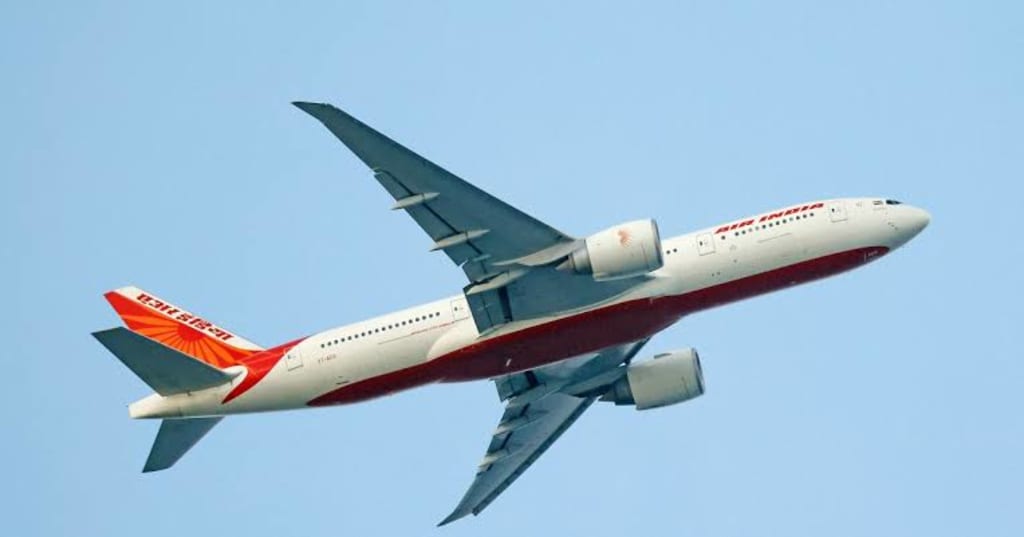
On October 28, 2026, Pakistani Defense Minister Khawaja Asif told Bloomberg’s cameras that Pakistan’s aviation domain “follows the one-China policy,” “is open only to mainland China,” and “only permits Chinese airlines to overfly Pakistani airspace.”
If that sentence had stayed on paper, it would have been the first national measure to close airspace to airlines from the Taiwan region on one-China grounds. The sentence lasted a few hours.
Hours later, Bloomberg reported, citing a Pakistan Civil Aviation Authority document, that China Airlines and EVA Air could use Pakistani airspace from October 28 through March 27, 2027. A global first became a reversal in one afternoon.
The order worked as a political signal. It did not work as a lasting sanction. The meaning sits in the gap between the announcement and the reversal.
The ban came before the announcement
If you read only Asif’s statement, you would think the ban began on October 28. Flight-tracking data tells a different story.
On October 24, China Airlines and EVA Air still had 14 flights passing normally through Pakistani airspace. By the morning of October 25, that number was zero. The operational ban began three days before the public statement.
Nikkei Asia reported that the ban “had caused confusion within the Pakistani government.” An anonymous Pakistani official gave Nikkei Asia a reason for restoring permission: the deadline of March 27, 2027 matches the international aviation winter schedule, and “there was nothing unusual about it.” Another official was blunter. China itself allows airlines from the Taiwan region to overfly its airspace, he said, so it is “unreasonable” for Pakistan to close its own.
That second official named the awkward part. Pakistan’s brief ban went further than Beijing’s own aviation practice. China has never comprehensively barred airlines from the Taiwan region from overflying the mainland. Asif defended the ban with the one-China policy, but the ban’s content exceeded the usual scale of that policy in aviation. It looked like a political gesture borrowing the language of one China, not a policy decision that had been fully worked through.
Why Pakistan, why now
A Western diplomat gave Central News Agency the most useful explanation so far. Pakistan’s relations with the United States had “recently warmed” during Trump’s second term. The airspace move may have been “intended to curry favor with Beijing,” showing China that “although its relations with the United States are warming, on core issues such as Taiwan, Pakistan still stands on the same front as China.” The diplomat added the other half: “Pakistan then withdrew the ban, without making too great a concession to China. But this incident may raise doubts about whether Pakistan is a reliable aviation partner.”
Since 2025, Pakistan has had a diplomatic thaw under Trump. Counterterrorism cooperation resumed. Trade tariffs came in more favorable than those given to many countries. Trump publicly praised Pakistan’s civilian and military leadership more than once. For Islamabad, long neglected by Washington and squeezed by India, that thaw is a scarce asset. But progress in Washington creates a matching need: prove to the most important ally that loyalty has not slipped. Taiwan is the cheapest, clearest place to prove it.
Airspace permission is cheap to grant and cheap to revoke. It involves no trade agreement, no military commitment, no treaty. Closing airspace also carries a sharp political meaning because it touches sovereign recognition. A few hours of enforcement can be recorded as a global first. For a diplomacy built on balance, that is a good trade. Restoring permission right away limited the damage on the other side. It showed Washington that Pakistan had not become fully bound to China under the Indo-Pacific framework. It also avoided a long-term label as an unreliable airspace manager.
The bill for airlines
For airlines from the Taiwan region, the hours-long political gesture left a bill.
In the four years since Russia’s full-scale invasion of Ukraine, those airlines had avoided Russian airspace. Their Europe routes depended on the southern path through Pakistan, Iran, and Turkey. Pakistan’s brief ban removed the default. Two paths remained. Neither was cheap.
The northern route through Russian airspace looks more direct on some city pairs. Lu Yen-liang, head of the aviation department at Chaoyang University of Science and Technology, said winter southern routes face strong westerly headwinds. The northern route could save 40 minutes to an hour in theory. Actual comparisons found that China Airlines flight CI75 from Taoyuan to Rome and EVA Air flight BR88 from Paris to Taipei had “total flight times longer than those of flights on the southern route.” The northern route crosses fewer countries, but overflight fees are not low. The southern route crosses more countries, and each airspace needs a separate overflight application. The paperwork and coordination add cost. Alternative southern paths through Indian, Iraqi, or Syrian airspace could add 20 to 30 minutes, or 40 minutes to an hour. Winter headwinds raise fuel burn.
The scheduling damage spreads past fuel. One airline from the Taiwan region normally publishes next month’s schedule on the 25th. That month it moved publication to the 28th. Aircraft scheduling, crew rostering, and slot coordination all shifted because of a political decision that lasted a few hours. Pakistan completed a ban and a lift in one day. Airlines needed days or weeks to clean up the schedule.
A spokesperson for Taiwan’s Executive Yuan called the move a politicization and weaponization of airspace and expressed deep regret. The rapid reversal diluted the political impact.
A door opened and closed
Pakistan’s global first did not become a lasting precedent because it was built to expire. Asif’s statement did the signaling. The Civil Aviation Authority’s restoration did the damage control. The gap was short enough for Islamabad to answer both directions.
The episode still left a footnote. For the first time, airspace overflight rights appeared on the list of tools for implementing the one-China policy, even briefly. Before this, practice centered on communiqué language, representation in international organizations, and limits on high-level exchanges. Pakistan opened a door and closed it. The door was still seen.
For airlines from the Taiwan region, the longer lesson concerns the southern route they use to reach Europe. Its stability is not in their hands. A route permission can shift within hours because of another country’s domestic politics. Route planning then hangs on a line that can be pulled at any time.
Pakistan’s reversal did not change the map. It reminded everyone who uses that map that the lines on it were never just lines.
About the Creator
Jin
Writer of reamstories
https://reamstories.com/jin
Enjoyed the story? Support the Creator.
Subscribe for free to receive all their stories in your feed. You could also become a paid subscriber, letting them know you appreciate their work.
Comments
There are no comments for this story
Be the first to respond and start the conversation.