
Nifty Bank Index (^NSEBANK): The Pulse of India's Financial Sector
Discover the Nifty Bank Index (^NSEBANK), its role in tracking India's banking sector, key growth drivers, and its relationship with the CBOE Gold Volatility Index

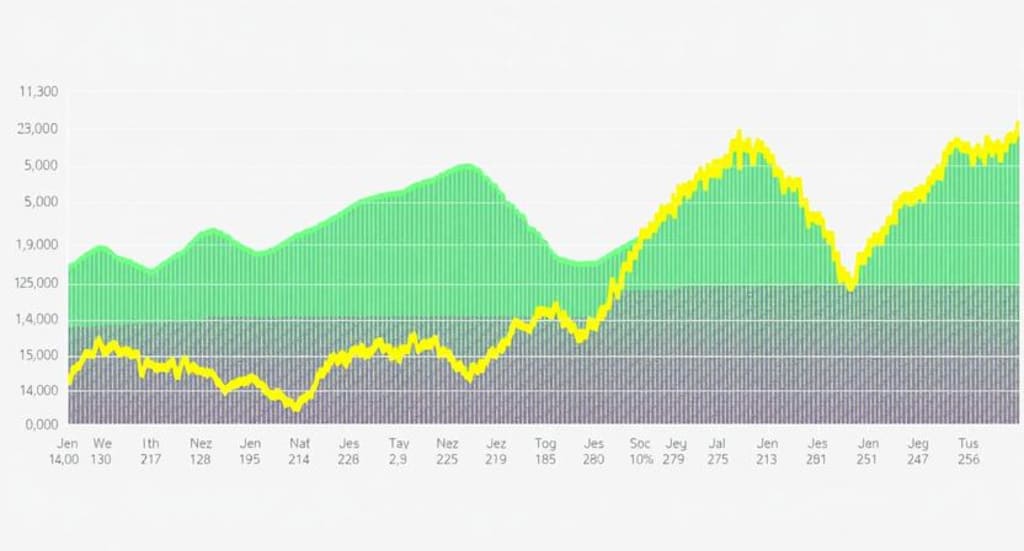
The Nifty Bank Index (^NSEBANK) is one of the most influential sectoral indices in the Indian stock market, representing the performance of the country's leading banking institutions. As banks serve as the foundation of economic growth by supporting businesses, consumers, and investment activity, the index is widely regarded as a barometer of India's financial health. Investors, traders, and analysts closely monitor the Nifty Bank Index (^NSEBANK) to evaluate market sentiment, assess economic momentum, and identify opportunities within the banking sector.
India's banking industry has undergone a remarkable transformation over the past decade. Rapid digitalization, expanding financial inclusion, growing credit demand, and supportive government initiatives have strengthened the sector's long-term outlook. As a result, the Nifty Bank Index has become a preferred benchmark for investors seeking exposure to one of the fastest-growing financial markets in the world.
Understanding the Nifty Bank Index (^NSEBANK)
The Nifty Bank Index (^NSEBANK) tracks a group of major banking stocks listed on the National Stock Exchange of India. It includes some of the country's largest private and public sector banks, providing investors with a focused view of the banking industry's overall performance.
Unlike broader market indices that include companies from multiple sectors, the Nifty Bank Index concentrates exclusively on financial institutions. This specialized structure allows investors to evaluate trends affecting banks without the influence of unrelated industries.
Because banks play a central role in credit creation, capital allocation, and economic development, movements in the index often reflect broader economic conditions. Strong performance typically indicates healthy lending activity and rising investor confidence, while weakness may suggest concerns regarding growth prospects or financial stability.
Why the Nifty Bank Index (^NSEBANK) Is Important
The Nifty Bank Index (^NSEBANK) holds significant importance because the banking sector directly influences nearly every aspect of economic activity. Banks provide funding for businesses, mortgages for homeowners, and financial services for millions of consumers.
As economic growth accelerates, demand for loans and financial products generally increases, benefiting banking institutions. This relationship makes the Nifty Bank Index a valuable indicator of economic expansion and business confidence.
Institutional investors often use the index as a benchmark when evaluating banking sector performance. Mutual funds, exchange-traded funds, and portfolio managers frequently compare returns against the index to measure investment success and identify emerging opportunities.
Economic Drivers Behind the Nifty Bank Index (^NSEBANK)
Several factors influence the performance of the Nifty Bank Index (^NSEBANK). Interest rates remain one of the most important drivers because they directly impact lending profitability and borrowing demand. Changes in monetary policy can significantly affect bank earnings and investor expectations.
Economic growth also plays a crucial role. Rising industrial production, consumer spending, and infrastructure investment generally support credit expansion, creating favorable conditions for banks. Strong economic activity often translates into higher loan growth and improved financial performance.
Additional influences include regulatory policies, asset quality trends, inflation levels, and government initiatives aimed at strengthening the financial sector. Investors closely monitor these variables because they can have a substantial impact on banking profitability and market sentiment.
Digital Banking and Industry Transformation
The Nifty Bank Index (^NSEBANK) increasingly reflects the digital evolution of India's financial system. Banks are investing heavily in technology to improve operational efficiency, enhance customer experiences, and expand access to financial services.
Mobile banking platforms, artificial intelligence, digital payments, and data analytics have transformed the way financial institutions operate. These innovations have enabled banks to reach underserved populations, streamline processes, and reduce costs.
As digital adoption continues to grow across India, technological advancements are expected to become an increasingly important driver of growth within the banking sector. Investors view these developments as key indicators of future competitiveness and profitability.
Nifty Bank Index (^NSEBANK) and CBOE Gold Volatility Index (^GVZ)
While the Nifty Bank Index (^NSEBANK) focuses on banking sector performance, the CBOE Gold Volatility Index (^GVZ) offers insight into expected volatility within the gold market. Together, these indicators provide a broader view of investor sentiment and market behavior.
The Nifty Bank Index is often associated with economic optimism, business expansion, and increasing financial activity. In contrast, the CBOE Gold Volatility Index (^GVZ) tends to attract attention during periods of uncertainty, when investors seek defensive assets such as gold.
When confidence in economic growth is strong, banking stocks may outperform as investors focus on earnings growth and credit expansion. During periods of market uncertainty, attention may shift toward gold and volatility indicators like the GVZ. Monitoring both benchmarks can help investors understand changes in risk appetite and market sentiment.
Historical Performance of the Nifty Bank Index (^NSEBANK)
The Nifty Bank Index (^NSEBANK) has demonstrated significant growth over the years, reflecting the increasing importance of India's financial sector. As the economy expanded and financial services became more accessible, banks benefited from rising loan demand and growing customer bases.
Although the index has experienced periods of volatility due to economic cycles and market disruptions, its long-term trajectory highlights the resilience of India's banking industry. The ability of banks to adapt to regulatory changes, technological innovation, and evolving customer expectations has contributed to sustained growth.
Historical trends suggest that the banking sector remains closely linked to the broader economic development of the country.
Investment Potential of the Nifty Bank Index (^NSEBANK)
Investors often view the Nifty Bank Index (^NSEBANK) as an attractive avenue for gaining exposure to India's financial sector. The index provides access to established banking institutions that play a crucial role in economic growth and capital formation.
Many investors choose index-based investment products linked to the Nifty Bank Index because they offer diversification within the banking industry. This approach reduces reliance on individual stock selection while allowing participation in the sector's overall growth potential.
As financial inclusion expands and digital banking adoption accelerates, the sector may continue benefiting from favorable long-term trends.
Future Outlook for the Nifty Bank Index (^NSEBANK)
The future of the Nifty Bank Index (^NSEBANK) will likely be shaped by economic growth, technological innovation, and evolving consumer financial needs. India's expanding middle class, rising urbanization, and increasing demand for financial products are expected to support long-term banking sector growth.
At the same time, investors must remain aware of challenges such as interest rate fluctuations, regulatory developments, and global economic uncertainty. These factors can influence profitability and market performance over shorter periods.
Despite these risks, the banking sector's central role in economic development positions it as one of the most important areas of focus for investors seeking exposure to India's growth story.
Conclusion
The Nifty Bank Index (^NSEBANK) serves as a critical benchmark for evaluating the strength and direction of India's banking industry. Its performance reflects trends in lending activity, economic growth, technological innovation, and investor confidence.
When analyzed alongside indicators such as the CBOE Gold Volatility Index (^GVZ), investors gain a more comprehensive understanding of market sentiment and risk conditions. As India's financial sector continues to evolve and expand, the Nifty Bank Index (^NSEBANK) is expected to remain a key reference point for investors, analysts, and market participants seeking insights into one of the world's most dynamic economies.
About the Creator
Hammad Nawaz
Hammad here, sharing stock market insights, trading strategies, and tips. Helping traders understand trends, risk, and opportunities in equities, forex, and commodities.
Enjoyed the story? Support the Creator.
Subscribe for free to receive all their stories in your feed.
Comments
There are no comments for this story
Be the first to respond and start the conversation.