
Nasdaq Just Removed the Wall Between Wall Street and Your Portfolio
23-hour trading starts in December. Here's what it really means for A-shares, Hong Kong, and the premium you're paying on that ETF.
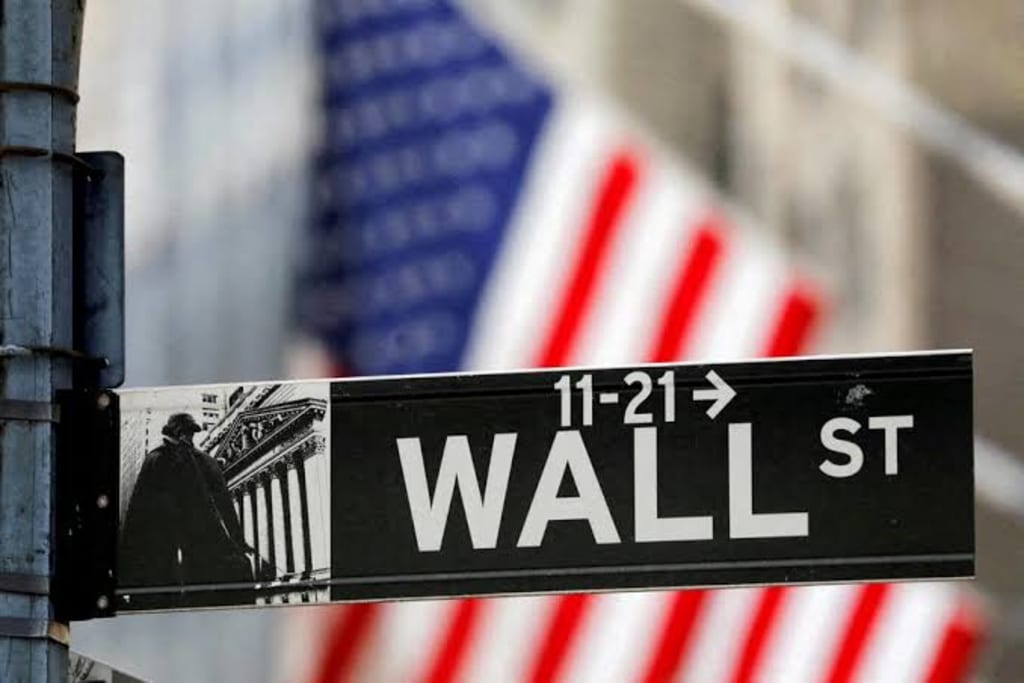
On December 6, 2026, Nasdaq's "23/5" regime goes live. The exchange will stay open 23 hours a day, five days a week, with a single one-hour closure. The new overnight session runs from 21:00 to 04:00 Eastern Time. Under winter time, that is 10:00 to 17:00 Beijing time. The window sits directly on top of the main A-share session and most of the Hong Kong session.
The timing is deliberate. For more than four decades, A-share and Hong Kong investors worked with an implicit buffer. U.S. prices moved while Asia slept. Asia digested the move at the next open. A gap up or gap down concentrated the shock into one opening print. The buffer was more than a time difference. It was a cooling mechanism. Bad news fermented overnight, was priced and repriced, and arrived in Asia with some of its sharpness removed. Nasdaq's new schedule removes that mechanism. U.S. price discovery no longer happens only after Asian markets close. Cross-market transmission shifts from an overnight gap to intraday, real-time linkage. Gaps will not disappear. Part of the shock will leak into the Asian session as continuous noise.
For domestic investors, the question is not whether they can trade U.S. stocks during the day. The prices they stare at all day now carry different information, and different quality.
A-shares: the firewall holds, but the cracks are structural
Start with the aggregate picture. Nasdaq's longer hours do not create a total drain on A-shares. China maintains capital-account controls and an annual foreign-exchange quota. Most domestic capital cannot move freely offshore. The core funding base of the A-share market does not shift because U.S. trading hours expand. Private fund managers interviewed on the change converge on the same judgment: the aggregate impact on A-shares is limited.
The word "limited" can hide the part that matters. The impact is structural, and it is concentrated in the part of the market already priced globally.
AI, semiconductors, innovative drugs, electric vehicles: these sectors do not derive their valuation anchors solely from domestic fundamentals. Relative pricing of global peers, U.S. industry narratives, and U.S. fund flows transmit through comparison effects and sentiment mapping. In the past, that transmission waited for the next open. Now Nvidia's intraday move during Asian hours can feed directly into A-share computing power, chip, consumer electronics, and AI names within the same session.
Two things follow. First, intraday volatility frequency rises. The old habit of checking U.S. premarket and after-hours moves after the A-share close is being replaced by continuous cross-market monitoring during the session. Second, the share of noise in the signal rises. Night-session volume accounts for less than 1% of total U.S. equity volume. Liquidity is highly concentrated. In one August 2026 sample, 15 stocks accounted for about half of night-session share volume. The regular session needed 256 stocks to reach the same share. Institutional participation in the overnight session is around 7%. In that environment, a modest order can push a screen price to a level that looks important. An A-share investor who treats a thin overnight quote as an effective signal is pricing noise as information.
The contrast with domestic-oriented assets is sharp. High-dividend names, utilities, and sectors driven by domestic demand and policy are less exposed to this channel. One manager put it plainly: investors holding globally integrated sectors will carry a heavier intraday monitoring burden than investors holding high-dividend defensives. That is not a judgment about which asset class is better. It describes an asymmetric information-processing cost imposed by the new schedule.
Hong Kong: same event, a different order of magnitude
If the A-share effect is a structural disturbance, Hong Kong faces the same direction at a larger scale.
Hong Kong fundamentals are not the issue. The market's openness changes the friction in the transmission chain. Hong Kong is a free-capital market with high foreign participation and no capital-account firewall of the A-share kind. When U.S. stocks become tradable during Asian daylight, cross-border funds no longer need to wait for the U.S. open to adjust U.S. exposure. They no longer need to switch strictly between Hong Kong and U.S. sessions. They can compare prices on the same screen, in the same minute, and decide where to go.
The effect is two-way, but the direction depends on the U.S. return environment. If U.S. equities are strong, some Asia-Pacific capital that previously expressed views through Hong Kong or ADRs because of time-zone constraints may be drawn directly into the U.S. overnight session. If U.S. equities weaken, the return flow into Hong Kong can be faster. What changes systematically is not the net flow direction but the source structure of intraday Hong Kong volatility. Hong Kong used to run on its own logic during Asian hours, with U.S. information arriving through the overnight print. Now U.S. prices are present in the same time zone. Hong Kong internet, semiconductors, innovative drugs, and EV names with U.S.-listed comparables will show stronger intraday linkage. There is also reverse pricing. Hong Kong tech moves during Asian hours can feed back into ADRs and U.S. peers in the same session. Pricing power becomes a real-time negotiation rather than a one-way arrangement where the U.S. sets and Hong Kong follows.
A counterpoint matters here. Jason Chan, senior investment strategist at Bank of East Asia, argues that the main U.S. catalysts, earnings and economic data, still land outside Asian daylight. Trading patterns in Asian hours are unlikely to shift overnight. Hong Kong investors already can obtain U.S. exposure through locally listed ETFs and index futures during the day. Southbound Stock Connect money cannot flow directly into U.S. stocks. The Hong Kong Exchange is also preparing a response. From March 2027 it plans to extend after-hours derivatives trading to 04:15. It has begun discussing an extension of cash-market trading hours.
Hong Kong's pricing environment becomes more crowded and noisier. More participants, faster information arrival, and a larger cross-market bargaining component embedded in intraday prices. For mainland investors using Stock Connect and framing decisions around domestic fundamentals, part of the intraday move now comes from a game they do not directly join and cannot fully read in real time. The consequences of that move still land on their positions.
Cross-border ETFs: a risk partly eased, not removed
The premium problem in cross-border ETFs cannot be avoided in any discussion of Nasdaq's longer hours. The logic needs to be separated. Overlapping trading hours ease one link in the premium formation mechanism. They do not remove the binding constraint.
The root of the current premium in Nasdaq-linked ETFs is the rigid QDII quota combined with secondary-market bidding. When the quota is exhausted and subscriptions are suspended, investors cannot subscribe at net asset value and sell in the secondary market. The arbitrage chain breaks. The secondary price loses the constraint that would pull it back toward NAV. The lag in reference NAV caused by non-overlapping U.S. and Asian sessions aggravates the problem, but it is not the only cause. Once Nasdaq's overnight session covers A-share trading hours, a more continuous U.S. reference price is available during the session. The NAV lag may narrow at the margin. Some private fund managers expect the persistent premium state to ease.
The quota and foreign-exchange constraints have not changed. As long as the QDII quota remains a hard limit, the arbitrage mechanism still fails when the quota runs out. The premium itself is a risk independent of index direction. In early November 2026, the Invesco Great Wall Nasdaq Technology ETF had a premium-discount rate of 41.64%. Harvest and Guotai Nasdaq ETFs exceeded 20%. If the Nasdaq index does not fall overnight, an investor who buys at a 40% premium still takes a direct loss as the premium converges toward NAV. The premium is an extra payment at purchase. The convergence segment is borne by the last buyers.
Overlapping hours make it more convenient to watch a real-time quote and act on it. If the on-screen price itself contains a large premium, seeing it more continuously does not make the decision safer.
The asymmetry of tradability
The discussion so far has been about how prices transmit. For individual investors, there is a more operational asymmetry.
Nasdaq's overnight session creates a right for global capital to trade U.S. stocks during Asian hours. A-share investors do not receive a symmetrical ability to adjust U.S. exposure in real time during the session. A-shares operate on T+1: shares bought today cannot be sold today. Cross-border ETF subscriptions are quota-constrained, and onshore-offshore conversion carries friction. Direct foreign-exchange investment in U.S. stocks is quota-limited. When the U.S. overnight session releases a sharp signal during the A-share session, the A-share investor sees it. The set of immediate hedging or adjustment actions is limited. The old overnight digestion at least offered a buffer. You saw bad news at night and had time to decide before the open. Now the shock arrives during the session. You see the price moving. You may be unable to leave in time, and you may be unable to hedge effectively.
This "visible but not actionable" state consumes more than volatility alone. It turns the rule change from a calculation problem into a behavioral one. Under higher information density and constrained action space, how does a person avoid being pulled by every intraday cross-market tick?
What has to change
Put the pieces together and the conclusion is not exciting, but it is closer to reality. The main effect of Nasdaq's 23/5 regime on domestic investors is a higher cost of separating signal from noise. New profit opportunities are not the point.
The overnight liquidity data already gives a clear warning. Less than 1% of volume, extreme stock concentration, a participant base dominated by overseas retail and a small institutional share of about 7%. Screen prices in that session are often exploratory quotes on a thin order book, not the effective pricing produced by a fully contested regular session. Wang Gang of Jiangyue Fund is cautious. The new session is more likely to serve information reflection and risk adjustment in the early phase. The regular U.S. session remains the main price-discovery center. Treating overnight prices as effective regular-session pricing means driving expensive trading decisions with low-information inputs.
For investors who do need to watch cross-market linkage, the first thing to learn is the bid-ask spread, order-book depth, and actual fill conditions in the new session, not how to place an overnight order. Institutions expect overnight spreads to widen to two or three times the regular session. The impact cost of larger orders will rise. In a market where the spread is already wide, chasing "real-time reaction" can let friction eat most of the apparent opportunity.
For investors whose main positions are in A-shares and Hong Kong, a more practical framework is to allocate attention by asset attribute, not by emotional urgency. If a company's value is mainly determined by domestic demand, domestic policy, and its own earnings, U.S. intraday moves are mostly disturbance. They do not justify changing the holding logic. If a company is deeply embedded in the global technology supply chain, the global pricing environment is a variable that cannot be ignored. The effective information still comes mainly from the regular U.S. session and industry fundamentals, not from every tick in a thin Asian overnight book. Zheng Yang of Shenzhen Junsheng Fund's line is a useful filter.
Finally, "not doing" is a strategy under the new regime. Longer trading hours and denser cross-market price flows create a natural sense of urgency to respond at all times. For time windows where an investor has no clear information edge or execution edge, staying still and letting low-liquidity noise fade is more likely to protect decision quality than trying to react in every linkage window. The market clock has been sped up. Investors do not need to match its speed. The buffer has been removed. The replacement is stricter filtering, not faster reaction.
About the Creator
Jin
Writer of reamstories
https://reamstories.com/jin
Enjoyed the story? Support the Creator.
Subscribe for free to receive all their stories in your feed. You could also become a paid subscriber, letting them know you appreciate their work.
Comments
There are no comments for this story
Be the first to respond and start the conversation.