
Gold Is Back in the Spotlight: Why Central Banks and Investors Are Buying Again
Gold is regaining investor attention in 2026 as central banks continue building reserves, geopolitical uncertainty remains high and expectations around interest rates reshape financial markets.
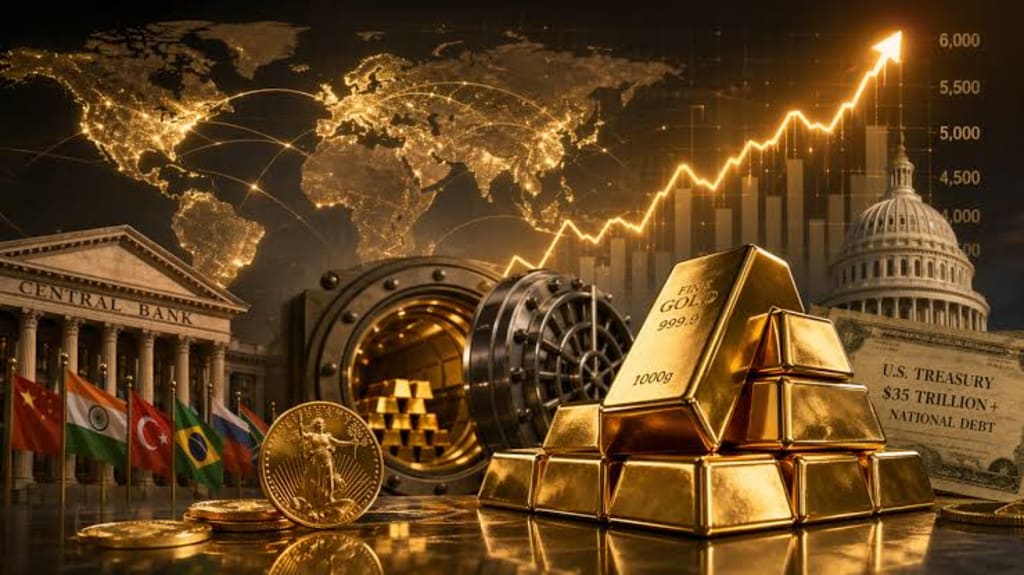
Gold has once again become one of the most closely watched assets in global financial markets. After reaching extraordinary highs earlier in 2026 and experiencing a significant correction, the precious metal has recently regained momentum as investors reassess inflation, interest rates, currency risks and geopolitical uncertainty.
On August 14, spot gold was reported around $4,391 per ounce, with the metal gaining about 1% on the day. A weaker U.S. dollar and expectations that the Federal Reserve may keep interest rates steady helped support demand.
The latest movement highlights why gold remains important to investors even after its dramatic rise.
Central Banks Are Changing the Gold Story
One of the biggest reasons behind gold's long-term strength is the continued interest from central banks.
The World Gold Council reported that central banks remain on course for another strong year of net gold purchases. The organization says diversification, protection against financial and geopolitical risks, and gold's historical performance during crises remain important reasons for maintaining or increasing gold reserves.
The second quarter of 2026 was particularly notable. Central banks bought a net 288.9 tonnes of gold, according to data reported from the World Gold Council, representing a substantial increase from the same period a year earlier.
This buying is significant because central banks generally take a long-term approach. They are not usually purchasing gold simply because of short-term price movements. Instead, many view it as a strategic reserve asset.
Why Governments Want More Gold
Gold has no issuing government and does not depend on a company's ability to repay debt. That makes it different from bonds, currencies and many other financial assets.
Central banks can use gold as part of a diversified reserve portfolio. During periods of geopolitical tension, financial instability or concerns about currency values, gold can provide an additional layer of protection.
A 2026 World Gold Council survey found that 89% of central-bank reserve managers expected global central-bank gold reserves to increase over the following 12 months, while 45% said their own institutions planned to increase gold holdings.
These figures suggest that official-sector demand is not simply a temporary reaction to one market event.
Interest Rates Remain Crucial
Interest rates are one of the most important factors affecting gold.
Gold does not pay interest or dividends. When government bond yields and other interest-bearing assets become more attractive, investors may have less incentive to hold gold.
The opposite can happen when expectations for lower interest rates increase. Lower rates can reduce the opportunity cost of owning gold and potentially make the metal more attractive.
Recent U.S. inflation and employment data have influenced expectations about Federal Reserve policy. Reuters reported that moderating inflation and weaker employment data reduced expectations for a September rate increase, helping gold regain momentum.
However, monetary policy remains uncertain. Even small changes in expectations about U.S. interest rates can produce significant movements in gold prices.
Gold Has Already Had a Dramatic 2026
Gold's performance this year has been extraordinary. The World Gold Council reported that the metal surged to record levels early in 2026, briefly moving above $5,500 per ounce intraday in January before later correcting.
That correction demonstrated an important lesson for investors: even during a powerful long-term rally, gold can experience major declines.
The recent recovery therefore does not mean prices will rise continuously. Profit-taking, changes in interest-rate expectations, currency movements and shifts in investor demand can all cause sharp volatility.
Investors Are Returning to Gold
Institutional investors are also paying attention again.
Reuters reported that global fund flows recently showed strong interest in gold-related funds, with gold funds receiving billions of dollars of inflows during the week ending August 12.
The renewed interest reflects gold's traditional role as a potential safe-haven asset.
When investors become worried about geopolitical tensions, inflation or financial instability, they often look for assets that may behave differently from stocks and bonds.
However, gold should not automatically be considered a risk-free investment. Its price can fall substantially, as demonstrated by the correction following its January peak.
High Prices Are Changing Consumer Demand
There is another side to the gold boom: expensive gold can discourage jewellery purchases.
The World Gold Council says elevated prices continue to weigh on jewellery demand, even while central-bank demand remains strategically strong.
This creates an unusual situation. Governments and financial investors may continue buying gold while ordinary consumers reduce the amount of jewellery they purchase because of high prices.
In countries where gold jewellery is an important part of weddings, festivals and household savings, this change can have significant economic consequences.
Could Gold Reach New Records Again?
Nobody can reliably predict the exact future price of gold.
Some major financial institutions remain optimistic about the metal's longer-term prospects. J.P. Morgan Global Research, for example, has published an outlook in which gold could potentially reach around $6,000 per ounce in a future period.
But forecasts are not guarantees.
Gold's future direction will depend on several factors, including central-bank purchases, U.S. interest rates, inflation, the strength of the dollar, geopolitical developments and investor demand.
A stronger dollar and higher interest rates could pressure prices. Continued central-bank buying, lower rates or renewed geopolitical uncertainty could provide support.
What Gold's Rise Really Means
The renewed attention surrounding gold is about more than the price of a precious metal. It reflects changing attitudes toward financial security.
Central banks appear increasingly interested in diversification. Investors remain concerned about geopolitical and economic uncertainty. At the same time, consumers are adapting to historically expensive gold.
The World Gold Council describes central-bank demand as strategically strong in 2026, even though it expects annual purchases to remain below the exceptionally high level recorded in 2025.
For ordinary investors, the most important lesson is that gold can play a role in diversification but can also be volatile. Anyone considering buying gold should evaluate their financial circumstances, investment horizon and risk tolerance rather than assuming that past gains will continue.
Conclusion
Gold has returned to the center of the global financial conversation in 2026. Central banks continue to accumulate reserves, investors are returning to gold-related funds and uncertainty surrounding interest rates and geopolitics is supporting demand.
Yet the market remains unpredictable. Gold has already demonstrated that record-breaking rallies can be followed by significant corrections.
The bigger story is the changing role of gold in the global financial system. As central banks and investors search for diversification and protection against uncertainty, the ancient precious metal remains remarkably relevant in the modern economy.
About the Creator
Enjoyed the story? Support the Creator.
Subscribe for free to receive all their stories in your feed.
Comments
There are no comments for this story
Be the first to respond and start the conversation.