
FTSE 100: Market Overview, Index Performance, and Investment Outlook
Explore the FTSE 100 index, its key components, market drivers, historical performance, and how it compares with modern assets like SpaceX IPO Prices in global investing

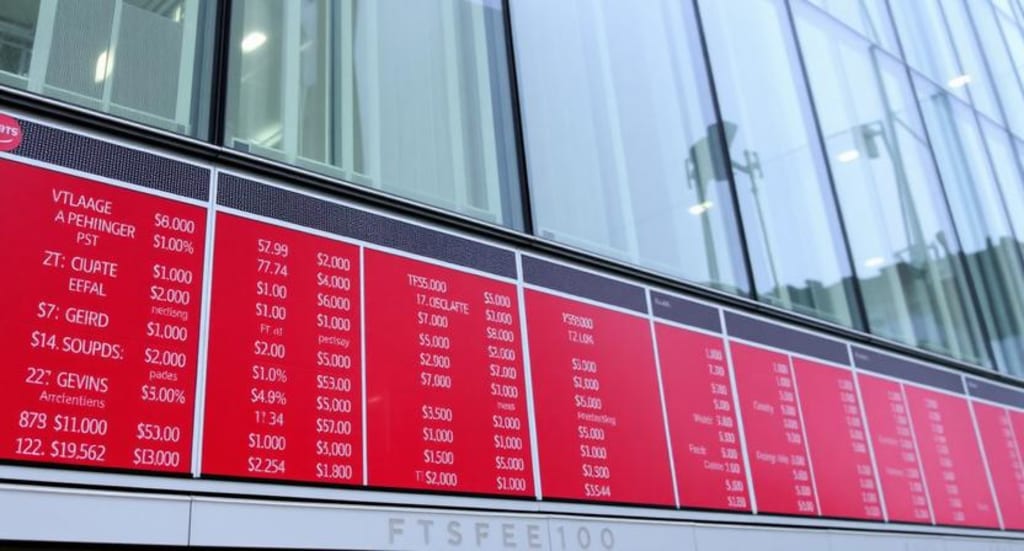
The FTSE 100 is one of the most important stock market indices in the United Kingdom, representing the performance of the 100 largest companies listed on the London Stock Exchange by market capitalization. It serves as a key benchmark for the UK economy and is widely followed by global investors looking to understand British and international market trends.
Because it includes major multinational corporations, the FTSE 100 is often influenced not only by the UK economy but also by global economic conditions, currency movements, and commodity prices.
What Is the FTSE 100?
The FTSE 100 index tracks the performance of the largest publicly traded companies in the UK. These companies span multiple sectors, including energy, finance, healthcare, consumer goods, and industrials.
Since many FTSE 100 companies earn a large portion of their revenue overseas, the index is considered globally sensitive rather than purely domestic.
Why the FTSE 100 Matters to Investors
The FTSE 100 is widely used as a benchmark for investment performance and economic health.
Economic Indicator
It reflects investor confidence in large UK-based corporations and overall market stability.
Dividend Strength
Many FTSE 100 companies are known for paying consistent dividends, attracting income-focused investors.
Global Exposure
A significant portion of revenue comes from international markets, reducing dependency on the UK economy alone.
Institutional Investment Benchmark
Pension funds, ETFs, and mutual funds often track the FTSE 100 for portfolio construction.
Key Factors That Influence the FTSE 100
Several macroeconomic and market-specific factors affect FTSE 100 performance.
Global Economic Conditions
International growth trends and financial stability strongly impact index movement.
Currency Fluctuations
The British pound’s strength or weakness affects multinational company earnings.
Commodity Prices
Energy and mining companies within the index are sensitive to oil, gas, and metal prices.
Interest Rates and Inflation
Monetary policy decisions from the Bank of England can influence investor sentiment.
Corporate Earnings
Quarterly financial performance of constituent companies directly impacts index value.
FTSE 100 vs Other Global Markets
The FTSE 100 is often compared with indices like the S&P 500 and Dow Jones due to its global significance. While the FTSE 100 is more focused on established multinational firms, it typically shows slower growth but more dividend stability compared to high-growth tech-heavy indices.
Investment Approaches for the FTSE 100
Investors can gain exposure to the FTSE 100 in several ways.
Index Funds and ETFs
Passive funds tracking the FTSE 100 are widely used for diversified exposure.
Individual Stock Selection
Investors may choose specific companies within the index for targeted strategies.
Dividend Investing
Many investors focus on FTSE 100 stocks for consistent income generation.
Long-Term Holding
The index is often used for long-term wealth-building strategies.
Risks Associated With FTSE 100 Investing
Despite its stability, the FTSE 100 carries risks.
Global economic downturns, currency volatility, and sector concentration can all affect performance. Additionally, heavy exposure to energy and financial sectors can create cyclical risk patterns.
FTSE 100 and SpaceX IPO Prices
The FTSE 100 represents a mature, diversified stock index made up of publicly listed companies with established financial histories. In contrast, SpaceX IPO Prices represent speculation about a potential future listing of a high-growth private company.
While the FTSE 100 offers stability, dividends, and global diversification, SpaceX IPO expectations focus on innovation, future expansion, and high-growth potential.
Both attract investors but serve very different roles in portfolio construction—one prioritizes stability, while the other reflects emerging growth opportunities.
Future Outlook for the FTSE 100
The FTSE 100 is expected to remain a key global benchmark as UK-listed multinational companies continue to operate across international markets. Future performance will depend on global economic conditions, currency trends, and corporate earnings growth.
Despite short-term volatility, the index continues to be a core component of many long-term investment portfolios.
Conclusion
The FTSE 100 remains one of the most important stock indices in the world, offering exposure to leading UK-based multinational companies. Its combination of dividend strength and global revenue exposure makes it attractive to a wide range of investors.
When compared with speculative themes like SpaceX IPO Prices, the FTSE 100 represents stability and established market structure, while SpaceX reflects future-oriented growth potential.
About the Creator
Hammad Nawaz
Hammad here, sharing stock market insights, trading strategies, and tips. Helping traders understand trends, risk, and opportunities in equities, forex, and commodities.
Enjoyed the story? Support the Creator.
Subscribe for free to receive all their stories in your feed.
Comments
There are no comments for this story
Be the first to respond and start the conversation.