
Fortunes Under Pressure
A Young Buyer's Guide to Gemstones, Without Getting Taken for a Ride

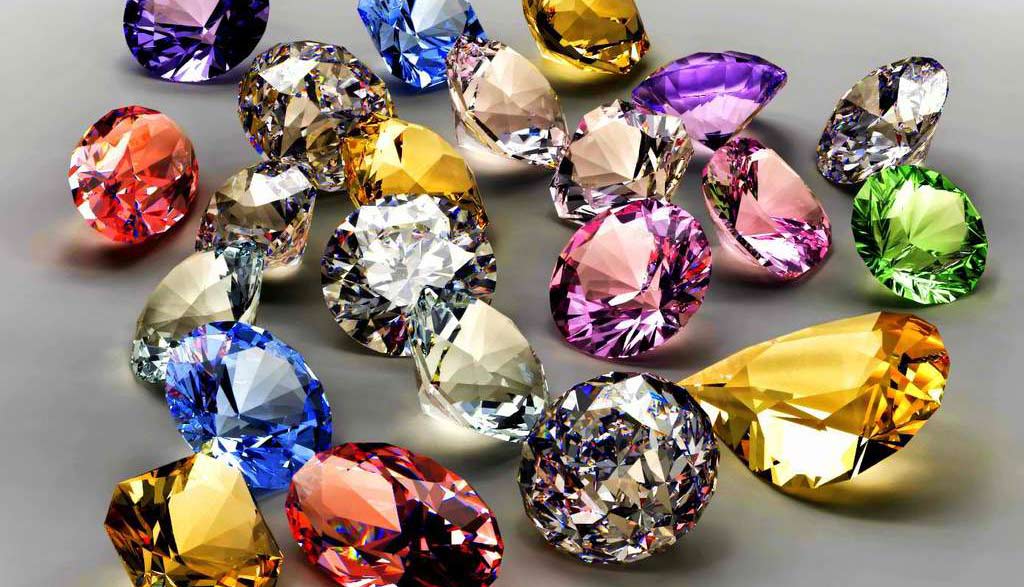
“The rarity of a thing gives it value.”
— Petronius
There is something almost absurd about gemstones. Human beings dig into mountains, riverbeds, deserts, and jungles looking for tiny pieces of crystallized mineral, cut them, polish them, put them inside little velvet boxes, and occasionally exchange them for enough money to buy a house. Yet, we have been doing precisely that for thousands of years.
Diamonds decorated royal regalia. Rubies became symbols of blood, passion, and power. Emeralds traveled from Brazilian mines into Portuguese courts. Sapphires adorned kings, clergy, movie stars, engagement rings, and museum collections. Long before somebody invented crypto currency, human beings were already carrying enormous concentrations of wealth in objects small enough to disappear into a coat pocket.
However, that does not mean every gemstone is an investment. Quite the opposite. Walk into any shopping mall, spend $8,000 on a diamond necklace, and attempt to sell it the following afternoon. You may receive a very painful education in the difference between its retail price and its market value. For gemstones occupy a strange financial realm between commodities, collectibles, jewelry, art, and luxury goods. They can preserve substantial wealth, and exceptional specimens can appreciate enormously; but, they are illiquid, complicated, difficult to standardize, and remarkably easy for inexperienced buyers to overpay for.
So, much like my previous guides to precious metals and watches, the fundamental rule is simple: Buy intelligently, and not emotionally.
Never buy gemstones because an influencer told you they will “10X.”, and never because a jewelry salesman brought out complimentary champagne.
Step 1: Stop Calling Every Gemstone an “Investment”
If your primary objective is building retirement wealth, close this article & the jewelry website, right now. Open a Roth IRA, buy some diversified index funds, and then come back, here. Diamonds and gemstones should generally be understood as "collectible hard assets", rather than replacements for conventional investments. Their greatest advantage is also their greatest weakness: every important stone is different.
A one ounce bar of 24 karat gold is fundamentally interchangeable with another ounce of 24 karat gold. A three-carat ruby (for example) is not interchangeable with another three-carat ruby. It might be vivid in color, untreated, beautifully cut, accompanied by respected laboratory documentation, and traced to Myanmar; yet, another might be pale, heavily included, glass-filled, poorly cut, and worth a fraction of the price.
GIA notes that fine gemstones can command some of the highest prices among colored gemstones, but treatment, color, quality, and documented origin can dramatically influence desirability.
That individuality is what makes gemstones fascinating. It is also what makes them dangerous to amateurs. The goal therefore should not be how to get rich buying gemstones? Rather, the goal should be how to buy beautiful & genuinely scarce gemstones (intelligently enough), so that they have a reasonable chance of preserving your wealth.
That distinction could save you thousands of dollars.
Step 2: Diamonds Are Not Bullion
One of the greatest misconceptions surrounding gemstones (particularly diamonds) comes from one famous phrase.
“A diamond is forever.”
- Mary Frances Gerety
Is that true, physically speaking? Sure. Is that true, financially speaking? No. The reality is that gold, silver, and other precious metals possess a transparent global market price. Diamonds do not. There is no universally quoted public “spot price” allowing you to walk into ten different shops with a diamond and receive virtually identical offers. That's because diamonds are evaluated according to numerous characteristics; most famously GIA’s "4Cs":
Cut: How effectively the stone interacts with light.
Color: How much (or how little) color the stone possesses.
Clarity: The presence of inclusions and blemishes.
Carat Weight: The physical weight of the stone.
Before we proceed further, here is where beginning collectors get themselves into trouble. The retail price is never the resale value. A diamond purchased from a luxury jewelry boutique incorporates far more than the stone itself: branding, rent, advertising, craftsmanship, sales commissions, packaging, and retailer margins. Those expenses do not magically follow the diamond when someone sells it.
It is the gemstone equivalent of driving a new car off the dealership lot. This is why buying pre-owned, estate, auction, or dealer-market gemstones can sometimes make far more financial sense than buying newly manufactured jewelry at full retail. Make sure to remember the same principle from watch collecting (assuming that you've read my article, Time Preserves Money, beforehand): You make your money when you buy, not when you sell.
Step 3: Learn Why Colored Gemstones Can Be More Interesting Than White Diamonds
Diamonds dominate modern jewelry advertising. Gem collectors, however, live in a much larger universe (rubies, sapphires, emeralds, alexandrites, spinels, jadeites, paraíba tourmalines, demantoid garnets, & natural fancy-color diamonds).
These stones occupy markets driven heavily by scarcity, color, provenance, treatment status, and collector demand. The traditional “Big Three” colored gemstones in the market are rubies, sapphires, and emeralds.
GIA describes a ruby as capable of commanding the highest price among colored gemstones, while exceptional sapphires and emeralds can similarly reach extraordinary appraisals; and in that appraisal process, their color becomes paramount.
For rubies, the market generally favors vivid, strongly saturated red. For blue sapphires, GIA identifies velvety blue to violet-blue stones, with strong to vivid saturation, among the most highly valued. For emeralds, vivid bluish-green to pure green coloration is particularly desirable.
From there, things start to get really interesting. Alexandrites can change apparent color under different lighting. Fine paraíba tourmalines can display an almost electric blue-green. Certain spinels once sat unidentified among famous royal "rubies". Fancy-colored diamonds can occur in extraordinary shades of pink, blue, yellow, green, and red.
In other words, never assume “diamond” automatically means “most valuable.” In this market, the stone's rarity is more complicated than the stone's advertising.
Step 4: Treatment Can Make or Break the Value
Imagine two rubies sitting beside each other. Both are three carats, both look beautiful, and both appear red. One formed naturally, possesses exceptional color, and shows no evidence of heat treatment. The other has undergone an extensive treatment to improve its appearance.
That's how one can know that they are not necessarily equivalent assets, because heat treatment is extremely common and widely accepted in the colored-gemstone trade. More aggressive treatments, however, can substantially affect market desirability. GIA notes that rubies showing no evidence of heat can command premiums because of their rarity, while diffused or glass-filled stones are generally worth less than traditionally heated stones. Likewise, an exceptional unheated sapphire can receive a premium over comparable treated material.
This does not mean treated gemstones are fake, but it does mean that you need to know what you are buying. Emeralds present another complication because clarity enhancement with oils or resins has a long history within the trade.
The collector therefore needs to ask the following questions:
Is the stone natural?
Has it been heated?
Has it been fracture-filled?
Has it undergone diffusion?
Has this emerald been clarity enhanced?
Is the color natural?
Is the stated geographic origin supported by any evidence or documentation?
The Federal Trade Commission maintains strict guidelines regarding the disclosure and truthful marketing of gemstones, lab-made stones, treatments, and imitations.
In the world of gemstones, ignorance becomes an expensive mistake, very quickly.
Step 5: Lab Reports Are Your Closest Ally
If somebody asks you to spend $15,000 on a colored stone but becomes strangely defensive when you ask for independent laboratory documentation, your wallet should immediately grow legs and run. Just, walk away.
For significant purchases, independent gemological reports are enormously important. The Gemological Institute of America (GIA) can determine whether a stone is natural or lab-grown, identify detectable treatments, document physical characteristics, and (whenever possible and requested) provide an opinion regarding geographic origin for certain colored stones.
That piece of paper is not glamorous, it will not sparkle beneath restaurant lighting, but that paperwork will protect the stone's value. Think of it like the paperwork accompanying a vintage Rolex, a classic Ferrari, a historical firearm, an antique painting, or a rare coin. The provenance reduces the uncertainty, and the uncertainty kills the resale value.
For diamonds, grading documentation also gives buyers a standardized vocabulary for discussing characteristics such as cut, color, clarity, and carat weight. Never rely exclusively upon “My jeweler says…”
Get independent evidence. Strong confidence is wonderful, but strong documentation is better.
Step 6: Natural, Lab-Grown, and Simulated Are Three Different Things
This distinction matters enormously. A natural diamond was formed through geological processes within the Earth. A lab-grown diamond is still a diamond (possesses essentially the same optical, physical, and chemical properties), but was manufactured rather than mined. A simulated diamond, such as cubic zirconia, merely resembles a diamond.
Those are three different categories and the FTC specifically requires sellers to avoid misleading consumers about lab-grown and simulated diamonds; as well as provide terminology intended to distinguish them from mined stones.
Don't get it twisted. Lab-grown diamonds can be fantastic jewelry. They allow buyers to obtain large, beautiful stones for considerably less money than comparable natural specimens. Yet, if long-term scarcity is your reason for buying, think carefully. Factories can manufacture additional lab-grown diamonds. Nobody can manufacture another geological deposit that disappeared millions of years ago.
This does not make them an inferior product. It simply means that beauty and scarcity are two different factors. Buy lab-grown if you love the appearance and economics; but, do not automatically assume its resale behavior will mirror that of an exceptionally rare natural stone.
Step 7: Provenance Matters, but Quality Comes First
Burmese Ruby. Kashmir Sapphire. Colombian Emerald. Those phrases possess almost mythical power in the gemstone trade, because a stone's geographic origin can contribute enormously to the story surrounding it. However, the origin alone does not create quality. GIA specifically warns buyers not to assume that every ruby from a famous source is exceptional. Every deposit produces different levels of material.
A mediocre ruby does not magically become magnificent because somebody says "Burma" or "Myanmar". On the other hand, when an already extraordinary gemstone possesses respected laboratory documentation connecting it with a historically celebrated source, provenance can add another layer of scarcity and collector interest. GIA notes, for example, that exceptional Kashmir sapphires can command particularly strong premiums, while fine Myanmar rubies with independent origin documentation may also receive market premiums.
The order, therefore, should be such.
Quality
Provenance
Story
Never reverse that order, because jewelry salespeople know perfectly well that human beings love stories.
Step 8: Buy the Stone, Not the Jewelry Store
Luxury branding is intoxicating. A velvet box opens. The freshly popped champagne appears. Soft lighting hits the diamond. Suddenly, somebody is convincing you that spending $14,000 is practically an act of personal growth.
Remember what you are actually purchasing. If value retention matters, separate the intrinsic desirability of the gemstone from the retail theater surrounding it. Designer jewelry can certainly possess collector value (particularly signed pieces from historically important houses) but the economics become different because you are now collecting brand, craftsmanship, design, provenance, and gemstone simultaneously.
For loose gemstones, compare comparable stones from multiple reputable dealers. For estate jewelry, research auction results. For expensive stones, obtain independent laboratory documentation.
Furthermore, always ask yourself this question. "Who is going to buy this from me someday?"
A liquid asset has an obvious exit. An illiquid asset requires a buyer. That distinction matters.
Step 9: The Rarest Stones Live in a Different Universe
Occasionally a gemstone becomes so exceptional that ordinary jewelry economics stop applying. Rare fancy-color diamonds provide dramatic examples.
In 2026, the 5.5-carat "Ocean Dream", a fancy vivid blue-green diamond, sold at Christie’s Geneva for approximately $17.3 million; far above its presale estimate. Yet at roughly the same time, another major vivid-blue diamond offered at Sotheby’s reportedly failed to sell at auction.
That juxtaposition teaches perhaps the most important lesson in this entire article. Just cause something is rare does not mean it guarantees a profit. Auction markets depend upon timing, provenance, fashion, competing bidders, economic conditions, and whether two wealthy people happen to desperately want the same object on the same afternoon.
Likewise, a 16.53-carat alexandrite ring sold at Sotheby’s for roughly $1.9 million in 2024, demonstrating the extraordinary prices exceptional examples of less-mainstream gemstones can command. These stones are closer to fine art than ordinary jewelry. They are trophies, and trophy assets operate according to their own rules.
Step 10: Think Like a Collector, Not a Speculator
This is where gemstones join watches, gold, antiques, art, and every other tangible collectible.
The intelligent collector asks multiple questions in the buying process. Is it authentic? Is it rare? Is it documented? Is it beautiful? Did I buy it at a sensible price? Will knowledgeable collectors still care about this in twenty years?
The speculator asks only one question. How quickly can I flip it? Those are radically different mindsets. The former produces collections, while the latter frequently produces expensive lessons. A gemstone should ideally offer something a stock certificate cannot; utility beyond financial return. You can wear it, gift it, study it, pass it to your loved ones, turn it into jewelry, or keep it in a safe.
Admire something that took geological forces millions (or even billions) of years to produce. That emotional utility matters, because if the stone never appreciates spectacularly, you should still be happy you own it.
BONUS STEP: Never Buy a Gemstone You Don’t Actually Like
This sounds embarrassingly obvious. Apparently, it is not. People buy luxury goods constantly because somebody else told them what they are supposed to desire. Diamonds because engagement rings “require” diamonds. Rolexes because successful men “wear” Rolexes. Designer handbags because TikTok says they are “investments”. Gold chains because celebrities wear them.
Forget all of that. Maybe you prefer emeralds. Maybe your favorite stone is sapphire. Maybe you think alexandrite is fascinating. Maybe you prefer an antique old-European-cut diamond with imperfections and personality over a clinically perfect modern brilliant. Good.
A gemstone is one of the few stores of portable wealth capable of being intensely personal. Use that freedom, because the best collectible assets exist at the intersection of scarcity, quality, documentation, historical interest, and personal enjoyment.
Remove the scarcity, and you have decoration. Remove the documentation, and you have uncertainty. Remove the quality, and you have mediocrity. Remove the enjoyment, and you might as well have bought an ETF.
Final Word: Pressure Creates Diamonds. Patience Creates Collectors.
Our economy increasingly encourages us to own nothing permanent. Subscription entertainment. Leased cars. Disposable electronics. Fast fashion. Cloud storage. Digital currencies. Products deliberately engineered around replacement cycles. Gemstones represent something almost defiantly ancient.
A ruby does not require a software update. An emerald does not care whether your streaming subscription expires. A sapphire cannot be deleted when a technology company shuts down its servers. A natural diamond formed long before human beings invented money in the first place.
Yet, permanence alone does not guarantee financial value. That is the distinction intelligent collectors must understand. Gold and silver possess monetary history and standardized commodity pricing. Fine watches combine engineering, brand history, and collector demand. Gemstones operate differently. Their value depends upon a complicated marriage of geology, beauty, scarcity, provenance, treatment, documentation, and human desire.
That makes them risky, but it also makes them fascinating. So buy slowly, study obsessively, demand documentation, ignore the hype, never confuse retail price with resale value, and (above all) buy something you would still be delighted to own even if its market price remained unchanged for twenty years; because a gemstone should never merely represent money. At its best, it represents something money increasingly struggles to purchase: permanence.
Works Cited (MLA)
Federal Trade Commission. “In the Loupe: Advertising Diamond, Gemstones and Pearls.” Federal Trade Commission, 2019. Accessed 11 Aug. 2026.
Federal Trade Commission. “Jewelry Guides: Helping Consumers Understand What They’re Buying.” Federal Trade Commission. Accessed 11 Aug. 2026.
Gemological Institute of America. “Emerald Buyer’s Guide.” GIA. Accessed 11 Aug. 2026.
Gemological Institute of America. “How to Buy a Diamond.” GIA 4Cs. Accessed 11 Aug. 2026.
Gemological Institute of America. “How to Choose a Diamond: Four-Minute GIA Diamond Grading Guide.” YouTube, 21 July 2014.
Gemological Institute of America. “Ruby Buyer’s Guide.” GIA. Accessed 11 Aug. 2026.
Gemological Institute of America. “Sapphire Buyer’s Guide.” GIA. Accessed 11 Aug. 2026.
Gemological Institute of America. “4Cs of Diamond Quality: Diamond Carat Weight Grading.” YouTube, 21 July 2014.
Herr, Jacob. “Hard Money for a Soft Economy: A Young Investor’s Guide to Precious Metals.” Vocal Media, 2025.
Herr, Jacob. “Time Preserves Money: A Multi-Step Guide to Buying Watches That Actually Hold Their Value in a Disposable Economy.” Vocal Media, 2026.
Petronius. The Satyricon. Translated by J. P. Sullivan, Penguin Classics, 1986.
About the Creator
Jacob Herr
Born & raised in the American heartland, Jacob Herr graduated from Butler University with a dual degree in theatre & history. He is a rough, tumble, and humble artist, known to write about a little bit of everything.
Enjoyed the story? Support the Creator.
Subscribe for free to receive all their stories in your feed.
Comments
There are no comments for this story
Be the first to respond and start the conversation.